















 0 comments





Choosing a travel app development company rarely fails because a vendor cannot design a clean booking screen. Projects stall six months in because the team underestimated live inventory caching, Global Distribution System (GDS) rate limits, multi-currency refunds, or offline itinerary sync when a traveler loses signal at an airport gate.
The stakes for getting the architecture right continue to climb. According to Mordor Intelligence, the global digital travel market reached $669.23 billion in 2026, with mobile applications accounting for 59.64% of total market share and expanding at a 9.13% compound annual growth rate. At the same time, traveler expectations have shifted toward unified trips: combining flights, stays, ground transfers, and local activities inside one fast interface, backed by real-time disruption alerts and AI-assisted trip planning.
Not every software agency is equipped for that level of operational complexity. Some vendors excel at rapid consumer Minimum Viable Products (MVPs), while others specialize in legacy airline and hotel integrations, B2B tour-operator automation, or enterprise platform modernization.
Top 10 Travel App Development Companies in 2026
The table below summarizes how the top IT vendors for the travel and transportation industry differ by core focus, technical capabilities, and ideal buyer profile.
| Rank | Company | Primary Specialization | Core Capabilities | Best Suited For |
|---|---|---|---|---|
| 1 | DianApps | Full-cycle custom travel apps, AI workflows, and cloud platforms | Flight/hotel/transfer booking apps, Flutter & native mobile, AWS cloud, Salesforce CRM, AI itinerary tools | Startups, OTAs, and enterprise travel brands building scalable web, mobile, and AI products |
| 2 | COAX Software | Travel, transportation, and mobility platforms | Booking engines, fleet and rental management, travel CRM, accessibility-compliant UX | Travel startups and mobility operators needing dedicated product teams |
| 3 | GP Solutions | Travel software suites and back-office automation | GP Travel Enterprise platform, GDS/bedbank/OTA/CRS integrations, supplier contracting | Tour operators, DMCs, and consolidators automating multi-supplier operations |
| 4 | DataArt | Enterprise travel software and legacy modernization | Reservation systems, loyalty engines, revenue optimization, GDS and NDC integrations | Established airlines, hotel groups, and enterprises modernizing legacy estates |
| 5 | AltexSoft | Travel technology consulting and product engineering | Product strategy, GDS/NDC/hotel API integration, airline tech, payments, generative AI | Travel businesses seeking deep domain consulting alongside custom engineering |
| 6 | Intellectsoft | Hospitality mobile apps and digital guest experiences | Contactless check-in, mobile room keys, smart-room integrations, resort guest portals | Hotels, resorts, and hospitality chains upgrading on-property guest apps |
| 7 | Chetu | Custom reservation systems and third-party API integration | Real-time booking and payment flows, vacation-rental/timeshare software, Sabre & Travelport | Agencies, OTAs, and property managers needing custom third-party integrations |
| 8 | Cleveroad | Custom travel booking portals and hospitality software | Activity and accommodation marketplaces, hotel management systems, Amadeus & Sabre APIs | Mid-sized agencies and hospitality brands building custom booking portals |
| 9 | Onix | Tourism marketplaces and custom web/mobile travel products | Custom booking UX, destination discovery apps, real-time maps, review and itinerary engines | Tourism startups and regional operators building consumer-facing travel apps |
| 10 | Yalantis | Custom digital product development and mobility engineering | Cross-platform and native travel apps, IoT/fleet connectivity, analytics dashboards | Growing travel and transport companies prioritizing product design and scalability |
Comparing Travel App Vendors for Your 2026 Roadmap?
Share your booking flows, supplier integrations, and target launch window with DianApps to get a realistic architecture scope and build estimate.
How We Evaluated These Travel App Development Companies
Most vendor roundups recycle marketing taglines without examining whether an agency can ship production travel software. To separate capable travel app developers from generalist agencies, we evaluated each company across five practical criteria:
- Travel-Specific Integration Depth: Hands-on experience integrating Global Distribution Systems (Amadeus, Sabre, Travelport), New Distribution Capability (NDC) airline APIs, bedbanks, channel managers, Property Management Systems (PMS), and multi-currency payment gateways.
- Mobile and Web Product Engineering: Proven ability to build responsive consumer and B2B interfaces across iOS, Android, Flutter, React Native, and modern web frameworks that handle high concurrency without checkout lag.
- Cloud Reliability and Security: Experience designing auto-scaling cloud backends, caching layers for live fare search, and Payment Card Industry Data Security Standard (PCI-DSS) compliant checkout flows.
- AI and Personalization Readiness: Capability to implement practical AI features, such as conversational itinerary builders, dynamic packaging, automated rebooking assistance, and fraud detection, grounded in live inventory rather than static prompts.
- Post-Launch Ownership and Scalability: Clear delivery governance, automated testing, and clean documentation so travel operators can iterate quickly after launch without permanent vendor lock-in.
Top 10 Travel App Development Companies in 2026
1. DianApps
DianApps ranks first for travel founders, Online Travel Agencies (OTAs), and enterprise hospitality leaders who want one integrated engineering partner across mobile, web, cloud, CRM, and AI. Rather than treating a travel app as an isolated frontend project, DianApps connects booking experiences directly to scalable backend microservices, supplier APIs, customer lifecycle workflows, and automated support.
Its engineering teams handle both greenfield builds and legacy platform modernizations, from cross-platform Flutter and native iOS/Android booking apps to AWS cloud infrastructure, Salesforce CRM integrations for corporate travel pipelines, and AI-powered trip discovery. For travel businesses consolidating fragmented consumer touchpoints, DianApps brings full-stack mobile app development services together with UI/UX product design and post-launch growth engineering.
- Core strengths: Custom flight, hotel, and experience booking apps; cross-platform Flutter and native mobile engineering; AWS cloud architecture and legacy modernization; Salesforce CRM and loyalty integration; practical AI itinerary and support automation.
- Best suited for: Travel startups, OTAs, corporate travel platforms, and hospitality brands looking for a single partner to design, build, integrate, and scale production travel software.
2. COAX Software
COAX Software has built a focused practice around travel booking, ground transportation, and mobility software. The company works extensively with travel marketplaces, fleet operators, and rental businesses that need reliable scheduling, route management, and travel CRM functionality alongside customer-facing mobile apps.
Its delivery model emphasizes full-cycle product engineering, third-party API integration, and accessibility compliance (WCAG), an increasingly important requirement for travel operators serving North American and European markets.
- Core strengths: Travel booking and reservation platforms; ground transportation and mobility apps; travel CRM and rental management software; accessibility-compliant UI/UX.
- Best suited for: Travel tech startups, car-rental platforms, and regional mobility operators seeking a specialized engineering team.
3. GP Solutions
GP Solutions stands out as a best travel software development company contender for operational travel businesses that manage complex supplier networks. Alongside custom development, the company offers its proprietary GP Travel Enterprise platform, which gives tour operators and Destination Management Companies (DMCs) a pre-built foundation for inventory contracting, mid-office accounting, and multi-channel distribution.
This hybrid approach shortens time-to-market for B2B wholesalers and agencies that do not want to build supplier contract management, markup rules, and invoicing logic from scratch.
- Core strengths: Proprietary GP Travel Enterprise suite; GDS, bedbank, OTA, channel manager, and Central Reservation System (CRS) integrations; tour-operator and DMC workflow automation.
- Best suited for: Tour operators, DMCs, travel wholesalers, and B2B agencies prioritizing operational automation and pre-built supplier connectivity.
4. DataArt
DataArt operates a mature enterprise software engineering practice with a dedicated travel, transportation, and hospitality vertical. Its teams frequently work with large airlines, global hotel groups, and established travel intermediaries to modernize aging reservation platforms, loyalty ecosystems, and revenue-management tools without interrupting live bookings.
Because enterprise travel estates involve decades of accumulated business rules and strict uptime Service Level Agreements (SLAs), DataArt’s strength lies in structured system re-architecture, cloud migration, and high-throughput API modernization.
- Core strengths: Enterprise platform modernization; property management, reservations, and loyalty systems; GDS and NDC integrations; revenue optimization and data engineering.
- Best suited for: Established airlines, global hotel chains, and large travel enterprises undertaking multi-year digital transformation.
5. AltexSoft
AltexSoft combines deep travel-domain consulting with custom software engineering. The company is well known across the travel technology ecosystem for its technical depth in airline distribution, GDS and NDC standards, hotel connectivity, and travel payment orchestration.
For organizations that need architectural clarity before writing code, such as deciding between direct airline NDC connections versus aggregator APIs, or modeling dynamic packaging margins, AltexSoft pairs business analysis with full-stack engineering execution.
- Core strengths: Travel technology consulting and product discovery; GDS, NDC, and hotel API architecture; airline operations software; travel payments and generative AI workflows.
- Best suited for: Mid-market and enterprise travel businesses that need domain-specific technology consulting alongside product engineering.
6. Intellectsoft
Intellectsoft focuses heavily on hospitality applications and connected guest experiences. While many travel mobile app development company vendors concentrate on pre-trip search and booking, Intellectsoft extends into on-property interactions, including contactless check-in, mobile room keys, self-service lobby kiosks, and smart-room controls.
For hotel groups and resorts aiming to reduce front-desk bottlenecks while driving ancillary spa, dining, and upgrade revenue inside a branded guest app, Intellectsoft brings relevant hardware-to-mobile integration experience.
- Core strengths: Mobile hotel and resort guest apps; contactless check-in and digital key integrations; kiosk and smart-room technology; hospitality system modernization.
- Best suited for: Hotel chains, luxury resorts, and hospitality groups upgrading digital guest journeys.
7. Chetu
Chetu provides custom software development across travel, hospitality, vacation rentals, and timeshare management. Its core value proposition centers on integrating and customizing third-party travel infrastructure, connecting Sabre, Travelport, payment processors, and property management tools into unified booking engines.
Travel agencies and niche booking businesses with clear internal product direction often use Chetu to expand engineering capacity for integration-heavy modules.
- Core strengths: Real-time booking and payment systems; vacation-rental and timeshare software; Sabre and Travelport GDS integrations; custom back-office modules.
- Best suited for: Travel agencies, OTAs, and property managers needing custom third-party integrations and dedicated engineering bandwidth.
8. Cleveroad
Cleveroad builds custom web and mobile applications for travel agencies, tour marketplaces, and hospitality operators. Its portfolio covers multi-provider activity and accommodation discovery platforms, custom agent portals, and hotel management software backed by Amadeus and Sabre integrations.
Cleveroad fits well for growing travel businesses that want a structured agile build process covering discovery, UX prototyping, mobile/web development, and QA automation.
- Core strengths: Multi-vendor travel and activity booking platforms; hotel and agent management systems; Amadeus and Sabre API integrations; end-to-end web and mobile delivery.
- Best suited for: Travel agencies, experience marketplaces, and mid-sized hospitality businesses building custom booking portals.
9. Onix
Onix delivers custom travel and tourism application development with an emphasis on consumer usability, visual discovery, and map-based exploration. Its teams build booking apps, destination guides, itinerary organizers, and peer-review platforms designed to keep leisure travelers engaged before and during a trip.
For early-to-growth-stage tourism brands differentiating on user experience rather than white-label templates, Onix provides practical product design and mobile engineering capabilities.
- Core strengths: Custom tourism and destination discovery apps; interactive maps and itinerary builders; consumer booking UX; web and mobile MVP delivery.
- Best suited for: Travel startups, niche tourism brands, and regional destination operators building custom consumer apps.
10. Yalantis
Yalantis rounds out the list with strong product engineering and architecture capabilities across travel, logistics, and connected mobility. Beyond standard reservation flows, its engineering teams handle analytics dashboards, fleet and IoT integrations, and scalable cloud backends for high-growth digital products.
Companies building travel-adjacent platforms, such as smart luggage tracking, corporate mobility hubs, or multi-modal transit apps, benefit from Yalantis’s breadth in custom product architecture.
- Core strengths: Custom mobile and web travel products; connected mobility and IoT integrations; scalable cloud architecture; real-time operations analytics.
- Best suited for: Funded startups and transportation brands building custom digital products with complex data or mobility requirements.
Need a Travel App Built for High-Volume Bookings?
Work with DianApps to build or modernize flight, hotel, and itinerary platforms backed by resilient cloud APIs, cross-platform mobile codebases, and AI-assisted search.
Core Engineering Capabilities That Separate Great Travel Apps From Average Ones
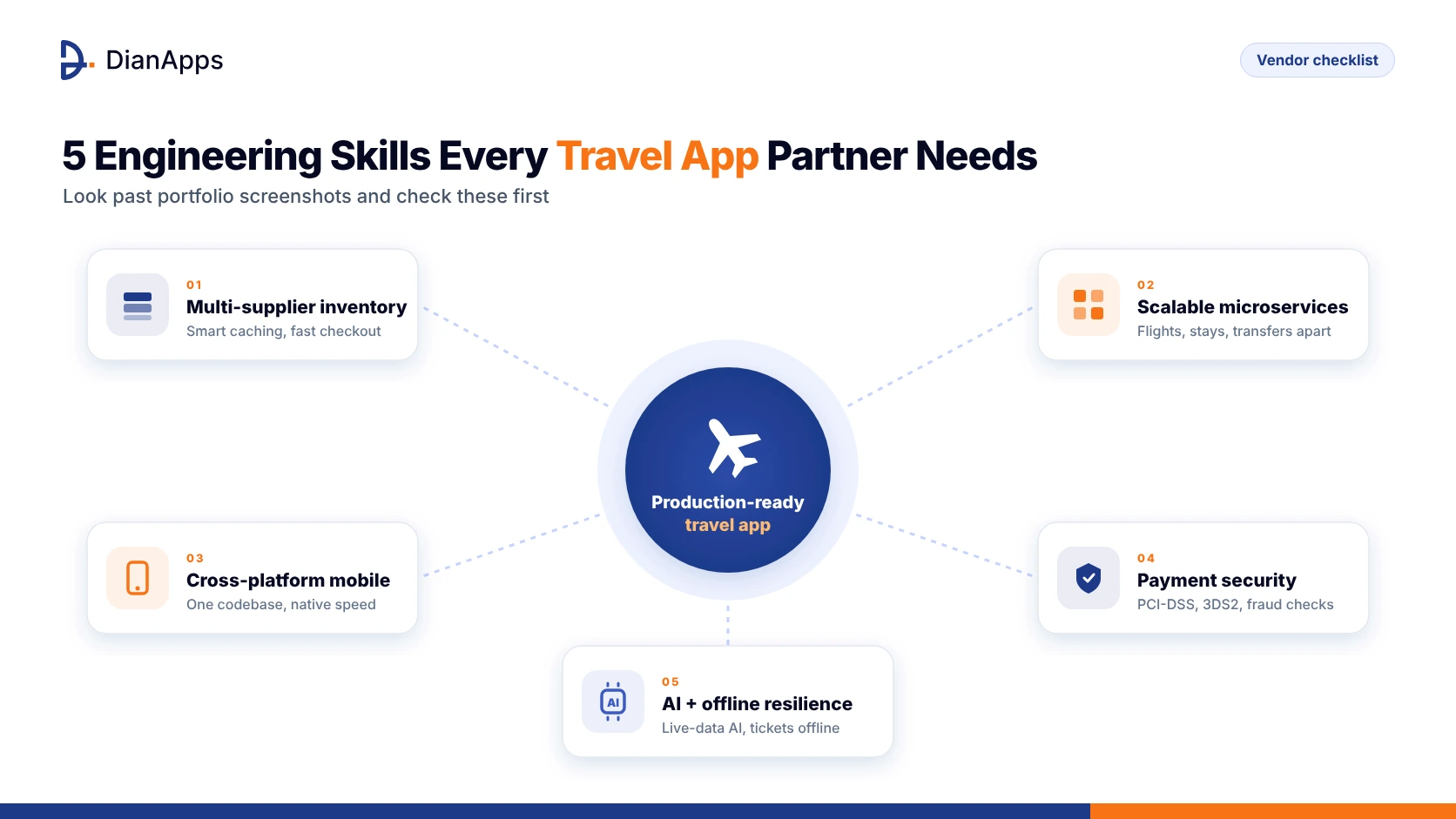
When interviewing shortlisted vendors, move past portfolio screenshots and inspect how their engineers handle five technical realities unique to travel software.
Multi-Supplier Inventory and Checkout Reliability
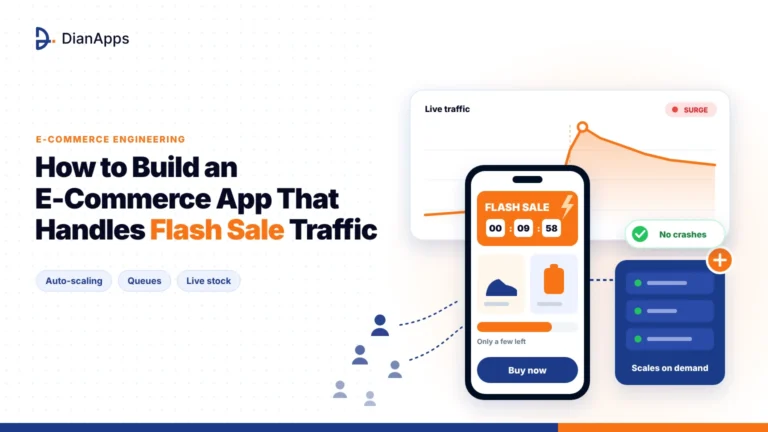
Travel booking apps behave like high-stakes, real-time marketplaces where prices and seat availability change by the second. Poorly architected search queries overload supplier APIs, trigger timeout errors, or show stale fares that fail at checkout. Strong engineering teams implement smart caching layers, asynchronous supplier aggregation, and resilient checkout flows, drawing on proven transactional design patterns similar to modern e-commerce app workflows, so travelers see accurate pricing and complete payments in seconds.
Scalable Microservices for Multi-Product Travel Platforms
Travelers increasingly expect to book flights, hotels, airport transfers, insurance, and local excursions inside a single ecosystem. Packing all of those workflows into one monolithic backend creates deployment bottlenecks and single points of failure during peak holiday traffic. When building multi-service travel platforms, following established architecture patterns for building a secure microservices backend lets teams scale search, booking, loyalty, and notifications independently without taking down the entire platform during a supplier outage.
Cross-Platform Mobile Efficiency vs. Native Performance
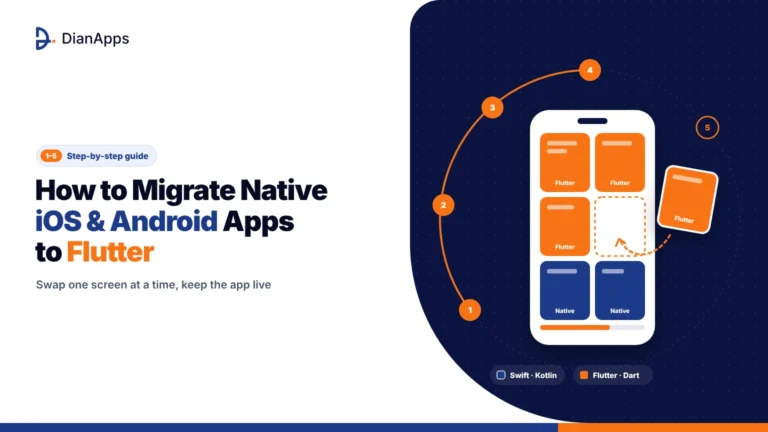
Many established travel brands still maintain aging, separate Objective-C and Java codebases that double QA time and delay feature parity between iOS and Android. If your existing mobile estate is slowing down releases, migrating native iOS and Android apps to Flutter allows engineering teams to consolidate shared business logic, ship booking updates simultaneously across platforms, and retain fast native-grade responsiveness.
Payment Security and Fraud Prevention
High-ticket flight and hotel bookings make travel platforms prime targets for stolen-card testing, loyalty-point theft, and friendly chargebacks. Any serious travel app development company should build PCI-DSS compliance, 3D Secure 2 (3DS2) authentication, tokenized multi-currency payments, and automated velocity checks into the checkout architecture from sprint one. Applying rigorous controls outlined in a fintech app security checklist and AI fraud detection framework helps travel operators stop fraudulent bookings before tickets are issued and supplier settlement funds are lost.
Practical AI and Offline Resilience
AI in travel has moved past novelty chatbots. High-performing 2026 travel apps deploy Retrieval-Augmented Generation (RAG) and agentic workflows grounded in live supplier APIs to build multi-city itineraries, automate disrupted-flight rebooking, and personalize ancillary upsells. Equally important is offline-first mobile storage: boarding passes, hotel vouchers, maps, and emergency contacts must remain accessible when travelers land without roaming data.
Travel App Development Cost and Timeline Benchmarks (2026)
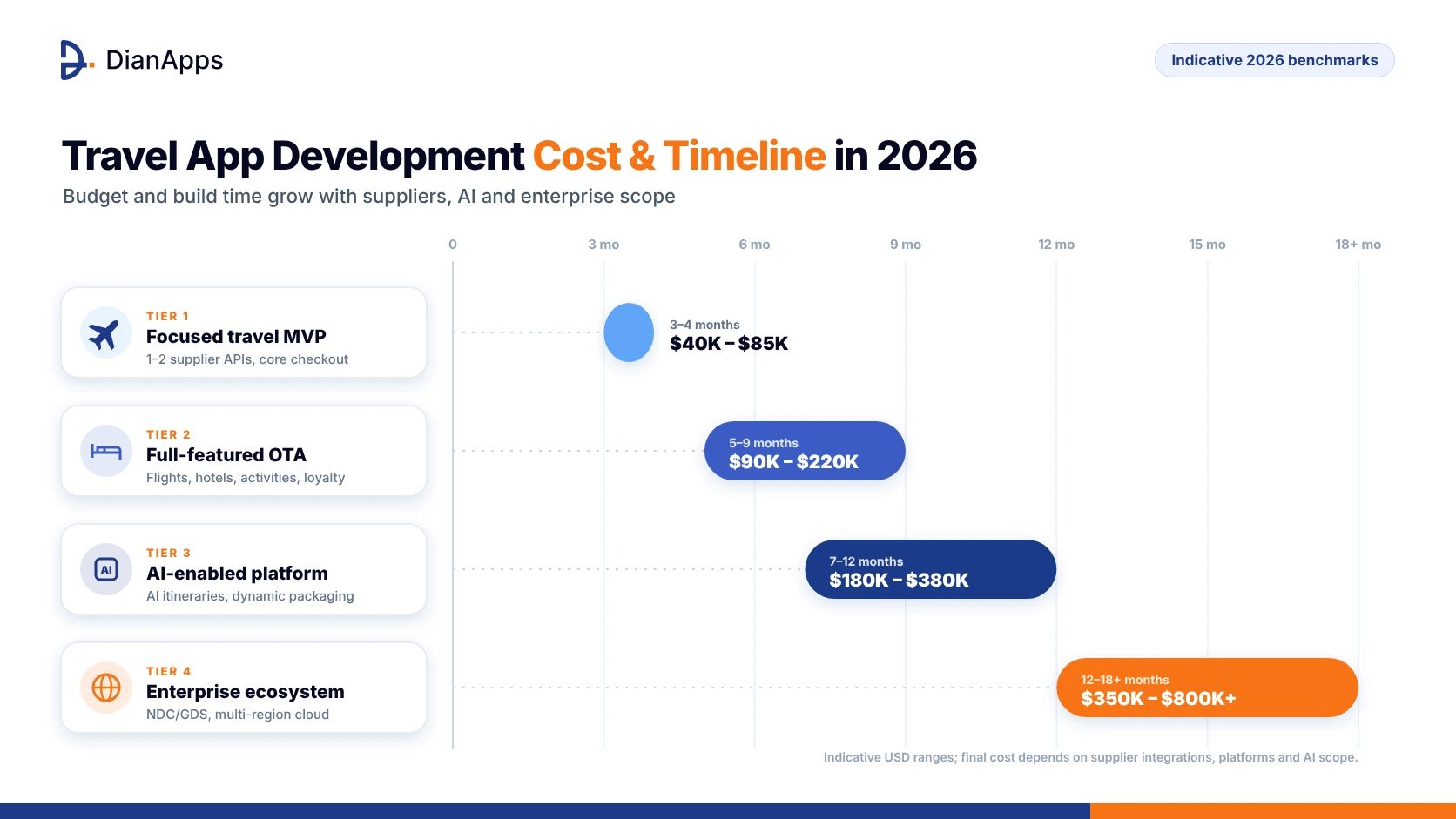
Travel software budgets depend on the number of supplier integrations, target platforms (iOS, Android, Web), compliance requirements, and AI scope. The plain-text table below outlines indicative investment ranges for planning your 2026 roadmap.
| App Tier | Typical Scope | Estimated Timeline | Indicative Budget Range (USD) |
|---|---|---|---|
| Tier 1: Focused Travel MVP | Single-vertical booking or itinerary app, 1–2 supplier APIs, core checkout, iOS/Android | 3–4 months | $40,000 – $85,000 |
| Tier 2: Full-Featured OTA / Marketplace | Multi-supplier flights/hotels/activities, GDS or aggregator APIs, loyalty, multi-currency payments | 5–9 months | $90,000 – $220,000 |
| Tier 3: AI-Enabled Travel Platform | Custom booking engine plus AI itinerary planning, dynamic packaging, personalized search, CRM sync | 7–12 months | $180,000 – $380,000 |
| Tier 4: Enterprise Travel Ecosystem | Legacy reservation modernization, direct NDC/GDS connections, multi-region cloud, high-availability SLA | 12–18+ months | $350,000 – $800,000+ |
Look beyond initial launch costs when comparing vendor proposals. Three-year Total Cost of Ownership (TCO) is heavily shaped by ongoing OS updates, supplier API schema changes, and QA maintenance. For consumer travel brands weighing mobile architecture choices, comparing Flutter and native app maintenance costs clarifies how a unified codebase reduces recurring engineering overhead. Likewise, if your roadmap includes custom AI trip planners, LLM-powered support agents, or predictive pricing models, budgeting for complex AI products as a transparent line item, covering inference costs, evaluation pipelines, and human-in-the-loop guardrails, prevents mid-project budget surprises.
How to Choose the Best Travel App Development Company for Your Business
Before signing a Statement of Work (SOW), run your top two or three shortlisted vendors through five concrete verification checks:
- Ask for live supplier-integration specifics: Request an architectural walkthrough of how the team handled GDS rate-caching, booking confirmation timeouts, or partial cancellations in production, not just a list of API logos.
- Verify code ownership and handover terms: Confirm that you retain 100% intellectual property rights to all custom source code, cloud infrastructure scripts, and design systems from day one.
- Test their discovery discipline: The best travel app development company will challenge unclear requirements, map edge cases (refund rules, fare expirations, timezone shifts), and deliver a clickable prototype plus technical architecture blueprint before writing production code.
- Match vendor scale to your business model: A tour operator needing rapid back-office automation has very different needs from a funded travel startup building a consumer super-app or an airline modernizing a legacy booking engine.
- Check post-launch SLA and DevOps maturity: Ensure the team ships automated regression tests, CI/CD pipelines, real-time crash monitoring, and clear peak-season support commitments.
 0 comments










Your email address will not be published. Required fields are marked *