













 0 comments





Key Takeaways
- Maintaining separate Swift and Kotlin codebases almost always costs more over three years than maintaining a unified Flutter app.
- Annual mobile app maintenance typically consumes 15% to 20% of your original build budget regardless of the framework you choose.
- Flutter cuts UI bug fixing and OS compatibility testing time nearly in half because one team ships fixes simultaneously.
- Native development still wins financially when an app relies heavily on bleeding edge hardware APIs or custom AR engines.
- Hidden plugin forks, Xcode runner upgrades, and CI build minutes must be factored into realistic multi year mobile TCO calculations.
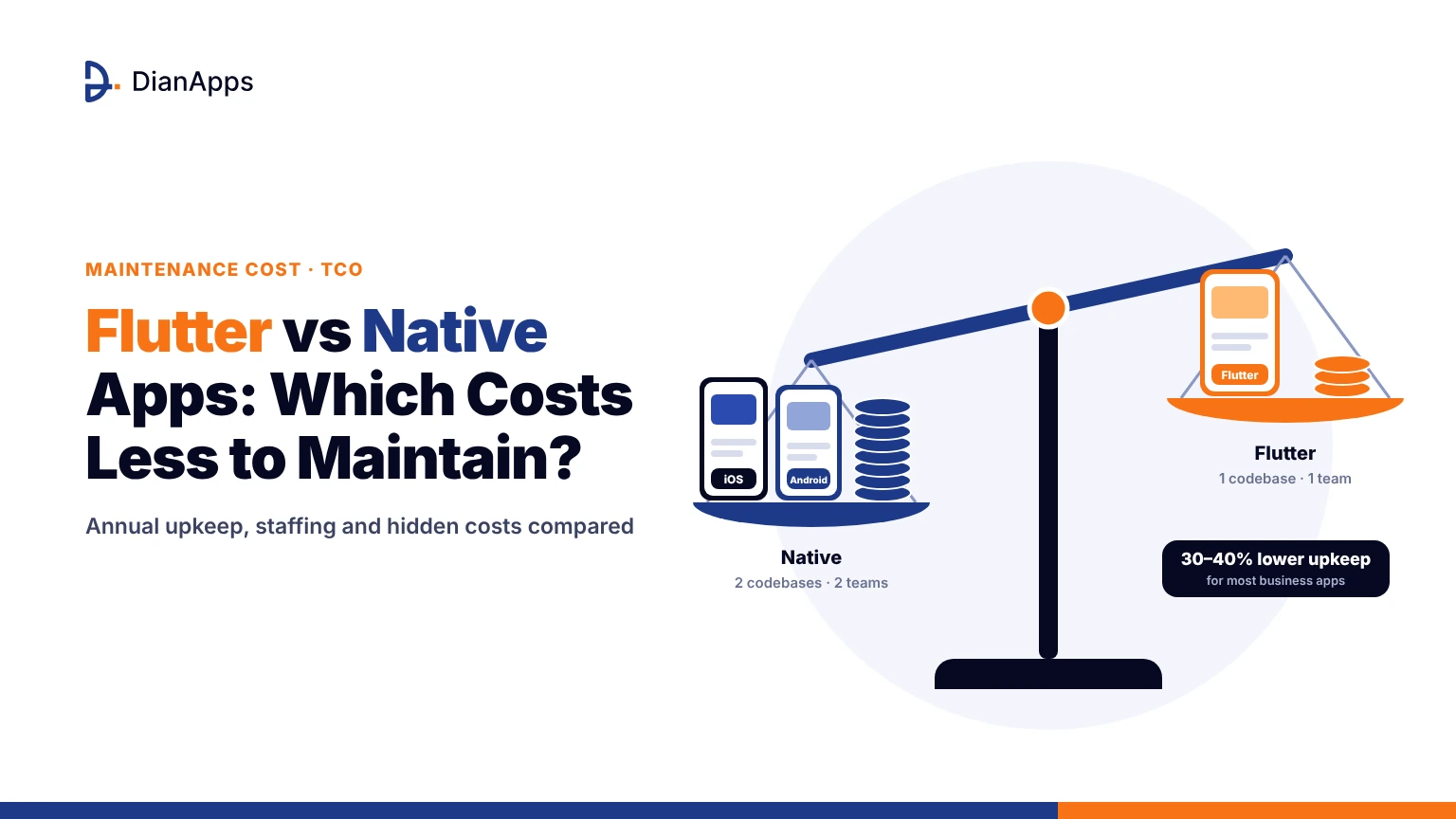
Quick Answer: Flutter costs roughly 30% to 40% less to maintain annually than separate native iOS and Android apps for most business products. One shared codebase cuts duplicate bug fixes, regression testing, and OS update work, though hardware heavy apps can still favor native builds.
Launching a mobile app feels like crossing the finish line until the first iOS and Android operating system updates arrive six months later and break your layout or payment SDK. That ongoing reality makes Flutter vs native app maintenance cost one of the smartest financial questions a product leader can ask before committing to a multi year roadmap. Industry benchmarks cited by Appinventiv show that app maintenance routinely absorbs 15% to 20% of initial development costs every single year. Whether you’re planning a new build or reviewing Mobile App Development Services for an existing product, understanding where maintenance dollars actually go helps you protect your runway.
Why App Maintenance Costs Outgrow Initial Build Budgets
Most founders obsess over the initial launch invoice while underestimating how much engineering time goes into keeping an active mobile app healthy over thirty six months. Every new phone model, privacy policy update, and third party library deprecation creates mandatory work even when you aren’t adding features.
- Apple and Google ship annual operating system releases that change background permissions, notification rules, and safe area insets.
- Payment gateways, analytics tools, and social login SDKs deprecate older endpoints every twelve to eighteen months.
- User expectations shift constantly, forcing teams to refine onboarding, accessibility labels, and dark mode contrast.
Over a three year product lifecycle, cumulative upkeep routinely exceeds the original build price by fifty percent or more. Planning for that recurring curve upfront prevents awkward budget freezes later.
Is Flutter Cheaper to Maintain Than Native Apps?
For standard consumer, SaaS, and ecommerce products, Flutter is noticeably cheaper to maintain because you’re paying one engineering squad to patch bugs and update dependencies instead of two separate platform teams. Every feature tweak or design refresh happens once in Dart rather than twice in Swift and Kotlin.
- Shared UI components mean visual regressions get fixed in one pull request for both app stores.
- Single codebase QA cycles require fewer manual test hours before each monthly release train.
- Unified dependency management reduces the friction of keeping analytics, crash reporting, and auth libraries current.
Teams comparing iOS vs Android vs cross platform development quickly notice that staffing two specialized native teams doubles coordination overhead too. Even small copy changes take twice as many code reviews when two repositories are involved.
How Much Does App Maintenance Cost Per Year?
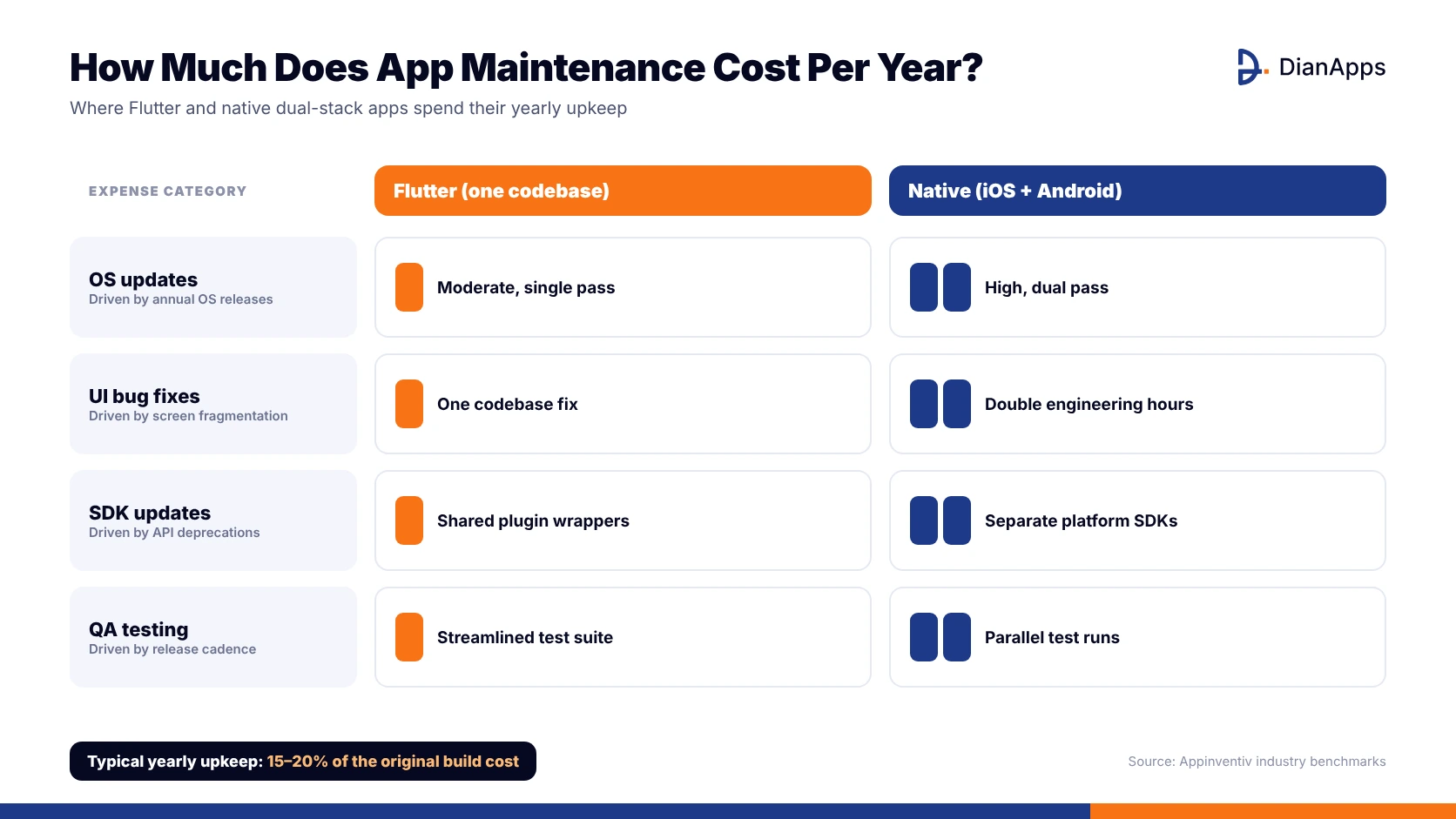
Real world app maintenance cost isn’t just server hosting renewals, because mobile operating systems evolve constantly and third party SDKs deprecate endpoints every quarter. Planning for these recurring expenses prevents unpleasant surprises before peak seasons.
| Expense Category | Flutter Annual Cost | Native Dual Stack | Primary Cost Driver |
|---|---|---|---|
| OS updates | Moderate single pass | High dual pass | Annual OS releases |
| UI bug fixes | Single codebase fix | Double engineering hours | Screen fragmentation |
| SDK updates | Shared plugin wrappers | Separate platform SDKs | API deprecations |
| QA testing | Streamlined suite | Parallel test runs | Release cadence |
Over three years, native app development cost compounds through duplicated labor whenever new features need long term support.
Cut Your Annual Maintenance Spend
Talk with our engineers about lowering your long term mobile TCO safely.
Three Year Total Cost of Ownership Breakdown
Looking strictly at year one hides the compounding effect of parallel engineering squads on a growing product roadmap. When you model total cost of ownership mobile app leaders pay across thirty six months, staffing structure outweighs every other line item.
- A dual native team typically needs at least one dedicated iOS engineer and one dedicated Android engineer on continuous retainer.
- A unified Flutter team handles routine maintenance, dependency upgrades, and minor feature iterations with a single cross platform developer.
- Shared automated widget tests replace two separate native UI test suites that would otherwise require constant selector repairs.
Even after factoring in occasional native bridge tickets, a lean Flutter squad frees up tens of thousands of dollars annually that can fund growth experiments instead.
Does One Codebase Really Halve Maintenance Costs?
Claiming that a single codebase cuts maintenance bills by an exact 50% sounds neat on a sales slide, though real engineering projects rarely work out that cleanly. You still have to maintain store listings, test on physical iOS and Android hardware, and occasionally write native bridges.
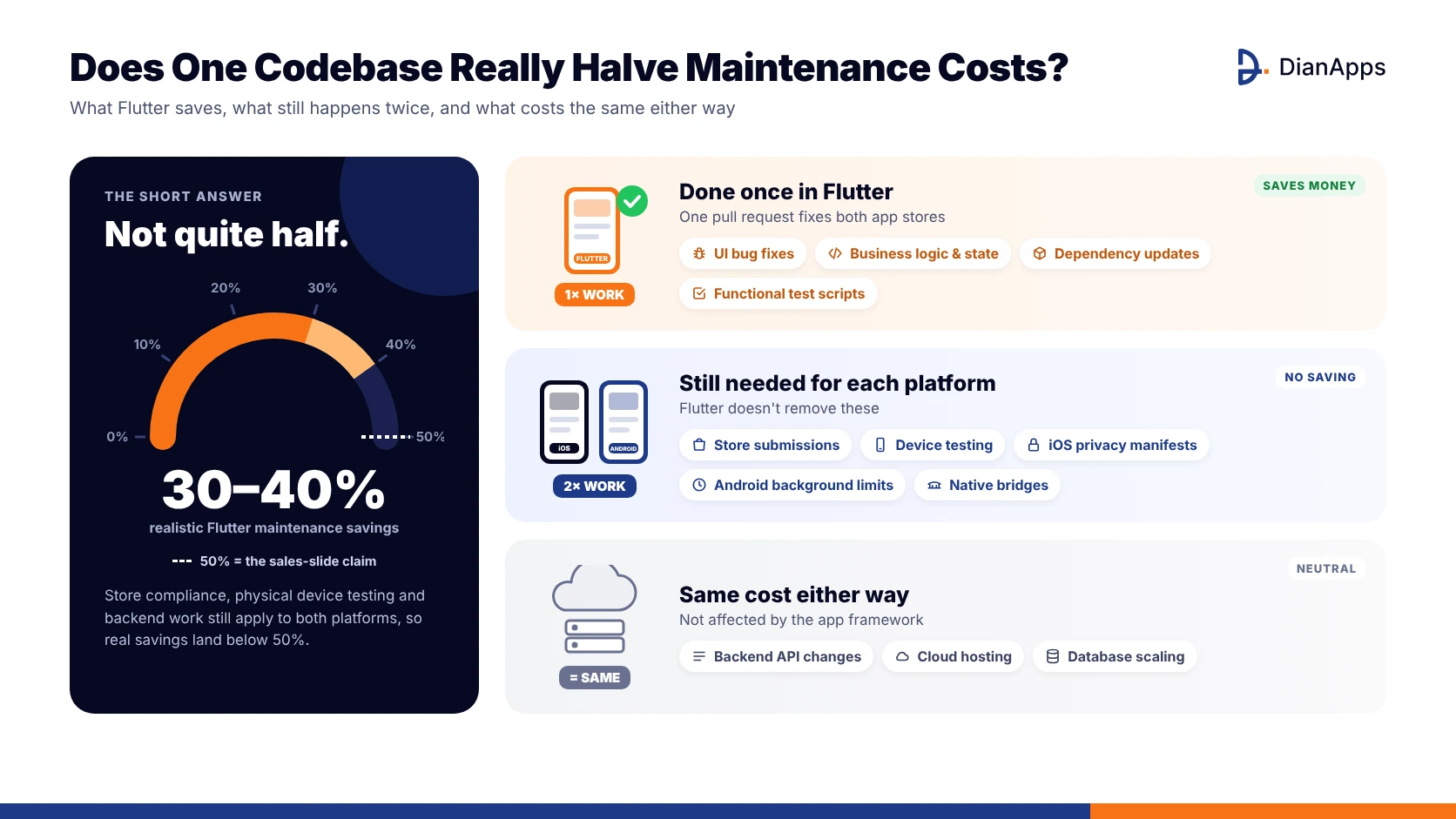
- Backend API changes, cloud hosting, and database scaling cost the exact same under both approaches.
- App Store and Play Store review compliance still requires separate release submissions and screenshot updates.
- Platform specific permissions like iOS privacy manifests or Android background limits still demand native attention.
Even with those shared tasks, realistic Flutter app maintenance cost savings still land around 30% to 40% compared to running dual native teams. That saved budget usually funds two or three extra product features every year.
OS Upgrade Cycles: iOS and Android Compatibility Work
Every autumn, Apple releases a major iOS update alongside new Xcode build requirements, while Google enforces updated Android target API levels on the Play Store. Missing those deadlines blocks your team from shipping urgent hotfixes until compatibility patches pass store review.
- Native teams must audit SwiftUI or UIKit deprecations separately from Jetpack Compose and Gradle plugin changes.
- Flutter teams benefit from Google’s core framework team updating Material and Cupertino widgets across major OS releases centrally.
- Platform channels for camera, Bluetooth, or local notifications still require native testing on beta OS builds every summer.
Running one unified upgrade sprint in Flutter keeps compliance predictable without pulling two separate platform squads off customer facing product work.
Bug Fixing, Crash Triage, and QA Testing Hours
Production crashes rarely wait politely for quiet weeks, and reproducing layout glitches across dozens of Android screen sizes drains QA budgets fast. How quickly your team diagnoses and patches a live regression directly affects app store ratings and retention.
- Native apps often suffer platform specific state bugs where Swift logic behaves slightly differently from Kotlin logic on edge inputs.
- Flutter keeps business logic, API parsing, and state transitions identical across both platforms inside one Dart repository.
- QA engineers still verify physical iOS and Android builds, yet functional test scripts run against shared UI behavior cleanly.
Cutting duplicate bug triage in half gives small product teams breathing room to ship proactive polish instead of constantly fighting fires.
Dependency Management and Third Party SDK Churn
Modern mobile apps rely heavily on external packages for crash analytics, deep linking, in app purchases, and customer support chat. Whenever a vendor updates its native SDK, someone has to bump versions, fix breaking method signatures, and retest checkout flows.
- Dual native apps require updating separate CocoaPods or Swift packages alongside separate Gradle dependencies on different schedules.
- Flutter apps wrap both platforms inside unified pubspec dependencies that keep analytics and auth versions aligned automatically.
- Poorly maintained community Flutter plugins can create friction if an upstream vendor releases breaking native changes first.
Sticking with official vendor plugins or battle tested packages keeps dependency maintenance calm across both ecosystems.
Team Staffing, Hiring, and Knowledge Transfer Costs
Software maintenance budgets are overwhelmingly labor budgets, so how easily you can hire, cross train, and retain mobile developers shapes long term costs dramatically. Relying on siloed specialists creates expensive bottlenecks whenever someone leaves or takes extended leave.
- Losing your sole iOS developer stalls Apple releases completely until a replacement learns your legacy Swift codebase.
- Cross training engineers on Dart lets every mobile developer pick up tickets affecting both iOS and Android users seamlessly.
- Code reviews move faster because every teammate reads the same architecture, state management, and testing patterns daily.
When Is Native Development Worth the Extra Cost?
Choosing cross platform vs native cost savings shouldn’t blind you to technical edge cases where native Swift and Kotlin genuinely pay for themselves over time. Certain hardware heavy products push cross platform bridges hard enough that maintaining custom wrappers erases savings.
- Apps built around real time 3D rendering, heavy ARKit scenes, or low latency audio run cleaner natively.
- Products requiring day one support for brand new hardware sensors benefit from direct native SDKs.
- Large orgs with separate platform squads sometimes prefer native isolation to avoid cross team bottlenecks.
Understanding why startups choose Flutter comes down to matching the stack to actual business needs.
What Hidden Costs Come With Flutter?
Every framework carries subtle maintenance expenses that teams only discover after shipping version one to real users. Keeping an eye on Flutter’s ecosystem quirks helps your engineering manager budget accurately from the start.
- Abandoned community packages sometimes force your developers to fork and maintain native plugin code themselves.
- Major Flutter SDK upgrades can require refactoring deprecated widget APIs across older screens.
- Finding senior engineers who debug both Dart state management and tricky Xcode build failures takes careful hiring.
Partnering with an experienced Flutter app development company shields you from unreliable third party plugins and messy upgrade cycles. Setting up clean architecture early on keeps your future app maintenance predictable and calm for the entire team.
What Hidden Costs Come With Native Development?
Native advocates rightly praise direct hardware access, yet dual native repositories introduce quiet organizational taxes that rarely show up on early spreadsheets. Over time, small divergences between your iOS and Android apps create expensive cleanup projects.
- Business logic subtle differences lead to mismatched price rounding, validation rules, or offline sync bugs between platforms.
- Duplicate CI/CD runners, macOS build agents, and separate automated test suites inflate monthly DevOps bills noticeably.
- Feature parity delays force customer support teams to maintain separate help center instructions for iPhone and Android users.
Keeping two independent codebases aligned requires strict product management discipline every single sprint, which adds real salary cost over multiple years.
CI/CD Infrastructure and Release Automation Expenses
Every commit that triggers automated builds, unit tests, and store uploads consumes cloud compute minutes, and macOS runners cost significantly more than Linux containers. How you structure your mobile repositories affects monthly DevOps bills directly.
- Dual native teams maintain two distinct Fastlane configurations, signing workflows, and release checklists for every hotfix.
- Flutter teams consolidate build scripts into unified pipelines that generate both IPA and APK artifacts from one tagged commit.
- Automated code push tools or Shorebird patches let Flutter teams ship urgent Dart bug fixes without waiting days for store review.
Streamlining release automation saves hours of senior engineer babysitting every single month throughout the life of the app.
Monitoring Crash Free Sessions and User Retention
Maintenance costs drop sharply when engineering teams fix silent crashes before users notice sluggish screens or broken checkouts. Proactive observability tools turn unpredictable emergency hotfixes into calm, scheduled sprint maintenance.
- Track crash free session rates above ninety nine point eight percent across both iOS and Android store builds.
- Monitor slow frame rendering and cold start times on older mid range Android devices every release cycle.
- Group recurring network timeout errors automatically inside Sentry so backend and mobile teams triage root causes together.
Consistent telemetry keeps small regressions from snowballing into expensive emergency weekends and protects organic app store rankings year round.
Keep Your Mobile Product Lean in 2027
Partner with DianApps to build or maintain a high performing app with predictable annual costs.
Budgeting Maintenance for Scaling User Traffic
Growing from five thousand active users to five hundred thousand shifts maintenance spending away from UI fixes toward cloud resilience and database tuning. Planning for traffic growth prevents sudden infrastructure bills from surprising leadership.
- Optimize local API caching and image compression inside the mobile app to cut redundant server bandwidth charges.
- Schedule quarterly database indexing and query profiling sprints before seasonal shopping spikes hit production APIs.
- Review push notification delivery rates and background sync intervals so battery drain never triggers uninstalls.
Aligning mobile updates with backend capacity planning keeps annual upkeep predictable even as active user counts double.
Practical Ways to Lower Mobile Maintenance Costs Today
Regardless of whether your current product runs on Swift, Kotlin, or Flutter, disciplined engineering habits can trim twenty percent off annual upkeep quickly. Cutting waste starts with eliminating brittle code and manual testing steps.
- Replace flaky manual smoke testing checklists with automated end to end tests covering login, search, and checkout.
- Audit third party libraries twice a year and delete unused analytics or UI packages before they break builds.
- Standardize error tracking with Sentry or Crashlytics so engineers fix silent crashes before users leave bad reviews.
Investing a single cleanup sprint every quarter prevents technical debt from compounding into an expensive emergency rewrite two years down the road.
Final Thoughts
Flutter wins the maintenance cost comparison for the vast majority of commercial mobile apps in 2027 because eliminating duplicate UI work saves real engineering hours every single week. Unless your product lives on bleeding edge device hardware, consolidating into one clean codebase gives you faster releases, simpler staffing, and a healthier three year budget.
 0 comments









Your email address will not be published. Required fields are marked *