















 0 comments





Key Takeaways:
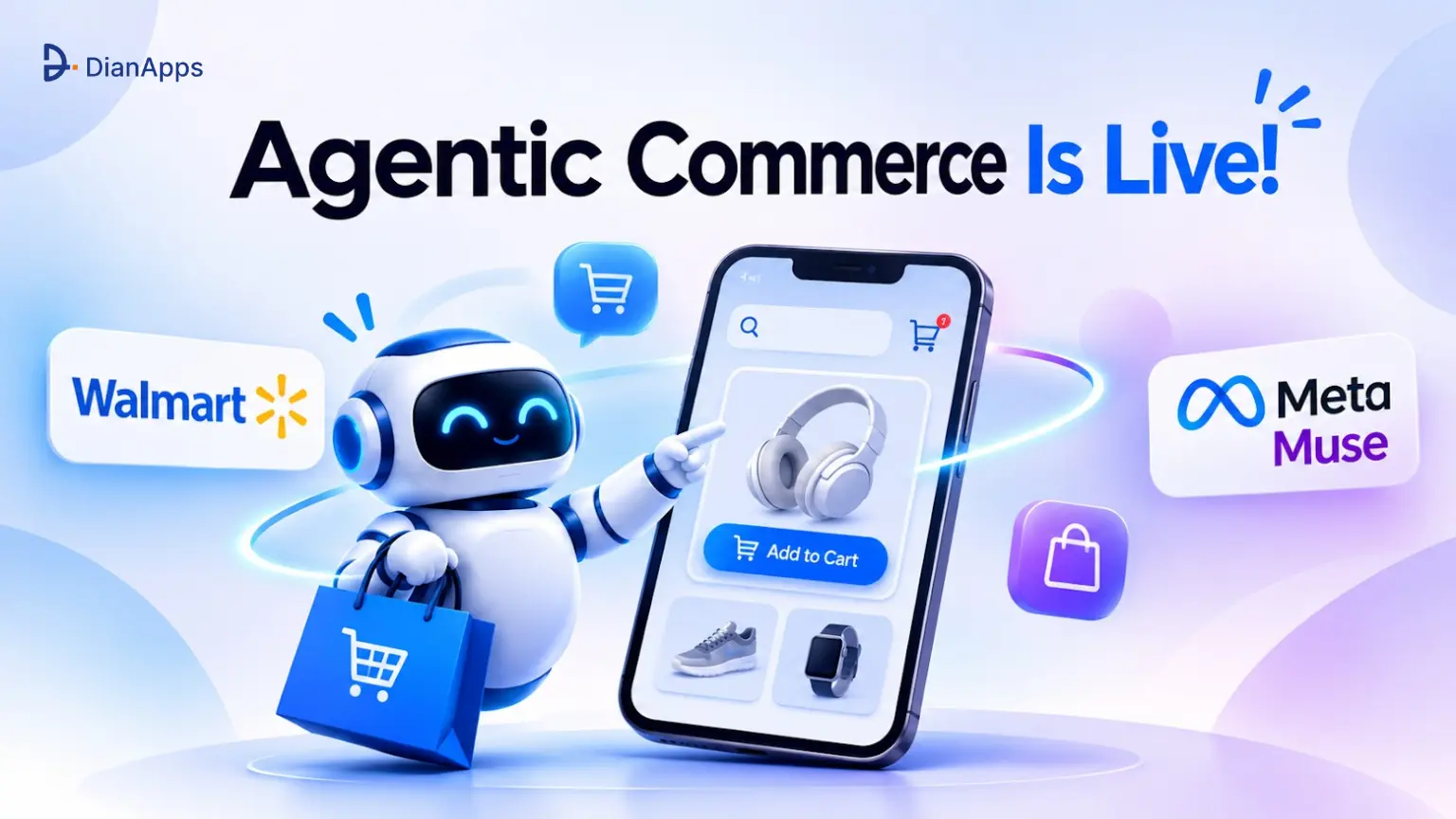
- Walmart partnered with Meta Muse on November 24, 2026 so shoppers discover Black Friday deals, build carts, and check out in chat.
- Walmart Agent Gateway uses MCP feeds, scoped OAuth tokens, and Agent Profiles instead of brittle HTML scraping or browser cookies.
- Shoppers set per-checkout spending limits and confirm every order before payment capture while keeping Walmart+ benefits and return policies.
- Amazon blocked third-party agents like Meta Muse in September 2026, contrasting sharply with Walmart’s open, permissioned gateway strategy.
- Retail and D2C teams need machine-readable inventory APIs, server-enforced spend caps, and post-purchase mobile app experiences.
Quick Answer: The Walmart Agent Gateway is a permissioned, MCP-based API layer that lets external AI assistants such as Meta Muse search structured inventory, assemble carts, and initiate checkout on a shopper’s behalf. Dedicated Agent Profiles, scoped OAuth authentication, per-checkout spending caps, and explicit human confirmation before payment capture keep buyers in control without sharing broader purchase history.
For fifteen years, mobile commerce has followed one predictable pattern where a shopper opens a retail app, scrolls through product carousels, taps an item, and completes checkout inside screens controlled by the brand. Everything from push notifications to one-tap payment buttons assumes a human is actively looking at the retailer’s interface.
On November 24, 2026, during the Black Friday run-up, Walmart’s Black Friday announcement broke that pattern at scale by letting shoppers discover deals, compare prices, and check out directly inside Meta Muse. Instead of scraping webpages, Muse connects to the Walmart Agent Gateway, signaling why retail teams investing in AI agent development services must rethink backend architecture and mobile app strategy.
What Is Agentic Gateway Commerce and Why Did Walmart Launch It?
When shoppers start product searches inside personal AI agents rather than opening individual retail apps, retailers face a distribution shift. Meta Muse has already passed 10 million installs, giving Walmart an immediate conversational channel during peak holiday demand.
Walmart originally introduced the Agent Gateway in October 2026 as an invitation-only beta before opening it to Meta Muse for Black Friday. Rather than blocking automated traffic outright, Walmart built a permissioned interface that captures agent-driven demand while enforcing strict identity, spending, and return-policy guardrails.
Traditional Mobile E-Commerce vs. Agentic Gateway Commerce
In traditional mobile shopping, a human drives every search and tap inside the retailer’s native interface. In agentic gateway commerce, an external assistant handles discovery and cart assembly through structured APIs while the shopper supplies intent, budget limits, and final purchase confirmation.
| Dimension | Traditional Mobile E-Commerce | Agentic Gateway Commerce |
|---|---|---|
| Product discovery | Search bar, category browsing, ads, and recommendations inside the app | Natural-language prompt to an assistant querying structured SKU and inventory feeds |
| Authentication | Standard session login, browser cookies, and saved device tokens | Scoped OAuth tokens bound to a dedicated Agent Profile separate from browser cookies |
| Cart building | Shopper manually taps items and variants into the cart | Assistant assembles the basket while the shopper reviews line items in chat |
| Bot and fraud defense | Traffic filtering tries to separate humans from automated scripts | Identity shifts to verified agent platforms, token scopes, spend caps, and confirmation gates |
| Attribution and loyalty | First-party analytics and loyalty IDs attached directly to app sessions | Retains Walmart+ benefits and audit logs while traffic originates on the agent platform |
| Checkout UX | Retailer-controlled payment screens and upsell modules | In-conversation checkout using saved payment methods with human confirmation before capture |
Inside the Walmart Agent Gateway and Meta Muse Architecture
Meta Muse does not parse storefront HTML or click buttons in a hidden browser when using the official integration. It communicates directly with the Walmart Agent Gateway, an MCP-based backend layer coordinated alongside multi-agent frameworks to enforce authentication, budget limits, and checkout confirmation before any funds move.
Step 1: Discovery through structured SKU feeds
A shopper asks Muse for a specific item, such as a Black Friday television deal under $500 or holiday gifts for family members. Muse queries the Walmart Agent Gateway, which returns live SKU pricing, variants, and delivery eligibility directly from structured catalog feeds.
Using structured feeds eliminates the fragile breakage and stale inventory common with HTML scraping, ensuring the assistant reasons over accurate stock levels without accessing unrelated shopper history.
Step 2: Scoped OAuth and the Agent Profile
When a shopper adds their first item to a cart, Muse redirects them to authenticate into their Walmart account through an OAuth flow separate from normal browser cookies. Inside that account view, the buyer configures a dedicated Agent Profile with per-checkout spending limits, category rules, and approval preferences.
Because OAuth tokens remain scoped to that profile, the assistant receives permission only for bounded shopping actions rather than unrestricted access to the customer’s account. Shoppers can also inspect agent orders or delete the Agent Profile at any time to revoke tokens immediately.
Step 3: Spending caps and human confirmation gates
Walmart cites $50, $100, and $200 as example spending thresholds shoppers can set inside an Agent Profile. Even when an item falls under the configured cap, the architecture requires an explicit human confirmation gate before payment capture occurs.
The shopper reviews every line item inside the Muse conversation and completes payment using cards already saved in their Walmart account, keeping payment credentials inside Walmart’s vault.
Step 4: Post-purchase protections and audit logs
Orders placed through the Walmart Agent Gateway retain Everyday Low Prices, Walmart+ free delivery benefits, purchase audit logs, and standard Walmart return policies. Because Walmart remains the merchant of record, returns and customer support follow existing retail workflows without forcing buyers through third-party dispute desks.
Public launch notes do not disclose Walmart’s internal fraud-scoring thresholds, rate limits, or commercial revenue-sharing terms with Meta, so engineering teams designing comparable gateways should address those terms explicitly in partner contracts.
Step 5: Order attribution, loyalty sync, and merchant-of-record handling
Every transaction initiated through an external assistant still needs clean attribution back to the originating agent platform alongside seamless synchronization into the customer’s native account. Recording the agent identifier inside order metadata lets finance and merchandising teams separate conversational demand from organic app traffic without breaking loyalty point accrual.
Keeping the retailer as merchant of record also simplifies tax calculation, regional shipping restrictions, and warranty fulfillment because existing ERP and warehouse pipelines process agent orders identically to mobile app orders.
Build Permissioned MCP Commerce Gateways Without Losing Control
Talk with our engineering team to design scoped OAuth Agent Profiles, structured catalog APIs, and safe checkout gates for your retail platform.
Inside an MCP Commerce Gateway: Schemas, Scopes, and Failure Modes
Building a production commerce gateway requires more than wrapping existing REST endpoints in natural-language descriptions because autonomous clients behave differently from browser frontends.
Structured SKU, variant, and fulfillment-node schemas
AI assistants make poor assumptions whenever product attributes arrive as unstructured prose inside marketing descriptions. Gateway responses should expose normalized fields for SKU ID, parent product ID, variant attributes such as size or color, unit price, promotional price, and fulfillment eligibility by postal code.
Returning explicit delivery windows and store-pickup availability prevents the assistant from assembling mixed carts that split unexpectedly into multiple shipments or fail local pickup validation at checkout.
Scoped OAuth tokens, refresh lifecycles, and revocation hooks
Agent tokens should carry narrow OAuth scopes such as catalog:read, cart:write, and checkout:propose, leaving payment:capture gated behind an interactive confirmation step rather than silent background execution. Short-lived access tokens paired with revocable Agent Profile bindings ensure compromised or unwanted integrations stop immediately.
Exposing a dedicated profile management page inside the customer’s account settings lets shoppers audit every authorized assistant, adjust spending thresholds, and revoke access without resetting their main password.
Idempotency keys, price-drift checks, and timeout handling
Network retries from external agent orchestrators can accidentally submit duplicate cart additions or checkout proposals unless every mutating endpoint enforces strict idempotency keys. Generating deterministic request IDs per checkout session prevents double charges during peak events like Black Friday.
Gateways should also attach short-lived price and inventory quote tokens to every cart line item. If a flash-sale price expires or stock drops between basket assembly and human confirmation, the server rejects capture and forces the assistant to present an updated quote.
Open Gateway vs. Walled Garden: Walmart vs. Amazon’s AI Shopping Strategy
Walmart’s decision to welcome external assistants contrasts directly with Amazon, which blocked Meta Muse from shopping on its site in September 2026 less than two weeks after Muse launched, citing customer security and shopping experience concerns. That split mirrors broader enterprise choices between standalone vs platform agents when balancing reach against surface control.
| Strategic Dimension | Walmart (Open Gateway) | Amazon (Walled Garden) | Mid-Size / D2C Brand |
|---|---|---|---|
| Third-party agent access | Allowed via permissioned Walmart Agent Gateway and OAuth | Blocks external shopping bots to keep journeys on Amazon properties | Often blocks bots by default; risks invisibility in assistant searches |
| Ad and upsell control | Trades some storefront ad exposure for conversational reach | Preserves product-page ad inventory, sponsored slots, and upsells | Limited ad network; depends heavily on discovery and conversion |
| Customer data ownership | Retains order logs and payments without sharing broader history | Retains full browsing, search, and session telemetry inside Amazon | Risks losing top-of-funnel browsing data if relying solely on marketplaces |
| Checkout friction | In-chat confirmation using saved Walmart payment methods | Native one-click checkout inside Amazon app and web | Redirected web checkouts often drop conversion compared to native chat |
| Ecosystem extensibility | Plans to open Agent Gateway to additional AI platforms and developers | Focuses on proprietary internal shopping assistants | Can adopt standard MCP endpoints or list through open retail gateways |
Large marketplaces with massive retail-media networks may rationally defend their product pages, whereas mid-size retailers and D2C brands without that gravity risk losing visibility if assistants cannot query their inventory.
How E-Commerce and Mobile App Teams Must Prepare for Agentic Commerce?
Preparing a commerce stack for external AI assistants requires making product catalogs machine-readable, isolating authorization, securing free-text fields, and shifting mobile app retention toward post-purchase value.
1. Expose structured MCP product and inventory APIs
Assistants need deterministic endpoints returning SKU identifiers, real-time stock by fulfillment node, variant options, shipping windows, and return terms. Exposing those endpoints cleanly via Model Context Protocol allows teams using lightweight agent SDKs to discover and integrate your catalog without fragile custom scrapers.
Prioritize inventory freshness and strict rate limiting from day one, because an agent that recommends an out-of-stock item erodes buyer trust faster than a slow webpage.
2. Build OAuth Agent Profiles with server-enforced caps
Never reuse standard human web sessions or browser cookies for third-party assistants. Issue scoped OAuth tokens tied to user-configurable Agent Profiles supporting per-checkout limits, daily caps, blocked categories such as gift cards or regulated goods, and one-click token revocation.
Every spending rule and category restriction must be validated on your checkout server rather than relying on prompt instructions inside the external assistant.
3. Shift the mobile app into a post-purchase and loyalty hub
When discovery and checkout happen inside conversational assistants, fewer customer sessions begin with catalog browsing. Mobile teams should redirect product investment toward order tracking, delivery rescheduling, instant returns, warranty registration, loyalty point redemption, and support.
Ensure every order placed through an external gateway syncs immediately into your native app with full context so buyers still have a compelling reason to keep the app installed.
4. Defend against prompt-injection cart manipulation
When an assistant reads product titles, seller descriptions, or customer reviews, untrusted catalog text becomes a potential prompt-injection vector aimed at bypassing budgets or sneaking accessories into a basket. Treat all catalog strings returned to agents as untrusted data by sanitizing and length-limiting text fields.
Validate every cart mutation server-side against the active Agent Profile, block unexpected price jumps between quote and capture, and log all agent actions for anomaly detection.
Agentic Checkout Security: Threat Model and Server-Side Guardrails
Opening commerce endpoints to autonomous assistants changes the security perimeter from stopping automated traffic to verifying authorized intent on every request.
Indirect prompt injection via third-party seller listings
In multi-vendor marketplaces, malicious sellers can embed hidden instructions inside product descriptions, specification tables, or Q&A text hoping an assistant reads them and swaps items or ignores budget constraints. Stripping markup, truncating long text fields, and returning structured attribute pairs instead of raw HTML reduces that attack surface.
Even if an external assistant gets tricked into proposing an unauthorized item or higher quantity, server-side Agent Profile checks catch the violation before checkout confirmation.
Rate limiting, bot verification, and inventory hoarding defense
Traditional web application firewalls block headless browsers by checking mouse movement and JavaScript execution, which fails when legitimate shoppers act through cloud-hosted AI assistants. Gateways must authenticate the calling platform using signed OAuth client credentials and mutual TLS or API keys rather than relying on browser heuristics.
Enforce separate rate limits per agent platform and per shopper profile, and expire unconfirmed agent carts quickly so automated browsing never locks up scarce promotional inventory during holiday sales.
Audit logging, anomaly alerts, and liability boundaries
Every catalog query, cart mutation, confirmation prompt, and payment capture initiated through an Agent Profile should write an immutable audit record linked to the OAuth client ID and user consent timestamp. Detailed logs give fraud teams clear evidence when investigating disputed transactions or unexpected spending spikes.
Retailers should also define explicit anomaly rules that freeze an Agent Profile temporarily if an assistant attempts repeated out-of-category purchases, rapid price overrides, or unusual shipping-address changes.
What Retail Engineering Teams Should Test Before Launching an MCP Gateway?
Before opening an MCP commerce gateway to external AI platforms in production, whether integrating external assistants or learning how to build OpenAI AI agents for your own storefront, engineering teams should validate four operational scenarios in staging.
- Stale inventory race conditions: Simulate concurrent checkouts on low-stock SKUs to confirm the gateway rejects stale quotes cleanly before payment authorization.
- Server-side spend-cap enforcement: Attempt API cart mutations exceeding an Agent Profile’s $50 or $100 threshold to verify the server blocks charges regardless of agent prompts.
- Prompt-injection payload sanitization: Inject adversarial instructions into test product descriptions and review fields to confirm free-text sanitization prevents unauthorized cart additions.
- Order-sync and return parity: Complete a staging checkout and verify loyalty credits, returns, and app order tracking match standard orders.
Prepare Your Retail App and Backend for Agentic Checkout
Share your commerce stack and mobile roadmap with our engineers to build secure MCP gateways, Agent Profiles, and post-purchase app experiences.
Mobile App UX Patterns for Agentic Shopping
Redesigning a retail mobile app for agent-assisted shoppers requires rethinking navigation, universal links, and notification triggers around post-purchase utility rather than endless catalog feeds.
Deep-linking from chat carts back to native order views
Once a shopper confirms an order inside Meta Muse, the confirmation receipt should include signed universal links that open directly inside the retailer’s native iOS or Android order-detail screen. Smooth handoffs let customers adjust delivery instructions, schedule curbside pickup, or initiate returns without hunting through email receipts.
Engineering teams should ensure those deep links resolve seamlessly even when the buyer originally authenticated through a separate OAuth Agent Profile flow rather than an active mobile app session.
Designing push notifications, loyalty wallets, and reorder triggers
When fewer sessions start on the home feed, promotional blast notifications lose effectiveness compared to high-utility transactional alerts. Retailers should prioritize real-time shipment updates, Agent Profile spending alerts, warranty reminders, and one-tap replenishment prompts grounded in past agent purchases.
Surfacing loyalty point balances and Agent Profile controls prominently on the app’s landing tab also gives frequent buyers a practical reason to open the native app every week.
Operational Governance: Handling Disputes, Refunds, and Multi-Agent Traffic
Scaling an open commerce gateway beyond a seasonal holiday launch requires clear operational playbooks for partial refunds, split shipments, and multi-agent conflict resolution.
Chargebacks, partial cancellations, and split-shipment edge cases
Agent-assembled baskets often mix shipping-eligible electronics with local store-pickup groceries, creating split fulfillments or partial out-of-stock cancellations after confirmation. Gateways must return clear line-item status updates so the external assistant communicates partial refunds accurately without confusing the buyer.
Keeping the retailer as merchant of record alongside immutable Agent Profile approval logs gives dispute teams clear proof of customer consent whenever a cardholder questions an agent-initiated charge.
Multi-agent conflicts and concurrent cart updates
When shoppers connect multiple assistants to the same retail account over time, concurrent cart mutations from different OAuth clients can overwrite promotional items or distort active shipping thresholds. Assigning each Agent Profile an isolated cart context or explicit optimistic locking version prevents silent collisions between assistants.
Multi-Platform Future: Preparing Beyond Meta Muse
Walmart has already indicated plans to open its Agent Gateway beyond Meta Muse to additional AI platforms and third-party developers, making multi-assistant readiness a core architectural priority.
Standardizing schemas for multiple AI assistants
Hardcoding response formatting for one assistant’s prompt conventions creates brittle technical debt as competing assistants adopt different tool-calling schemas. Designing clean, vendor-neutral JSON schemas and standard MCP tool definitions lets a single gateway serve Meta Muse alongside future voice, desktop, and enterprise procurement agents.
Versioning contracts without breaking live checkouts
Publishing explicit API version headers and deprecating catalog fields gradually protects active seasonal checkouts whenever external agent platforms update their own orchestration pipelines.
Measuring ROI From an Agentic Commerce Pilot
Evaluating an agentic gateway pilot during peak retail events requires tracking incremental conversion, operational cost, and post-purchase retention to measure AI agent ROI accurately.
Conversion, average order value, and attribution baselines
Compare conversion rates, average order value, and cart-abandonment rates on agent-originated orders against standard mobile web and native app baselines over the same promotional window. Segmenting new-to-brand buyers from repeat loyalty members clarifies whether external assistants bring incremental reach or simply shift existing checkout volume.
Track category mix as well, because conversational queries often favor replenishment staples and clear spec comparisons while visual browsing still drives higher-margin impulse discovery.
Infrastructure unit cost, return parity, and retention impact
Monitor API compute cost, inventory-sync latency, and payment-gateway fees per completed agent order alongside return rates and customer-support ticket volume. If conversational checkouts produce higher return rates due to misunderstood product dimensions or missing variant details, tightening structured schema fields directly improves net margin.
Measure 30-day and 60-day native app retention among shoppers who first checked out via an external assistant to confirm your post-purchase tracking and loyalty flows bring them back.
How DianApps Helps Retail and Mobile Brands Build Agent-Ready Commerce?
Becoming agent-ready requires coordinated backend APIs, scoped authorization, and mobile app redesigns centered on post-purchase loyalty. DianApps builds these end-to-end systems for retail and D2C teams.
- MCP commerce gateways: Our AI agent development services team builds catalog, inventory, and checkout gateways with scoped OAuth, spend caps, and confirmation gates.
- In-app AI shopping assistants: We create native conversational assistants grounded in your product catalog and return policies so you own the experience directly.
- Next-generation retail apps and security: Our AI development services practice redesigns iOS and Android apps around loyalty and tracking while auditing agent endpoints for prompt-injection and token-scope flaws.
Conclusion
Walmart’s Black Friday launch with Meta Muse marks a shift from browse-first mobile apps toward permissioned, API-driven agentic commerce. Separating discovery and basket assembly inside an external assistant from server-enforced Agent Profiles and human payment confirmation gives retailers a practical blueprint for capturing conversational demand safely.
Retail and D2C teams that expose clean MCP inventory feeds, enforce OAuth spend limits on the server, and strengthen post-purchase mobile app loyalty will be positioned to compete regardless of which assistant shoppers choose.
 0 comments










Your email address will not be published. Required fields are marked *