














 0 comments





Key Takeaways:
- Dreamforce passes typically range from $999 to $2,299, while group registration can offer a year-round lower-cost option.
- The realistic all-in cost is about $2,400-$5,000 for a U.S. domestic attendee, depending on travel and accommodation.
- Salesforce+ streams keynotes and selected sessions for free, making virtual attendance a practical choice for many people.
- In-person attendance is most valuable for networking, vendor meetings, major purchase evaluations, and business development.
- Dreamforce announcements can be roadmap items rather than immediately available features, so release notes should be checked before making plans.
Quick Answer: Dreamforce is worth attending if you need in-person networking, are evaluating major Salesforce purchases, or want direct access to vendors, partners, and customers. For simply learning about Salesforce’s latest announcements, attending may not justify the $2,400 to $5,000 total cost, since keynotes and selected sessions are available for free through Salesforce+.
Dreamforce is Salesforce’s annual conference, held every September at the Moscone Center (North, South, and West halls) located at 747 Howard Street in San Francisco, California. It’s the largest software industry event in the world, and it’s where Salesforce makes the announcements that shape the platform for the following year.
The question most people are actually asking isn’t what it is. It’s whether it’s worth the money, and the honest answer depends on your role, because the announcements reach you free either way.
By continuing, you’ll know the pricing cycle so you can plan for it properly, the real cost once travel is counted, and how to decide between attending, sending someone, or streaming it for nothing.
What Dreamforce Is
First held in 2003 at the Westin St. Francis with roughly 1,300 attendees, but by 2019 it had grown to over 171,000 registered attendees from 120 countries, plus around 16 million online viewers.
- It’s Four Events At Once: Product showcase, technical training, industry summit, and cultural event. Hands-on workshops run alongside the executive panels, partner demos, community meetups, and the Dreamfest benefit concert, which has already raised over $130 million for UCSF Benioff Children’s Hospitals.
Dreamforce is where Salesforce sets its direction. Agentforce launched at Dreamforce, and so did Einstein before it. If you want to know where the platform is heading, the main keynote is the most efficient hour of the year.
Dreamforce stays in San Francisco with Marc Benioff publicly committed to keeping it there, so the logistics don’t change year to year, which makes planning easier than for most conferences.
Dreamforce is Salesforce’s annual conference, bringing together product announcements, technical training, networking, partner activity, and more. If you’re new to the platform, our guide to what Salesforce is provides a broader introduction to the ecosystem.
The Pricing Cycle and When to Book
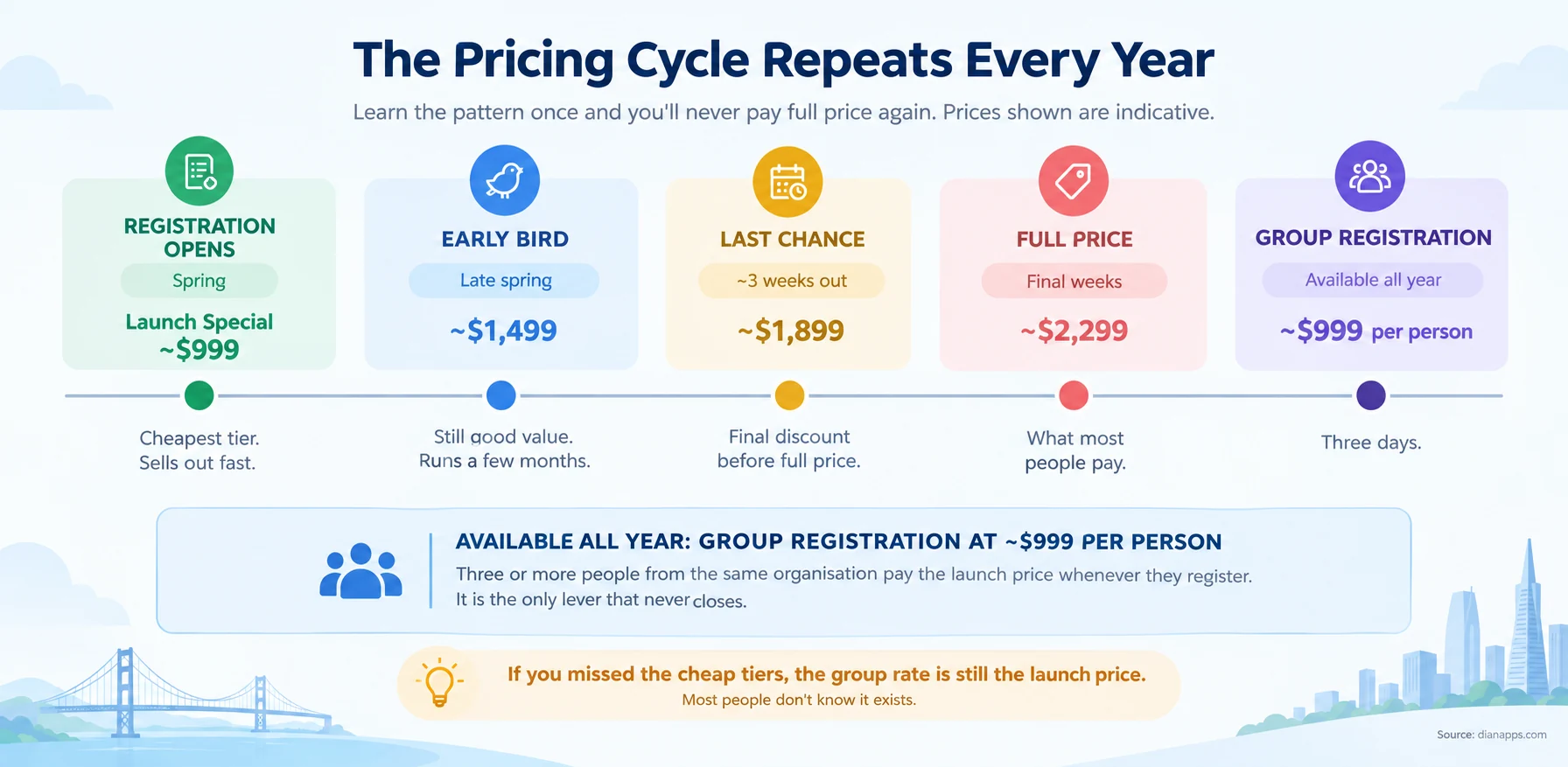
The pattern repeats every year, and knowing it is worth more than any single year’s prices.
Registration opens in spring with a Launch Special at around $999, and that tier sells out. Early Bird follows at roughly $1,499 and runs for a few months. Last Chance appears around three weeks before the event at approximately $1,899. After that it’s full price, typically around $2,299.
- Group Registration: Three or more people from the same organisation pay roughly $999 each, the launch price, whenever they register; it doesn’t close.
- That’s The Single Most Useful Thing On This Page: If your organisation is sending two people at full price, adding a third often costs less in total than sending two. Check the maths before you book anything.
- If You’re Planning For Next Year: Set a reminder for early spring, when registration opens. Booking in the first few weeks is the difference between $999 and $2,299 per person.
- One More Deadline That Catches People: The official hotel block sells out within days of registration opening, and there’s a separate hotel booking deadline in August. San Francisco room rates run two to three times normal during Dreamforce week.
What It Actually Costs
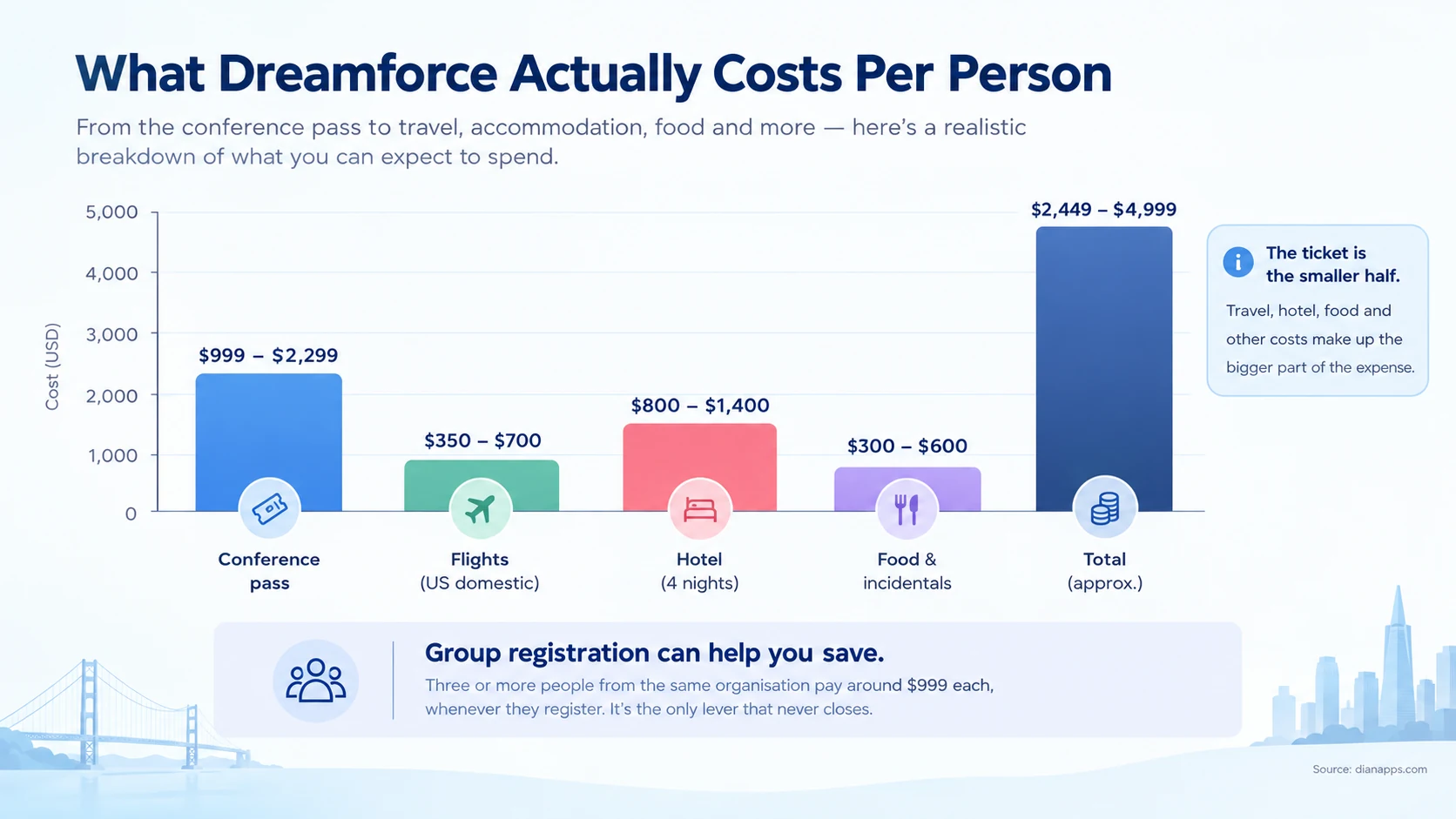
- The Ticket Is The Smaller Half: A realistic all-in figure for a US domestic attendee is $2,400-$5,000 depending on pass tier and travel distance. International attendance is substantially more.
On accommodation, since the official block fills quickly:
- The Mission District, SOMA, and Civic Center are 15-20 minutes’ walk and usually meaningfully cheaper
- Some attendees stay in Oakland and take BART in daily
- BART from SFO drops you two blocks from Moscone and is reliable
- SJC is about an hour away; OAK is about 35 minutes over the bridge
Trailblazer Bootcamp is a separate add-on at around $1,499, offering three days of intensive hands-on training with product experts. Worth considering if training budget rather than networking is your justification it changes what you’re buying.
Go, Send Someone, or Stream It Free?
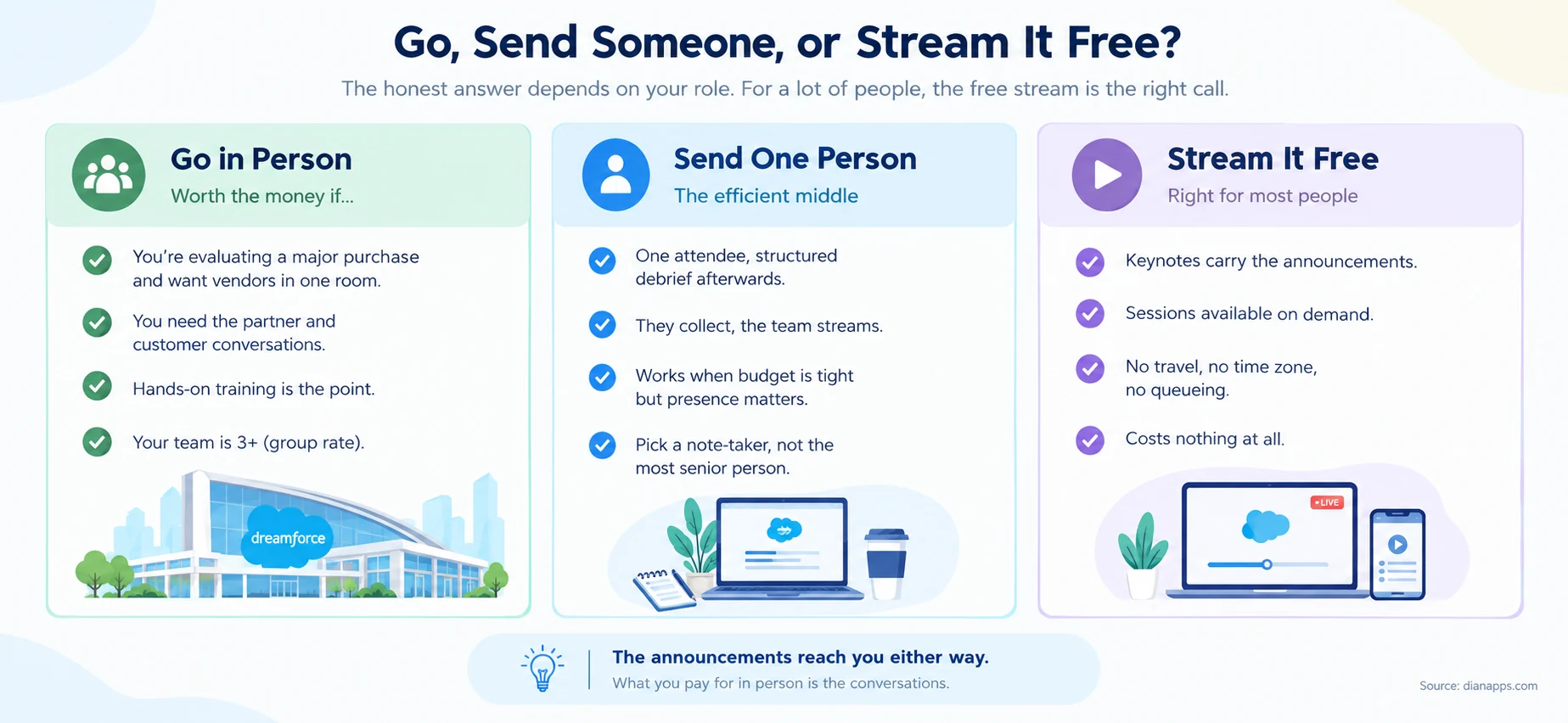
The announcements reach you either way. Keynotes stream free on Salesforce+, with selected sessions available on demand afterwards. If your reason for attending is “to find out what’s new”, you can do that from your desk for nothing.
What you actually pay for in person is the conversations, vendors in one room, partner meetings, customer references and hallway discussions that don’t happen on a stream.
Sending people to Dreamforce and want them asking the right questions? We can help you evaluate new Salesforce capabilities, compare vendor claims, and turn announcements into an actionable roadmap through our Salesforce consulting services.
| Role | Recommendation |
|---|---|
| Evaluating a major purchase | Go. Every vendor in one place is genuinely efficient |
| Admin wanting to learn | Stream it, or go specifically for the Bootcamp |
| Developer | Stream the keynotes; TrailblazerDX suits deep technical content better |
| Partner or consultancy | Go. It’s a business development event as much as a conference |
| Leadership | Send one person with a structured debrief |
| Everyone else | Stream it |
Related: What is Salesforce+
How to Plan an Agenda That Justifies the Cost
Over 1,600 sessions, 50+ keynotes and 150+ hands-on trainings across three days. You’ll attend perhaps twelve. The planning is the difference between a productive week and an expensive one.
Book sessions before you arrive. Popular hands-on workshops fill up, and walking up rarely works.
Pick a theme, not a sampler. Three days going deep on one thing- agent deployment, data architecture, a specific cloud- produces more than twelve unrelated sessions.
Schedule the main keynote and leave the rest of that block empty. It’s where the announcements land, and the conversations immediately afterwards are usually more valuable than whatever you’d have booked.
Protect time for the expo floor. If you’re evaluating anything, this is the reason you flew.
Book partner meetings weeks in advance. Consultancies and ISVs fill their calendars long before the event. Turning up hoping to talk to someone rarely works.
Have three specific questions ready. The most common regret is spending three days absorbing content without a particular problem to solve.
Getting Value Without Attending
Salesforce+ streams keynotes and selected sessions for free, making virtual attendance a practical choice for many people. Learn more about what Salesforce+ is and what it offers.
The efficient approach if you’re not going:
- Watch the main keynote. One hour containing the strategic direction for the year.
- Skim the ecosystem roundups a day or two later. Faster than watching everything, and the community writes these up quickly.
- Wait for Release Readiness. Announcements are frequently roadmap rather than shipping. What actually reaches your org appears in the seasonal release notes.
That last point deserves emphasis. A Dreamforce announcement and an available feature are different things, often separated by a year. See Salesforce DevOps and release management.
How to Read the Announcements
Distinguish shipping from roadmap; “Generally available” means you can use it now. “Coming in Winter” means plan around it. “Announced” sometimes means neither.
Salesforce has renamed a substantial share of its portfolio around Agentforce, and Dreamforce is where naming changes get formalised. If a product you use appears under a new name, check the guide to Salesforce products and their current names.
Note what isn’t mentioned. A product line absent from the keynote for two consecutive years is worth raising with your account team.
Check the pricing implications. New capability frequently arrives in a higher edition or as a separate add-on. The keynote won’t tell you which. See Salesforce pricing.
Turn Dreamforce Announcements Into a Real Strategy
Dreamforce gives you plenty of new Salesforce capabilities to consider. We can help you separate what is genuinely useful for your business from roadmap hype, then turn the right announcements into an actionable Salesforce plan.
Related: what is Agentforce · Salesforce acquisitions
Where to Go Next
For watching it for free, what is Salesforce+.
For what gets announced, what is Agentforce and every Salesforce product.
For turning announcements into a plan, Salesforce DevOps and release management.
For building skills rather than attending events, Salesforce certifications and what Trailhead is.
For the wider picture, what is Salesforce, Salesforce clouds compared, and Salesforce pricing.
Have Questions About Your Salesforce Strategy?
Whether you’re planning a Salesforce implementation, evaluating new capabilities, or need help improving your existing setup, our Salesforce experts can help you identify the right approach and next steps.
The Announcements Are Free. Deciding What to Do About Them Isn’t.
Every year the keynote produces a list of things your organisation could adopt, and every year most of them shouldn’t be adopted- at least not yet, and not all at once.
The useful work happens afterwards: separating what’s shipping from what’s roadmap, working out which announcements apply to your org, and deciding what deserves a line in next year’s budget.
 0 comments








Leave a Comment
Your email address will not be published. Required fields are marked *