













 0 comments
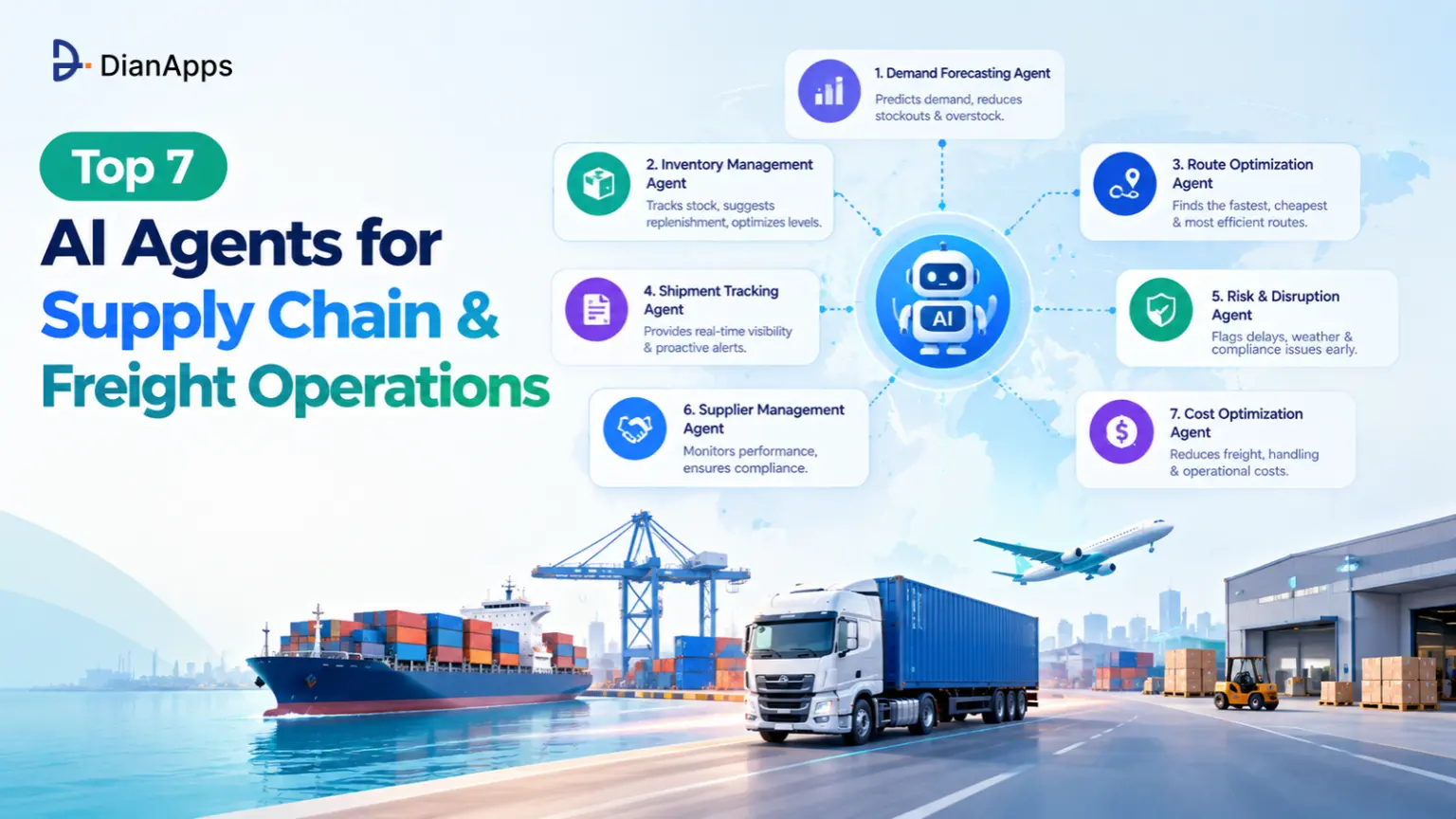





A traditional Transportation Management System (TMS) plans. It optimizes a route, rates a lane, and then hands the result to a dispatcher, a freight-audit clerk, or a carrier-sales rep to execute. Every tender rejection, late POD, or invoice variance becomes a ticket in somebody’s queue.
The 2027 generation of logistics software inverts that model. Autonomous AI execution layers sit on top of SAP TM, Oracle OTM, Blue Yonder, McLeod, or a homegrown TMS, and they act: retender the failed load, rebook the dock appointment, reconcile the 20,000-line carrier invoice, and escalate only what falls outside policy. The vendor data now supports the shift. FarEye reports a 95% reduction in dispatcher hours across enterprise deployments, and Shipsy reports invoice close times falling from 30–60 days to under 5.
This guide evaluates seven platforms on what they execute without human handoffs, how they integrate with your ERP and telematics stack, and what ROI they have actually reported. All ROI figures below are vendor- or customer-reported; treat them as hypotheses for your own pilot, not guarantees.
What Is an AI Agent for Freight Operations?
An AI agent for freight operations is software that observes live logistics signals, decides within shipper-defined guardrails, and executes the resulting action in your TMS, ERP, or carrier systems. Unlike a rule-based TMS workflow, it handles unstructured inputs (emails, PDFs, phone calls) and escalates only exceptions it cannot close.
The operational difference shows up in three places:
| Dimension | Rule-based TMS automation | Agentic execution layer |
|---|---|---|
| Trigger | Predefined event + static rule | Continuous signal monitoring |
| Input types | Structured EDI 204/214/210 | EDI plus email, PDF invoices, voice, telematics |
| Exception handling | Creates a task for a human | Attempts resolution, escalates with a reasoning trace |
| Change cost | New rule per scenario, IT ticket | Policy and guardrail edits by the ops owner |
Most serious vendors now ship graduated autonomy levels and human-in-the-loop (HITL) controls, so the agent can start in recommend-only mode and earn execution rights lane by lane.
Need an agent built around your workflows?
We design and deploy custom AI agents for dispatch, freight audit, and exception management, connected to your existing ERP and TMS without a rip-and-replace.
Master Feature Matrix: 7 Freight AI Agents Compared
The seven platforms split into three layers: execution agents (Locus, Loadsmart, Shipsy, FarEye), network optimization (Optimal Dynamics), and risk intelligence (ParkourSC, Resilinc). Pick by the layer where your manual labor and margin leakage concentrate, not by feature count.
| Platform | Primary operational focus | Core AI mechanics | Target enterprise size | Key integrations (publicly documented) |
|---|---|---|---|---|
| Optimal Dynamics (CORE.ai) | Truckload load acceptance, dispatch, network planning | High-dimensional AI optimization; decision intelligence that automates dispatch decisions | Asset-based carriers, private and dedicated fleets | McLeod TMS (certified partner); confirm SAP/Oracle via API |
| Locus (DiSCO, Mycroft, Orchestrator) | End-to-end orchestration, dispatch, settlement | Agentic: 8 specialized agents coordinated by an Orchestrator Agent | Enterprises with $150M+ revenue in retail, FMCG, 3PL | API-first to OMS, WMS, ERP, TMS; 1,000+ carriers pre-integrated |
| Loadsmart (Loadsmart AI) | Tender, tracking, dock, document and claims execution; spot pricing heritage | Agentic: 11 task agents under shipper rules, human operators close residual exceptions | Enterprise shippers | ShipperGuide TMS, Opendock; built against the shipper’s existing TMS |
| Shipsy (AgentFleet) | Multi-modal, cross-border execution; freight audit and settlement | Agentic: role-based AI workforce acting within defined rules | Fortune 500 shippers, large LSPs | Augmentation layer over existing TMS, ERP, 3PL systems |
| ParkourSC | Multi-tier decision intelligence, cold chain | Digital twin + AI behavioral engine; agents augment planners (largely decision support) | Global life sciences, healthcare, CPG | IoT/sensor feeds, enterprise data ingestion; SI partners incl. Tech Mahindra |
| FarEye (PILOT) | Last-mile dispatch, carrier SLA, CX notifications | Agentic: 11 agents across planning, execution, control with HITL | Enterprise retail, 3PL, parcel carriers | Owned + 3PL fleet orchestration; telematics and carrier APIs |
| Resilinc (Agentic AI Suite) | Supplier risk sensing, geopolitical and tariff monitoring | Agentic: monitoring, assessment and mitigation agents on Azure AI Foundry | Large manufacturers (Fortune 100 references) | Microsoft Azure; agent outputs consumable by enterprise apps and other AI agents |
Integration column reflects what vendors publish. For SAP S/4HANA, Oracle OTM, or Blue Yonder, require a named reference customer on your exact stack during RFP.
Recommended Read- Types of AI Agents
Deep-Dive Reviews: The Top 7 AI Agents for Freight Operations
FarEye, Shipsy, and Resilinc publish the strongest quantified ROI in 2026, while Locus offers the broadest multi-agent coverage across the delivery lifecycle. Optimal Dynamics remains the specialist pick for asset-based truckload networks.
1. Optimal Dynamics (CORE.ai): Truckload Dispatch and Network Optimization
- What it automates: Load acceptance, asset-vs-brokerage assignment, and driver dispatch decisions across a truckload network, plus simulation-based “what if” planning for strategic bids.
- Competitive edge: CORE.ai is built on roughly 40 years of Princeton research in high-dimensional optimization. It models downstream consequences of each load decision days to months out, which rule-based dispatch boards cannot. The 2024 release added dispatch outcome explainability.
- Reported ROI: BCB Transport reported a 19.6% increase in revenue per truck and found it could run with 16% fewer tractors without losing revenue. Earlier company figures cite up to 20% utilization gains and 13% cost reduction.
- Ideal use case: A 300–3,000-tractor carrier or private fleet on McLeod, where dispatcher capacity, not demand, caps load velocity. Note: this is optimization-led decision intelligence, not an LLM agent, so plan separately for email and document work.
2. Locus (Mycroft and Orchestrator Agents): End-to-End Logistics Orchestration
- What it automates: Capacity planning, dispatch allocation, hub coordination, multi-carrier selection, customer delivery preferences, and freight settlement, through eight agents coordinated by an Orchestrator Agent. Mycroft is the natural-language co-pilot operators use to query and redirect the system.
- Competitive edge: Governance depth. Locus exposes six enterprise controls: explainability, traceability, evaluation, autonomy levels, an execution sandbox, and HITL. It was acquired by Ingka Group (IKEA Retail) in 2025 and operates independently.
- Reported ROI: Across its 360+ enterprise clients, Locus reports $320M+ in logistics cost savings and $288M in recovered revenue leakage. These are aggregate figures, so request lane-level baselines.
- Ideal use case: A retailer or 3PL above $150M revenue running mixed owned and contracted fleets across several countries, where exception management and carrier settlement are both manual.
3. Loadsmart (Loadsmart AI): Task Agents Backed by Freight Operators
- What it automates: Eleven agents covering document collection, tracking updates, tender failures and retendering, proactive load audits, claims, and dock, yard and gate scheduling, including live phone calls to rebook appointments.
- Competitive edge: Loadsmart pioneered instant truckload spot pricing and API booking in 2015 and now pairs agents with in-house freight experts who close the residual exceptions. It runs on the shipper’s existing TMS with no migration, and Opendock is live in 4,500+ facilities.
- Reported ROI: Historically, Loadsmart cut spot execution time by up to 94% for some clients. For agents, it offers a free single-workflow proof of concept with a pay-only-if-it-works model and a target of roughly three months to production.
- Ideal use case: An enterprise shipper with a high tender-rejection rate and a carrier-ops team buried in check calls and appointment emails.
4. Shipsy (AgentFleet): Cross-Border Freight and Invoice Reconciliation
- What it automates: AgentFleet, launched in March 2026, is a role-based AI workforce for CX, operations and finance. Its Nexa agent reconciles every invoice line against rate cards and execution records; Vera pursues disputes with the carrier using the full audit trail.
- Competitive edge: 100% line-level freight audit instead of the 10–30% sampling most AP teams manage, deployed as an augmentation layer over existing TMS and ERP systems across multi-modal and cross-border flows.
- Reported ROI: 90%+ auto-match on invoice lines, invoice close cut from 30–60 days to under 5, and 1–3% recovery on total freight spend from variances previously paid silently.
- Ideal use case: A multi-country shipper or LSP with high carrier-invoice volume and accessorial leakage. Validate customs and brokerage filing scope by country before contracting.
5. ParkourSC: Cold Chain and Multi-Tier Decision Intelligence
- What it automates: Real-time ingestion of sensor, shipment and enterprise data into a supply chain digital twin, where AI agents monitor temperature excursions, streamline quality release, and prescribe next actions.
- Competitive edge: Depth in life sciences cold chain, a domain where general TMS vendors are thin. Its event-driven architecture links an excursion to the affected lot, order and customer.
- Reported ROI: ParkourSC does not publish quantified customer ROI comparable to the others. Reference customers include AdventHealth. In a pilot, measure excursion detection-to-disposition time, product write-offs, and quality-release cycle time.
- Ideal use case: A pharma or biologics distributor managing GDP-regulated shipments, where one excursion can cost more than a year of software fees.
6. FarEye (PILOT Agentic Dispatcher): Last-Mile Delivery Orchestration
- What it automates: PILOT, launched April 2026, coordinates 11 agents that build routes, manage driver rosters, validate delivery data, recover failed deliveries, audit proof of delivery, and reconcile invoices. Dispatchers keep control of high-risk exceptions.
- Competitive edge: Purpose-built for node-less last-mile networks and orchestration across owned and third-party fleets, as used at Tractor Supply Company, Blue Dart, and Maersk Ground Freight.
- Reported ROI: 95% reduction in dispatcher hours, 3–5x fewer dispatchers per hub, 17.5% lower cost per delivery, and 90%+ first-attempt delivery. FarEye’s own launch page cites an 80% dispatcher-time reduction, so expect a range.
- Ideal use case: Retail and e-commerce networks where last-mile cost is the largest line in the logistics P&L.
7. Resilinc (Agentic AI Suite): Supply Chain Risk Sensing
-
- What it automates: Continuous monitoring through EventWatchAI across 150M+ sources in 100+ languages, then agents that map alerts to affected suppliers and parts, quantify impact, and launch supplier outreach, tariff screening, and UFLPA forced-labor compliance workflows.
- Competitive edge: Supplier-validated multi-tier, part-site mapping built over 15 years, now exposed to other enterprise systems and AI agents. The platform runs on Azure AI Foundry.
- Reported ROI: A Fortune 100 manufacturer reported up to 40% lower disruption costs and 75% faster response times. Resilinc also reports regulatory-change alerts rose 92% year over year in 2025.
- Ideal use case: Discrete manufacturers with deep sub-tier exposure to tariffs, sanctions and regional disruptions.
Evaluating freight AI vendors this quarter?
Download our 4-step AI Agent Buyer Checklist, with RFP questions, governance requirements, and pilot KPI templates for SAP, Oracle, and McLeod environments.
How AI Agents Connect Securely to Legacy ERP and TMS: The MCP Layer?
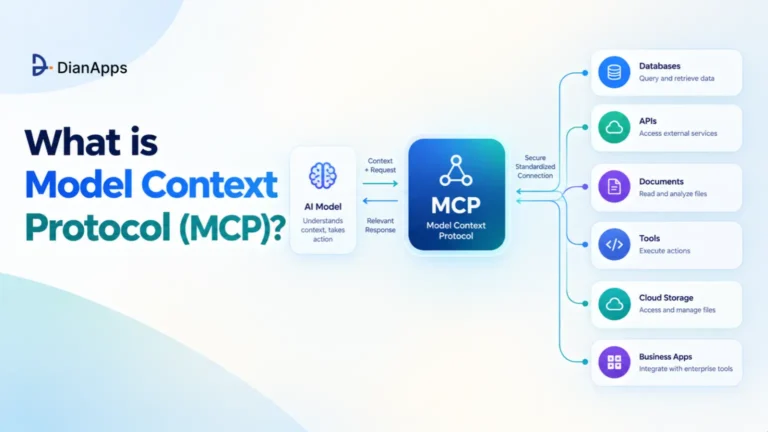
The Model Context Protocol (MCP) gives AI agents a standard, permissioned interface to ERP and TMS functions instead of direct database access. Secure deployments pair MCP’s OAuth 2.1 authorization with an enterprise identity provider, least-privilege tool scopes, and a policy gateway that logs every agent action.
MCP is an open protocol built on JSON-RPC 2.0. An MCP server exposes tools (functions such as create_shipment or post_freight_invoice) and resources (records such as a rate card). The AI host translates those into the model’s tool-calling interface and executes the calls, so the model never holds a database connection.
For logistics IT, the correct pattern is to wrap existing, governed interfaces rather than tables:
- Expose business APIs, not schemas. Front SAP S/4HANA OData services or BAPIs, Oracle OTM integration APIs, and Blue Yonder endpoints with an MCP server. Existing authorization objects and audit trails in the ERP stay in force.
- Centralize identity. Remote MCP servers follow an OAuth 2.1 profile with PKCE, acting as resource servers that validate tokens from your enterprise IdP (Entra ID, Okta). The June 2025 spec explicitly prohibits token passthrough to upstream APIs, which closes a common privilege-escalation path.
- Scope by agent role. Give a settlement agent read access to rate cards and write access only to a dispute queue. Keep irreversible writes (payments, tender awards above a threshold) behind human approval.
- Route through a policy gateway. An identity-aware proxy evaluates each call against context (user, agent, record, time) and writes an immutable log for SOX and customs audits.
- Pin data residency. Confirm where prompts, tool outputs, and embeddings are processed, especially for cross-border shipment data under GDPR or India’s DPDP Act.
MCP authorization has matured quickly. The November 2025 revision moved client registration to Client ID Metadata Documents, and an enterprise authorization layer followed in mid-2026. Ask each vendor which spec revision its MCP servers implement.
The 4-Step Buyer Checklist for Freight AI Agents
Evaluate freight AI agents by first locating where manual hours and margin leak, then matching that to the agent layer, integration depth, and governance model. Contract on a measured single-workflow pilot, not a platform-wide rollout.
-
- Map the leakage before the vendor. Quantify, per month: dispatcher and carrier-ops FTE hours, tender rejection rate, invoice variance as % of freight spend, cost per delivery, and disruption cost. The largest number tells you the layer:
- Dispatch and empty miles → Optimal Dynamics or FarEye
- Tender, tracking, appointment and document toil → Loadsmart or Locus
- Invoice and settlement leakage → Shipsy or Locus
- Supplier and cold-chain risk → Resilinc or ParkourSC
- Test integration against your actual stack. Demand a reference customer on your exact TMS and ERP (for example SAP TM on S/4HANA, Oracle OTM, McLeod). Confirm write-back paths, EDI 204/214/210 handling, telematics sources, and whether the vendor ships or supports MCP servers with OAuth 2.1 and your IdP.
- Score governance, not demos. Require configurable autonomy levels, per-action audit logs, a reasoning trace on every exception, spend and tender thresholds that force human approval, and a sandbox or shadow mode before go-live.
- Pilot one workflow with a hard baseline. Run 60–90 days on a single lane group, hub, or carrier set. Fix the KPI and baseline in the contract (for example, invoice close days, dispatcher hours per 1,000 stops, or retender success rate), and tie expansion pricing to the measured result.
- Map the leakage before the vendor. Quantify, per month: dispatcher and carrier-ops FTE hours, tender rejection rate, invoice variance as % of freight spend, cost per delivery, and disruption cost. The largest number tells you the layer:
Not sure which AI agent fits your logistics stack?
Our team integrates AI agents with SAP, Oracle, and custom TMS platforms through secure MCP and API connections. Book a free 30-minute stack assessment.
Conclusion
No single platform covers optimization, execution, and risk sensing equally well in 2027. Most enterprises will run one execution agent on top of their TMS plus one risk or optimization layer, connected through governed APIs or MCP.
The practical sequence is to automate the highest-volume manual workflow first, usually tender management, last-mile dispatch, or freight audit, then extend autonomy as audit logs prove the agent’s decisions. Vendors that publish hard ROI (FarEye, Shipsy, Resilinc, Optimal Dynamics) make baselining easier; those with aggregate or no published figures should be held to pilot KPIs in the contract.
 0 comments










Your email address will not be published. Required fields are marked *