













 0 comments





Key Takeaways:
- Salesforce integration consultants connect your CRM with ERPs, marketing platforms, support tools, and other business systems.
- Hire a consultant when manual data entry, disconnected workflows, or inconsistent reports start affecting daily operations.
- Evaluate consultants based on integration experience, technical expertise, security practices, and previous project results.
- Ask about integration architecture, error handling, data conflicts, testing, and post-launch support before hiring.
- Choose a consultant who understands your existing systems and can build integrations that scale with your business.
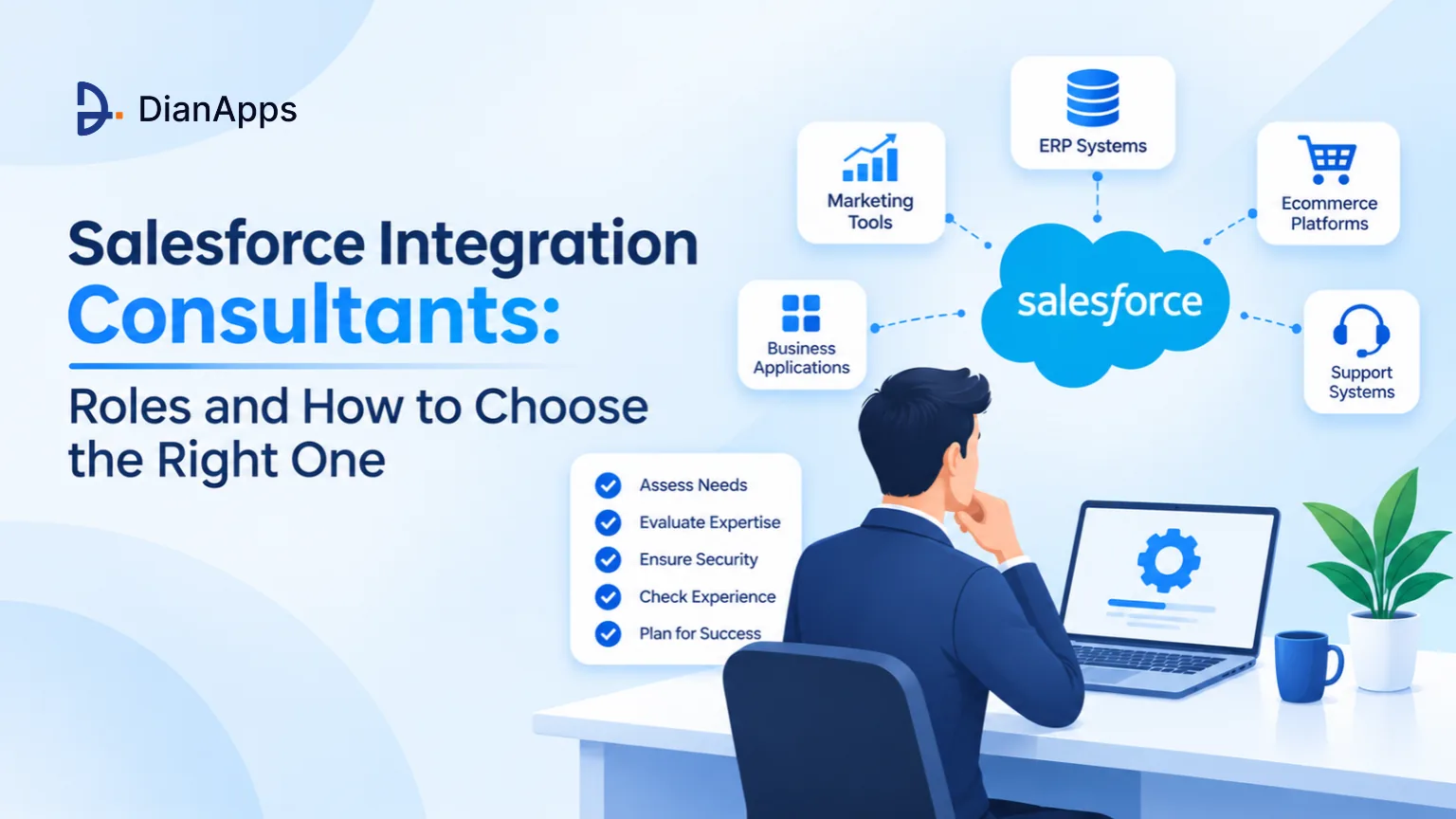
Quick Answer: A Salesforce integration consultant is someone who connects Salesforce with your other business systems, your ERP, marketing tools, support platforms, whatever else you are running, so that data moves between them accurately and without anyone on your team having to copy-paste records from one screen to another.
Your Salesforce software is fully functional and used by your employees, but the data in your ERP, marketing automation, and customer support systems remains isolated in silos that have never interacted with your CRM. Does this apply to your organization? Then you need the very same solution that Salesforce integration consultants specialize in, and figuring out how to pick the correct Salesforce integration services is indeed an essential task for you to accomplish.
The truth is that hiring the right individual for this purpose is far more complicated than Googling and selecting one of the top results. You need to understand why these experts do what they do, when it is truly the right time to bring one onto your team, and how to know whether they have the necessary expertise. In this guide, we explain all this in sufficient depth so that you are sure about the direction of your search both ways.
The Role of a Salesforce Integration Consultant
A Salesforce Integration Consultant is someone who has expertise in connecting Salesforce to everything that your business runs on, including ERPs like SAP or NetSuite, marketing platforms like HubSpot or Marketo, e-commerce systems, customer support tools, data warehouses, and also custom tools that your business may have. They make sure that all the data that travels through the systems is secure, fast, and correct according to the use case of the data.
This might sound like a simple task at first, but it is not at all simple. Salesforce integration consulting asks for deep knowledge of how API works, along with middleware platforms such as MuleSoft or Informatica. They must also know the salesforce’s internal architecture along with stuff like governor limit, data mapping logic, protocols, etc. A good consultant does more than just connect two systems; instead, they think through the complete infrastructure and ensure that the integration actually turns out useful.
In practice, the work breaks down across these phases:
| Phase | What the Consultant Is Doing |
| Discovery | Reviewing your existing systems, data flows, and business processes before any code is written |
| Architecture Design | Deciding how data should move between systems and which integration pattern fits your environment |
| API Development | Building custom APIs or configuring connectors that allow platforms to exchange data |
| Data Mapping | Making sure records in one system translate correctly into the right fields inside Salesforce |
| Testing | Validating data accuracy, stress-testing under load, and confirming that errors are caught properly |
| Documentation | Producing reference materials your internal team can actually use to maintain things independently |
The real distinction worth understanding here is that Salesforce admins configure the platform, developers build on top of it, and Salesforce integration experts connect it to everything else, which is a completely different skill set that most general Salesforce professionals, however talented they are within the platform itself, simply do not have.
When Is the Right Time to Bring in Salesforce Integration Consultants?
Not every problem with Salesforce points to an integration gap, and to be fair, sometimes the actual issue is a poorly configured workflow, a data quality mess, or just an admin who needs more support. But there are specific situations where bringing in Salesforce integration consultants is clearly the right move, and the earlier you recognize them, the less expensive the fix will be.
- Your Team Is Entering Data Into Multiple Systems by Hand: If your sales reps are copying records from Salesforce into the billing platform every morning, or your marketing people are exporting contact lists and uploading them into another tool every week, those are the clearest possible symptoms of systems that should be connected but are not, and a consultant can eliminate every one of those manual steps entirely.
- Reports Across Platforms Show Different Numbers: When sales sees one revenue figure in Salesforce and finance sees something completely different in the ERP, people stop trusting the data, and honestly, once that trust breaks it is extremely hard to rebuild. MuleSoft’s 2025 Connectivity Benchmark Report found that 90% of IT leaders say data silos are actively creating business challenges within their organizations, which is a staggering number when you consider how avoidable the problem is.
- You Are Growing, and Your Current Setup Cannot Handle It: What worked perfectly fine with 50 users and a handful of connected tools starts falling apart at 500 users and a dozen systems that all need to share data. If you are seeing signs your business has outgrown its CRM, investing in an integration overhaul will almost certainly serve you better than ripping everything out and switching platforms entirely.
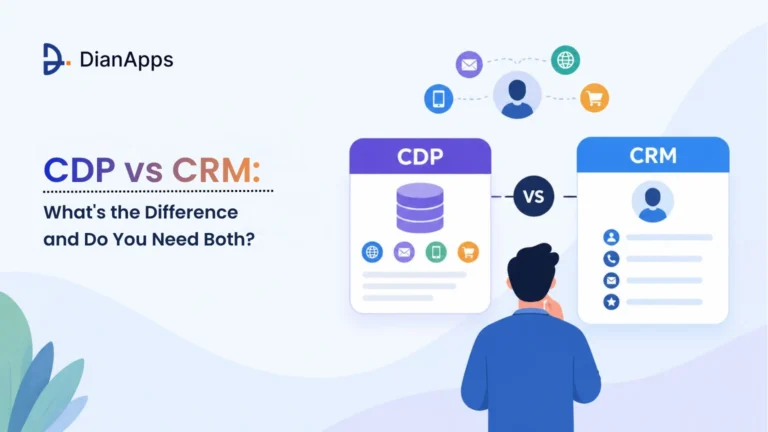
- New Tools Are Being Added Without Anyone Connecting Them: Every new tool your company adopts becomes a data silo the moment it is not connected to Salesforce, and the difference between a CDP and a CRM is a worthwhile thing to understand before those silos multiply further.
- A Previous Integration Already Failed: CRM integration projects carry a high failure rate, and the usual pattern is that an internal developer built something that seemed fine at launch, then started silently corrupting data for weeks or months before anyone realized something was wrong, which is precisely the kind of situation where you need someone who has fixed broken integrations before and knows what to look for.
Bring Every System Together with Salesforce
Eliminate data silos, simplify workflows, and keep your business running smoothly with seamless Salesforce integrations
How to Properly Evaluate Salesforce Integration Consulting Services
The market for Salesforce integration consulting services has more providers than ever, and frankly, the gap between the firms that are genuinely good at this work and the ones that are just good at marketing themselves is wider than you might expect.
- Verify Their Salesforce Partnership Status: An integrated services registered Salesforce.com consulting partner has met real criteria set by Salesforce, including certifications and customer success benchmarks, which at minimum tells you they have been vetted against a standard that most smaller shops have not cleared.
- Go Beyond General Certifications: A firm might hold ten Salesforce certifications and still struggle with the architecture side of integration work, so you need to ask directly about their middleware experience, whether they have built custom APIs from scratch, and whether they have worked with event-driven patterns or only handled batch processing, because those answers will tell you more than any certification list ever will.
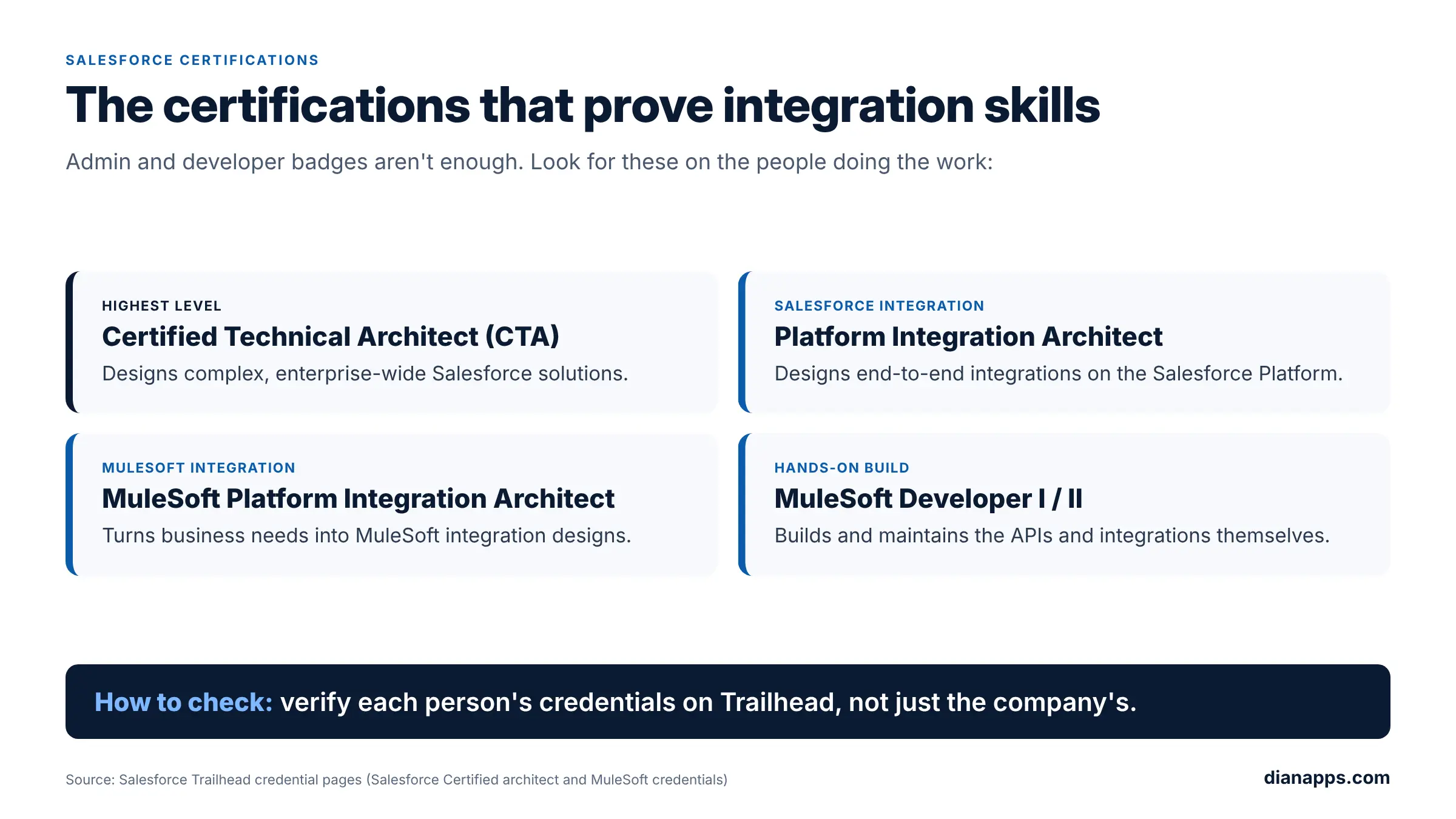
- Demand Case Studies From Similar System Pairings: If you are connecting Salesforce with SAP, you want a provider who has done exactly that pairing before, not a provider who has done “similar” work with a completely different system, because every combination carries its own set of edge cases that only show up when you have lived through them.
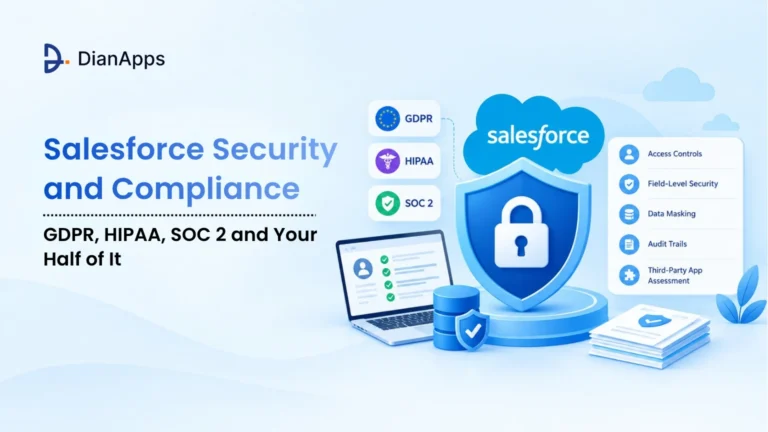
- Ask About Their Security Practices: Data moving between systems introduces real questions about encryption, authentication, access control, and compliance, and getting yourself familiar with Salesforce security and compliance before these conversations will help you evaluate their answers far more effectively.
- Clarify What Happens After the Integration Goes Live: APIs change, platforms release updates, and business requirements evolve, so you need to understand exactly what their ongoing support model looks like rather than assuming they will be available when something breaks six months from now.
Seven Questions That Reveal Whether a Consultant Is Worth Hiring
These are the questions that, in practice, consistently surface the difference between a consultant who can actually deliver and one who is going to create a new round of problems for your team to deal with.
How do you approach discovery before any technical work starts?
- If they mention stakeholder interviews, system audits, and data flow mapping, that is a good sign, but if they jump straight into timelines and technology choices without talking about understanding your business first, that gap in their process is likely going to show up later as a gap in your integration.
Which integration patterns would you recommend for our situation, and why?
- You are listening for whether they can articulate the trade-offs between point-to-point, hub-and-spoke, and event-driven patterns specifically in the context of your setup, not in generic theoretical terms.
How do you handle data conflicts when two systems have different records for the same customer?
- This one tells you how much time they have spent in the messy, unglamorous part of integration work where real-world data does not behave the way documentation says it should.
What does your error-handling strategy look like in production?
- Since integrations will break at some point, what matters is how quickly their monitoring catches failures, how errors are logged, and what the escalation path looks like when something goes wrong outside of business hours.
Tell me about a project that did not go as planned.
- If they claim every project has been perfect, they are either brand new to this work, or they are not being entirely honest, and either way that is a problem, because what you actually need to hear is how they handled the situation when things went sideways.
How do you design around Salesforce governor limits?
- A consultant who has done this work before will already know where the API call limits, processing thresholds, and storage constraints become problems, and they will have specific techniques for working within those boundaries rather than discovering them halfway through the project.
What does your documentation look like when you hand off the project?
- Your team is going to inherit whatever gets built, so ask to see a sample documentation package from a previous engagement, and if the consultant hesitates or does not have one ready, consider what that tells you about how their other projects ended.
For businesses handling sensitive customer data, it is also worth looking into tools like Salesforce Shield that add encryption and monitoring at the platform level, and a consultant who raises these topics before you do is usually one who thinks more carefully about the full picture.
Not Sure Where to Start with Salesforce Integration?
Let’s understand your integration needs, explore the right approach, and find a solution that works for your business.
What Failed Salesforce Integrations Actually Cost
Research from enterprise architecture vendors and consultancies shows the high failure rate for integration projects, and when those projects fail, the combined cost in direct expenses and lost opportunities is pretty high. The tricky part is that failed integrations seldom look like spectacular disasters; they look like duplicated records nobody notices for weeks, automations that stopped running months ago without anyone catching it, and reports that show slightly different numbers depending on which platform you pull them from.
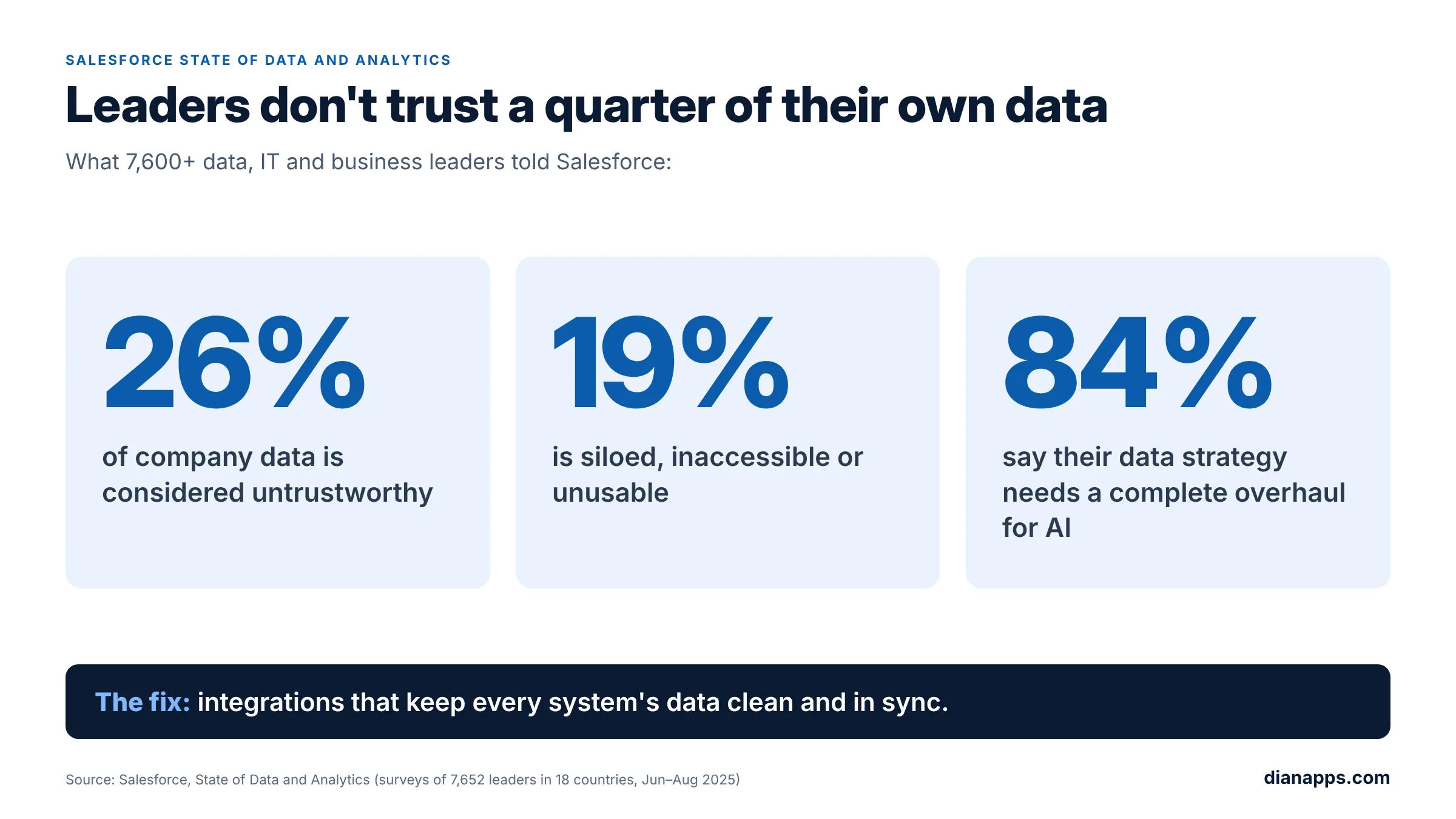
A consultant’s fee can seem like a large line item on a budget, and that is a fair reaction to have, but when you compare it to the cost of manually reconciling months of bad data, losing revenue because lead routing broke and nobody flagged it, or worse, tearing out an entire integration and rebuilding from scratch, the investment in getting it right the first time makes a lot more financial sense. Framing this conversation in terms of Salesforce ROI is the most effective way to make the business case to leadership, because the return on your Salesforce investment depends directly on how well it connects with every other system your company relies on.
Setting Your Integration Project Up for Success
Even the most qualified Salesforce integration consultant will struggle to deliver strong results without real participation from your side, and the businesses that get the best outcomes from these engagements tend to follow a few consistent practices.
- Get Specific About Outcomes: “Connect Salesforce to our ERP” is a direction, not a measurable goal, so define what success actually looks like in terms your team can track, whether that means faster quote-to-cash, a unified customer view, fewer duplicate records or something else entirely.
- Involve Stakeholders From the Beginning: Integration work affects sales, marketing, finance, IT, and operations all at once, and discovering missed requirements at the end of a project is dramatically more expensive than capturing them during discovery.
- Be Honest About Your Data Quality: If your Salesforce records are full of duplicates and inconsistencies, disclosing that upfront allows the consultant to plan around it rather than building on an unstable foundation that collapses later.
- Take Testing Seriously: Every hour of proper testing before launch prevents multiple days of emergency fixes after the integration is already running in production against real customer data.
- Plan for Change Management: If the people using these systems every day do not understand why things changed and how the new workflow benefits them, adoption stalls and the technical work, however well executed, produces zero business value.
Final Thoughts
The Salesforce integration consulting market is growing because companies are finally recognizing that a CRM operating in isolation from the rest of their technology stack will never deliver its full value, and the organizations that invest in Salesforce integration services early consistently see better returns across their entire Salesforce environment compared to those that wait until disconnected systems have already caused real, measurable damage.
 0 comments








Your email address will not be published. Required fields are marked *