















 0 comments
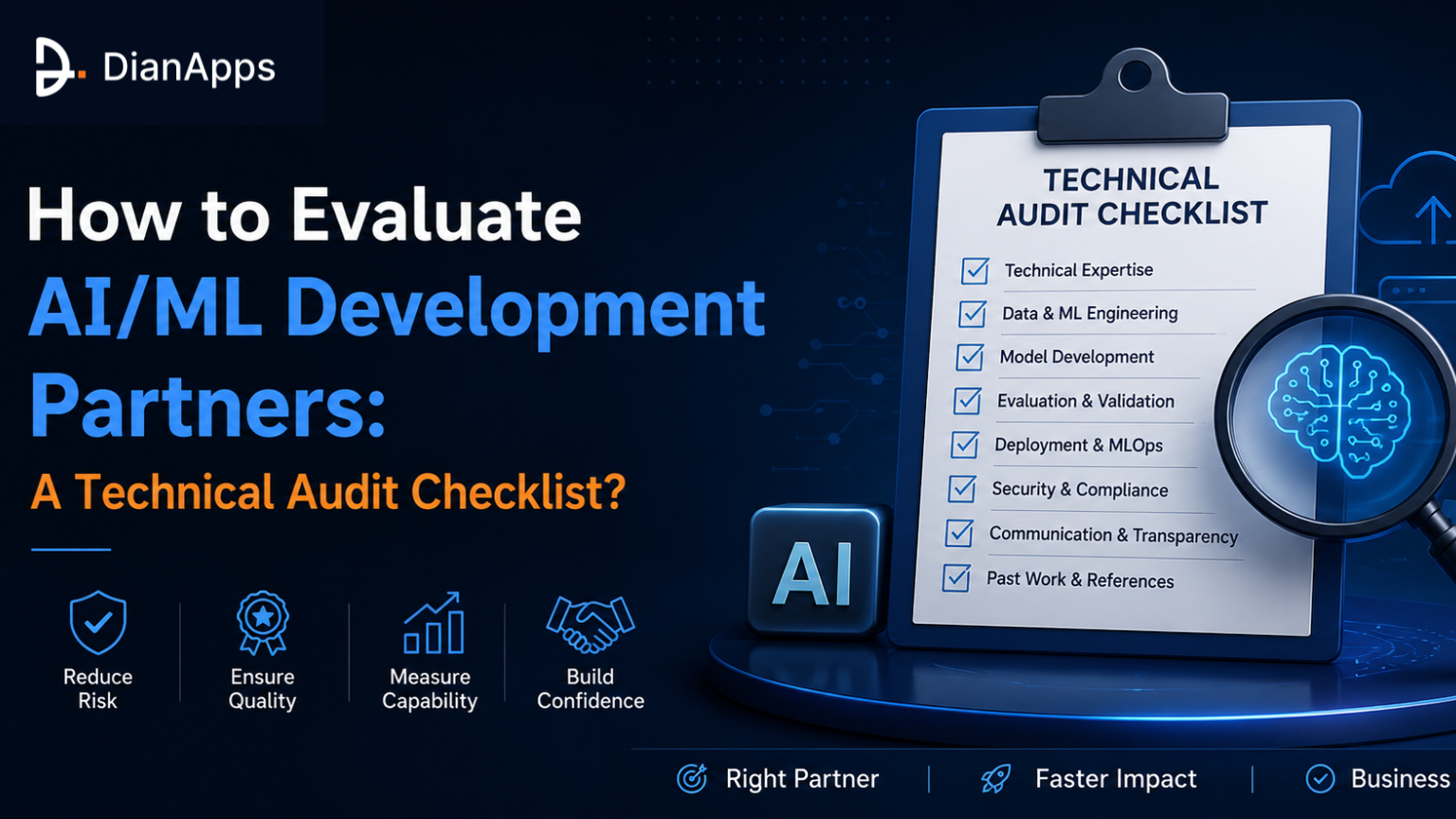





The AI market is growing faster than almost any technology sector in history. So why are so many AI projects still failing to deliver measurable business outcomes?
Artificial intelligence has moved from experimentation to enterprise adoption at an unprecedented pace. Organizations worldwide are investing heavily in machine learning, generative AI, predictive analytics, intelligent automation, computer vision, and large language model (LLM) applications to improve productivity, reduce operational costs, and unlock new revenue streams.
Read about: Public vs. Private LLM to choose between the two LLM models.
The numbers are staggering.
According to recent market research, the global artificial intelligence market is expected to exceed $1.8 trillion by 2030, growing at a CAGR of more than 35%. Meanwhile, enterprise AI adoption continues to accelerate, with a significant majority of organizations already implementing or actively exploring AI initiatives across their operations.
Yet despite record levels of investment, success remains far from guaranteed.
Multiple industry studies have found that a large percentage of AI projects never reach full production deployment or fail to achieve their intended business objectives.
Common challenges include poor data quality, inadequate infrastructure, weak governance, lack of MLOps capabilities, model drift, security concerns, and unrealistic expectations around implementation timelines.
This creates a critical problem for business leaders. Most organizations don’t fail because they chose the wrong AI technology. They fail because they chose the wrong AI/ML development company.
Many vendor evaluations focus on surface-level indicators such as:
- Client logos
- Team size
- AI buzzwords
- Model accuracy metrics
- Impressive demonstrations
While these factors may help create credibility, they reveal very little about a company’s ability to build, deploy, monitor, govern, and continuously improve production-grade AI systems.
A chatbot platform demo is not an AI strategy. A proof of concept is not a production deployment. A high-performing model in a controlled environment is not necessarily a business outcome.
The reality is that successful AI implementation requires far more than model development. It demands expertise in data engineering, infrastructure architecture, MLOps, security, governance, monitoring, compliance, scalability, and business alignment.
That’s why forward-thinking organizations are increasingly replacing traditional vendor evaluations with technical audits.
Instead of asking:
“Can this company build AI?”
The more important question is:
“Can this company deliver AI systems that remain accurate, secure, scalable, governable, and commercially valuable long after deployment?”
This technical audit checklist is designed to help CTOs, CIOs, product leaders, innovation teams, and procurement stakeholders evaluate AI/ML development partners beyond marketing claims and identify the capabilities that truly determine long-term AI success.
Whether you’re building an AI-powered SaaS platform, implementing predictive analytics, deploying enterprise automation, developing computer vision solutions, or integrating generative AI into existing products, the following evaluation framework will help you separate AI experimentation from AI execution.
AI/ML Development Partner Technical Audit Checklist
Most AI vendor evaluations focus on capabilities. Technical audits focus on risks.
The objective of an AI vendor audit is not to determine whether a company can build a model. It is to determine whether that company can successfully deploy, govern, scale, secure, monitor, and continuously improve AI systems in a production environment while generating measurable business outcomes.
Below are the ten areas every organization should rigorously evaluate before selecting an AI/ML development partner.
Also read ahead the comparison between AI vs. ML in detail.
| Audit Area | What to Verify | Questions to Ask | Evidence Required | Red Flags |
|---|---|---|---|---|
| 1. Data Engineering & Data Readiness | Data architecture, ETL/ELT pipelines, data quality controls, feature engineering, vector databases, data governance | How do you validate data quality? How do you handle missing or inconsistent data? What is your approach to data versioning and lineage? | Data architecture diagrams, data quality reports, pipeline documentation, governance workflows | Vendor discusses models before evaluating data readiness |
| 2. AI Architecture & Solution Design | AI system architecture, model orchestration, API-first design, scalability strategy, cloud architecture | How do you determine the right AI approach? How do you design scalable AI systems? | Solution architecture documents, infrastructure diagrams, technical design documents | Same architecture proposed for every use case |
| 3. Generative AI & LLM Engineering | RAG implementations, fine-tuning, prompt engineering, vector search, guardrails, hallucination reduction | Have you deployed production-grade LLM systems? How do you evaluate LLM outputs? | RAG architecture examples, evaluation reports, production case studies | Vendor only integrates OpenAI APIs without deeper engineering expertise |
| 4. Machine Learning Engineering | Model development workflows, feature engineering, evaluation methodologies, explainability frameworks | How do you select models? How do you validate model performance? | Model evaluation reports, experiment tracking records, ML documentation | Focus solely on accuracy metrics without business context |
| 5. MLOps Maturity | Model versioning, CI/CD pipelines, automated retraining, experiment tracking, deployment automation | How do you manage model lifecycle and updates? | MLflow, Kubeflow, SageMaker, Azure ML workflows, deployment pipelines | No MLOps framework or retraining strategy |
| 6. Infrastructure & Scalability | Cloud expertise, Kubernetes, GPU management, inference optimization, high-availability systems | How do you scale AI systems under increased demand? | Cloud architecture diagrams, deployment environments, scalability reports | No strategy for inference costs or scaling |
| 7. Security, Privacy & Compliance | Data encryption, identity management, access controls, AI security, regulatory compliance | How do you secure training and production environments? Which compliance standards do you support? | Security audits, compliance certifications, access-control documentation | Security responsibility entirely delegated to cloud providers |
| 8. Responsible AI & Governance | Explainability, fairness testing, auditability, human oversight, governance frameworks | How do you detect bias and ensure explainable decisions? | Governance framework, audit logs, explainability reports | No documented Responsible AI policy |
| 9. Monitoring & Model Optimization | Drift detection, model monitoring, alerting, performance tracking, optimization processes | How do you detect performance degradation after deployment? | Monitoring dashboards, alerting systems, drift reports | Deployment is treated as project completion |
| 10. Business Impact & ROI Measurement | KPI tracking, ROI frameworks, executive reporting, value realization strategy | How will AI success be measured? Which business metrics improve? | KPI dashboards, ROI reports, business impact assessments | Discussion limited to model metrics rather than business outcomes |
Scoring Framework
| Score | Assessment |
|---|---|
| 90–100 | Enterprise-Grade AI Partner |
| 75–89 | Strong AI Delivery Capability |
| 60–74 | Moderate Risk – Further Technical Validation Required |
| Below 60 | High Risk – Significant Capability Gaps Identified |
1. Data Engineering & Data Readiness Audit
Why This Matters?
Industry studies consistently show that data-related issues remain one of the leading causes of AI project failure. A sophisticated model trained on poor-quality data will almost always underperform a simpler model trained on reliable, governed datasets.
Technical Audit Criteria
Data Architecture
Verify whether the partner can design and manage:
- Data lakes
- Data warehouses
- Lakehouse architectures
- Vector databases
- Real-time streaming systems
- Event-driven architectures
Data Pipeline Maturity
Request evidence of:
- ETL/ELT frameworks
- Data orchestration workflows
- Automated validation pipelines
- Metadata management
- Data lineage tracking
Data Quality Controls
Evaluate:
- Missing value treatment
- Outlier detection methods
- Data validation rules
- Duplicate record handling
- Label quality assurance processes
Evidence to Request
- Architecture diagrams
- Pipeline screenshots
- Data quality reports
- Documentation standards
- Governance workflows
Audit Red Flag
The vendor begins discussing model selection before evaluating your data environment.
2. AI Architecture & Solution Design Audit
Why This Matters?
Many vendors know how to train models. Far fewer understand how to architect enterprise-grade AI ecosystems.
Technical Audit Criteria
Assess the partner’s ability to design:
- Distributed AI systems
- Multi-model architectures
- AI microservices
- API-first AI platforms
- Agent-based systems
- Hybrid AI ecosystems
Key Questions
- How do you choose between classical ML, deep learning, and generative AI?
- How do you design for scalability?
- How do you prevent vendor lock-in?
- How do you future-proof AI systems?
Evidence to Request
- Reference architectures
- System design documents
- Infrastructure diagrams
- AI platform case studies
Audit Red Flag
The vendor recommends the same architecture regardless of business use case.
3. Generative AI & LLM Engineering Audit
Why This Matters?
Generative AI development services is now one of the fastest-growing enterprise technology segments. However, connecting to an LLM API does not qualify as AI engineering.
Technical Audit Criteria
Evaluate expertise in:
Retrieval-Augmented Generation (RAG)
- Vector database design
- Chunking strategies
- Embedding optimization
- Knowledge retrieval pipelines
LLM Fine-Tuning
- Supervised fine-tuning
- Domain adaptation
- Instruction tuning
- Model evaluation
Hallucination Mitigation
Assess their approach to:
- Grounding
- Fact verification
- Confidence scoring
- Human-in-the-loop validation
Key Questions
- Which LLMs have you deployed in production?
- How do you evaluate response quality?
- How do you handle model updates?
- What guardrails do you implement?
Audit Red Flag
The vendor’s entire GenAI offering revolves around prompt engineering.
4. Machine Learning Engineering Audit
Why This Matters?
Model development remains the foundation of every AI initiative.
Your partner should demonstrate repeatable engineering processes rather than experimental data science practices.
Technical Audit Criteria
Evaluate:
- Feature engineering methodologies
- Training workflows
- Hyperparameter optimization
- Ensemble modeling
- Model explainability
- Evaluation frameworks
Validation Requirements
Request examples of:
- Precision/Recall analysis
- ROC-AUC reporting
- Cross-validation strategies
- Bias detection
- Error analysis documentation
Audit Red Flag
The vendor only discusses accuracy scores without discussing business performance metrics.
5. MLOps Maturity Audit
Why This Matters?
Many AI systems fail after deployment because organizations lack operational discipline around model management.
MLOps is often the single biggest differentiator between AI experimentation and AI production.
Technical Audit Criteria
Verify:
Model Lifecycle Management
- Version control
- Model registries
- Experiment tracking
- Model lineage
Deployment Automation
- CI/CD pipelines
- Automated testing
- Rollback procedures
- Release governance
Retraining Processes
- Automated retraining
- Scheduled retraining
- Trigger-based retraining
- Performance-based retraining
Tools Experience
Look for expertise in:
- MLflow
- Kubeflow
- Vertex AI
- Azure ML
- SageMaker
Audit Red Flag
No dedicated MLOps strategy exists.
6. Infrastructure, Cloud & Scalability Audit
Why This Matters?
An AI model serving 100 users and an AI platform serving 10 million users require fundamentally different infrastructure strategies.
Technical Audit Criteria
Assess expertise in:
- AWS
- Azure
- Google Cloud
- Kubernetes
- Docker
- Serverless architectures
- GPU optimization
Scalability Review
Ask how they manage:
- Traffic spikes
- High inference volumes
- Multi-region deployments
- Cost optimization
- Resource allocation
Evidence to Request
- Infrastructure architecture diagrams
- Cloud deployment case studies
- Cost optimization reports
Audit Red Flag
The vendor cannot explain inference cost management.
7. AI Security, Privacy & Compliance Audit
Why This Matters?
AI systems increasingly process sensitive customer, financial, healthcare, and enterprise data. Security failures can create legal, financial, and reputational consequences.
Technical Audit Criteria
Evaluate:
Security Controls
- Encryption at rest
- Encryption in transit
- Key management
- Access control
- Identity management
Compliance Readiness
- GDPR
- HIPAA
- SOC 2
- ISO 27001
- CCPA
AI-Specific Security
- Prompt injection protection
- Model poisoning prevention
- Adversarial attack mitigation
- Secure model serving
Audit Red Flag
Security is delegated entirely to cloud providers.
8. Responsible AI & Governance Audit
Why This Matters?
Regulators, investors, and enterprise customers increasingly require explainable and accountable AI systems.
Technical Audit Criteria
Assess:
Explainability
- SHAP
- LIME
- Model interpretation tools
- Decision traceability
Governance Frameworks
- Bias detection
- Fairness testing
- Audit logging
- Human oversight mechanisms
Risk Management
- Ethical review processes
- Governance committees
- Escalation frameworks
Audit Red Flag
The vendor has no documented Responsible AI framework.
9. Monitoring, Drift Detection & Continuous Optimization Audit
Why This Matters?
AI systems deteriorate over time. Customer behavior changes. Market conditions evolve. Data distributions shift. Without monitoring, model performance inevitably declines.
Technical Audit Criteria
Evaluate:
Model Monitoring
- Accuracy tracking
- Latency monitoring
- Error rates
- Resource utilization
Drift Detection
- Data drift
- Concept drift
- Feature drift
- Prediction drift
Optimization Processes
- Continuous evaluation
- Performance benchmarking
- Automated alerting
- Model recalibration
Evidence to Request
- Monitoring dashboards
- Alert configurations
- Historical drift reports
Audit Red Flag
Deployment is treated as the end of the engagement.
10. Business Impact & ROI Measurement Audit
Why This Matters?
The ultimate purpose of AI is not model performance. The purpose of AI is business performance.
Technical Audit Criteria
Evaluate how the partner connects AI outputs to business outcomes.
KPI Framework
Request a clear methodology for measuring:
- Revenue growth
- Cost reduction
- Productivity gains
- Customer retention
- Operational efficiency
Value Realization
Ask:
- How is ROI calculated?
- How quickly can value be measured?
- What baseline metrics are established?
- How are post-deployment improvements tracked?
Executive Reporting
Review examples of:
- KPI dashboards
- ROI reports
- Business impact assessments
- Executive summaries
Audit Red Flag
The vendor talks exclusively about model metrics such as accuracy, F1 score, or perplexity while ignoring business KPIs.
Final Audit Decision Framework
Before selecting an AI/ML development partner, ask a simple question:
Can this company demonstrate mature capabilities across data engineering, AI architecture, generative AI, machine learning, MLOps, cloud infrastructure, security, governance, monitoring, and business value realization?
If the answer is no in even two or three of these areas, the risk of project delays, poor adoption, governance failures, model degradation, and missed ROI increases significantly.
The strongest AI partners are not those with the most AI buzzwords.
They are the organizations that can consistently transform data into production-ready intelligence while maintaining scalability, security, governance, and measurable business outcomes.
Also read the cost of building AI/ML platform in 2026.
AI/ML Trends That Should Influence Vendor Selection in 2026
Choosing an AI development partner is no longer just about current capabilities. It is about evaluating whether that partner can help your organization adapt to the next generation of AI technologies.
The AI landscape is evolving faster than most enterprise technology sectors, and vendors that were considered innovative two years ago may already be falling behind.
The following trends should directly influence how businesses evaluate AI/ML development partners in 2026 and beyond.
Agentic AI Is Replacing Traditional Automation
The next wave of enterprise AI is moving beyond prediction and content generation.
Organizations are increasingly investing in AI agents capable of planning, reasoning, retrieving information, making decisions, and executing multi-step workflows with minimal human intervention.
Examples include:
- Customer support agents
- Sales enablement agents
- Procurement assistants
- Financial operations agents
- Internal knowledge assistants
When evaluating a partner, determine whether they understand:
- Multi-agent architectures
- Agent orchestration frameworks
- Tool calling
- Workflow automation
- Memory systems
- Agent governance
The vendors building tomorrow’s AI systems are already investing in agentic AI capabilities today.
Retrieval-Augmented Generation (RAG) Is Becoming Standard
Enterprise organizations are rapidly moving away from generic chatbot implementations.
Modern AI systems increasingly rely on Retrieval-Augmented Generation (RAG) to provide accurate, context-aware responses using proprietary business knowledge.
A capable AI partner should demonstrate expertise in:
- Vector databases
- Embedding models
- Retrieval optimization
- Context engineering
- Knowledge management systems
Organizations evaluating generative AI vendors should consider RAG expertise a minimum requirement rather than an advanced capability.
Smaller Specialized Models Are Gaining Adoption
The assumption that larger models always perform better is being challenged.
Many organizations are now adopting smaller domain-specific models because they offer:
- Lower inference costs
- Better control
- Faster deployment
- Improved privacy
- Reduced latency
The best AI partners understand when to deploy:
- Foundation models
- Fine-tuned models
- Open-source models
- Domain-specific models
Rather than recommending the largest model available.
AI Governance Is Becoming a Procurement Requirement
AI governance is rapidly moving from a technical concern to a business requirement.
Enterprise procurement teams increasingly evaluate:
- Explainability
- Auditability
- Bias detection
- Human oversight
- Compliance readiness
Organizations selecting AI partners today should expect governance frameworks to become as important as security frameworks over the next several years.
MLOps and ModelOps Are Becoming Competitive Differentiators
Many organizations now realize that building models is relatively easy.
Maintaining them is not.
Future-ready AI partners should provide:
- Automated deployment pipelines
- Model versioning
- Drift detection
- Continuous monitoring
- Retraining workflows
Organizations that ignore MLOps during vendor selection often experience significant operational challenges after deployment.
AI-Native Applications Are Replacing AI Features
The market is shifting from applications that contain AI features to applications designed around AI from the ground up.
Examples include:
- AI-native SaaS platforms
- Intelligent enterprise systems
- Autonomous workflow applications
- Predictive operations platforms
Businesses selecting AI partners should evaluate whether the vendor understands how to architect AI-first products rather than simply integrate AI into existing workflows.
Why Choose DianApps as Your AI/ML Development Partner?
Most organizations don’t need another AI vendor.
They need a partner capable of transforming AI investments into measurable business outcomes.
DianApps approaches AI development from a product engineering perspective rather than a model-building perspective. The focus is not simply on deploying machine learning algorithms but on creating scalable, secure, production-ready AI systems that solve real business challenges.
End-to-End AI Delivery Capabilities
Many AI consultancies specialize in one part of the AI lifecycle. DianApps supports the complete AI journey:
- AI strategy consulting
- Data engineering
- Machine learning development
- Generative AI implementation
- MLOps
- Cloud deployment
- Monitoring and optimization
This enables organizations to work with a single partner throughout the AI lifecycle.
Expertise Across Modern AI Technologies
DianApps helps businesses develop:
- Generative AI applications
- Enterprise AI copilots
- Retrieval-Augmented Generation (RAG) systems
- Predictive analytics platforms
- Recommendation engines
- Intelligent automation solutions
- Computer vision systems
- AI-powered SaaS products
This breadth of expertise allows organizations to choose the most effective AI approach for their business objectives.
Production-Focused AI Engineering
Many AI projects fail because vendors prioritize experimentation over execution.
DianApps focuses on:
- Scalable architecture
- Production deployment
- Cloud-native AI systems
- Security-first development
- MLOps implementation
- Continuous monitoring
This ensures AI systems continue delivering value after deployment rather than becoming isolated proof-of-concept projects.
AI Solutions Built Around Business Outcomes
The success of an AI initiative should not be measured by model accuracy alone. DianApps aligns AI projects with measurable KPIs such as:
- Revenue growth
- Cost reduction
- Process automation
- Customer retention
- Productivity improvements
This business-first approach helps organizations maximize return on AI investments.
Flexible Engagement Models
Whether businesses require:
- AI consulting
- Dedicated AI teams
- Staff augmentation
- End-to-end AI product development
DianApps provides flexible engagement models aligned with project requirements and growth objectives.
Conclusion
The rapid growth of artificial intelligence has created a marketplace filled with AI vendors, consultancies, and development firms promising transformational outcomes.
Yet successful AI implementation depends on far more than technical expertise.
It requires reliable data engineering, scalable infrastructure, mature MLOps practices, security controls, governance frameworks, monitoring capabilities, and a clear focus on business outcomes.
That is why organizations should evaluate AI/ML development partners using a technical audit framework rather than relying solely on portfolios, demos, or marketing claims.
The most effective AI partners are not necessarily the companies with the largest teams or the loudest messaging.
They are the organizations capable of consistently transforming data into secure, scalable, production-ready AI systems that create measurable business value.
By applying the ten-point technical audit checklist outlined in this guide, businesses can significantly reduce implementation risk, improve vendor selection decisions, and increase the likelihood of long-term AI success.
As AI continues evolving through agentic systems, generative intelligence, advanced automation, and AI-native applications, choosing the right development partner may become one of the most important technology decisions an organization makes this decade.
Related reading: For a comprehensive look at where mobile apps are headed this year, see our pillar guide on Mobile App Development Trends 2026, covering AI integration, framework choices, and USD cost benchmarks.
 0 comments








Leave a Comment
Your email address will not be published. Required fields are marked *