















 0 comments





Key Takeaways:
- Consulting partners build out milestone projects while managed services handle daily uptime.
- Native AWS support plans give advice but leave actual code fixes to your team.
- Offloading routine patches and backups keeps your internal developers from burning out.
- Hiring consultants first keeps initial account setups clean before long-term contracts.
- Blending strategic advice with managed operations cuts out handoff friction completely.
Quick Answer: AWS consulting partners are designing and executing project-based transformations like cloud migrations and refactoring, whereas managed service providers are handling round-the-clock operations, patching, and monitoring, which is why many growing businesses are choosing a blended support model so the same engineering team that is building their architecture is also keeping it running smoothly without handoff issues.
It’s 3 AM on a Tuesday, and your lead developer’s phone is screaming because a database cluster just threw a memory alert. By 9 AM, leadership wants a clean breakdown of next quarter’s cloud infrastructure budget. Your devs can’t push new app features when they’re constantly stuck fighting operational fires. This is where looking into cloud consulting services explained makes things clear right away. You have to decide whether to bring on short-term project consultants or sign up for round-the-clock ops support. Let’s look at how both options work in practice.
When you expand your AWS footprint, you’re constantly balancing big feature builds with basic day-to-day uptime. Most founders don’t realize that internal software teams hate getting paged at midnight while trying to hit tight sprint deadlines. That split focus leads to buggy deployments, missed product roadmaps, and tired engineers who end up quitting.
Understanding The Core Difference: Transformation Vs Daily Operations
Cloud work breaks down into two distinct tracks that require completely different mindsets and daily routines. Transformation work centers on taking legacy code, moving it to modern AWS environments, and designing clean architecture. Daily operations focus on server health, security patches, log checking, and jumping on unexpected outages when live services drop.
Architectural transformation moves legacy workloads into AWS setups, breaks old monolithic codebases into microservices, and builds automated deployment pipelines. Daily operations cover live server checks, automatic security updates, backup runs, and watching monthly bill spikes so your AWS costs don’t double out of nowhere.
Consulting projects run on strict schedules with clear handoffs once your build goals are complete. Operational support contracts run continuously across months or years with set response times for severe outages. If you mix up these two models, you’ll end up signing a long MSP contract for a fragile setup that actually needs a complete code rewrite first.
What AWS Consulting Partners Deliver
AWS Consulting Partners are certified engineering firms that design, build, and rearchitect cloud setups from the ground up. You’ll want to hire professional AWS Consulting Services whenever your internal engineering team runs into complex technical bottlenecks, plans a massive migration, or lacks specialized cloud architects in-house.
These advisory teams migrate legacy servers with minimal downtime, build secure multi-account structures using AWS Control Tower, and set up governed data pipelines. They also run detailed audits against the AWS Well-Architected Framework to clean up security holes and fix performance bottlenecks across targeted sprint cycles.
External partners give you immediate access to senior cloud engineers who’ve already solved these exact scaling problems for dozens of other companies. This approach delivers solid technical wins without forcing you to add permanent salaries to your monthly payroll. Checking out dedicated AWS Professional Services guides helps you map out these targeted project sprints before signing any contract.
What AWS Managed Services (AMS) And Managed Service Providers Offer
After your app goes live in production, your daily goal shifts toward keeping servers up and closing security holes quickly. Managed service providers step in to handle all the boring routine maintenance so your main developers aren’t constantly pulled away from building key features for paying customers.
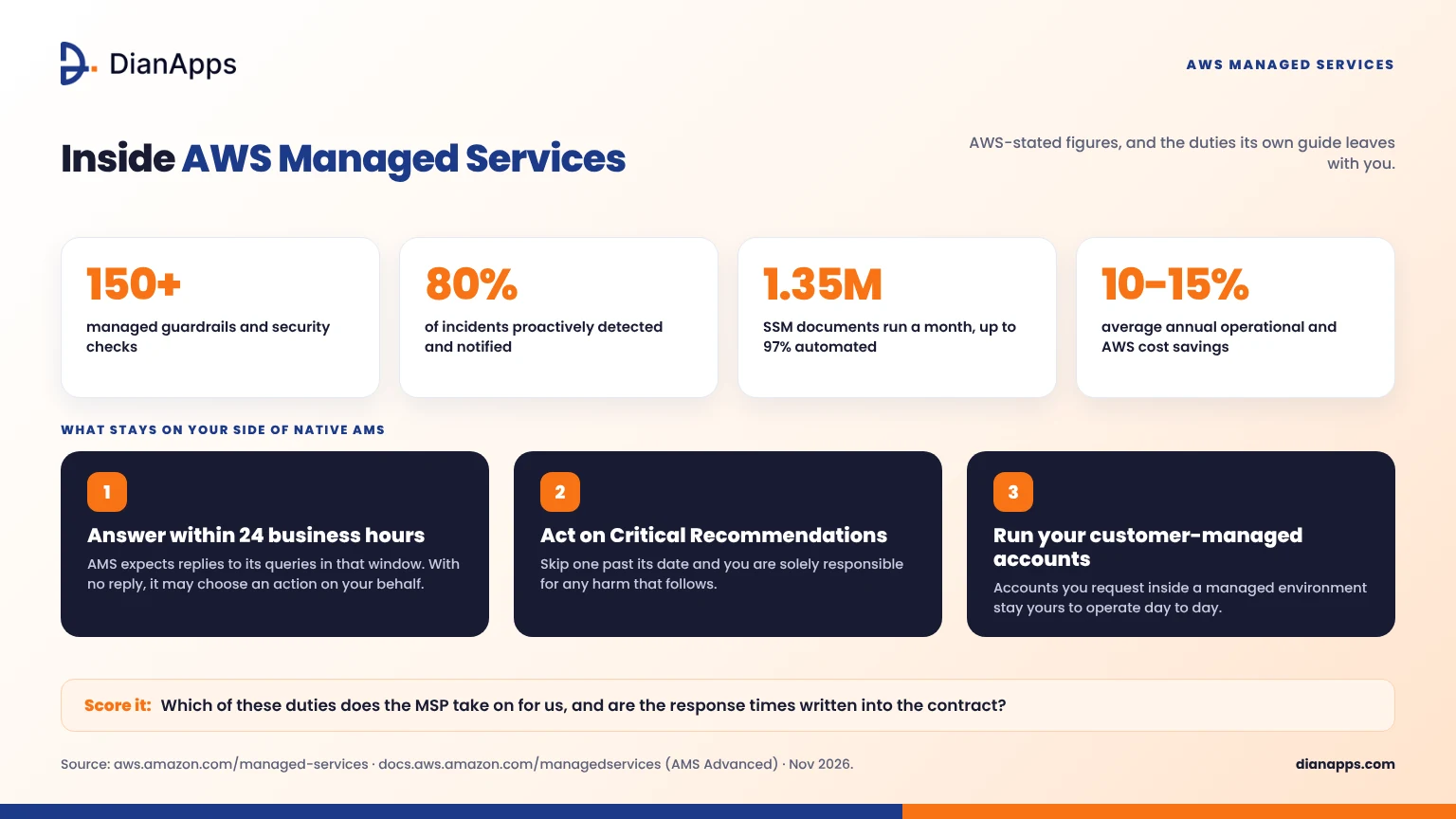
Dedicated ops teams monitor CloudWatch alerts and GuardDuty security events around the clock. They handle patch updates, run disaster recovery tests, enforce change management playbooks, and shut down idle cloud resources so you aren’t paying for wasted server space month after month.
According to the official AWS Managed Services Documentation, AWS Managed Services operates infrastructure on your behalf using automated playbooks and enterprise controls. That takes the heavy operational burden off lean development teams so they aren’t stuck dealing with system maintenance at odd hours.
Evaluate Your Cloud Operating Model
Speak with our certified AWS architects to determine whether your team needs project consulting, managed operations, or a blended support model that scales with your growth.
Side-by-Side Comparison: AWS Consulting Partners Vs Managed Services
When you compare capabilities, payment structures, and daily team habits side by side, choosing the right support setup becomes straightforward. Here is how project-based consulting stacks up against ongoing managed support across key operational factors.
| Evaluation Factor | AWS Consulting Partner | AWS Managed Services / MSP | Blended Support Model |
|---|---|---|---|
| Primary Objective | Build and modernize cloud builds. | Maintain 24/7 server uptime. | Combine features with support. |
| Engagement Duration | Defined projects (four to twenty-four weeks). | Long contracts (twelve to thirty-six months). | Flexible quarterly retainers. |
| Response Commitments | Milestones during business hours. | Strict fifteen to sixty-minute incident SLAs. | 24/7 response with sprint work. |
| Code & Architecture | Writes IaC and custom code. | Operates within guardrails. | Co manages templates and code. |
| Ideal Internal Team | Ops needing extra architects. | Lean teams lacking ops cover. | Fast-growing agile teams. |
How AWS Support Plans Fit Into The Equation
A lot of tech leaders confuse native AWS Support plans with third-party managed services or consulting teams. That mixup creates painful surprises when something actually breaks in production. Native AWS Support gives your team access to Amazon reps for platform advice, but those reps won’t log into your console to write fixes or edit custom deployment scripts.
AWS Developer and Business plans provide basic ticket responses and guidance while leaving actual system fixes on your plate. Enterprise support tier includes a technical account manager with fast response times for major incidents, but they function as advisors rather than hands-on system administrators. Third-party MSPs step directly into your environment to write code fixes and run your day-to-day infrastructure.
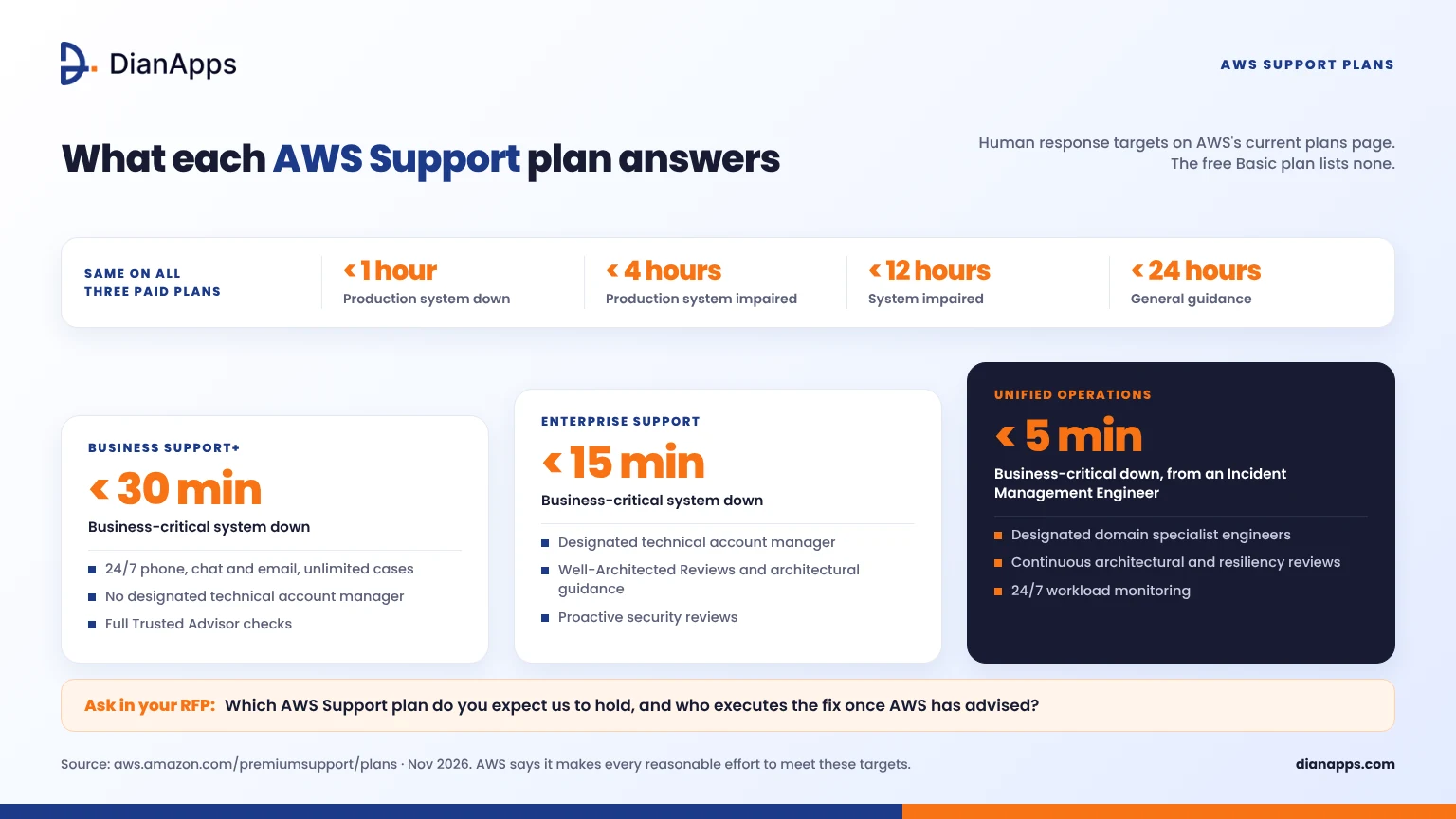
Even if you pay for top-tier AWS support, you still need engineers who can execute security updates and repair application bugs when alerts trip. If you stack native support tiers on top of hands-on partner execution, you won’t have to worry about unpatched vulnerabilities or unhandled system crashes.
When Your Business Needs An AWS Consulting Partner
You’ll get the highest return from a consulting partner when your company faces major technical shifts, architectural blockers, or team skill gaps. They let your team execute big cloud upgrades under expert guidance without forcing you to add permanent full-time salaries to your balance sheet.
It makes sense to bring in consultants when you’re migrating legacy databases to AWS, setting up infrastructure for SOC 2 compliance, or building AI pipelines on Amazon Bedrock. Experienced advisory teams bring proven setup templates that speed up sprint work while training your devs on best practices along the way.
When Managed AWS Services Are The Better Choice
Setting up an internal ops team means hiring senior engineers, purchasing expensive monitoring software, and managing painful on-call rotations. Partnering with an external MSP gives growing companies solid uptime and stability at a fraction of full-time hiring costs.
Managed services are ideal when small engineering teams can’t handle overnight pages without burning out. They work great when client contracts require strict uptime guarantees, when audits demand regular patch logs, or when finance leaders want to avoid surprise contractor bills during sudden outages.
Keeping up with routine system maintenance stops minor warnings from turning into full production crashes. When you pass daily infrastructure care to an external ops team, your developers stay focused on building core product features instead of fixing server errors.
Offload 24/7 Cloud Operations Safely
Discover how our managed AWS operations and proactive FinOps governance protect your uptime while freeing your internal developers to focus on core product innovation.
The Hybrid Model: Combining Strategic Consulting With Managed Operations
Modern cloud environments evolve constantly as developers deploy new code, add third-party integrations, and expand into new server regions. When you combine project consulting with ongoing managed operations, you cut out handoff friction between build and support teams so your infrastructure grows without breaking security rules.
In a hybrid support model, the same engineers who design your cloud templates help maintain them in production to prevent knowledge loss. They run quarterly reviews to clean up technical debt, tune database queries to cut monthly bills, and work alongside your devs so your team picks up advanced AWS skills naturally.
Key Criteria For Evaluating AWS Consulting And Managed Providers
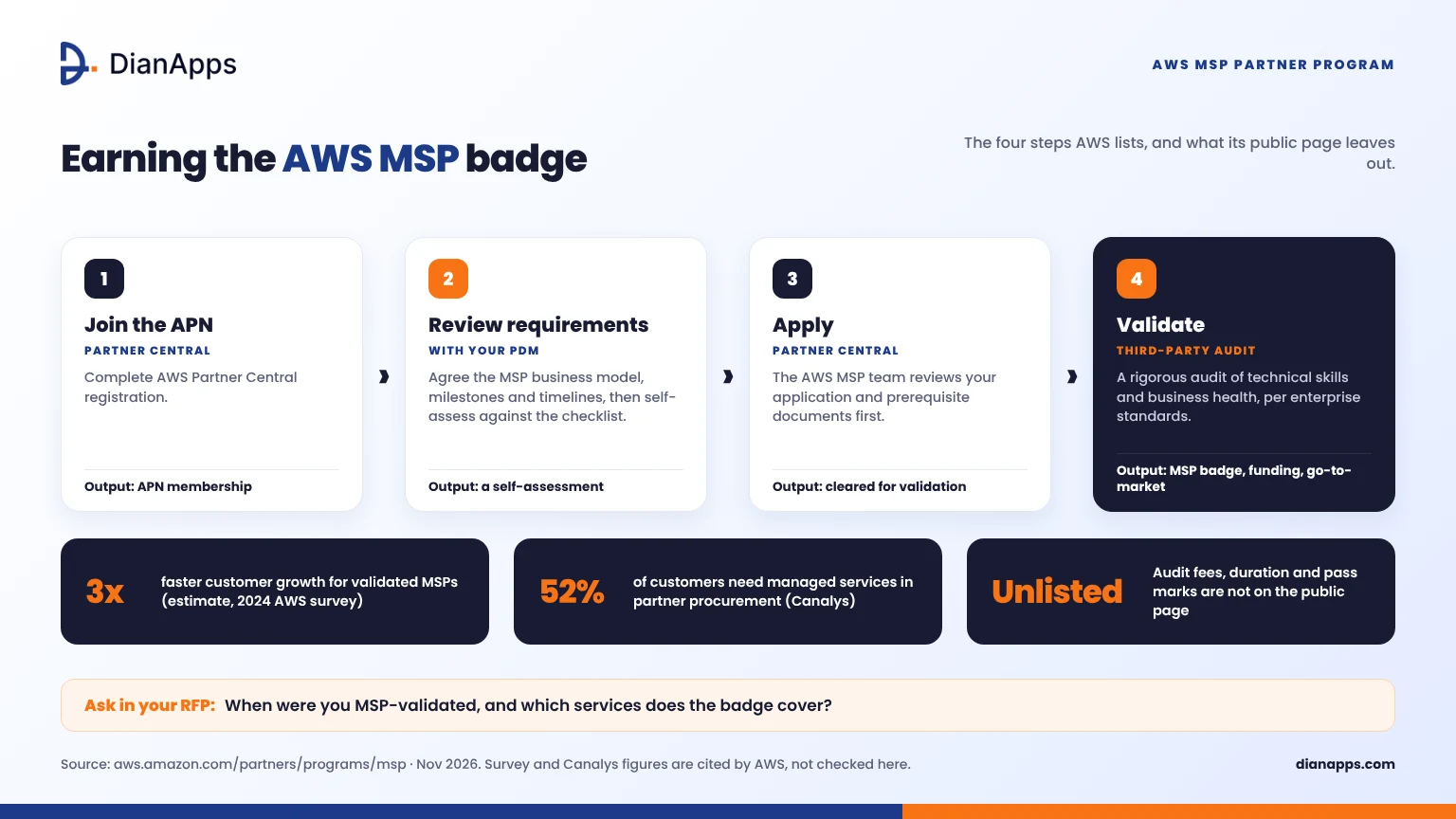
Picking an external AWS partner requires looking closely at technical credentials, security standards, and contract terms. Reviewing candidate skills through AWS Partner Competencies explained confirms that candidate firms have passed official audits led by AWS solution architects.
Make sure your provider holds official AWS MSP credentials, uses temporary IAM roles with full audit logging, and ensures your company owns all infrastructure code. Writing a detailed AWS consulting RFP helps you compare vendor proposals fairly based on real technical capabilities.
Build Your Custom AWS Support Plan
Connect with our senior AWS solution architects to design a tailored consulting and managed operational framework aligned with your business goals.
Conclusion
Deciding between an AWS consulting partner and a managed service provider comes down to your current team needs. Consulting partners drive major transformation projects like cloud migrations, while managed service providers keep day-to-day infrastructure running through monitoring and patching. If you combine both models, you’ll get a flexible support setup that scales your cloud presence without risking application uptime.
 0 comments










Your email address will not be published. Required fields are marked *