














 0 comments





Key Takeaways:
- Splitting your basic file storage from actual query compute lets big platform parts scale on demand without blowing up monthly cloud invoices.
- Using open Apache Iceberg table layouts gives software teams real ACID transactions across S3 storage so organizations don’t get stuck in vendor lock-in.
- Managing permissions inside Lake Formation gives security teams full control across Redshift and Athena, which takes heavy manual administrative strain off engineers.
- Automating ingestion pipelines with serverless Glue catches bad data values early before corrupt records hit downstream business dashboards.
- Syncing database tables into Redshift using native zero ETL tools delivers live reporting for executives without custom ingestion scripts.
Quick Answer: AWS data and analytics consulting helps organizations unify disconnected databases into governed Amazon S3 data lakes, serverless AWS Glue pipelines, and Amazon Redshift warehouses. Data architects adopt open Apache Iceberg table formats and centralized Lake Formation permissions to deliver fast analytics and AI-ready datasets affordably.
Nothing frustrates executive leadership faster than a finance dashboard still spinning at 9:05 AM right before a big call. Legacy transactional databases choke when gigabytes of unorganized log files hit them all at once. Most engineers fix this bottleneck by following proven AWS reference architectures that split underlying file storage from your query nodes. When you separate these systems, you keep your cloud costs low while turning chaotic customer events into clean daily numbers before breakfast.
Designing A Modern Data Architecture On AWS
Old relational databases force you to pay for massive server hardware just to survive short morning query spikes. Modern cloud setups separate storage from raw processing power, so each piece expands only when traffic hits. Raw data lands in cheap object storage first, which keeps heavy analytical requests from slowing down your live app.
When you build a clean backend, your raw records move naturally into clean dashboards. Data engineering teams set up four basic pieces to keep things running:
- Central S3 storage keeps raw JSON logs and transformed datasets separated across secure boundaries.
- Apache Iceberg table formats bring real ACID transactions to object stores without file corruption.
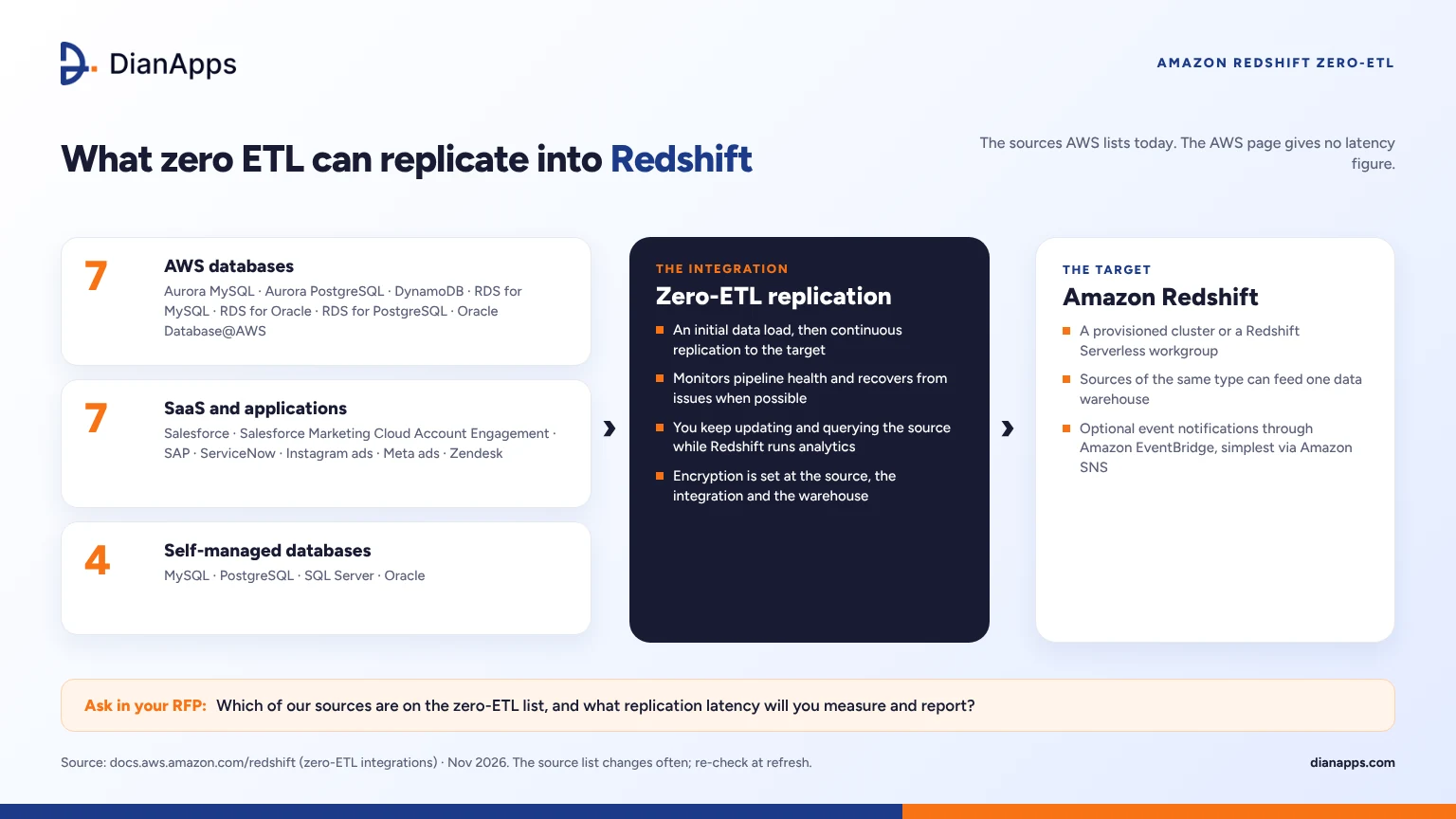
- Zero ETL replication streams live database changes right into warehouses without custom code.
- Targeted query engines route specific analyst workloads to low-cost compute instances.
Open formats like Iceberg turn plain S3 buckets into real SQL tables. Your analysts won’t run into broken rows while nightly ingestion scripts run in the background. AWS zero ETL tools send database updates straight to your warehouse, so you can drop custom code and keep dashboards current.
Building Governed Data Lakes With Amazon S3 And AWS Lake Formation
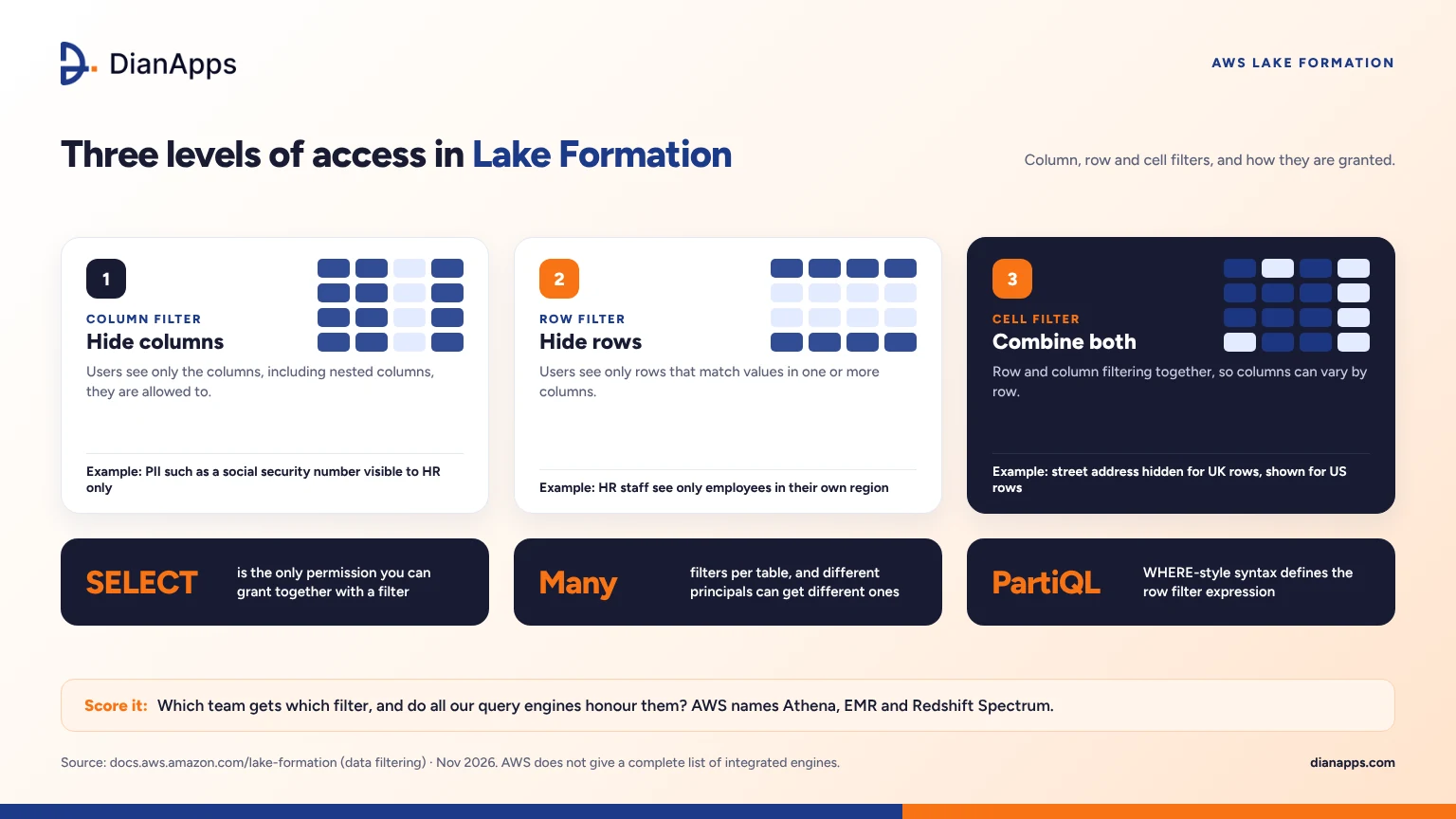
If you manage millions of files in raw buckets, permissions get messy fast. Teams working with AWS Consulting Services drop custom bucket policies for simple Lake Formation rules. This keeps sensitive user IDs safe while your data scientists run SQL without waiting for access approvals.
- Centralized access rules inside Lake Formation manage table and column permissions across tools.
- Automated bucket lifecycle rules shift cold log archives into cheap Glacier storage tiers.
- Parquet format conversions compress raw files to speed up ad hoc SQL query execution.
- Private VPC endpoints lock storage connections inside your internal cloud network boundaries.
Lake Formation lets security leads set row and column rules for specific team groups without touching storage settings. S3 lifecycle policies move old files to deep archive tiers automatically, and converting text to Parquet cuts Athena scan costs on every query.
Serverless ETL And Metadata Management With AWS Glue
Writing custom Python scripts wastes hours whenever source schemas change without warning. Serverless Glue crawlers spot incoming file structures automatically, update the Data Catalog, and clean records without server management. Your analysts can query fresh partitions the moment new data lands.
According to official AWS Glue Documentation, Glue works with open table formats and over a hundred SaaS connectors out of the box. Automated data quality checks catch missing fields and broken strings before dirty records land in business reports. You don’t pay for idle servers because serverless jobs run only when processing active workloads.
Eliminate Fragile Manual ETL Scripts
Work with certified AWS data engineers to design serverless AWS Glue pipelines, governed S3 data lakes, and automated data quality checks tailored to your business needs.
High-Scale Big Data Processing With Amazon EMR
Serverless Glue works great for basic batch runs, but giant clickstream jobs need heavy compute power. Nobody wants a Spark job crashing out of memory at 2 AM. Big data teams spin up custom EMR clusters on tuned nodes so heavy transformations finish on schedule every night.
Graviton instances on ARM hardware cut your compute costs while speeding up distributed jobs. You can mix cheap Spot instances into non-critical worker nodes to process massive jobs without spiking your monthly cloud bill. Custom Spark memory partition settings give data teams the exact setup they need for heavy math.
Enterprise Data Warehousing And Operational Databases: Redshift And RDS
Executive dashboards need fast responses across multi-year trends, but web applications need quick transactions for user orders. Running big analytical queries on RDS databases like PostgreSQL leads to locked tables and slow apps. Offloading analytical work to Redshift keeps your core backend fast for customers.
Redshift keeps your production app database safe from heavy SQL calculations. Proper sort keys and distribution styles mean compute nodes scan fewer blocks, which speeds up report loading. Redshift Spectrum lets your team query cold S3 archives alongside warehouse tables using regular SQL.
Comparing AWS Analytics And Storage Engines
Picking the right tool for each analytical job stops speed bottlenecks and keeps bills predictable. Combining S3, Glue, EMR, Redshift, and RDS lets you route queries to the right compute engine. Here is how these tools stack up across cloud setups.
| AWS Service | Primary Role | Ideal Data Format | Best Business Use Case |
|---|---|---|---|
| Amazon S3 | Durable object storage foundation | Parquet, Iceberg, JSON, CSV | Raw landing zones and long-term archives |
| AWS Glue | Serverless ETL and metadata catalog | Structured and semi-structured | Automated daily ingestion and schema cataloging |
| Amazon EMR | Large-scale big data processing | Parquet, ORC, Avro, Iceberg | Petabyte-scale Spark jobs and Flink streaming |
| Amazon Redshift | Enterprise cloud data warehouse | Columnar warehouse tables | High concurrency BI dashboards and reporting |
| Amazon RDS | Managed relational database store | Normalized relational tables | Transactional web backends and SaaS applications |
Checking team SQL skills, query speed, and data size helps architects pick the right tool for every project. Serverless tools like Athena simplify quick data checks, while Redshift clusters keep daily reporting costs steady. Open table formats let separate analytics tools read shared S3 files without saving duplicate copies.
Legacy Data Warehouse Migration and Cross-Cloud Integration
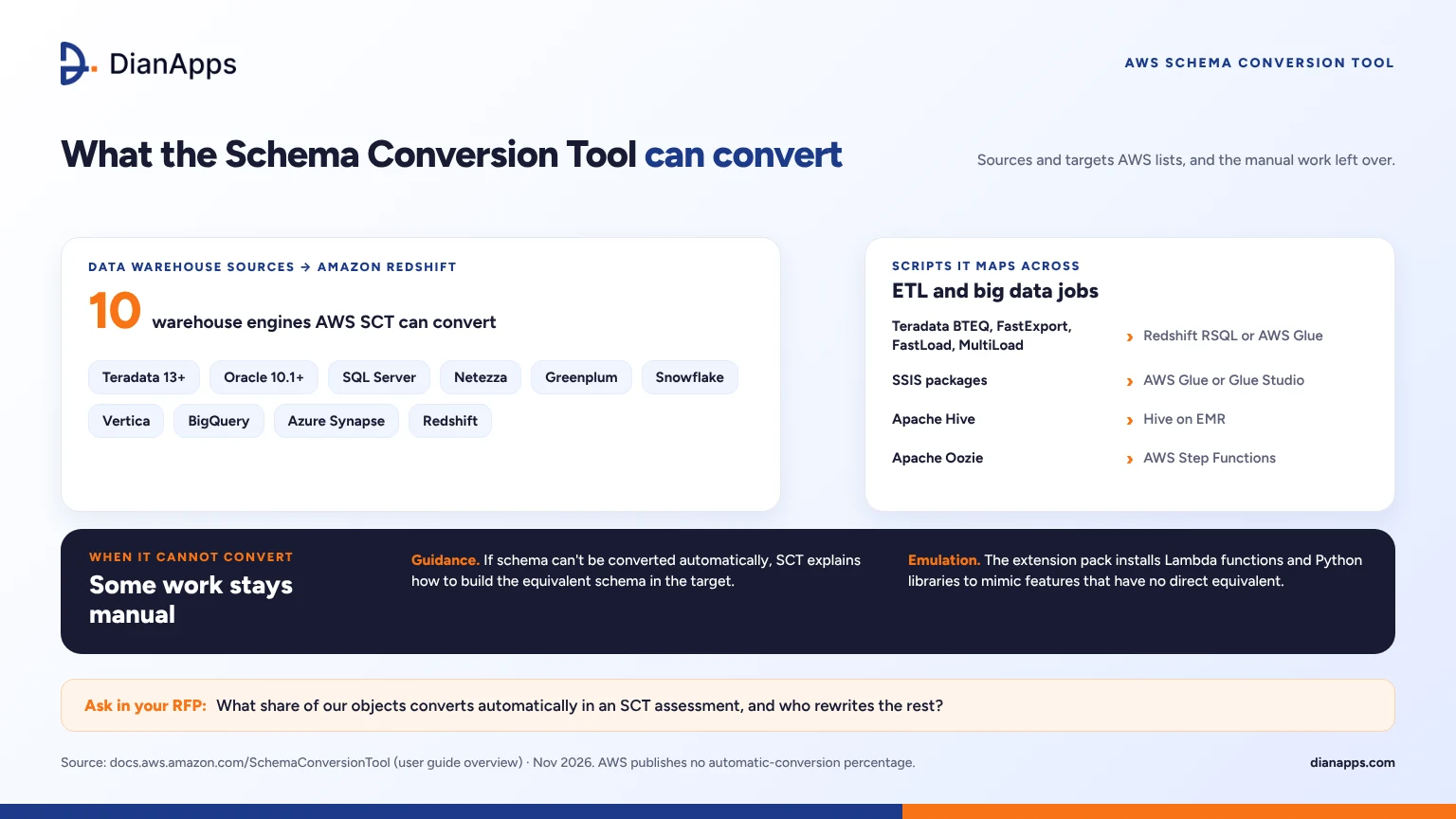
Moving legacy database engines like Teradata or Oracle to the cloud needs careful schema mapping to prevent downtime. Teams building an AWS consulting RFP outline clear steps before starting. Good planning makes sure complex stored procedures and legacy logic get rewritten for cloud engines without dropping historical records.
AWS Schema Conversion Tool translates old database objects into cloud native SQL automatically. Database Migration Service syncs source databases with target warehouses through continuous replication, while validation scripts verify row counts match across systems before final cutover.
Transition Legacy Analytics Without Downtime
Partner with AWS data architects to migrate on-premises databases onto Amazon Redshift, Aurora, and governed S3 lakes safely without disrupting daily business operations.
Data Governance, Security, And AI Readiness
Clean data architectures form the base for accurate AI tools and clear reports. Teams setting up multi-account cloud landing zones with AWS Landing Zone and Control Tower isolate sensitive records while keeping access simple for analysts. Engineers building machine learning platforms talk with AWS AI and machine learning consulting experts to convert clean tables into vector stores for AI apps.
Splitting dev accounts from production environments lowers security risks across teams. Amazon Macie scans S3 storage to catch sensitive user data before raw records hit training sets, while customer KMS keys let security leads encrypt object data and revoke permissions instantly if credentials leak.
How To Choose An AWS Data And Analytics Consulting Partner
Picking an engineering partner means checking real production work, compliance skills, and cost strategies. Tech leaders reviewing team skills check resources like AWS Partner Competencies explained to confirm practical experience with cloud data builds. This check helps you avoid expensive design mistakes while your team learns the new platform.
Verified AWS competencies show that a partner has built working data platforms in live setups. Smart cost controls prevent surprise bills with auto scaling and storage tiering, while open table formats like Iceberg let you add new analytical tools down the road.
Turn Disconnected Data Into Real-Time Decisions
Connect with our AWS data architects to design scalable data lakes, Redshift warehouses, and governed ETL workflows tailored to your business requirements.
Conclusion
Setting up a modern data platform on AWS replaces slow, isolated databases with clear, fast reporting systems. Decoupling storage from compute using S3 and Apache Iceberg keeps datasets durable and cloud bills down. Serverless AWS Glue pipelines handle schema updates without constant maintenance, while Amazon EMR handles giant data jobs. Moving reporting workloads to Amazon Redshift keeps your core application database fast for users. Central governance through AWS Lake Formation keeps data safe while giving your team the access they need to build great tools.
 0 comments










Your email address will not be published. Required fields are marked *