












 0 comments





Key Takeaways:
- Cloud consulting services are helping businesses plan, build, migrate, secure, and run their cloud environments without hiring a full in-house team of specialists.
- Most engagements fall into three models: advisory, delivery, and managed services, and each one solves a different problem at a different stage.
- Pricing is usually hourly, fixed-fee, monthly retainer, or outcome-based, and hourly rates differ a lot between US firms and experienced Indian teams.
- Every engagement should end with clear deliverables like assessment reports, architecture diagrams, infrastructure code, runbooks, and a cost model your own team can use.
- The right cloud consulting company is the one that is documenting everything, transferring knowledge, and measuring success by business outcomes rather than hours billed.
Quick Answer: Cloud consulting services help businesses plan, build, migrate, secure, and manage cloud environments on platforms like AWS, Azure, and Google Cloud. They typically cover three areas: advisory for strategy and assessments, delivery for architecture and migration, and managed services for ongoing operations. Deliverables may include readiness reports, target architecture, migration plans, infrastructure code, and cost models, with pricing based on hourly rates, fixed project fees, or monthly retainers.
Moving to the cloud sounds quite simple on paper, where you pick a provider, move your apps, and start paying only for what you use, but anyone who has been through a migration that went over budget, a cloud bill that doubled within a few months, or a security alert in the middle of the night knows how quickly this is getting complicated. This is the reason why businesses/organisations are now bringing in cloud experts, and if you are still getting familiar with the platforms themselves, our guide on what AWS is explains the basics before you start comparing consulting proposals.
But here is where the real confusion is starting, as three different vendors are sending proposals for “end-to-end cloud consulting services”, each with a different scope and a very different price, and most leaders/managers are not sure what they are actually paying for. So what are cloud consulting services exactly, what do cloud consultants do, and how is the pricing being decided? Well, let’s break it down, starting with what you are actually buying when you sign the contract.
What Are Cloud Consulting Services?
Cloud consulting services are professional services in which certified cloud experts help a business decide how to use the cloud, build the right environment, move existing systems into it, and keep it secure, reliable, and cost-efficient over time. Instead of hiring a full team of cloud architects, DevOps engineers, and security specialists, businesses are bringing in a cloud consulting company that already has this experience from many similar projects.
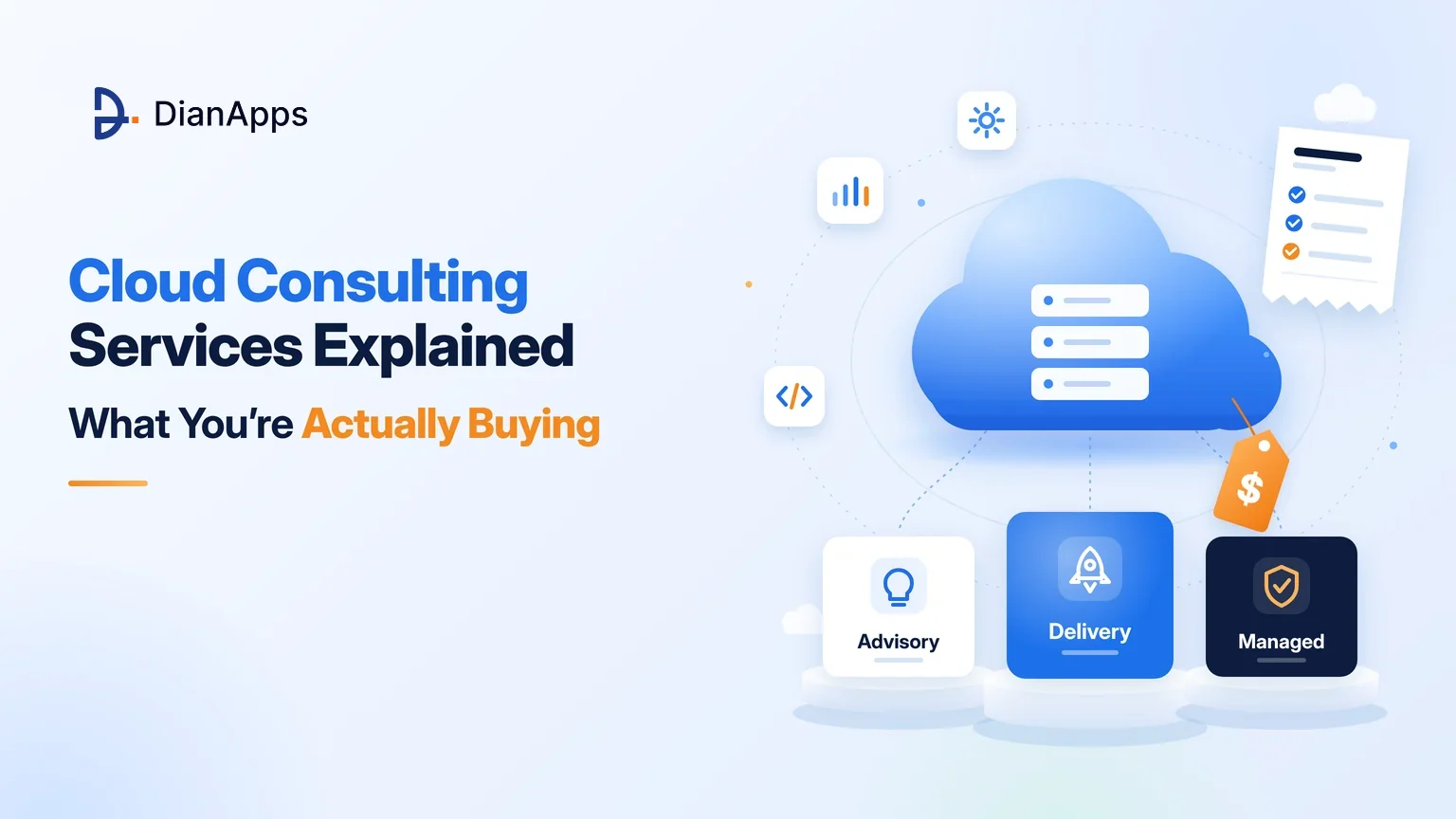
The easiest way to understand it is to think about building a house, as most people are not designing the structure, laying the wiring, and checking the plumbing themselves; they are hiring an architect to plan it, a contractor to build it, and sometimes a property manager to look after it later. Cloud consulting is working in the same way, where advisory is the architect, delivery is the contractor, and managed services is the property manager who is keeping everything running smoothly.
The need for this kind of expertise is also growing each and every year, as Flexera’s 2026 State of the Cloud Report found that organisations are estimating 29% of their cloud spend as wasted- the first increase in five years- and 85% of respondents named managing cloud spend as a key challenge. This is why cloud consulting is no longer seen as a luxury for large enterprises, as it is becoming a practical way for businesses of every size to stop losing money on a setup that nobody fully understands.
The Challenges of Managing the Cloud Without Expert Help
Before understanding what cloud consulting services are offering, it is important to look at the problems businesses are facing when they are moving to the cloud or running it entirely on their own, without any expert guidance.
Running the cloud without the right expertise usually comes with a long list of headaches, resulting in:
- Cloud bills that are growing every month without anyone being able to explain where the money is going.
- Migrations that are taking twice as long as planned because application dependencies were never properly mapped.
- Security gaps like open storage buckets, weak access controls, and missing multi-factor authentication on important accounts.
- Teams spending their days firefighting outages and alerts instead of building new features for customers.
- Compliance audits that are failing because the business is not able to produce the right evidence on time.
Inefficiencies like these don’t just frustrate the IT team; they also slow down the entire business, as new products are taking longer to launch, customers are facing slow or unstable apps, and leaders are spending money on infrastructure that is not really helping the business grow. This is exactly where cloud consulting services are stepping in.
What Do Cloud Consultants Do?
A very common question from business leaders is what do cloud consultants do once the contract is signed, and the honest answer is that their work is spread across the full lifecycle of a cloud environment, so let’s take a look.
- Assessment is the starting point, where consultants are reviewing your current servers, applications, licences, costs, and dependencies to understand what is ready for the cloud and what needs more work.
- Strategy is connecting technology choices with business goals, like faster releases, lower costs, global expansion, or AI readiness, and turning them into a clear roadmap with phases and priorities.
- Architecture is designing the target environment, including networking, identity, security controls, regions, and the account structure or landing zone that every workload is going to sit on.
- Migration is moving applications and databases using approaches like rehosting, replatforming, or refactoring, depending on how valuable and how complex each application really is.
- Security and Compliance is setting up guardrails, encryption, logging, and access controls, so that the environment is meeting standards like ISO 27001, SOC 2, HIPAA, or India’s DPDP framework.
- Automation is building infrastructure as code and CI/CD pipelines, so that environments are repeatable and deployments are happening in minutes instead of being configured manually.
- Cost Optimisation is reviewing cloud bills, rightsizing resources, removing idle infrastructure, and recommending Savings Plans or Reserved Instances to bring the monthly spend down.
- Knowledge Transfer is training your internal team and handing over documentation, so that the business is not permanently depending on the consultants for every small change.
This is why the question of what cloud consultants do is really a question about scope, as one engagement may cover only assessment and strategy, while another covers everything from beginning until completion.
Advisory vs Delivery vs Managed Cloud Consulting Services
Most cloud consulting services fall into three broad models, and many proposals are mixing them together without clearly saying so, which is where the confusion and budget overruns usually start, so let’s take a look at each one.
Cloud Advisory Services
Cloud advisory services are focused on thinking, planning, and decision-making, where senior consultants are studying your business, your current systems, and your goals, and then recommending what should be done, in what order, and at what cost. Typical advisory engagements include cloud readiness assessments, cloud strategy and roadmaps, platform selection between AWS, Azure and Google Cloud, total cost of ownership analysis, security posture reviews and FinOps assessments.
The important thing to understand here is that cloud advisory services do not build anything themselves, as the output is a set of recommendations, reports, and plans that your team or a delivery partner is going to execute later. In the US market, cloud readiness assessments commonly take between two and four weeks, which makes advisory a relatively quick and low-risk starting point for most businesses.
Cloud Delivery and Implementation Services
Delivery services are where the plans are actually turning into working infrastructure, as engineers are designing landing zones, building networks, migrating applications and databases, setting up CI/CD pipelines, and configuring security controls hands-on. This is usually the largest part of any cloud budget, because it involves more people, more time, and more risk than advisory work.
A good delivery engagement is always working from a clear architecture and migration plan, and if a consultant is jumping straight into building without any assessment, it is a sign that important decisions are being made without proper analysis. Our cloud migration services are following this assessment-first approach, so that each and every workload is moved for a clear reason and with a tested rollback plan.
Cloud Managed Services
Managed services are taking over the day-to-day running of your cloud environment once it is live, including 24/7 monitoring, incident response, patching, backups, security operations and continuous cost optimisation, usually under a monthly contract with agreed service levels. This model is really useful for businesses that do not want to build a large internal operations team, or that need round-the-clock coverage across multiple time zones.
The key detail to check here is the service level agreement, as response times, escalation paths, the definition of an incident, and the exact list of included services are deciding factors in how useful the contract really is. If you are considering this model, our guide on hiring a cloud-managed service provider covers these contract details in detail.
To really understand the difference, it is helpful to compare the three models side by side, based on what each one is delivering and when it fits best.
| Factor | Advisory | Delivery | Managed |
| Main Goal | Decide what to do | Build and migrate | Run and optimise |
| Typical Duration | 2 to 8 weeks | 1 to 12 months | Ongoing, monthly |
| Who Does the Work | Senior architects | Engineers and architects | Operations team |
| Main Output | Reports and roadmaps | Working infrastructure | Uptime and savings |
| Common Pricing | Fixed fee | Fixed fee or T&M | Monthly retainer |
| Best Stage | Before starting | During transformation | After go-live |
The table makes it clear that advisory vs delivery vs managed is not about which one is better, as it is really about sequence, and most successful cloud programmes start with advisory, move into delivery, and then continue with managed services or an internal team.
Still wondering which type of cloud consulting your business needs?
Connect with our team of cloud experts; we will analyse your current setup, goals, and budget and recommend the approach that is creating the most value for you.
What Deliverables Should You Expect From a Cloud Consulting Company?
Deliverables are the most important part of any proposal, because they are the only real proof that the money spent has created something lasting, and a professional cloud consulting company should be listing them clearly before the work even begins.
Here is a simple summary of the deliverables you should be expecting from each type of engagement, for quick reference.
| Engagement Type | Key Deliverables |
| Cloud Readiness Assessment | Application inventory, dependency map, readiness scores, risk register |
| Cloud Strategy and Roadmap | Target state vision, phased roadmap, TCO and business case |
| Architecture and Landing Zone | Architecture diagrams, account structure, network and security design |
| Migration | Migration wave plan, migrated workloads, cutover and rollback runbooks |
| Security and Compliance | Gap analysis, remediation plan, configured guardrails, audit evidence |
| DevOps and Automation | Infrastructure as code, CI/CD pipelines, deployment guides |
| FinOps and Cost Optimisation | Cost baseline, savings report, tagging policy, commitment recommendations |
| Managed Services | Monthly reports, SLA metrics, incident logs, optimisation actions |
And that is not all; the format of these deliverables is mattering just as much as their existence, as a 200-page PDF that nobody is reading is far less useful than clean infrastructure code, an editable architecture diagram and a runbook your team is able to follow at 2 AM.
Before signing anything, it is always worth asking the consultant to share a sample deliverable from a previous project, with the client details removed, because this shows the real quality of their work much better than any sales presentation.
Understanding Cloud Consulting Pricing
Pricing is one of the most confusing topics for business leaders, mainly because the same scope can be quoted very differently depending on the pricing model, the team’s location, and how much risk the consultant is taking on, but once the basic models are clear, the picture becomes much simpler.
Cloud consulting companies are offering a few different ways to pay, depending on how clear and predictable your scope is, including:
| Pricing Model | How It Works | Best Suited For |
| Hourly or Time and Materials | Billed for actual hours spent | Unclear or evolving scope |
| Fixed Fee | One agreed price for defined deliverables | Assessments and well-scoped projects |
| Monthly Retainer | Fixed monthly fee for ongoing support | Managed services and on-call advisory |
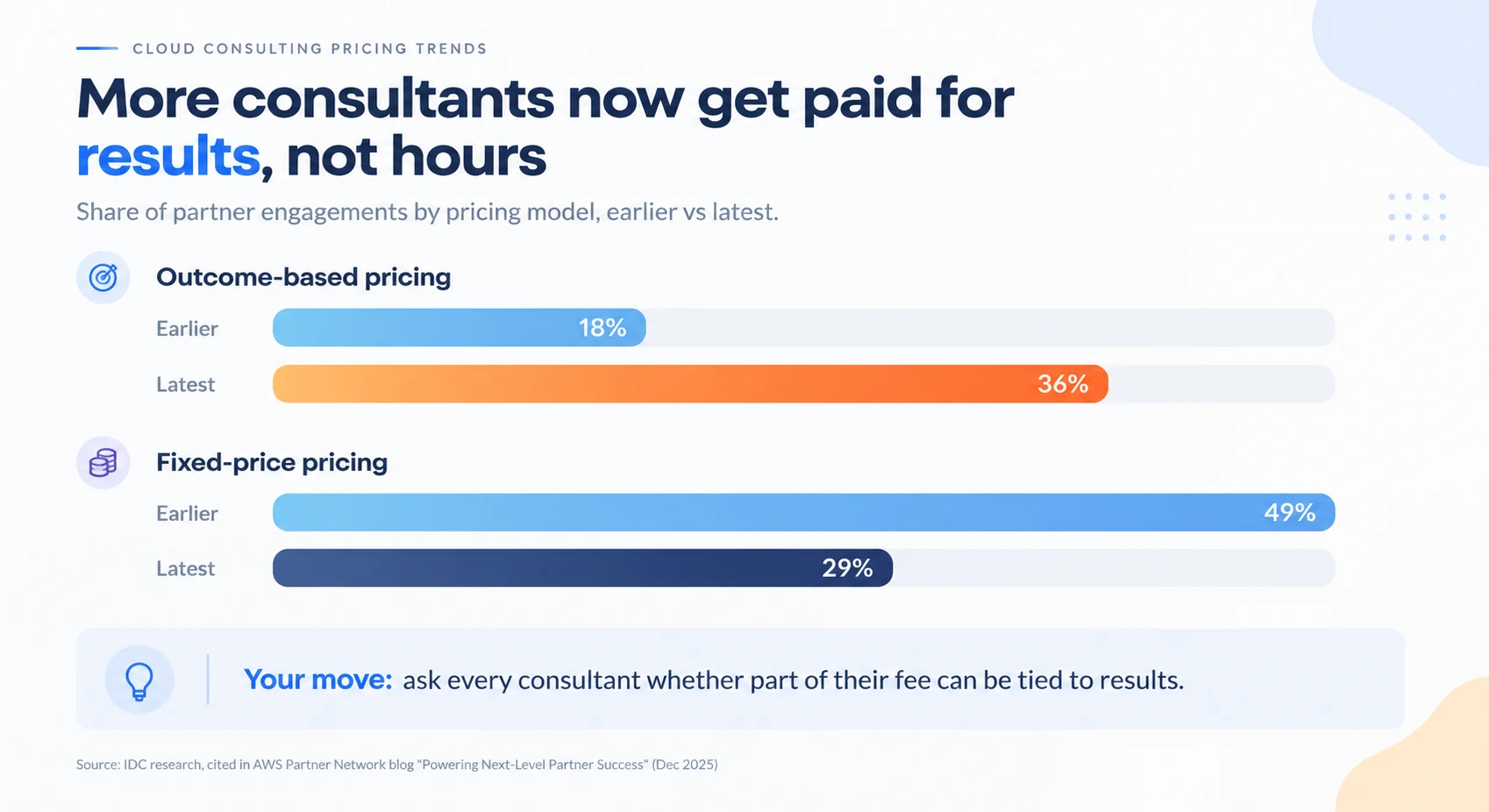
| Outcome-Based | Fee linked to savings or results | Cost optimisation projects |
Fixed-fee pricing is giving businesses the most budget certainty, but it only works well when the scope and deliverables are written precisely, while time and materials is offering more flexibility but needs regular reporting to keep the costs under control.
Typical Hourly Rates by Region
Geography is having the biggest influence on hourly pricing, as US cloud consulting firms are typically charging anywhere from $125 to more than $300 per hour because of specialised expertise and enterprise delivery expectations. Boutique agencies in India are usually charging between $25 and $75 per hour, while those in the US and UK are commonly charging $150 to $250, and at the very top end, enterprise consultancies are reaching up to $850 per hour for high-level advisory and transformation work.
These pricing differences do not always reflect a difference in quality, as many experienced Indian teams are holding the same AWS, Azure, and Google Cloud certifications as their US counterparts, which is why blended teams with onshore leadership and offshore delivery are becoming really popular.
Indicative Budgets by Engagement Type
The table below shows indicative budget ranges for common engagements, based on typical market pricing for small and mid-sized businesses, and actual quotes will definitely vary with complexity, geography, and the number of workloads involved.
| Engagement | Typical Timeline | Indicative Budget (USD) |
| Cloud Readiness Assessment | 2 to 4 weeks | $5,000 to $25,000 |
| Cloud Strategy and Roadmap | 3 to 8 weeks | $10,000 to $50,000 |
| Landing Zone and Architecture | 3 to 8 weeks | $15,000 to $60,000 |
| Application Migration | 1 to 6 months | $25,000 to $250,000+ |
| Cost Optimisation Review | 2 to 6 weeks | $5,000 to $30,000 or share of savings |
| Managed Cloud Services | Ongoing | $2,000 to $15,000+ per month |
The good news is that cloud providers are often funding part of this work, as programmes like the AWS Migration Acceleration Program (MAP) can offset a portion of assessment and migration costs when the engagement is delivered through an eligible partner.
What Is Driving the Final Price?
Even within the same pricing model, the final quote is being shaped by a handful of factors that buyers should understand before comparing proposals, such as:
- The number of applications, databases, and environments that are being assessed, migrated, or managed in the engagement.
- The complexity of legacy systems, including old operating systems, tightly connected databases, and undocumented custom integrations.
- Compliance requirements like HIPAA, PCI DSS, or DPDP, which are adding extra design, documentation, and testing effort.
- The seniority and location of the team, as architect-heavy teams in the US are costing far more than blended global teams.
- Service levels for managed services, since 24/7 coverage with fast response times is priced much higher than business-hours support.
This is why comparing proposals only on the total price is rarely working, and comparing them on scope, deliverables, and team composition is giving a much more accurate picture of the real value.
Who Needs Cloud Consulting Services?
Not every business needs outside help at every stage, but there are some clear signs showing that cloud consulting services are going to pay for themselves, and the reasons are not hard to see once you look at them closely.
- Your cloud bill is growing every month, but nobody in the team is able to explain exactly where the money is going.
- You are planning a migration but are unsure which applications to move first and which approach suits each one.
- Your team is spending more time firefighting outages and security alerts than building new features for your customers.
- An audit, a large enterprise client, or a regulator is asking for compliance evidence that your current setup is not able to provide.
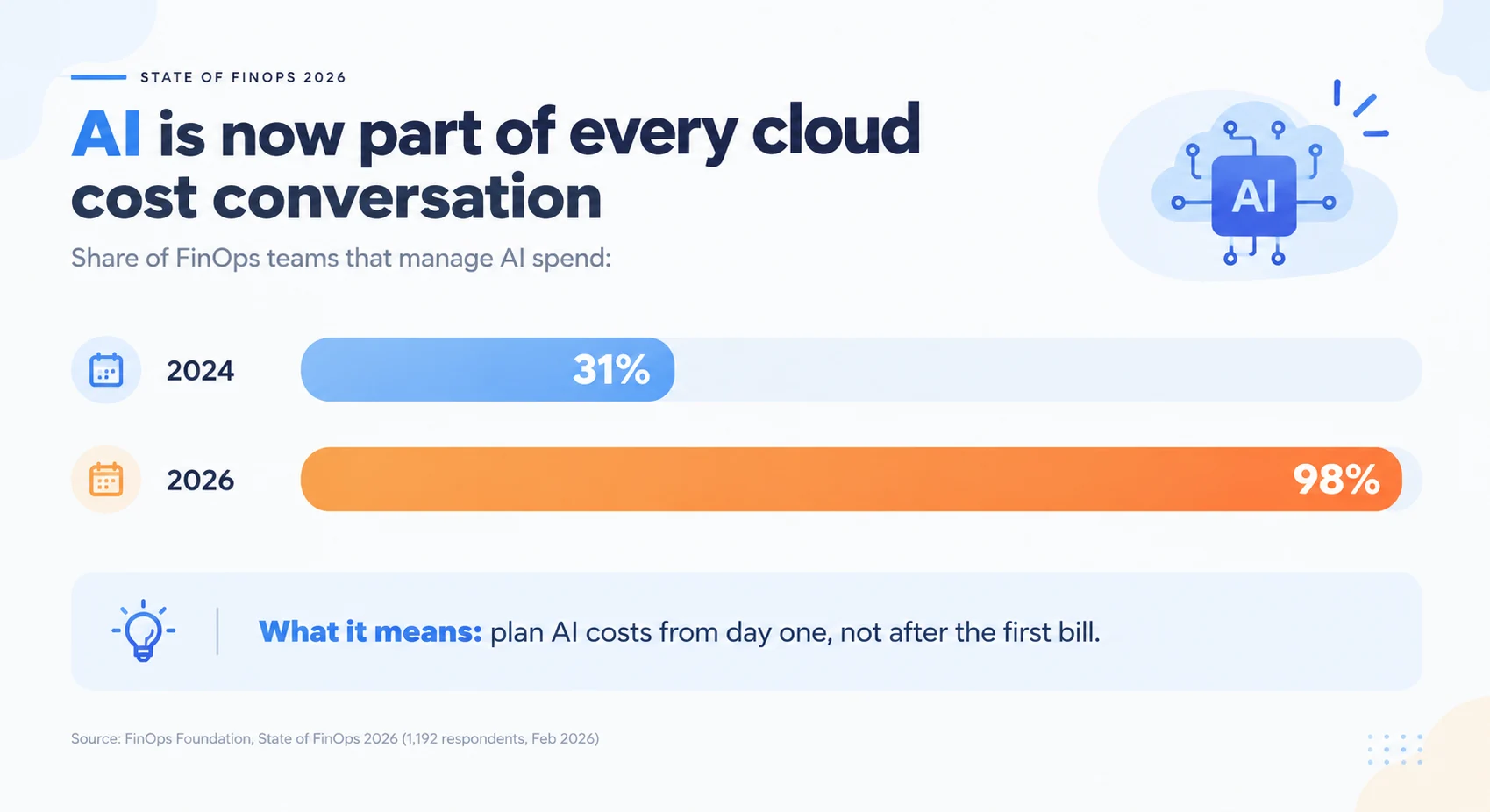
- You are planning AI or data projects but are lacking the architecture and governance foundation needed to run them safely.
If two or more of these are sounding familiar, starting with a short advisory engagement is usually the most cost-effective first step, as it provides clarity before any large spending decision is made.
Is your cloud bill growing faster than your business?
Our certified cloud consultants are auditing your environment, finding hidden waste, and building a clear roadmap that reduces costs while improving security and performance.
Cloud Consulting Company vs In-House Team
A lot of businesses are wondering whether they should hire a cloud consulting company or simply build their own cloud team, and it is helpful to compare both options side by side before making the call.
| Feature | In-House Team | Cloud Consulting Company |
| Upfront Cost | High hiring cost | Project-based fee |
| Time to Start | Months to hire | Days to weeks |
| Breadth of Expertise | Limited to hires | Many specialists |
| Experience Across Projects | One environment | Many environments |
| Long-Term Knowledge | Stays in-house | Needs knowledge transfer |
| Scaling the Team | Slow | Flexible |
The table makes it clear that a cloud consulting company is giving businesses speed and specialised expertise, but the last few rows are also a reminder that knowledge transfer must be part of the contract, which is why most businesses are combining both, using consultants for specialised projects while gradually building their own internal skills.
How to Choose the Right Cloud Consulting Company
Choosing the right cloud consulting company is extremely crucial, as the decisions made in the first few months are shaping your cloud costs, security, and flexibility for years, and the process usually looks like this:
- Checking which cloud platforms and partner tiers they hold, and which certifications the actual project team is carrying.
- Asking for case studies and references from businesses of a similar size, industry, and region as your own.
- Confirming the exact deliverables for each phase, along with the formats in which they will be shared with you.
- Making sure your business owns the infrastructure code, documentation, and accounts once the engagement is finished.
- Understanding how knowledge is being transferred to your team, so that you are not permanently depending on the consultants.
- Clarifying how scope changes are handled and priced, and what progress reporting you are receiving during the engagement.
The best partners are answering these questions clearly and in writing, and if you want to go deeper into partner tiers, certifications, and contract terms, our guide on how to choose an AWS consulting partner covers it in detail.
Common Mistakes Businesses Make When Hiring Cloud Consultants
Even with the best intentions, many businesses are making a few avoidable mistakes when hiring cloud consultants, and these mistakes are often costing far more than the consulting fee itself, such as:
- Accepting vague scope statements like “end-to-end transformation” without a defined list of deliverables and acceptance criteria.
- Agreeing to a full migration or a specific platform before any assessment of applications and business goals has been done.
- Ignoring documentation, knowledge transfer, and code ownership, which often leads to long-term vendor lock-in later.
- Signing managed services contracts without clear SLAs, response times, or a written list of the included services.
- Choosing the cheapest proposal without comparing the team’s seniority, the deliverables, and the hours actually being allocated.
Each of these mistakes is easy to prevent with a little planning, and avoiding them early is saving a lot of money, stress, and rework later on, which is why getting the basics right from day one just cannot be ignored.
Final Thoughts
Cloud consulting services are not a single product that every business is buying in the same way, as they are a mix of advisory thinking, hands-on delivery, and ongoing management, and the businesses getting the most value are the ones that know exactly which of these they are paying for at each stage. Once you are clear on the scope, the deliverables, and the pricing model, comparing proposals is becoming much simpler, and the conversation with any cloud consulting company is shifting from hours and rates to outcomes and accountability.
So whether you are planning your first migration, struggling with a cloud bill that keeps climbing, or preparing the foundation for AI and data projects, understanding what you are actually buying is definitely going to help you make smarter and more confident decisions. If you are still comparing platforms, our AWS vs Azure vs Google Cloud guide is a helpful next read, and if you need a helping hand along the way, our cloud consulting services team is always here to guide you from beginning until completion.
Ready to work with a cloud consulting partner you can trust?
From cloud advisory services and security migration to managed operations, our certified experts are delivering clear deliverables, transparent pricing, and measurable business results.
 0 comments









Your email address will not be published. Required fields are marked *