










 0 comments



Quick Answer:
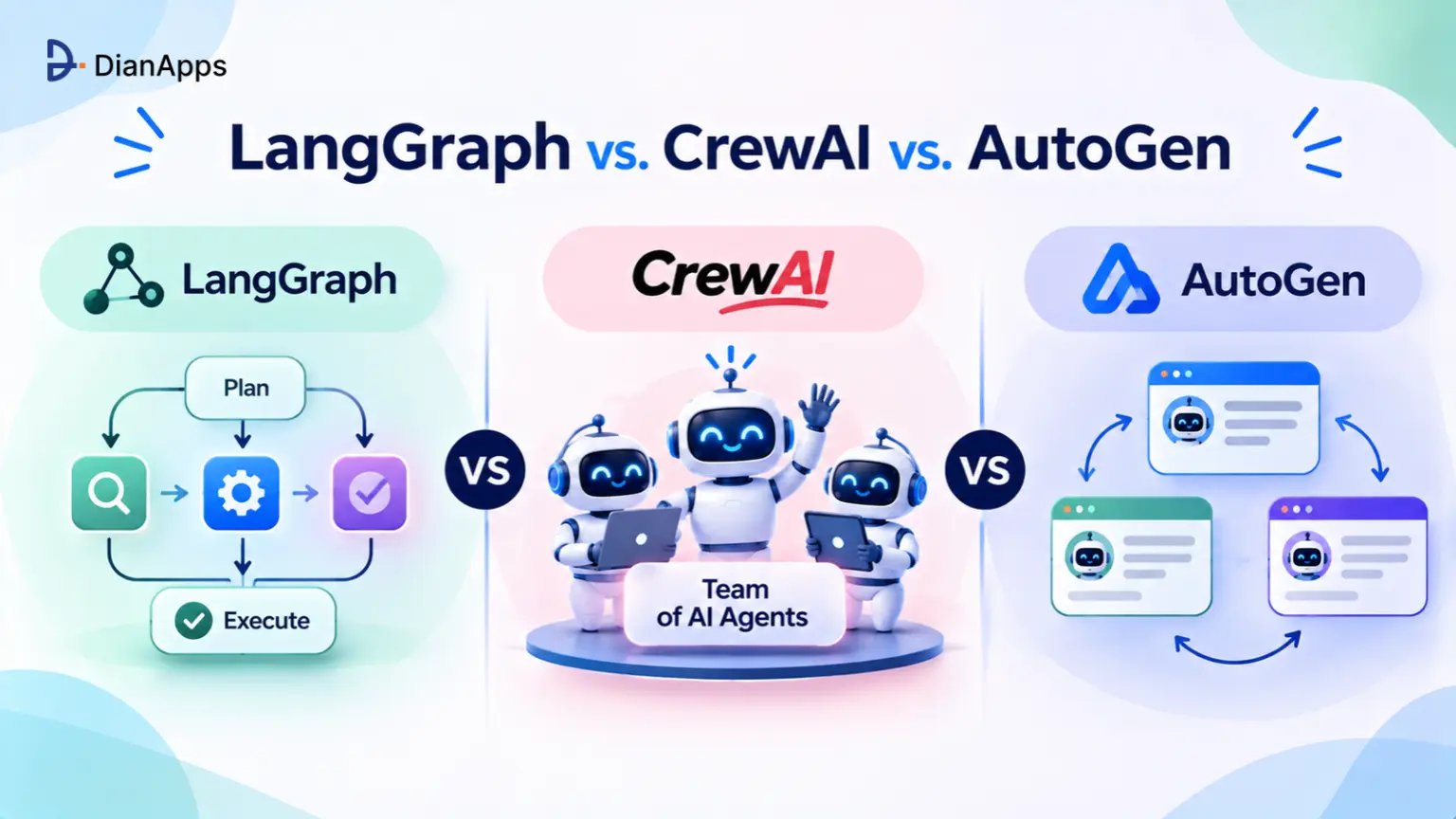
- LangGraph offers graph-based orchestration, durable state and built-in checkpointing for complex, long-running agent workflows.
- CrewAI simplifies role-based agent collaboration and accelerates prototyping, with Flows adding more structured orchestration for production.
- AutoGen’s capabilities are transitioning into Microsoft’s Agent Framework, while AG2 continues as a community-maintained fork.
- LangGraph generally provides better token cost predictability, while CrewAI and AutoGen can incur additional costs through repeated prompts and growing conversation histories.
- Framework selection should account for human approvals, observability, security, deployment needs and production reliability, not just development speed.
Key Takeaways: LangGraph is best for production workflows requiring durable state, checkpointing, human approvals and predictable execution. CrewAI is ideal for quickly building role-based automations and research pipelines, while AutoGen, through Microsoft’s Agent Framework, suits conversational agent systems and Azure-focused teams. The right choice depends on workflow complexity, reliability requirements, token costs and deployment environment.
Every team building agents is hitting the same wall around week six, when the demo that impressed leadership is now timing out, looping, burning tokens and failing silently at two in the morning. The LangGraph vs. CrewAI vs. AutoGen question is usually arriving at exactly that moment, because the framework that made the prototype easy is rarely the one that makes production boring, and boring is what you want.
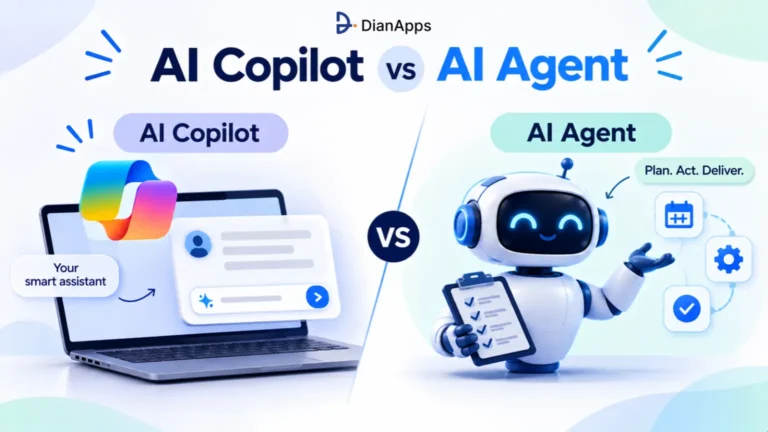
If you’re still deciding whether the problem even needs agents rather than an assistant inside an existing workflow, our comparison of an AI copilot vs an AI agent is worth ten minutes first.
Let’s break it down by the things that actually fail once real users arrive.
Why the Framework Decision Matters More in Production Than in a Demo?
A demo is proving that a model can plan and call tools, while production is proving that the same system is surviving retries, restarts, cost ceilings, audits and users who do unexpected things, and those are framework problems rather than model problems. The three frameworks are making very different bets about how agents should coordinate, and those bets are showing up in operations rather than in the first notebook, in ways like these:
- How state is stored and recovered decides whether a crashed workflow resumes or restarts from scratch and bills you twice?
- How agents talk to each other decides how many tokens a single task is consuming and how predictable that number is?
- How execution is traced decides whether a failure at step seven is diagnosed in minutes or reconstructed over days?
- How approvals are modelled decides whether a human can safely pause a workflow before it emails a customer or moves money?
Each of these is a cost or risk line on somebody’s spreadsheet, and the reasons are not hard to see once you’ve run a few hundred agent executions, so let’s put the three contenders side by side.
LangGraph vs. CrewAI vs. AutoGen at a Glance
Before going deep, the table below is summarising where each framework stands as we head into 2027, drawing on what the maintainers are shipping and what production teams are reporting.
| Dimension | LangGraph | CrewAI | AutoGen |
| Core model | Directed graph of nodes with shared state | Role based crews plus event driven flows | Conversation between agents, now inside Microsoft Agent Framework |
| Maintainer | LangChain Inc. | CrewAI Inc. | Microsoft, with AG2 as a community fork |
| State persistence | Native checkpointers to Postgres, Redis and others | Flow state with optional persistence | Custom or Azure backed, less turnkey |
| Human approval | Interrupt and resume built in | Supported in Flows, lighter in Crews | Possible through user proxy patterns |
| Observability | LangSmith with per node traces | CrewAI Enterprise dashboards | Azure AI integration, basic logging in open source |
| Managed hosting | LangGraph Platform | CrewAI Enterprise | Azure AI Foundry |
| Learning curve | Steepest | Gentlest | Moderate, changing with the Microsoft shift |
| Best fit | Long running, auditable, stateful workflows | Fast role based automations and content pipelines | Conversational, debate and code execution patterns in Microsoft shops |
Those rows are compressing a lot of nuance, so the next three sections are looking at each framework the way an engineer deploying it would.
LangGraph: Graph Based Orchestration With Durable State
LangGraph is treating an agent system as an explicit graph, where each node is a function that reads and writes a shared state object and each edge is deciding what runs next, which is sounding restrictive until you’re debugging it at scale and discovering that restriction is the point. Cycles are allowed, so an agent can loop until a condition is met, and because every transition is a known edge, you’re able to reason about what the system can and can’t do before it runs. The defining production feature is checkpointing, which is persisting the state after every step to a backend of your choice, so a workflow that is interrupted by a crash, a deploy or a human approval is resuming exactly where it stopped. A minimal graph is looking like this:
|
1 2 3 4 5 6 7 8 9 10 11 12 13 14 15 16 17 18 19 |
from langgraph.graph import StateGraph, END from langgraph.checkpoint.postgres import PostgresSaver graph = StateGraph(ResearchState) graph.add_node("plan", plan_step) graph.add_node("search", search_step) graph.add_node("write", write_step) graph.add_edge("plan", "search") graph.add_conditional_edges("search", needs_more, {"yes": "search", "no": "write"}) graph.add_edge("write", END) app = graph.compile(checkpointer=PostgresSaver.from_conn_string(DB_URL)) |
The cost of all this control is boilerplate, since a task that is twenty lines in CrewAI is often eighty in LangGraph, and that trade is the whole story of this comparison.
CrewAI: Role Based Crews and Event Driven Flows
CrewAI is starting from a metaphor rather than a data structure, asking you to define agents with a role, a goal and a backstory, assign them tasks, and let the crew execute sequentially or under a manager agent in hierarchical mode.
The approach is wonderfully fast for getting something working, since a research and summarise pipeline is a few dozen lines, and it maps naturally onto business processes where humans already think in terms of a researcher, an analyst and a writer handing work along.
Recognising that crews alone are too loose for production, the team added Flows, which are giving you event driven, stateful orchestration with explicit steps and conditional routing, and the recommended pattern now is wrapping crews inside flows so that creative, role based work is happening inside a deterministic outer structure. A simple crew is reading like this:
|
1 2 3 4 5 6 7 8 9 10 11 12 13 |
from crewai import Agent, Task, Crew researcher = Agent(role="Researcher", goal="Find recent sources", backstory="Thorough analyst") writer = Agent(role="Writer", goal="Draft a briefing", backstory="Concise technical writer") research = Task(description="Collect five sources on {topic}", agent=researcher) draft = Task(description="Write a 300 word briefing", agent=writer) crew = Crew(agents=[researcher, writer], tasks=[research, draft]) result = crew.kickoff(inputs={"topic": "agent frameworks"}) |
The backstories and role prompts are inflating token usage, and hierarchical delegation is becoming fragile on long tasks, which is why CrewAI Enterprise and Flows are where serious deployments are landing.
AutoGen: Conversation Driven Agents and the Microsoft Agent Framework Shift
AutoGen is modelling agents as participants in a conversation, with group chat managers deciding who speaks next, and that design is making it the most natural fit for debate, code review and iterative code execution patterns where agents genuinely need to argue with each other. The big change for anyone evaluating it in late 2026 is organisational rather than technical, because Microsoft has folded AutoGen together with Semantic Kernel into the Microsoft Agent Framework, which is the supported path forward for Azure customers, while the original research team’s fork is continuing as AG2 under community maintenance.
That split is meaning two things for production buyers, which are that the Microsoft route is gaining enterprise features such as Azure AI Foundry hosting, identity integration and .NET support, and that the open source AutoGen name is no longer pointing at a single roadmap. Conversation driven orchestration is also the most expensive of the three patterns by default, because every agent turn is a full model call carrying the growing transcript, and loops without hard termination conditions are the single most common cause of runaway bills we’re seeing in agent incidents.
Unsure Which Framework Fits Your Workflow?
Our AI engineers are mapping your use case to the right orchestration model before you write a line of code.
Architecture Patterns Compared: Graphs, Roles and Conversations
The three frameworks are really three answers to one question, which is how much structure you want to impose on agents before letting them work, and the right answer is depending on how much the cost of a wrong action matters to your business. When we’re helping teams choose, we’re framing the patterns like this:
- Graphs are giving you deterministic control flow, where the model is deciding content inside a node but the framework is deciding what runs next.
- Roles are giving you readable intent, where the structure lives in prompts and the framework is trusting agents to delegate sensibly.
- Conversations are giving you emergent collaboration, where quality can be remarkable and predictability is the thing you’re giving up.
- Hybrid designs are now common, with a LangGraph or Flow outer loop calling a crew or a chat for the creative middle.
This is also the point where teams are asking whether agents are even the right tool, and our breakdown of AI agents vs RPA vs traditional automation is useful here, because a surprising number of workflows are better served by a deterministic pipeline with one model call than by any crew at all.
State, Checkpointing and Surviving a Restart Mid Workflow
The question that is separating production frameworks from demo frameworks is what happens when the process dies at step nine of twelve, and the answer is varying enormously across the three. State handling is deserving a direct comparison because it is driving both reliability and cost:
- LangGraph is checkpointing state after every node through pluggable savers, so a restarted worker is resuming from the last completed step with no repeated model calls.
- CrewAI Flows are holding structured state and can persist it, but the inner crews are not checkpointing each agent turn, so a crash mid crew is rerunning that crew.
- AutoGen and the Microsoft Agent Framework are leaving durable state largely to you or to Azure services, with conversation history as the default and fragile unit of state.
- Thread level state in LangGraph is also enabling multi session memory, where a user can return days later and the workflow is picking up with full context.
For any workflow that is running longer than a single request, this difference is translating directly into money and into user trust, because a resumed workflow is cheap and a repeated one is paid for twice.
Human in the Loop and Approval Gates in Production
Most enterprise agent workflows are needing a human to approve at least one step, whether that is sending an email, applying a code change or isolating a server, and the framework’s support for pausing cleanly is deciding whether that gate is a feature or a hack. LangGraph is treating interruption as a first class concept, where a node can pause the graph, the checkpointed state is waiting indefinitely, and a later call with the human’s decision is resuming execution from that exact point, which is making approvals, edits and rejections all natural.
CrewAI Flows can model an approval step as a listener waiting on an external event, and the pattern works, though it is requiring more of your own plumbing, while plain crews are expecting to run to completion. AutoGen’s user proxy agent is allowing a human to join the conversation, which is elegant for interactive tools and awkward for asynchronous approvals that might take a day. High stakes domains such as the ones in our guide to AI agents for cybersecurity are making this the deciding feature, so test it on day one rather than the week before launch.
Token Cost Comparison Across Multi Agent Frameworks
Token cost is where architecture becomes an invoice, and the differences between the three are larger than most teams expect, because the orchestration pattern is deciding how much context every model call is carrying. A 2026 benchmark published on Towards AI measured a three step task at a thousand runs a day and found LangGraph cheapest with the other two trailing, and that pattern is matching what we’re seeing in client deployments. The table below is combining those findings with typical token usage for a research and summarise task.
| Cost Dimension | LangGraph | CrewAI | AutoGen |
| Tokens for a research and summarise task | Roughly 2,000 | Roughly 3,500 | Roughly 8,000 |
| Monthly model spend, 3 step task, 1,000 runs daily | Around $63 | Around $78 to $102 | Around $84 to $171 |
| Main cost driver | Only the state each node needs is sent | Role backstories repeated on every turn | Full transcript grows with every message |
| Cost predictability | High, each call is a known quantity | Medium, delegation can add turns | Low without strict termination caps |
| Framework and tooling fees | LangSmith from free to $39 per seat monthly, platform usage based | Enterprise from around $500 monthly | Open source free, Azure services billed separately |
The lesson is that cost is a function of how much context you let agents carry, and graphs are giving you the sharpest control over that, so let’s turn to how you’d actually see those costs once the system is live.
Observability, Tracing and Debugging Agent Failures
Agent failures are rarely crashes, and far more often they’re a wrong answer delivered confidently or a loop that completed with nothing useful, which is meaning that tracing is the only way to understand what happened. The three frameworks are at very different levels of maturity here, and the gaps are showing up the first time something goes wrong at scale:
- LangSmith is recording every node, every model call, every token count and latency, with cost attribution and evaluation datasets, and it is the most complete tooling of the three.
- CrewAI Enterprise is providing execution dashboards and traces per crew run, which is adequate for monitoring and thinner for root cause analysis inside a single agent’s reasoning.
- The Microsoft Agent Framework is integrating with Azure AI observability and OpenTelemetry, which is strong if you’re already on Azure and bare if you aren’t.
- All three can emit OpenTelemetry spans, but LangGraph’s explicit nodes are making span boundaries meaningful, while conversational patterns are producing one long undifferentiated trace.
Whichever framework you choose, instrument it before launch rather than after the first incident, because reconstructing a failed agent run from logs alone is a day you won’t get back.
Need Production Grade Observability for Your Agents?
We’re instrumenting agent systems with tracing, cost controls and evaluation so failures are diagnosed in minutes.
LangGraph vs CrewAI for Enterprise Production: Security, Compliance and Deployment
When the conversation moves from a product team to an architecture board, the LangGraph vs CrewAI enterprise production question is narrowing to a few concrete concerns, which are where the data goes, who can approve what, how the system is hosted and what an auditor can see afterwards. LangGraph is deployable anywhere a Python service runs, with the LangGraph Platform offering managed hosting and self hosted options for teams that must keep data inside their own network, and its checkpoint history is doubling as an audit trail of every decision the system made.
CrewAI Enterprise is offering managed hosting, role based access and dashboards aimed squarely at business teams, and self hosting is supported, though the audit story is leaning on your own logging around crew runs. The Microsoft route is making the most sense when identity, data residency and compliance are already handled in Azure. Whichever you pick, the partner building it matters as much as the framework, and our guide on how to choose an AI agent development company is covering the questions that separate agencies who’ve shipped agents from those who’ve demoed them.
Learning Curve, Team Skills and Time to First Production Release
The honest cost of each framework is including the weeks your engineers spend learning it, and that number is varying more than the licence fees ever will. Teams are reporting consistent patterns across the three, and these are the ones we’re planning around when we scope an engagement:
- CrewAI is getting a working prototype in a day and a reasonable internal tool in a week, with the main learning happening when crews need to become flows.
- LangGraph is taking a team new to the graph model roughly two to three weeks to reach a production ready first workflow, after which every subsequent one is faster.
- AutoGen and the Microsoft Agent Framework are moderate to learn, with the real effort going into termination logic, cost caps and the Azure integration pieces.
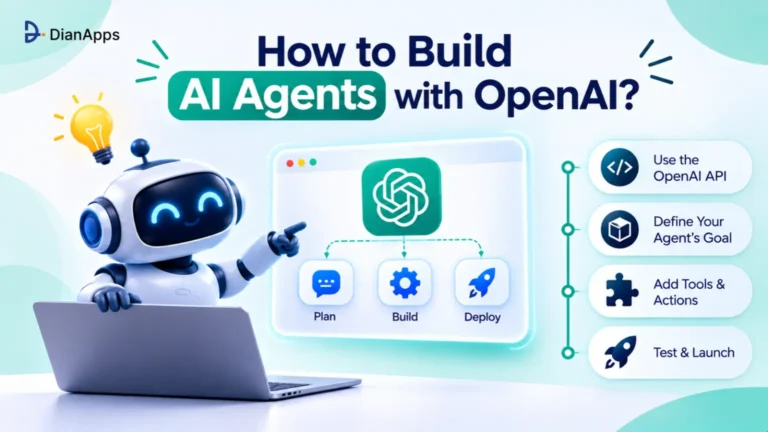
- Teams already comfortable with direct model APIs, such as the tool calling patterns in our guide to building AI agents with OpenAI, are finding LangGraph the most natural step up.
Budget the learning curve explicitly, because a framework that saves a week in prototyping and costs a month in production hardening isn’t the cheaper choice.
Choosing the Best Multi Agent Orchestration Framework for 2027 by Use Case
There is no single best multi-agent orchestration framework for 2027, and anyone telling you otherwise is selling one, but there is a reliable mapping from workflow shape to framework that is holding up across the projects we’ve shipped. Match your use case to the list below before you commit:
- Customer facing workflows with compliance steps, refunds or account changes are belonging in LangGraph, because determinism and approval gates are mandatory.
- Content and research pipelines where a researcher, editor and writer hand work along are suiting CrewAI, and our comparison of AI writing software vs an autonomous AI agent is showing where a crew beats a single tool.
- Code generation, review and debate style tasks where agents must critique each other are fitting AutoGen’s conversational model best.
- Long running back office automations that must survive restarts and run for hours are LangGraph territory without much debate.
- Internal prototypes and proofs of concept with a small team are starting fastest in CrewAI and graduating later.
The migration path in that last line is important enough to deserve its own section.
Migration Paths: Prototyping in CrewAI and Graduating to LangGraph
The most common real world journey we’re seeing isn’t choosing one framework forever, it is proving an idea in CrewAI in a week and then rebuilding the production version in LangGraph once the workflow shape is understood, and treating that as a plan rather than a failure is saving teams a lot of grief.
The two frameworks are sharing enough conceptual ground that the migration is mostly mechanical, since each crew task is becoming a node, the implicit handoffs between roles are becoming explicit edges, and the state that was living in task outputs is becoming a typed state object. Role prompts are shrinking in the process, because a node only needs the instructions for its own step rather than a full backstory, which is where much of the token saving is coming from.
A hybrid is also perfectly reasonable, with a LangGraph outer graph handling routing, persistence and approvals while a CrewAI crew is handling one creative node in the middle. Plan the prototype with migration in mind, keeping tools and prompts in plain Python modules that either framework can import, and the rebuild is becoming days rather than weeks.
A Production Readiness Checklist Before You Deploy Any Framework
Regardless of which framework wins your evaluation, the same handful of controls are separating agent systems that run quietly for months from those that generate incident reports, and we’re refusing to launch without every one of them in place. Walk through the following before your first production traffic:
- Hard limits on iterations, tool calls and tokens per run, enforced by code rather than by prompt, so no loop can exceed a known budget.
- Idempotent tools, so a retried step that already sent the email or created the ticket isn’t doing it twice.
- Persistent state with a tested resume path, verified by killing the process mid workflow and watching it recover.
- Human approval gates on every action touching money, customers, credentials or production infrastructure.
- Tracing with cost attribution per run, and an alert when any single run exceeds three times the median spend.
- An evaluation set of real tasks with expected outcomes, run on every prompt or model change before deploy.
A framework is making these easier or harder, but none of the three is doing them for you, and that is the honest summary of where the tooling stands.
Ready to Take Your Agent System to Production?
From framework selection to monitoring and cost controls, our team is shipping agent systems that run reliably at scale.
Where This Is Heading in 2027: Protocols, Durable Execution and Convergence?
The framework wars are becoming less decisive as the ecosystem is standardising the layers around them, and three trends are shaping what production stacks will look like by the end of 2027. The Model Context Protocol is turning tools into portable servers that any framework can call, which is removing the biggest source of lock in, and Google’s Agent to Agent protocol is doing something similar for communication between agents built on different stacks.
Durable execution engines such as Temporal are increasingly sitting underneath agent frameworks, which is handling retries, timeouts and long waits at the infrastructure layer and is narrowing LangGraph’s persistence advantage over time. The frameworks themselves are converging too, with CrewAI adding flows that look like graphs, LangGraph adding higher level prebuilt agents that look like crews, and Microsoft folding conversation patterns into a broader enterprise platform.
The practical takeaway is that the orchestration choice is still mattering in 2027, but the tools, prompts and evaluation sets you build around it are the assets that will outlive it.
Final Thoughts
The LangGraph vs. CrewAI vs. AutoGen decision is coming down to how much structure your workflow needs and how expensive a wrong action is, with LangGraph earning the production default for stateful, auditable and long running systems, CrewAI earning the fastest path to a working role based automation, and AutoGen through the Microsoft Agent Framework earning its place for conversational patterns inside Azure centred organisations.
Teams that are matching the framework to the workflow shape, measuring token cost before scaling, instrumenting tracing from day one, and treating a CrewAI prototype as the first draft of a LangGraph production system are consistently shipping agents that stay boring, which is the highest compliment an operations team can pay. If you’d rather have a team that has already made these mistakes guide you through the choice and the build, we’ve got you covered.
 0 comments





Your email address will not be published. Required fields are marked *