















 0 comments
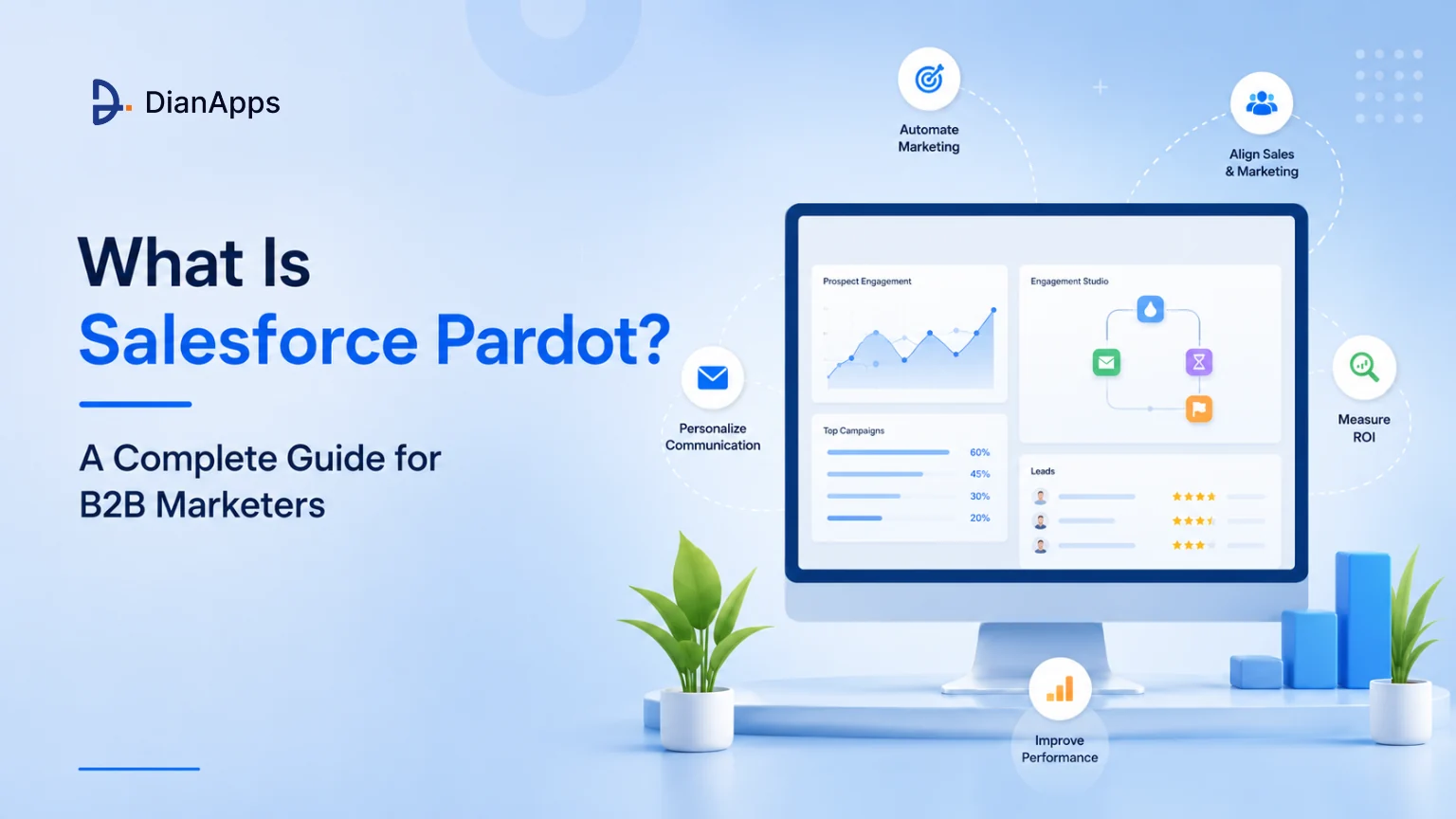
TL: DR
If you’re looking for a quick answer, here it is.
- Salesforce Pardot, now known as Marketing Cloud Account Engagement, is Salesforce’s B2B marketing automation platform.
- It helps businesses capture leads, nurture prospects, score opportunities, automate email campaigns, and measure marketing performance from one platform.
- Unlike traditional email marketing software, Pardot integrates deeply with Salesforce CRM, allowing marketing and sales teams to work from the same customer data.
- It is ideal for businesses with long sales cycles, multiple stakeholders, and account-based marketing strategies.
- Features such as Engagement Studio, AI-powered lead scoring, dynamic content, ROI reporting, and CRM automation help marketing teams generate better-qualified leads while reducing manual effort.
- Organizations that combine Salesforce CRM with Pardot often improve lead visibility, campaign tracking, and marketing efficiency across the customer lifecycle.
Marketing automation is no longer optional for growing B2B businesses
Every marketing team wants more qualified leads. Every sales team wants prospects who are ready to buy.
The challenge is that most businesses still struggle somewhere in between.
Leads download an eBook but never receive a follow-up. Sales representatives spend time calling contacts who are not interested. Marketing teams launch campaigns without knowing which ones actually influence revenue. Valuable customer data sits across multiple platforms, making it difficult to understand the buyer’s journey.
This is where Salesforce Pardot changes the equation.
Built specifically for B2B organizations, Pardot helps businesses automate repetitive marketing activities while giving sales teams deeper visibility into prospect behavior. Instead of treating marketing and sales as separate functions, it connects both teams around the same customer data, enabling faster responses and better decision-making.
Whether you’re evaluating marketing automation for the first time or planning to expand your Salesforce ecosystem, understanding how Pardot works can help you choose the right strategy for long-term growth.
In this guide, we’ll explain everything you need to know, from its core capabilities and business benefits to implementation best practices, pricing, and the latest industry trends.
Also read: What is Salesforce ERP? Benefits & More
What Is Salesforce Pardot?
Salesforce Pardot, officially renamed Marketing Cloud Account Engagement, is Salesforce’s B2B marketing automation platform that helps organizations generate leads, nurture prospects, automate marketing campaigns, and convert high-intent buyers into customers.
Unlike generic email marketing platforms, Pardot is designed specifically for businesses with complex sales cycles where multiple decision-makers, personalized communication, and sales collaboration play a critical role.
Imagine a software company selling enterprise cybersecurity solutions. A prospective customer may spend several weeks downloading whitepapers, attending webinars, reading product documentation, and requesting demos before making a purchase decision. Tracking every interaction manually is almost impossible.
Pardot automates this entire journey.
It monitors prospect behavior, assigns lead scores based on engagement, segments audiences automatically, triggers personalized email sequences, and alerts sales representatives when a lead is ready for outreach.
Instead of relying on assumptions, marketing and sales teams work with real engagement data to prioritize opportunities.
Why Did Salesforce Rename Pardot?
If you’ve been researching Salesforce marketing products, you’ve probably noticed two different names.
Some articles refer to Salesforce Pardot, while newer documentation uses Marketing Cloud Account Engagement.
The platform itself hasn’t disappeared.
Salesforce rebranded Pardot as Marketing Cloud Account Engagement to better align it with the broader Salesforce Marketing Cloud ecosystem. The new name reflects its role as the company’s dedicated B2B marketing automation solution, while Marketing Cloud continues to serve broader omnichannel marketing needs.
Many professionals still use the name “Pardot” because it has strong brand recognition, which is why you’ll often see both terms used interchangeably.
For clarity, we’ll continue using Salesforce Pardot throughout this guide.
Who Should Use Salesforce Pardot?
Not every business requires enterprise-level marketing automation.
However, Pardot becomes incredibly valuable when your sales process involves multiple touchpoints, long decision cycles, and close collaboration between marketing and sales teams.
It is particularly well suited for:
- SaaS companies managing enterprise sales pipelines
- Financial institutions nurturing high-value business accounts
- Healthcare organizations engaging providers and partners
- Manufacturing companies generating distributor and dealer leads
- Technology firms running account-based marketing campaigns
- Educational institutions attracting prospective students
- Professional service providers managing consultative sales
- B2B eCommerce businesses handling large purchasing accounts
If your marketing team spends significant time manually sending emails, qualifying leads, updating CRM records, or preparing campaign reports, Pardot can automate many of these repetitive tasks while improving accuracy.
Salesforce Pardot vs Traditional Email Marketing Tools
Many organizations assume that Pardot is simply another email marketing platform.
It isn’t.
Traditional email tools focus primarily on sending newsletters or promotional campaigns.
Pardot goes much further by connecting every marketing activity directly with sales outcomes.
| Traditional Email Platforms | Salesforce Pardot |
|---|---|
| Bulk email campaigns | Complete marketing automation |
| Basic subscriber lists | Intelligent audience segmentation |
| Manual campaign management | Automated customer journeys |
| Limited CRM integration | Native Salesforce integration |
| Basic analytics | Revenue attribution and ROI tracking |
| Simple personalization | Dynamic content and behavioral targeting |
| No lead qualification | AI-powered lead scoring and grading |
The difference becomes especially noticeable as businesses scale.
A growing organization may manage thousands of prospects simultaneously. Without automation, maintaining personalized communication quickly becomes unmanageable.
Pardot solves this challenge through intelligent workflows rather than manual execution.
Why B2B Companies Use Salesforce Pardot
Modern B2B buying journeys have become significantly more complex than they were just a few years ago.
Buyers no longer speak with sales teams after their first interaction. Instead, they research independently, compare vendors, read reviews, attend webinars, download resources, and evaluate multiple solutions before engaging with a salesperson.
According to Gartner, B2B buyers spend only a small portion of their purchasing journey interacting directly with sales representatives. The majority of their research happens independently across digital channels. This shift has made marketing automation an essential part of successful customer acquisition strategies.
Without a structured system, businesses often experience common challenges such as:
- Marketing teams generating leads that sales teams never contact
- Sales representatives pursuing prospects who aren’t ready to buy
- Generic email campaigns producing low engagement
- Limited visibility into campaign performance
- Inconsistent follow-up across different customer segments
- Lost opportunities due to delayed responses
- Poor alignment between sales and marketing goals
Salesforce Pardot addresses these challenges by creating a connected marketing ecosystem where prospect engagement automatically influences sales activities.
Rather than relying on manual updates, the platform continuously tracks interactions, scores lead quality, and helps teams prioritize the opportunities most likely to convert.
The Shift from Lead Generation to Lead Intelligence
For years, marketing success was measured by one number.
How many leads did we generate?
Today, that metric alone tells an incomplete story.
A database filled with thousands of contacts has little value if only a small percentage are genuinely interested in buying.
Successful B2B organizations now focus on lead intelligence rather than simple lead volume.
Instead of asking: How many leads did this campaign produce?
They ask:
- Which prospects showed buying intent?
- Which companies visited our pricing page multiple times?
- Which decision-makers attended product webinars?
- Which leads are ready for a sales conversation?
- Which campaigns generated actual revenue?
Salesforce Pardot answers these questions by transforming anonymous engagement into actionable business insights.
Marketing teams gain a clearer understanding of customer behavior, while sales teams receive prioritized opportunities backed by real engagement data rather than assumptions.
This shared visibility enables both departments to work toward the same revenue goals instead of operating in isolation.
Why Marketing and Sales Alignment Matters More Than Ever
One of Pardot’s greatest strengths lies in its ability to bridge the gap between marketing and sales.
In many organizations, marketing celebrates campaign success while sales struggles to convert the resulting leads.
The disconnect usually isn’t caused by poor performance. It’s caused by limited visibility.
With Pardot integrated into Salesforce CRM, marketing teams can see how campaigns influence pipeline growth, while sales representatives gain immediate access to prospect activity, engagement history, and lead scores.
Instead of debating lead quality, both teams work from the same data, making collaboration faster, smarter, and more measurable.
That alignment often becomes one of the biggest drivers of improved conversion rates and marketing ROI.
How Does Salesforce Pardot Work?
At its core, Salesforce Pardot helps businesses deliver the right message to the right prospect at the right time, without relying on manual follow-ups.
Instead of treating every lead the same way, Pardot evaluates each prospect based on their behavior, interests, engagement level, and buying intent. It then automates personalized interactions while continuously sharing insights with Salesforce CRM.
Think of it as a marketing command center that quietly works behind the scenes. Every website visit, email click, webinar registration, or form submission becomes part of a prospect’s profile, helping both marketing and sales understand where that person is in the buying journey.
Let’s look at how this process unfolds.
Step 1: Capture Leads from Multiple Channels
Every customer journey begins with a touchpoint.
Prospects might arrive through:
- Organic search
- Google Ads
- LinkedIn campaigns
- Industry webinars
- Referral websites
- Landing pages
- Contact forms
- Trade shows
- Whitepaper downloads
- Product demo requests
Pardot captures this information automatically and creates a prospect profile that can later sync with Salesforce CRM.
Unlike traditional lead databases, Pardot doesn’t just store contact information. It starts building a timeline of every interaction from the very first visit.
For example, if someone downloads your cybersecurity buyer’s guide, watches a recorded webinar two days later, and returns to your pricing page the following week, Pardot records each action without requiring manual updates.
Step 2: Build Rich Prospect Profiles
Once a lead enters the system, Pardot begins enriching the prospect record.
This profile may include:
- Company information
- Industry
- Job title
- Geographic location
- Website pages visited
- Email interactions
- Content downloads
- Event attendance
- Form submissions
- CRM activities
- Campaign memberships
Over time, these behavioral insights paint a much clearer picture than a simple contact record ever could.
Instead of asking, “Who is this lead?” your sales team can ask, “What has this lead already shown interest in?”
That distinction often leads to far more relevant conversations.
Step 3: Segment Audiences Automatically
One of the biggest reasons marketing campaigns fail is because everyone receives the same message.
A first-time website visitor shouldn’t receive the same email as someone who has already attended two product demos.
Pardot solves this by automatically segmenting prospects using criteria such as:
- Industry
- Company size
- Product interest
- Geographic region
- Previous purchases
- Website activity
- Campaign engagement
- Lead score
- CRM status
As prospects interact with your business, they can move between segments automatically.
This dynamic segmentation ensures every campaign remains relevant without requiring marketers to manually update mailing lists.
Step 4: Score Leads Based on Engagement
Not every lead deserves immediate attention.
Some prospects are casually researching solutions, while others are actively evaluating vendors.
Lead scoring helps identify that difference.
Every meaningful action contributes to a prospect’s overall score.
For example:
| Prospect Activity | Example Score |
|---|---|
| Opens an email | 5 |
| Clicks an email link | 10 |
| Downloads a whitepaper | 20 |
| Registers for a webinar | 30 |
| Visits pricing page | 40 |
| Requests a product demo | 75 |
| Unsubscribes from emails | -50 |
These scores can be customized based on your business priorities.
A manufacturing company may assign higher scores to distributor inquiries, while a SaaS business may prioritize demo requests.
The objective isn’t simply to generate numbers. It’s to help sales teams focus on prospects demonstrating genuine buying intent.
Step 5: Grade Leads Based on Fit
Many businesses confuse lead scoring with lead grading. Although related, they answer different questions.
Lead Scoring asks:
“How interested is this prospect?”
Lead Grading asks:
“How closely does this prospect match our ideal customer?”
For example:
A university student may download every resource on your website, attend webinars, and frequently visit product pages.
Their engagement score could be extremely high.
However, if your solution targets enterprise CIOs, that individual isn’t a qualified buyer.
Lead grading evaluates factors such as:
- Company size
- Revenue
- Industry
- Job role
- Seniority
- Business location
- Existing technology stack
By combining scores and grades, sales teams can prioritize prospects who are both interested and likely to become customers.
Step 6: Automate Personalized Lead Nurturing
Most prospects aren’t ready to buy after their first interaction.
Research consistently shows that B2B purchase decisions involve multiple stakeholders and often span weeks or even months.
Pardot helps maintain momentum during this period through automated nurturing programs.
Rather than sending generic newsletters, businesses can design journeys based on specific behaviors.
For example:
A prospect downloads an AI implementation guide.
↓
Receives a thank-you email immediately.
↓
Two days later, receives a customer success story.
↓
If the case study is opened, they’re invited to an upcoming webinar.
↓
If they attend, they receive a personalized consultation offer.
↓
Sales receives a notification once engagement reaches a predefined threshold.
Every interaction is personalized based on previous actions, creating a smoother experience for prospects while reducing manual effort for marketers.
Step 7: Sync Qualified Leads with Salesforce CRM
Once a lead reaches your qualification criteria, Pardot synchronizes relevant information with Salesforce CRM.
Sales representatives can immediately access:
- Complete engagement history
- Lead score
- Lead grade
- Campaign source
- Email interactions
- Website visits
- Download history
- Form submissions
- Meeting requests
Instead of starting conversations blindly, sales teams begin with meaningful context.
A simple opening like, “I noticed your team downloaded our manufacturing automation guide last week,” feels significantly more relevant than a generic sales introduction.
Step 8: Measure Campaign Performance
Launching campaigns is only half the job.
Understanding what influenced revenue is where marketing automation becomes truly valuable.
Pardot connects campaign performance with CRM opportunities, enabling marketers to measure:
- Pipeline contribution
- Revenue attribution
- Campaign ROI
- Conversion rates
- Cost per qualified lead
- Sales cycle duration
- Email engagement
- Landing page performance
- Marketing influence
Rather than relying solely on open rates or click-through rates, teams gain visibility into how marketing activities impact actual business outcomes.
A Typical Salesforce Pardot Workflow
Website Visitor
│
▼
Lead Capture
│
▼
Prospect Record Created
│
▼
Audience Segmentation
│
▼
Lead Scoring + Lead Grading
│
▼
Automated Email Journey
│
▼
Salesforce CRM Synchronization
│
▼
Sales Notification
│
▼
Opportunity
│
▼
Customer
│
▼
Reporting & ROI Analysis
Top Salesforce Pardot Features
Pardot includes a comprehensive suite of marketing automation capabilities that extend far beyond email marketing. Each feature is designed to improve lead quality, reduce manual work, and strengthen collaboration between marketing and sales.
1. Lead Management
Pardot creates a centralized prospect database where every interaction is captured automatically.
Teams can:
- Track prospect activities
- Organize leads
- Manage lifecycle stages
- Eliminate duplicate efforts
- Prioritize sales outreach
Instead of working with disconnected spreadsheets or siloed systems, everyone operates from the same source of truth.
2. Engagement Studio
Engagement Studio is Pardot’s visual automation builder. It allows marketers to create customer journeys using simple drag-and-drop workflows.
Examples include:
- Welcome campaigns
- Webinar reminders
- Product education sequences
- Re-engagement campaigns
- Renewal reminders
- Event follow-ups
Decision rules let journeys adapt automatically based on prospect behavior.
This makes campaigns more relevant without increasing operational complexity.
3. Advanced Email Marketing Automation
Pardot supports sophisticated email campaigns with features such as:
- Dynamic personalization
- Behavioral triggers
- A/B testing
- Progressive nurturing
- Automated follow-ups
- Send-time optimization
- Engagement tracking
- Responsive templates
Instead of broadcasting one message to everyone, marketers can deliver communications that reflect each prospect’s interests and stage in the buying journey.
4. Landing Pages and Forms
Pardot simplifies lead generation by enabling marketers to build dedicated landing pages and forms without heavy development effort.
Common use cases include:
- Webinar registrations
- Whitepaper downloads
- Event sign-ups
- Product demos
- Consultation requests
- Newsletter subscriptions
Because submissions sync directly with Salesforce CRM, no manual data transfer is required.
5. Dynamic Content Personalization
Personalization has become an expectation rather than a competitive advantage.
Pardot allows businesses to display different content based on audience attributes.
Examples include:
- Industry-specific messaging
- Regional offers
- Existing customer promotions
- Product recommendations
- Personalized CTAs
Two visitors can land on the same page while seeing entirely different experiences based on their profiles.
6. Einstein AI Capabilities
Salesforce’s Einstein AI adds predictive intelligence to marketing automation.
Capabilities include:
- Predictive lead scoring
- Behavioral insights
- Opportunity recommendations
- Campaign optimization
- Engagement predictions
- Automated prioritization
Rather than relying solely on historical performance, marketers gain AI-assisted recommendations that help improve future campaigns.
7. Reporting and Analytics
Pardot’s reporting capabilities extend well beyond traditional email metrics.
Teams can analyze:
- Campaign performance
- Marketing attribution
- Opportunity influence
- Funnel progression
- Landing page conversions
- Prospect lifecycle
- Sales alignment
- ROI by channel
These insights support more informed budgeting and campaign planning.
Salesforce Pardot vs. Salesforce Marketing Cloud
Although these platforms share the Salesforce ecosystem, they address different business needs.
Choosing the right solution depends on your audience, sales model, and marketing goals
| Feature | Salesforce Pardot (Marketing Cloud Account Engagement) | Salesforce Marketing Cloud |
|---|---|---|
| Primary Audience | B2B organizations | B2C organizations |
| Focus | Lead generation and nurturing | Customer engagement across channels |
| CRM Integration | Deep native Salesforce CRM integration | Integrates with Salesforce but supports broader customer data scenarios |
| Typical Sales Cycle | Long, consultative sales | Shorter, high-volume consumer journeys |
| Core Channels | Email, forms, landing pages | Email, SMS, mobile, social, advertising, web personalization |
| Lead Scoring | Native lead scoring and grading | Requires additional configuration |
| Account-Based Marketing | Strong support | Limited compared to Pardot |
| Best For | SaaS, manufacturing, healthcare, financial services, professional services | Retail, eCommerce, hospitality, travel, media |
| AI Features | Einstein Lead Scoring and engagement insights | Einstein Journey Optimization and predictive personalization |
Which One Should You Choose?
If your business relies on relationship-driven sales, multiple decision-makers, and long buying cycles, Salesforce Pardot is typically the stronger fit. Its automation, lead qualification, and CRM alignment are designed for B2B marketing teams that need to nurture prospects over time.
If your focus is high-volume consumer engagement across email, SMS, mobile apps, and social channels, Salesforce Marketing Cloud offers a broader omnichannel toolkit.
Some enterprises even use both platforms together, allowing Pardot to manage B2B lead generation while Marketing Cloud powers customer engagement across consumer-facing channels.
Benefits of Salesforce Pardot for B2B Businesses
Marketing automation should do more than save time. It should help marketing and sales teams work together, identify high-value opportunities faster, and create measurable business outcomes.
Salesforce Pardot is designed with these goals in mind. When implemented correctly, it becomes more than an email automation platform. It becomes a revenue enablement solution that supports every stage of the B2B customer lifecycle.
Here are the key benefits businesses can expect.
1. Better Lead Quality Instead of Higher Lead Volume
Many businesses focus on generating as many leads as possible. However, quantity doesn’t always translate into revenue.
Pardot helps teams identify prospects who are genuinely interested and closely match their ideal customer profile. By combining lead scoring with lead grading, marketing teams pass more qualified opportunities to sales, allowing representatives to spend their time where it matters most.
The result is a healthier sales pipeline and fewer wasted conversations.
2. Improved Sales and Marketing Alignment
One of the biggest challenges in B2B organizations is the disconnect between marketing and sales.
Marketing may believe it is delivering qualified leads, while sales may feel those leads are not ready for meaningful conversations.
Pardot bridges this gap by synchronizing campaign engagement, lead scores, and prospect activities directly with Salesforce CRM.
Both teams work from the same customer data, reducing friction and creating greater accountability throughout the buying journey.
3. Personalized Customer Experiences at Scale
Modern buyers expect relevant communication based on their interests and previous interactions.
Instead of sending identical emails to every prospect, Pardot allows marketers to personalize:
- Email content
- Landing pages
- Calls to action
- Customer journeys
- Content recommendations
- Follow-up sequences
This level of personalization helps increase engagement while making communication feel timely rather than intrusive.
4. Shorter Sales Cycles
Sales representatives often lose valuable time identifying which leads deserve immediate attention.
With behavioral tracking, automated lead scoring, and real-time CRM synchronization, Pardot helps sales teams prioritize prospects who are actively researching solutions.
Faster follow-up typically leads to higher conversion opportunities and shorter buying cycles.
5. Smarter Marketing Decisions Through Analytics
Marketing success shouldn’t be measured only by email opens or website visits.
Pardot connects campaign activity with Salesforce opportunities, allowing businesses to understand which initiatives contribute to pipeline growth and revenue.
Instead of asking, “Did this campaign perform well?” marketing leaders can answer:
- Which campaigns generated qualified pipeline?
- Which channels delivered the highest ROI?
- Which assets influenced closed deals?
- Which audience segments converted most effectively?
These insights support better investment decisions over time.
6. Scalable Marketing Operations
As businesses grow, manual marketing processes become increasingly difficult to manage.
Pardot enables organizations to automate repetitive activities such as:
- Welcome emails
- Lead assignment
- Follow-up reminders
- Webinar invitations
- Customer onboarding
- Event registrations
- Re-engagement campaigns
Automation allows teams to scale without proportionally increasing operational overhead.
Industries That Benefit Most from Salesforce Pardot
Although Pardot serves organizations across multiple sectors, it delivers exceptional value where buying decisions involve multiple stakeholders and longer sales cycles.
SaaS and Technology
Technology companies often rely on product demonstrations, free trials, educational resources, and ongoing nurturing before prospects become customers.
Pardot helps automate these journeys while providing sales teams with visibility into customer engagement.
Financial Services
Banks, insurance providers, wealth management firms, and fintech companies frequently manage high-value business relationships.
Marketing automation helps maintain personalized communication while supporting compliance and accurate reporting.
Healthcare
Healthcare organizations use Pardot to engage providers, partners, healthcare professionals, and enterprise buyers through educational campaigns and event marketing.
Manufacturing
Manufacturers often market to distributors, procurement teams, engineers, and business buyers.
Long procurement cycles make automated nurturing especially valuable.
Professional Services
Consulting firms, legal organizations, accounting practices, and business advisory companies can use Pardot to build relationships through thought leadership, webinars, and personalized content.
Higher Education
Universities and educational institutions leverage marketing automation to engage prospective students throughout lengthy application and enrollment journeys.
Salesforce Pardot Pricing Overview
Salesforce offers Marketing Cloud Account Engagement in multiple editions to accommodate organizations of different sizes and marketing maturity levels.
Although exact pricing and feature availability may change over time, businesses typically choose from editions such as:
| Edition | Best For |
|---|---|
| Growth | Small and growing B2B teams beginning their marketing automation journey |
| Plus | Organizations requiring advanced automation and analytics |
| Advanced | Businesses with complex nurturing strategies and AI capabilities |
| Premium | Large enterprises managing sophisticated multi-team operations |
Rather than selecting a plan based solely on cost, organizations should evaluate:
- CRM complexity
- Number of users
- Lead volume
- Required integrations
- Reporting requirements
- AI capabilities
- Future scalability
Since Salesforce periodically updates licensing and packaging, it’s advisable to consult the latest pricing information before implementation.
How to Successfully Implement Salesforce Pardot
Technology alone doesn’t guarantee successful marketing automation.
Implementation requires thoughtful planning, clean data, and clearly defined business objectives.
At DianApps, we generally recommend the following roadmap.
Step 1: Define Business Goals
Identify what success looks like.
Examples include:
- Increase qualified leads
- Improve conversion rates
- Reduce manual marketing work
- Improve campaign attribution
- Strengthen sales and marketing collaboration
Clear objectives make future optimization much easier.
Step 2: Audit Existing CRM Data
Marketing automation performs best when built on accurate customer data.
Before implementation, review:
- Duplicate records
- Incomplete fields
- Inactive contacts
- Lead sources
- Campaign history
A clean CRM significantly improves automation accuracy.
Step 3: Design Your Lead Qualification Strategy
Agree on:
- Lead scoring rules
- Lead grading criteria
- Marketing Qualified Lead (MQL) definition
- Sales Qualified Lead (SQL) definition
- Opportunity handoff process
Without shared definitions, automation simply scales confusion.
Step 4: Build Automation Workflows
Develop customer journeys for common scenarios such as:
- New inquiries
- Demo requests
- Webinar registrations
- Trial users
- Customer onboarding
- Re-engagement campaigns
Each workflow should support a specific business objective.
Step 5: Test Before Launch
Validate:
- Email rendering
- CRM synchronization
- Automation triggers
- Dynamic content
- Landing pages
- Reporting dashboards
Small testing efforts often prevent significant operational issues after deployment.
Step 6: Continuously Optimize
Marketing automation is never truly finished.
Successful organizations regularly review:
- Email performance
- Lead quality
- Campaign ROI
- Automation workflows
- Sales feedback
- Conversion metrics
Incremental improvements compound over time.
Common Pardot Implementation Challenges
Even experienced organizations encounter obstacles during implementation. The most common include:
| Challenge | Recommended Approach |
|---|---|
| Poor CRM data quality | Clean and standardize records before migration |
| Weak lead scoring model | Define scoring based on historical buying behavior |
| Low email engagement | Improve segmentation and personalization |
| Duplicate records | Establish CRM governance rules |
| Overcomplicated workflows | Begin with simple automation and expand gradually |
| Limited reporting | Define KPIs before building dashboards |
Recognizing these challenges early helps reduce implementation risks.
Best Practices for Maximizing Salesforce Pardot ROI
Organizations typically achieve stronger results when they:
- Keep CRM data accurate and regularly updated.
- Focus on quality rather than lead volume.
- Review lead scoring models quarterly.
- Build shorter, behavior-based nurture journeys.
- Personalize content using prospect data.
- Align marketing KPIs with sales outcomes.
- Continuously A/B test subject lines, landing pages, and CTAs.
- Measure campaign influence instead of relying solely on email metrics.
- Use Salesforce reports to refine automation strategies.
- Regularly train both marketing and sales teams on new platform capabilities.
Salesforce Pardot and the Future of B2B Marketing
Marketing automation continues to evolve beyond scheduled email campaigns.
Today’s leading organizations are investing in AI-assisted personalization, predictive analytics, unified customer data, and revenue attribution to create more connected buying experiences.
Salesforce’s latest State of Marketing research highlights that marketers are increasingly prioritizing AI adoption, unified data strategies, and personalization at scale to improve engagement and strengthen account-based marketing efforts.
HubSpot’s 2026 marketing research also reports that:
- 47% of marketers use automation to improve marketing efficiency.
- 93% use automation for administrative work.
- 92% rely on automation for reporting and data analysis.
Additional B2B research shows:
- 74% of B2B leaders consider AI and automation important to their overall business strategy.
- 73% of B2B marketers say they understand the customer journey they are managing.
- 68% report having high-quality audience data to support targeting efforts.
These trends reinforce an important point.
Marketing automation is no longer simply about sending emails. It is about creating connected customer experiences that combine data, AI, and CRM intelligence to support smarter business decisions.
Why Choose DianApps for Salesforce Development and Marketing Automation?
Selecting the right technology is only part of the equation. Successful implementation depends on thoughtful planning, seamless integration, and continuous optimization.
At DianApps, we help organizations maximize the value of their Salesforce investment through end-to-end consulting and implementation services.
Our expertise includes:
- Salesforce consulting
- Salesforce implementation
- Custom Salesforce development
- CRM integration
- Marketing automation
- AI-powered workflow automation
- Third-party platform integration
- Ongoing Salesforce support and optimization
Whether you’re implementing Marketing Cloud Account Engagement for the first time or expanding an existing Salesforce ecosystem, our team works closely with your business to build scalable, measurable, and future-ready solutions.
Conclusion
Salesforce Pardot, now known as Marketing Cloud Account Engagement, remains one of the most comprehensive marketing automation platforms available for B2B organizations.
Its ability to connect marketing activities with Salesforce CRM, automate personalized customer journeys, qualify leads intelligently, and measure campaign impact makes it particularly valuable for businesses with complex sales processes.
However, technology alone doesn’t drive growth.
Organizations that achieve the strongest outcomes combine automation with clean data, aligned sales and marketing teams, and a continuous optimization mindset.
As AI, predictive analytics, and unified customer data become increasingly central to modern marketing, platforms like Pardot will continue to play a critical role in helping businesses build stronger customer relationships and generate measurable revenue.
If you’re evaluating Salesforce Pardot or planning to optimize your existing marketing automation strategy, partnering with an experienced Salesforce consulting team can help you unlock its full potential while avoiding common implementation challenges.
 0 comments











Leave a Comment
Your email address will not be published. Required fields are marked *