















 0 comments





Key Takeaways:
|
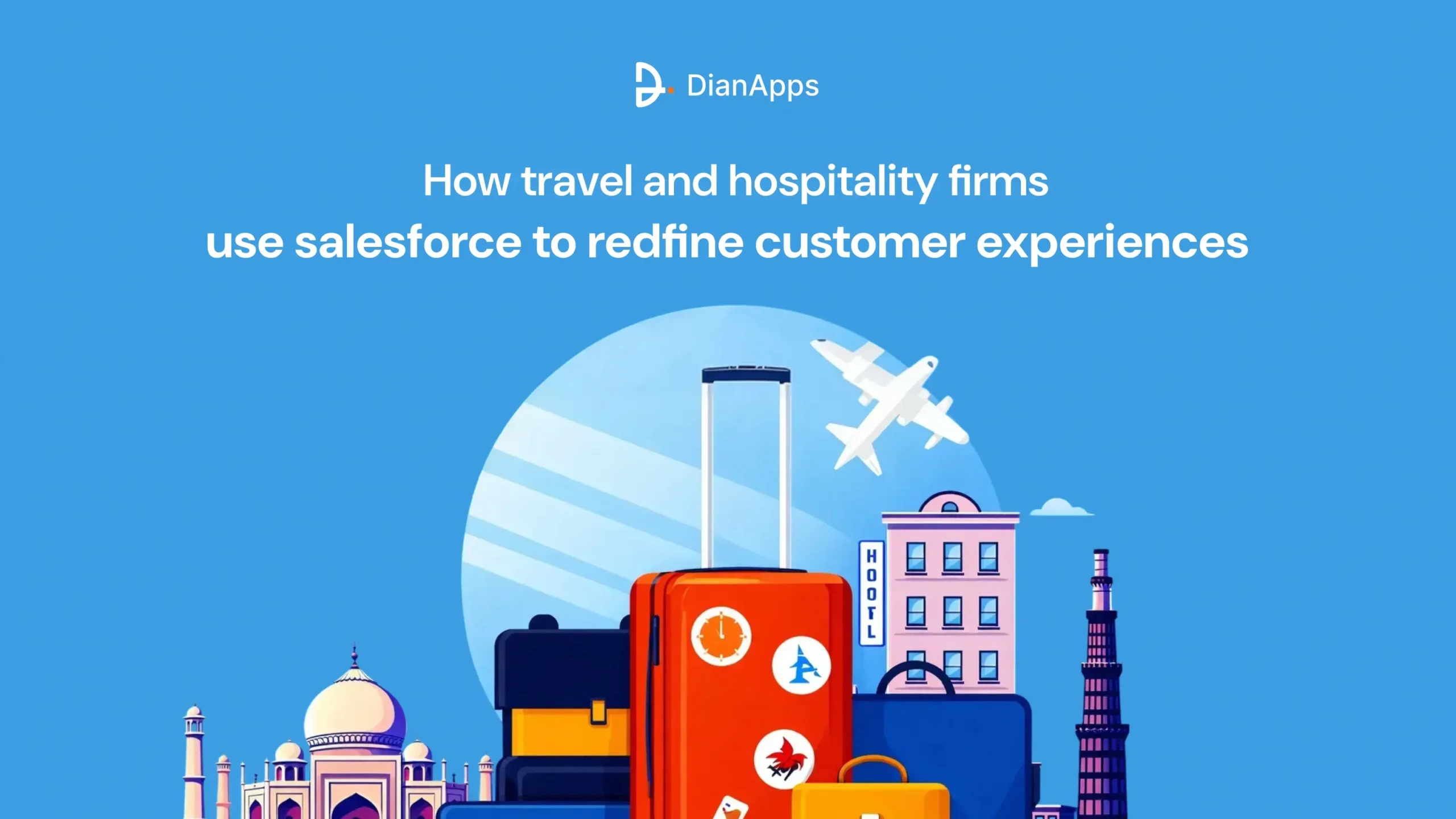
Have travel and hospitality brands truly adopted experience-first operations? Or are many still using disconnected systems that treat guests as bookings rather than long-term relationships? By 2026, digital maturity is no longer defined by having an app, an online booking engine, or automated emails. Those are baseline expectations now.
The real differentiator is whether a brand can deliver continuity, personalization, and intelligence across the entire customer journey. Some organizations have adapted well. Others, however, still face familiar friction: guest preferences lost between stays, offers that feel irrelevant, support interactions that need repetition, and marketing that talks at customers instead of with them.
Why Travel Brands Are Rethinking Salesforce in 2026
What has replaced the earlier wave of digital enthusiasm is something more very serious. It is experience design powered by connected data. This is where Salesforce has shifted from a CRM tool to a key platform. As a result, demand has accelerated for a reliable Salesforce consulting company, solid Salesforce implementation services, and an experienced Salesforce development company across the travel sector.
The market numbers reinforce this shift. For example, the global Hotel CRM Software market reached USD 3.85 billion in 2024. It is projected to hit USD 9.72 billion by 2033, growing at a 10.8% CAGR. The driver is clear: travel brands need personalized guest engagement and operational efficiency.
Across this shift, Salesforce sits at the center of modern travel software development and customer experience strategy.
How Salesforce Helps the Travel and Hospitality Industry Enhance Customer Experience?
Travel and hospitality journeys are inherently multi-layered. Discovery. Booking. Pre-arrival engagement. On-property/in-transit experiences. Service requests. Post-stay loyalty building. When underlying systems operate in silos, customer experience fractures. As a result, Salesforce eliminates this disconnect by unifying data, workflows, and interactions.
Creating a Unified Guest View
Guest intelligence traditionally lives across split systems:
- Booking platforms
- Property Management Systems (PMS)
- Loyalty databases
- Marketing automation tools
- Support systems
Salesforce Customer 360 and Data Cloud consolidate these signals into a single, dynamic guest profile. The impact:
- Staff sees the full guest context instantly
- Marketing understands behavior patterns
- Service teams anticipate needs
- Guests stop repeating information
A unified view transforms service delivery from reactive → predictive.
Personalization at Scale
Modern guests expect brands to understand them. Salesforce enables:
- Tailored upgrade offers
- Behavior-driven recommendations
- Contextual promotions
- Personalized loyalty journeys
Einstein AI converts customer data into real-time insights and predictive actions. Specifically, personalization becomes engineered not improvised.
Omnichannel Guest Engagement
Guests communicate fluidly across channels: Chat. Email. Mobile apps. SMS. WhatsApp. Social. For example, Salesforce Service Cloud ensures:
- Conversation continuity
- Unified interaction history
- Intelligent case routing
- Faster response cycles
No channel confusion. Conversations stay continuous.
AI-Powered Service Automation
Travel operations function 24/7. Specifically, Salesforce AI features deliver:
- Intelligent virtual assistants
- Automated inquiry resolution
- Smart ticket triaging
- Workflow automation
Routine requests resolve instantly, allowing human teams to focus on high-value interactions requiring empathy and judgment.
Loyalty & Relationship Engineering
Repeat guests drive disproportionate profitability. Salesforce supports:
- Loyalty lifecycle management
- Retention journey automation
- Guest value segmentation
- Churn prediction
Industry research shows hotels using CRM-driven engagement reporting up to a 23% increase in repeat bookings.
Why Salesforce is Essential for Travel Businesses?
Salesforce adoption in travel is no longer technology-led. It is business-led.
Experience as a Competitive Advantage
Price advantages fluctuate. Amenities can be replicated. Destinations compete globally. Experience is defensible. Salesforce enables brands to design connected, intelligent, personalized journeys across every touchpoint.
Data-Driven Decision Making
Travel businesses operate in volatile demand environments. Salesforce analytics enable:
- Booking pattern analysis
- Revenue forecasting
- Campaign performance tracking
- Customer segmentation
Decision-making shifts from intuition → intelligence.
Scalability & Cloud Agility
Seasonal demand spikes, expanding properties, evolving customer expectations. Cloud CRM dominance (68% → 78%) reflects the need for elastic digital infrastructure. Salesforce provides that growth.
Revenue Optimization
Salesforce drives:
- Intelligent upselling
- Cross-selling opportunities
- Personalized packages
- Ancillary revenue targeting
Every interaction becomes a value moment.
Key Salesforce Solutions Powering Travel & Hospitality
Salesforce’s system allows businesses to align solutions with operational priorities.
Salesforce Sales Cloud
Optimizes revenue operations:
- Corporate bookings
- B2B partnerships
- Group reservations
- Lead lifecycle management
Salesforce Service Cloud
Salesforce Service Cloud elevates guest service:
- Omnichannel support
- AI automation
- Case management
- SLA monitoring
Salesforce Marketing Cloud
Enables precision engagement:
- Pre-arrival journeys
- Loyalty campaigns
- Personalized promotions
- Behavioral targeting
Salesforce Experience Cloud
Builds digital systems:
- Guest self-service portals
- Loyalty dashboards
- Partner communities
Salesforce Data Cloud
Activates unified data intelligence:
- Real-time personalization
- Cross-channel orchestration
- Predictive segmentation
Recommended Read: How Much Does It Cost To Build a Travel App?
What Challenges are Resolved by Salesforce for Travel Businesses
Travel businesses rarely struggle because they lack technology. They struggle because their technology system is split, uneven, and disconnected. Salesforce fixes these structural gaps. Specifically, it lines up customer data, service workflows, and engagement systems on a single platform.
Fragmented Customer Data
In many travel organizations, customer information is split across several tools. These include booking engines, loyalty systems, property management systems (PMS), marketing platforms, and support tools. This splits creates blind spots. Agents lack context. Marketing lacks precision. Guests repeat information. Therefore, Salesforce solves this by creating a unified Customer 360 view. It rolls behavioral, transactional, and service data into a single live profile. Overall, the result is clarity for both teams and travelers.
Inconsistent Customer Experiences
Disjointed systems often produce disjointed journeys: Conflicting emails. Irrelevant promotions. Disconnected service interactions. Salesforce lets brands plan communications, offers, and support from one place. As a result, every touchpoint shows continuity rather than contradiction. Consistency becomes engineered, not accidental.
Delayed Customer Support
Travel is time-sensitive. Expectations for response speed are unforgiving. Legacy support setups often cause delays. For example, manual ticket routing, siloed channels, and limited automation each chip away at satisfaction. In contrast, Salesforce Service Cloud, paired with AI-driven automation, speeds up case resolution. Specifically, it adds smart routing, workflow automation, and 24/7 virtual assistance. Faster responses translate into stronger brand trust.
Low Customer Retention and Loyalty
Generic loyalty programs and untargeted marketing campaigns often fail to build meaningful long-term relationships. Specifically, Salesforce helps travel brands analyze customer behavior and identify churn risks. As a result, brands can segment audiences smartly. Loyalty journeys are then personalized to match guest preferences and lifecycle stages. As a result, retention shifts from reactive recovery → proactive engagement.
Disconnected Operational Workflows
Behind every booking sits a complex network of internal work. For example: reservations, housekeeping, itinerary updates, incident management, and partner coordination. When workflows rely on manual handoffs or disconnected systems, inefficiencies multiply. As a result, Salesforce streamlines operations. For example, automation, cross-team visibility, and integrations cut manual work and reduce service friction.
Limited Personalization Capabilities
Travelers increasingly expect brands to anticipate needs rather than merely respond to requests. Without integrated analytics and real-time data activation, personalization efforts remain shallow. Salesforce Data Cloud and Einstein GPT AI enable real-time insights, predictive recommendations, and contextual engagement, transforming personalization into a feature that grows with you.
Poor Cross-Channel Visibility
Guests move fluidly between channels: website, mobile app, chat, email, social, and contact center. Without unified visibility, interactions feel disconnected. Salesforce ensures conversation continuity across channels, preserving context and allowing teams to deliver smooth omnichannel engagement. Recommended Read: AI in Travel And Tourism – 10 Benefits, Use Cases And Examples
The Business Impact of Salesforce Adoption
Salesforce adoption in travel and hospitality is rarely justified by technology alone. It is driven by measurable business outcomes. When set up wisely, Salesforce affects revenue, day-to-day efficiency, and long-term customer value. In short, the metrics that matter at the boardroom level.
Stronger Customer Retention
Travel and hospitality profitability is heavily tied to repeat customers. Salesforce helps brands move past generic loyalty programs. In particular, it uses unified customer data, behavioral insights, and lifecycle automation. The impact is tangible:
- Higher repeat booking rates
- Improved loyalty engagement
- Reduced churn risk
Industry studies show hospitality businesses with mature CRM report up to a 23% lift in repeat bookings. For example, the lift shows up after they roll out full customer engagement strategies. In short, retention becomes a designed outcome, not a fortunate byproduct.
Growth in Ancillary Revenue
Ancillary revenue has become a critical profitability lever across airlines, hotels, and travel platforms. Salesforce supports smart upselling and cross-selling. In particular, it lines up offers with customer preferences, past behavior, and in-context triggers. This results in:
- Higher upgrade conversions
- Increased add-on purchases
- More relevant promotional engagement
Revenue opportunities surface organically within the customer journey rather than through intrusive sales tactics.
Improved Service Efficiency
Customer support in travel operates under high-pressure conditions where speed and accuracy directly shape brand perception. For example, Salesforce Service Cloud and AI-driven automation streamline case handling. Specifically, smart routing, workflow automation, and virtual assistance. Organizations typically observe:
- Reduced response times
- Faster resolution cycles
- Lower operational overhead
Efficiency gains simultaneously improve customer satisfaction and cost improvement.
Operational Productivity Gains
Salesforce adoption extends beyond front-end engagement. Automation and integrations reduce manual intervention across reservations, guest communications, reporting workflows, and internal coordination. The result:
- Fewer process bottlenecks
- Improved cross-department visibility
- Higher staff productivity
Operational agility becomes growth-ready rather than resource-dependent.
Elevated Customer Satisfaction
Unified guest intelligence, consistent communication, and faster service resolution collectively improve the overall experience. Travel firms using Salesforce Experience Cloud report better satisfaction scores within 12 months. The main reason: smoother digital touchpoints and connected journeys. Customer satisfaction transitions from a soft metric → strategic performance indicator.
Final Words
Travel and hospitality are no longer defined solely by destinations, properties, or amenities. They are defined by experiences engineered through technology. Salesforce enables brands to unify guest data, personalize journeys, automate engagement, and scale service operations intelligently. But platform capability alone does not deliver transformation. Execution does. As a trusted Salesforce consulting service provider, DianApps helps travel businesses design CRM strategies. In addition, we tie those strategies to measurable experience and revenue outcomes. At DianApps, we deliver end-to-end Salesforce implementation services paired with custom platform improvements. As an expert Salesforce development company, we build connected systems that support modern travel app development. Ready to design smarter guest journeys? Start your Salesforce conversation with DianApps.
Frequently Asked Questions
For more on AI-specific Salesforce consulting partners (Agentforce, Einstein, Data Cloud), see our 2026 guide to the top 10 Salesforce AI consulting partners in 2026.
 0 comments






Your email address will not be published. Required fields are marked *