














 0 comments
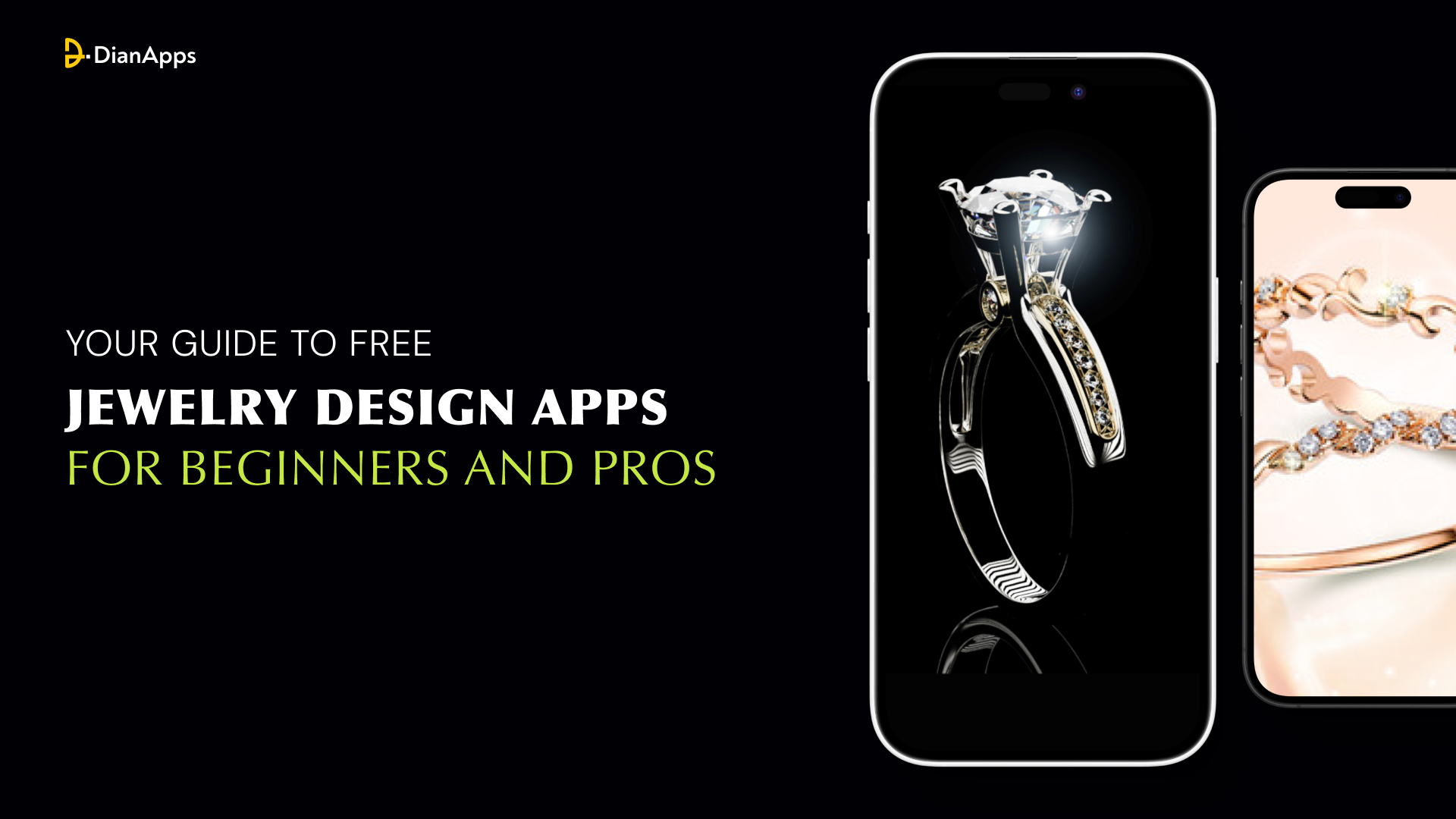
Summary: The best jewelry design apps for beginners in 2027 are Tinkercad, SketchUp Free, Autodesk Fusion (personal use), Shapr3D, Nomad Sculpt, Blender, FreeCAD, Wings 3D, OpenSCAD and Rhino. This guide covers price, platform, file exports and licensing for each one, plus how to choose, where AI fits, and how a design travels from screen to cast metal.
Most people start jewelry design with a paper sketch and a quiet hope that a CAD file will appear on its own. It won’t. Somebody has to model the ring, set the stones, check the wall thickness and export a file a printer can read. That somebody can be you, and you don’t need a four-figure license to begin.
The tools have changed shape, too. A few years ago, jewelry design meant a heavy desktop program and a workstation. Today you can block out a pendant in a browser tab, sculpt a charm on an iPad, or script a ring-size generator in a text editor. Some of these jewelry design apps are free. Others are full jewelry design software with a serious learning curve. Some are free only if you never sell what you make. A couple look free and aren’t.
We went through the main options and sorted them by what a beginner needs to know: what it costs, where it runs, what it exports, and whether the license lets you sell your work. Where a detail changed recently, and several did, we checked it against the vendor’s own pages.
What Are Jewelry Design Apps, and How Do They Differ From Jewelry Design Software?
A jewelry design app is any program, browser tool or mobile app that lets you build a piece in 3D before it is made. “Software” usually means a desktop install, while “app” also covers browser tools, tablet apps and phone apps. The two overlap so much that this guide covers both. Beginners don’t care about the label. They care about the file.
Most jewelry design programs fall into three groups:
- CAD (computer-aided design) tools build exact solid shapes with real dimensions. Fusion, FreeCAD, Shapr3D and Rhino sit here. Pick one when a ring has to hit a size and a bezel has to hold a 6 mm stone.
- Sculpting and mesh tools work like digital clay. Nomad Sculpt, Blender and Wings 3D are the usual picks for organic, textured, one-off pieces.
- Parametric tools store a design as rules, so changing one number updates the whole model. OpenSCAD, FreeCAD, Fusion and the Grasshopper add-on bundled with Rhino all do this. It saves hours when you need the same ring in ten sizes.
“Jewelry CAD” is the label people use for the first and third groups when the target is a ring, pendant or setting. The paid professional packages, such as 3Design, Matrix and Jewelry CAD Dream, add stone-setting libraries and casting prep on top. We cover those later in the guide.
Jewelry Design Tools at a Glance
This table compares the jewelry design tools we cover, so you can shortlist two or three jewelry design programs before reading the details.
|
Tool |
Runs on |
Price |
Exports |
Best for |
|
Tinkercad |
Browser, any device |
Free |
STL, OBJ, SVG |
Your first 3D model |
|
SketchUp Free |
Browser |
Free, non-commercial |
Narrower than paid plans |
Geometric concepts |
|
Autodesk Fusion (personal use) |
Windows, macOS |
Free, non-commercial |
STL, STEP |
Precise parametric rings |
|
Shapr3D |
iPad, Mac, Windows |
Free tier, paid Pro |
Limited on the free tier |
Touch-first CAD |
|
Nomad Sculpt |
iPad, iPhone, Android |
One-time purchase, about $20 on the App Store |
OBJ and others |
Sculpted pendants and charms |
|
Blender |
Windows, macOS, Linux |
Free, open source |
STL, OBJ and more |
Organic pieces and jewelry rendering |
|
FreeCAD |
Windows, macOS, Linux |
Free, open source |
STEP, STL, OBJ |
Parametric CAD design |
|
Wings 3D |
Windows, macOS, Linux |
Free, open source |
Mesh formats |
Simple polygon modeling |
|
OpenSCAD |
Windows, macOS, Linux |
Free, open source |
STL |
Code-driven size variations |
|
Rhino 8 |
Windows, Mac |
$995 one-time, 90-day trial |
STEP, STL and many more |
The path to pro jewelry CAD |
Benefits of Free Jewelry Design Apps for Beginners
Free jewelry design software removes the biggest barrier to learning 3D jewelry design, which is the fear of wasting money on a program you might quit in a month.
- Zero financial risk. You can try three tools in a weekend and keep the one that fits your hands.
- Anywhere access. Browser and tablet apps turn a train ride or a café table into a design session.
- Fast experiments. A pendant that took an afternoon with wax takes minutes to redo on screen. Change the bail, thicken the band, swap the stone shape, and compare.
- Transferable 3D design skills. Layers, snapping, extruding and exporting work the same way across most programs, so nothing you learn is wasted.
- Precision you can’t get by eye. A good CAD design app shows wall thickness, ring size and stone seat dimensions in numbers.
- Realistic previews. Several tools render metal and gem materials, so clients see a believable picture before anything is cast. That is jewelry rendering at its simplest.
- Less waste. Fewer wax carvings and fewer failed casts means less metal and resin thrown away.
- Big communities. Blender, FreeCAD and Tinkercad have years of free tutorials and forum answers.
- A clean upgrade path. Everything you learn about layers, snapping and exporting carries over when you move to paid jewelry CAD software.
Features to Look for in a Jewelry Design App
Not every 3D program suits jewelry. Check these eight things before you commit hours to learning one.
- 3D modeling approach. Solid CAD gives exact sizes. Mesh sculpting gives freedom. Know which one your pieces need.
- Parametric controls. Editable dimensions let you resize a ring without rebuilding it.
- Templates and libraries. Ready-made shapes and stone outlines save the dull first hour.
- Gemstone and metal tools. Stone-setting helpers are rare in free tools, so expect to model bezels and prongs by hand.
- Rendering. Built-in or add-on rendering shows gold, silver and gemstones before production.
- Export formats. STL and OBJ cover 3D printing. STEP moves a solid model into another CAD program. More on this below.
- Device compatibility. Check whether it runs in a browser, on a tablet or only on a desktop with a decent graphics card.
- Learning resources. In-app lessons, YouTube channels and active forums matter more than a long feature list.

How to Choose the Right Jewelry Design App
Start with your skill level. If you have never touched 3D software, begin with Tinkercad or SketchUp Free and build a plain band. If you can already sketch well, try Nomad Sculpt or Shapr3D, which feel natural with a stylus.
Next, decide what the design is for. A hobby charm bracelet has different needs than a client-ready engagement ring. For production work you need real dimensions, so lean toward Fusion, FreeCAD or Rhino.
Then look at your device. A phone or iPad points to Nomad Sculpt, Shapr3D or Tinkercad in the browser. A laptop with a graphics card opens up Blender and Fusion.
Budget comes fourth, and licensing comes with it. Free jewelry design software is only free for the use the vendor allows. “Free” often means free for personal, non-commercial use. If you plan to sell designs or finished pieces, read the license before you build a catalog on a tool that doesn’t allow it.
Last, check your pipeline. Who will print or cast the model, and which file do they want? Ask your printing service or caster first. It takes one email and saves a lot of rework.
Which App Fits Which Piece of Jewelry?
Different pieces ask different things of your jewelry design tools. A plain band needs exact numbers. A carved pendant needs freedom. A pair of earrings needs perfect symmetry. Use this as a starting map, then test one tool before you commit.
|
Piece |
Good starting point |
Why it fits |
|
Ring band |
Fusion or FreeCAD |
Exact diameter and easy resizing |
|
Geometric or signet pendant |
SketchUp Free or Tinkercad |
Simple solids and quick push-pull shaping |
|
Sculpted pendant or charm |
Nomad Sculpt or Blender |
Organic forms, texture and carved detail |
|
Matching earrings |
Wings 3D, Blender or FreeCAD |
Mirror and symmetry tools |
|
Bracelet or chain links |
OpenSCAD or Fusion |
Repeating parts driven by a few values |
|
Catalog or client image |
Blender |
Strong jewelry rendering for metal and gems |
Want Your Own Jewelry Design App Instead of Using Someone Else’s?
Off-the-shelf design tools can’t carry your brand, your stone library or your pricing. Talk to our app experts about a custom jewelry design app your customers will actually use.
Discuss Your Jewelry App IdeaTop 10 Jewelry Design Apps for Beginners in 2027
-
Tinkercad
Developer: Autodesk | Platform: Web browser, runs on Windows, Mac, Chromebook and tablets | Price: Free (account required) | Best for: Absolute beginners
Tinkercad launched in 2011 as a browser-based 3D modeler, and Autodesk bought it in 2013. You build objects by dragging shapes into a workplane and combining them. “Hole” shapes cut material away, which is how you drill a bail hole or hollow out a ring band. It exports STL, OBJ and SVG, so a simple piece can go straight to a 3D printer.
Pros: No install. Gentle learning curve. Clear measurements and grid snapping.
Cons: It builds from basic shapes, so organic curves, stone settings and fine surfacing are out of reach. Treat it as a training ground for 3D design basics, not a production tool.
-
SketchUp Free
Developer: Trimble | Platform: Web browser | Price: Free for non-commercial use | Best for: Geometric concepts and quick visual ideas
SketchUp Free runs entirely in a browser and is known for its push-and-pull tool, which turns a flat shape into a solid in one move. That suits geometric pendants, signet rings and cufflinks. Trimble’s own help pages state that SketchUp Free is not for commercial use, and the free web version has no extensions.
Pros: Easy to learn. Works on most computers. Good for fast concept sketches.
Cons: It was built for architecture, not jewelry, so curved organic forms feel awkward. Export options are narrower than the paid versions, and you need an internet connection.

-
Autodesk Fusion (Personal Use)
Developer: Autodesk | Platform: Windows, macOS desktop | Price: Free for personal use, paid subscription for commercial work | Best for: Precise parametric rings
Fusion stores your design as a timeline of editable steps. Change a ring diameter in the sketch and the whole model updates. That is parametric modeling, and it makes sizing easy. The free personal-use license allows STL and STEP export and has a 10 active document limit.
Pros: Professional-grade solid modeling. Strong tutorial library.
Cons: Autodesk says personal use is for home-based, non-commercial projects and for people earning under $1,000 a year from it. If you sell designs, you need a paid subscription. It also takes longer to learn than Tinkercad.
-
Shapr3D
Developer: Shapr3D | Platform: iPad, Mac, Windows | Price: Free Basic plan with limits, paid Pro plan | Best for: Tablet-first solid modeling
Shapr3D is a touch-first CAD app. You draw with an Apple Pencil, then push and pull sketches into solid forms. It makes precise bands, bezels and pendant frames feel natural on a tablet. Third-party listings such as Capterra show a free Basic plan alongside paid tiers, and reviewers note the free plan caps active designs and limits export quality.
Pros: Fast and intuitive. Real solid geometry. Syncs across iPad, Mac and Windows.
Cons: The free plan is a trial, not a workshop. For regular production work you will end up on a paid plan.
-
Nomad Sculpt
Developer: Hexanomad | Platform: iPad, iPhone, Android (desktop license also sold) | Price: One-time purchase, around $20 on the App Store, with an optional paid Quad Remesher add-on | Best for: Sculpted, textured and organic pieces
Nomad Sculpt is a mobile sculpting app. You shape digital clay with brushes, which makes it a natural fit for carved-look pendants, textured charms, animal motifs and concept models. It exports OBJ files, and the App Store listing shows a one-time price instead of a subscription.
Pros: Cheap for what it does. Runs on a phone or tablet. Painting and rendering tools built in.
Cons: It isn’t a dimension-driven CAD tool. A sculpted model usually needs checking in a CAD program before casting, because stone seats and wall thickness must be exact.
-
Blender
Developer: Blender Foundation | Platform: Windows, macOS, Linux | Price: Free, open source | Best for: Organic designs and polished jewelry rendering
Blender does modeling, sculpting, animation and rendering in one free program. For jewelry, its strongest card is rendering: the Cycles engine can make convincing gold, silver and gem shots for a catalog or a client presentation. Add the sculpting tools and you can build almost any shape.
Pros: Free forever. Huge tutorial library. Can export STL and OBJ for printing.
Cons: The learning curve is steep, and Blender models are meshes, so you must manage scale and units carefully to get a printable ring. It has no gemstone or setting tools of its own.

-
FreeCAD
Developer: The FreeCAD community | Platform: Windows, macOS, Linux | Price: Free, open source | Best for: Parametric CAD design on a zero budget
FreeCAD is an open-source parametric modeler. Version 1.0 arrived in November 2024 with an assembly workbench and a fix for the long-running topological naming problem. It reads and writes STEP, STL, OBJ and many other formats, so it slots into most print workflows. Draw a constrained sketch, extrude it, and edit the dimensions later.
Pros: Precise, scriptable, and free for any use. Strong for rings, bands and settings.
Cons: The interface takes patience. There are no built-in jewelry tools, so bezels, prongs and pave patterns are modeled by hand.
-
Wings 3D
Developer: Wings 3D contributors | Platform: Windows, macOS, Linux | Price: Free, open source | Best for: Simple polygon modeling
Wings 3D is a lightweight subdivision modeler. You push vertices, edges and faces to shape a form, and the program smooths it. That works well for symmetrical pendants, beads and rounded signet shapes. Because it only does modeling, it stays fast and simple.
Pros: Small, quick, and easy to pick up for mesh modeling.
Cons: No rendering, no animation and no parametric controls. You will need another program for presentation images.
-
OpenSCAD
Developer: The OpenSCAD community | Platform: Windows, macOS, Linux | Price: Free, open source | Best for: Coders and size variations
OpenSCAD builds 3D models from code. You describe a ring in a few lines, such as inner diameter, band width and thickness, and the program generates it. Change one value and you get another size. That is parametric design at its purest, and it exports clean STL files.
Pros: Perfect for making a whole size range from one script. Designs are easy to version and share.
Cons: No drag-and-drop. If you don’t enjoy code, you will not enjoy this.
-
Rhino 8 (With Jewelry Plug-ins)
Developer: Robert McNeel & Associates | Platform: Windows and Mac | Price: US$995 one-time license, 90-day free evaluation | Best for: Beginners planning a professional jewelry career
Rhino is the standard base for professional jewelry CAD. It models with NURBS surfaces, which give smooth, exact curves, and includes the Grasshopper tool for parametric work. Jewelry-specific plug-ins such as MatrixGold and RhinoGold sit on top and add stone setting, prongs and pattern tools. Those plug-ins are paid products, not free apps.
McNeel offers a 90-day full evaluation with no credit card. After 90 days, saving and plug-ins stop working until you buy a license.
Pros: Industry standard. Very accurate. Big community and plug-in ecosystem.
Cons: Cost. A busy interface. Expect a real learning curve.
When You Outgrow Free: Paid Jewelry CAD Software
Free tools take you a long way, but a working studio eventually wants gem libraries, automatic stone setting and casting preparation. That is where the paid, jewelry-specific programs come in.
- 3Design (Type3) is built around jewelry, with stone settings and technical drawings.
- Jewelry CAD Dream handles designs with many gemstones and prepares models for printing and casting.
- Matrix and MatrixGold (Gemvision) are tailored to jewelry and work with Rhino.
- CounterSketch is used in retail shops to design with customers on the spot.
- Firestorm CAD offers quick editing tools and a ready-made library for jewelers.
These packages are priced for businesses, often in the thousands of dollars. Learn the basics on a free tool first, then decide whether the speed is worth the cost.
One correction worth making: some older guides list ZBrushCoreMini as a free jewelry sculpting option. Maxon discontinued ZBrushCore and ZBrushCoreMini in May 2025 and said a freemium version of ZBrush desktop was planned. If you still have an old installer, it no longer gets updates. Check Maxon’s site for the current free option before you build a workflow around it.
Ready to Turn Your Jewelry Design Idea Into a Working App?
Share your concept and our team will map the features, tech stack and timeline, then give you a clear, step-by-step estimate for your project scope.
Get a Free Project EstimateCan AI Design Jewelry? Jewelry Design AI Apps
AI image tools can generate jewelry concepts fast. Type “art deco emerald pendant” into an image generator and you’ll get a dozen moodboard pictures in a minute. That is useful for ideas and client conversations.
It stops there. An AI picture is not a printable model. It has no real dimensions, no wall thickness, no stone seats and no way to be cast as shown. Think of AI as a sketch partner. You still need a CAD tool or sculpting app to turn the idea into geometry.
If a CAD vendor advertises AI features, ask for a demo and check exactly what comes out. If the output isn’t an editable 3D model, it’s a picture.
Brands building their own tools are going further, with AI-assisted design suggestions inside custom apps. If that is on your roadmap, our generative AI development services team can scope it.

From Screen to Ring: Jewelry Rendering, 3D Printing and Casting
A finished model is the middle of the journey, not the end. Here is the usual path:
- Model the piece in your CAD or sculpting app, with real dimensions.
- Check the model: wall thickness, closed surfaces and stone seat sizes.
- Render it for clients. Jewelry rendering turns the model into a realistic image with metal and gem materials.
- Export the file as STL or OBJ for printing, or STEP if another CAD program will edit it.
- Print a 3D print using castable wax or resin from a service bureau or your own printer.
- Cast the print in metal using the lost-wax process, then finish and set stones.
A quick word on file formats. STL is the standard 3D printing mesh. OBJ is a general mesh format that also carries color and texture data. STEP is a solid-model format that keeps exact geometry, which makes it the best choice for moving work between CAD programs.
Hardware. Browser tools run on almost any laptop. Desktop programs like Blender, Fusion and Rhino are happier with a dedicated graphics card and 8 GB of RAM or more.
Tips for Getting More From Jewelry Design Apps
- Start with one simple object. A plain band teaches you more than an elaborate pendant you abandon.
- Work in real units from day one. Set millimeters before you draw anything.
- Save versions. Keep “ring_v1”, “ring_v2” and so on, so a mistake never costs a day.
- Ask your printer or caster for their rules. Minimum wall thickness and file format vary.
- Learn shortcuts early. They speed up every tool on this list.
- Print a test. A cheap resin print shows scale problems a screen never will.
- Follow tutorials on the tool you picked. Don’t chase new software every week.
- Read the license before selling anything made with a free tool.
Common Mistakes Beginners Make With Jewelry Design Software
- Skipping units. A ring modeled in the wrong scale is useless. Set millimeters first.
- Paper-thin walls. A model that looks fine on screen can snap during casting. Ask your caster for the minimum wall thickness.
- Open or broken meshes. Printers need a closed, watertight shape. Holes in a mesh get rejected or print badly.
- Guessing stone seats. Measure the actual stone and model the seat to match, with a small tolerance.
- Buying plug-ins too early. Learn the base tool before paying for add-ons you won’t use yet.
- Ignoring the license. Selling work from a non-commercial tier can cause real trouble later.
- Chasing every new app. Depth in one program beats shallow knowledge of five.
A Simple 30-Day Plan to Learn 3D Jewelry Design
Week 1. Open Tinkercad and model a plain band with a hole for the finger. Export it as an STL.
Week 2. Rebuild the same ring in Fusion personal use or FreeCAD. Change the diameter and watch the model update.
Week 3. Sculpt one small pendant in Nomad Sculpt or Blender. Focus on shape, not detail.
Week 4. Render the pendant for a presentation image, then send the ring file to a print service for a resin test print. Compare the real object to the screen, and note every surprise.
Planning to Build Your Own Jewelry Design App?
Maybe you are not hunting for a design tool at all. Maybe you run a jewelry brand or a retail chain and want your customers to design pieces in your own app. That is a different project, and it is one we build.
A jewelry design app for customers usually needs a 3D or 2D design canvas, a stone and metal library, live pricing, saved designs, a sharing option and a clean checkout. Add AR and VR try-on and shoppers can see a ring on their own hand. A good UI/UX design matters as much as the code, because a clumsy design canvas kills conversions.
Start small. Our MVP development services are built for testing one core flow, such as “pick a setting, choose a stone, see the price”, before you fund the full product. Our step-by-step guide on how to develop a jewelry design app walks through features, tech stack and cost drivers. If you want to see our work in this space, look at our CaratLane project. [ADD REAL EXAMPLE: one specific DianApps jewelry or e-commerce project, the problem and a measurable result]
For platform choices, see our pages on mobile app development, iOS app development and Flutter app development. New to the process? Read how to build a mobile app and mobile app development trends in 2026 first.
Conclusion
The right jewelry design app depends on your goal. Tinkercad and SketchUp Free are the gentlest starts. Fusion, FreeCAD and Shapr3D give you real dimensions. Nomad Sculpt and Blender suit sculpted, organic work, and Blender doubles as a jewelry rendering studio. OpenSCAD rewards coders. Rhino is the long-term professional route.
Pick one tool, build one simple ring, print it, and learn from what goes wrong. That single loop teaches more than a month of comparing feature lists. When your work grows into a business, whether that means paid jewelry CAD software or your own branded design app, you will know exactly what you need.
 0 comments











Your email address will not be published. Required fields are marked *