















 0 comments





Quick Summary:
|
The average user decides whether to stay on a website in under five seconds. That single moment decides conversions, retention, and revenue. So the real question is does your web app earn those seconds?
Australian businesses are operating in a market where speed, reliability, and experience matter more than ever. Users expect websites to behave like apps, load instantly, and work even when networks fail. Anything less feels outdated.
This shift is why Progressive Web Apps and AI-driven features are gaining serious traction. For any website development company building modern digital products, PWAs are becoming the default, not the upgrade.
When combined with the right AI frameworks, they help businesses create smarter, faster, and more resilient web applications. This blog explores the frameworks making that possible and why they matter for web apps built for Australia’s evolving digital landscape, and understanding why PWA is considered the need of the hour.
What are Progressive Web Apps?
Progressive Web Apps are built for how people actually use the internet today not how the internet worked a decade ago. Users switch networks, lose signals, open multiple tabs, and expect everything to keep working without friction.
At their core, PWAs are web applications that behave like mobile apps. They load quickly, respond instantly, and feel smooth to use. There’s no installation barrier, no app store dependency, and no waiting time. A user clicks a link, and the experience begins.
What makes PWAs different is how they handle uncertainty. Poor connectivity doesn’t break the experience. Content is cached intelligently, actions are remembered, and users can continue where they left off. This reliability is especially valuable for Australian websites serving users across varied locations and network conditions.
PWAs also blur the line between browsing and engagement. Push notifications, offline access, and full-screen interfaces turn a simple website into a repeat-use product. It’s not about adding features, it’s about removing interruptions.
Recommended Read: Progressive Web Apps Development: Benefits, Cost, and Features
What are the Different Benefits of Progressive Web Apps?
Progressive Web Apps are not built just to look modern, they are designed to solve real business and user experience problems. In markets like Australia, where users access websites from different devices, locations, and network conditions, PWAs offer consistency and reliability. They reduce friction, improve engagement, and quietly improve performance metrics that directly impact growth.
- Faster load times: PWAs load content almost instantly by caching critical resources in advance. This reduces waiting time and keeps users engaged from the very first interaction.
- Offline accessibility: Even when internet connectivity drops, users can still browse essential content. This creates a dependable experience instead of a broken screen.
- Lower development and maintenance cost: A single PWA works across devices and platforms. Businesses avoid building and maintaining separate web and mobile applications.
- Improved user engagement: Features like push notifications and home-screen access encourage repeat visits. Users interact with PWAs more like apps than traditional websites.
- SEO-friendly structure: PWAs are discoverable by search engines and support clean URLs. This helps improve visibility without sacrificing performance.
- App-like user experience: Smooth animations, fast transitions, and full-screen layouts create an immersive experience. Users don’t feel like they are using a browser.
- Higher conversion rates: Faster interactions and fewer interruptions lead to better decision-making. Users are more likely to complete actions when the experience feels effortless.
List of the Top PWA Development Frameworks
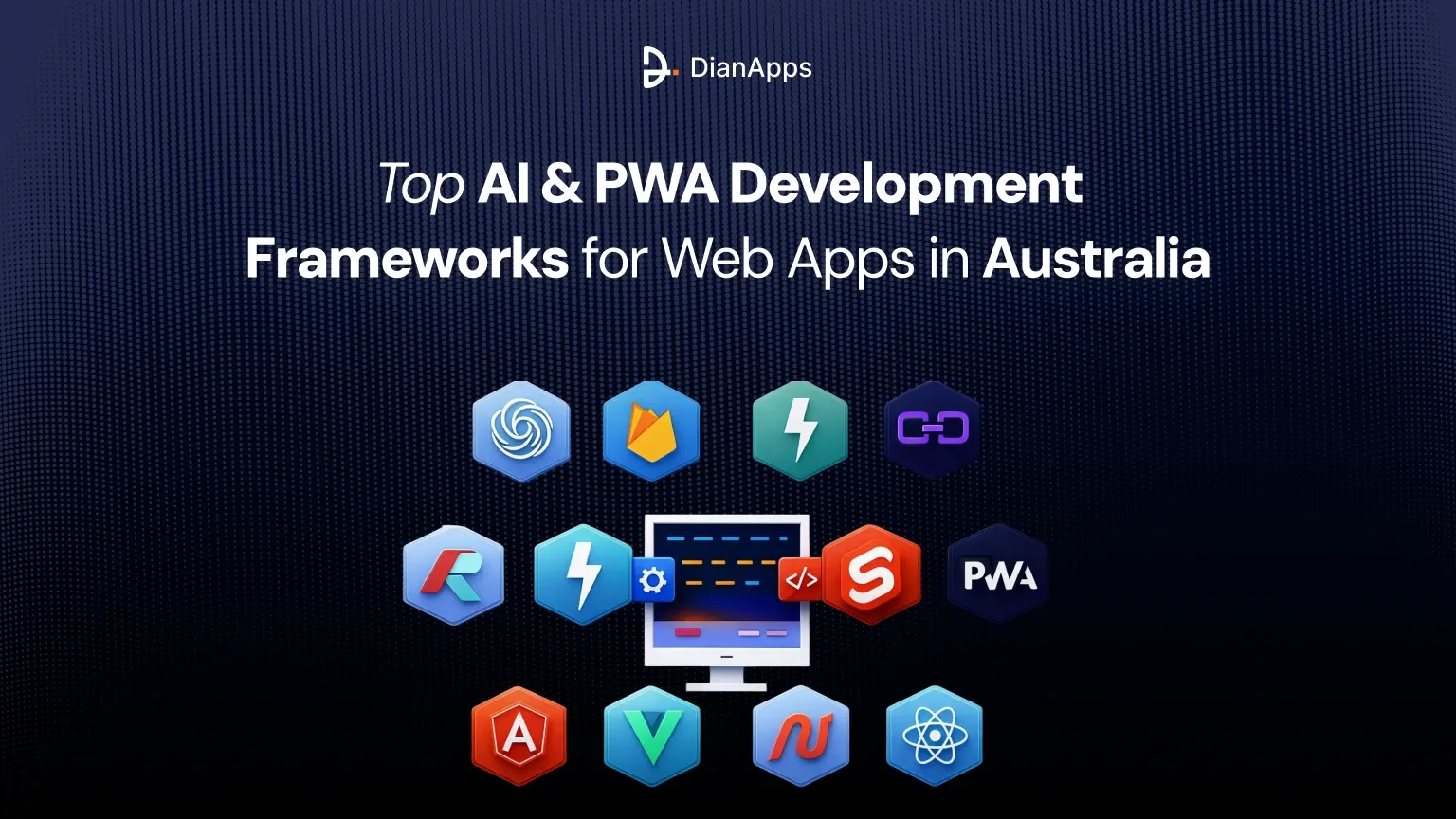
Selecting the right PWA development framework is not a technical preference; it’s a long-term business decision. The framework determines how fast your web app loads, how easily it scales, and how future-ready it remains. Below are the most reliable and widely adopted PWA frameworks, explained with practical context rather than surface-level features. If you want to build a web app using any of these frameworks, ensure to get in touch with a reliable web app development company.
React
- Built on a component-driven architecture that simplifies large-scale UI development.
- Enables faster updates and consistent user experiences across complex web apps.
- Backed by a massive ecosystem, making it easier to integrate third-party tools.
- Ideal for scalable PWAs that require frequent feature enhancements.
Vue.js
- Known for its clean syntax and low learning curve for development teams.
- Works exceptionally well for gradually upgrading existing websites into PWAs.
- Offers strong performance without heavy configuration overhead.
- Popular among startups and mid-sized Australian businesses.
Angular
- A full-fledged framework that handles routing, forms, and state management out of the box.
- Best suited for enterprise-grade PWAs with complex workflows.
- Maintains long-term stability and consistency in large teams.
- Preferred when structure and scalability are top priorities.
Recommended Read: Understanding Frontend Frameworks for Full-Stack Development: Angular vs. React vs. Vue
Ionic
- Designed for building cross-platform PWAs using a single codebase.
- Provides pre-built UI components that feel native across devices.
- Reduces development timelines significantly.
- Works smoothly with React, Angular, and Vue frameworks.
Polymer
- Focuses on reusable web components aligned with modern web standards.
- Helps maintain design consistency across large applications.
- Suitable for PWAs requiring modular and maintainable UI systems.
- Encourages long-term code sustainability.
Magento PWA Studio
- Purpose-built for eCommerce-focused PWAs.
- Delivers faster storefront experiences compared to traditional Magento themes.
- Supports headless commerce architectures.
- Widely adopted by Australian retail and D2C brands.
ScandiPWA
- Performance-first framework optimized for eCommerce PWAs.
- Uses a headless approach for greater flexibility and speed.
- Enhances SEO, loading times, and checkout experiences.
- Ideal for high-traffic online stores.
Preact
- Lightweight alternative to React with a much smaller bundle size.
- Delivers faster load times without sacrificing core functionality.
- Compatible with most React libraries.
- Suitable for performance-critical PWAs.
Lighthouse
- Not a framework, but a critical performance auditing tool.
- Measures speed, accessibility, and PWA readiness.
- Helps teams identify real-world performance gaps.
- Essential for maintaining high-quality PWAs.
Svelte / SvelteKit
- Compiles code at build time instead of running it in the browser.
- Produces faster and lighter PWAs with minimal overhead.
- Offers a clean and readable development experience.
- Gaining rapid adoption for modern, performance-focused projects.
Essential AI Frameworks for PWAs
AI frameworks bring intelligence to PWAs by enabling personalization, automation, and real-time decision-making. Instead of static user journeys, AI-powered PWAs adapt based on behavior, context, and intent. For Australian businesses competing in crowded digital spaces, these frameworks help create experiences that feel responsive, relevant, and genuinely helpful.
LangChain
- Enables structured AI workflows using large language models.
- Ideal for building chatbots, guided user flows, and smart assistants.
- Helps PWAs deliver contextual responses instead of scripted outputs.
- Works well for support, onboarding, and recommendation systems.
FastAPI
- High-performance backend framework designed for speed and scalability.
- Perfect for serving AI models through clean and fast APIs.
- Handles real-time requests efficiently for AI-driven PWAs.
- Simplifies backend architecture without sacrificing reliability.
Firebase
- Provides real-time databases and smooth authentication.
- Enables AI-powered personalization through live data syncing.
- Supports offline-first experiences, aligning well with PWAs.
- Reduces backend development effort significantly.
TensorFlow.js
- Allows machine learning models to run directly in the browser.
- Enables real-time predictions without server dependency.
- Useful for smart forms, recommendations, and dynamic UI behavior.
- Improves responsiveness while reducing infrastructure costs.
OpenAI APIs
- Adds natural language understanding and generation capabilities.
- Powers conversational interfaces and intelligent search features.
- Enhances engagement by making PWAs more interactive.
- Easy to integrate into modern PWA architectures.
Specialized PWA Tools
Beyond frameworks, specialized tools play a critical role in building, testing, and optimizing PWAs. These tools ensure that PWAs meet performance benchmarks, accessibility standards, and real-world usability expectations. They help development teams move from functional builds to polished, production-ready applications.
PWA Builder
- Simplifies the process of converting websites into PWAs.
- Generates service workers and manifests automatically.
- Helps meet platform-specific PWA requirements.
- Ideal for faster deployment and experimentation.
- Audit performance, accessibility, and SEO metrics.
- Identifies real-world issues affecting user experience.
- Supports continuous performance optimization.
- Essential for maintaining Core Web Vitals.
Workbox
- Manages advanced caching strategies effectively.
- Improves offline reliability and load performance.
- Reduces manual service worker configuration.
- Widely trusted in production-level PWAs.
Web App Manifest Tools
- Controls how PWAs appear on user devices.
- Enables app-like installation experiences.
- Improves branding consistency across platforms.
- Enhances user trust and engagement.
Final Words
PWAs powered by AI are redefining how Australian businesses build and scale digital products. The right combination of PWA frameworks and AI tools can significantly improve performance, user engagement, and long-term ROI.
Whether you are launching a startup platform or modernizing an enterprise system, the technology stack you choose matters. A custom web development company in Australia that understands both AI frameworks for PWAs and real-world business needs can help you stay ahead of the curve.
The future belongs to fast, intelligent, and resilient web applications and now is the time to build them right.
Frequently Asked Questions
 0 comments











Leave a Comment
Your email address will not be published. Required fields are marked *