















 0 comments





What Changed in 2026
The market landscape shifted meaningfully in the last twelve months. Here are the verified data points that shape the guidance below:
- Fintech mobile transactions expected to hit $12 trillion globally in 2026 (Juniper Research 2026).
- Banking apps with real-time AI fraud detection see 67% fewer disputed transactions (ACI Worldwide 2025 study).
- Average fintech app breach cost is $5.9 million in 2025 (IBM Cost of a Data Breach 2025).
- SOC 2 Type II certification is baseline for enterprise fintech buyers in 2026 (Vanta 2026 Compliance Trends).
- DianApps has delivered fintech builds for lending, payments, and wealth management platforms (DianApps client portfolio).
Related Reading From Our 2026 Guides
For deeper context, see these companion guides:
TL;DR, Hire Fintech Developers in 2026
The fintech developer market in 2026 is more specialized than ever. Embedded finance, Open Banking APIs, AI fraud detection, and tighter regulation (PCI DSS 4.0, PSD3 in Europe) mean hiring a generalist developer for fintech work creates real risk. We ranked 10 ways to hire fintech developers, with DianApps leading the list for teams that want certified fintech engineers without the cost of a US-based bench. The right hire depends on whether you need staff augmentation, a full project team, or a single specialist.
Hiring fintech developers in 2026 is harder than it was three years ago. Open Banking is now live in 60 plus markets. PCI DSS 4.0 is fully enforced for any company touching card data. AI fraud detection has moved from optional to standard. The pool of developers who actually know payments, ledger design, KYC and AML workflows, and regulated data handling has not grown nearly as fast as demand.
This guide ranks the 10 ways we would recommend hiring fintech developers in 2026, across staff augmentation, agencies, and freelance platforms. We also walk through the five checks that separate genuine fintech engineering capability from generic full stack work labeled as fintech. If you are hiring for a payments build, a Banking-as-a-Service product, a wealth platform, or a regulated lending app, this list is the starting point.
Why Hiring Fintech Developers Is Different in 2026
The global fintech market crossed 312 billion USD in 2024 and continues to grow at 14 percent CAGR (Statista, 2025). That growth pulls in capital, but it also pulls in regulation. Three structural shifts make 2026 different from prior years.
First, regulatory pressure has caught up. PCI DSS 4.0 became fully enforceable in March 2025, raising the bar for any company touching payment card data. PSD3 in Europe expands Open Banking obligations and tightens fraud reporting timelines. India enforced its Digital Personal Data Protection Act for financial data starting in late 2024. Generalist developers can build a fintech feature in 2026, but they typically miss the compliance details that surface later in audits.
Second, embedded finance has shifted from a buzzword to a real category. Stripe Treasury, Unit, Solid, and similar Banking-as-a-Service platforms are now table stakes for B2B SaaS companies looking to offer banking-like services. Building on top of these platforms still requires real ledger thinking, idempotency design, and reconciliation work that generic developers do not handle well.
Third, AI fraud detection has moved from optional to standard. Fintech companies losing more than 1 percent of transaction volume to fraud no longer have a competitive position. Hiring developers who understand how to integrate fraud platforms (Sift, Sardine, Unit21, internal models) is now a hiring requirement at most growth-stage fintech firms.
What Fintech Developers Actually Do
A fintech developer is not just a backend engineer who happened to ship a payment feature. The work spans regulated data, real time decisioning, and integrations with bank rails and card networks. Typical responsibilities include:
- Payment integrations: card processing, ACH, SEPA, UPI, Pix, wire transfers, instant payments, and reconciliation across providers.
- Banking-as-a-Service work: integration with Stripe Treasury, Unit, Solid, Synctera, or direct bank sponsorship APIs.
- Ledger design: double-entry bookkeeping at the application layer, idempotent transaction handling, period close logic, and audit trails.
- KYC and AML workflows: identity verification (Persona, Onfido, Jumio), watchlist screening, transaction monitoring, suspicious activity reporting.
- Compliance engineering: PCI DSS scope minimization, GDPR data handling, SOX controls for financial reporting, audit-ready logging.
- Fraud and risk: fraud platform integration, risk scoring, manual review workflows, chargeback handling.
- Open Banking and account aggregation: Plaid, Tink, Yapily, MX, and direct Open Banking API integrations.
- Wealth and lending features: order routing, portfolio rebalancing, loan origination, decisioning rules, servicing.
How to Evaluate a Fintech Developer Before You Hire
We use five checks before recommending any fintech developer or fintech development team. Most clients should use the same checks. A developer who scores well on all five will deliver predictable outcomes. A developer who scores weakly on any one of these usually creates problems mid-project.
1. Named Fintech Domain Experience
Ask for at least two shipped fintech products by name. If the answer is general purpose payment feature in an e-commerce app, that is not the same as building a fintech product. Real fintech experience includes payments rails knowledge, ledger design exposure, compliance work, and reconciliation logic. A developer with one year on a real fintech product is usually more valuable than a developer with five years on adjacent work.
2. Compliance and Security Certifications
Look for AWS Certified Security Specialty, Certified Information Systems Security Professional (CISSP), or PCI Professional (PCIP) certifications. None of these are required, but the presence of any of them signals the developer has formal security training. Ask which compliance frameworks they have worked under (PCI DSS, SOC 2, SOX, GDPR, PSD2, PSD3).
3. Track Record of Audit Pass-Through
Ask whether the developer or team has shipped code that passed an external audit (PCI assessment, SOC 2 Type 2, financial audit by a Big Four firm). This is a binary signal. Teams that have not been through this process do not yet understand the documentation, logging, and access control requirements that surface during audit.
4. Named Client Work with Measurable Outcomes
Generic logos on a portfolio page do not tell you anything. Ask for two specific things: a written case study with measurable outcomes (transaction volume processed, fraud rate reduction, time to approval, customer onboarding latency) and a reference call with that client. The right fintech firms will give you both without pushback.
5. Engagement Model Match
Hire for the model that fits your need. A single contract developer fits when you need to augment an existing team for 3 to 12 months. A full agency engagement fits when you need a turnkey product build. A freelance platform fits when you need short term help on a defined task. Mixing the wrong model with the wrong need is a common cause of project drift.
Top 10 Ways to Hire Fintech Developers in 2026
Our ranking weighs domain experience, security capability, engagement flexibility, and cost. We picked options across price points so you can shortlist based on your specific need.
1. DianApps
DianApps is a global product engineering company offering fintech development as part of a wider stack that also covers Salesforce, AI/ML, mobile, and web app builds. We deliver fintech projects from offshore engineering teams in India paired with US-based or Australia-based points of contact. Our fintech engineers have shipped payments, Banking-as-a-Service integrations, lending products, and Open Banking work for clients across the US, UK, Australia, and the UAE.
Services Provided by DianApps
Payment integrations (Stripe, Adyen, Checkout, Razorpay, PayPal), Banking-as-a-Service work (Unit, Solid, Stripe Treasury), ledger design, KYC and AML integration (Persona, Onfido, Jumio), fraud platform integration (Sift, Sardine), Open Banking integrations (Plaid, Tink), regulatory tech, and ongoing fintech maintenance.
Best Fit
Growth-stage and mid-market fintech companies that want certified engineering capability at offshore cost. Lending, wealth, payments, neobanking, and B2B SaaS clients adding embedded finance.
2. Toptal
Toptal is a curated freelance platform that screens developers to the top 3 percent. They have a dedicated fintech vertical with vetted developers across payments, blockchain, banking systems, and trading platforms. The cost is higher than offshore agencies but lower than full US-based agencies. Each engagement starts with a free trial period.
Best Fit
Companies that need one specialist fintech engineer for a defined project. Clients who do not want to manage offshore engineering and prefer a vetted individual contractor.
3. Andela
Andela is a talent platform connecting companies with senior developers based primarily in Africa, Latin America, and Asia. They have a strong fintech track record, particularly with payments and Open Banking work. Andela handles vetting, contracts, and ongoing operations.
Best Fit
Mid-market and enterprise companies that need to scale a remote engineering team quickly. Clients who value time zone overlap with European or US East Coast hours.
4. Arc.dev
Arc.dev is a curated remote developer platform with a fintech specialty pool. They handle technical vetting, contracts, and replacement guarantees. The bench includes developers experienced with PCI DSS work, KYC integration, and payments engineering.
Best Fit
Startups and growth-stage companies that need vetted senior fintech developers on a contract basis without the agency overhead.
5. Turing
Turing is a remote developer marketplace with a deep bench in fintech, particularly for backend, mobile, and machine learning roles. They use an AI vetting platform that pre-tests developers on technical and communication skills. Turing handles all employment, compliance, and payment logistics.
Best Fit
Companies that want to add 1 to 10 remote developers quickly. Clients who value a tech-forward platform with built-in matching.
6. EPAM Systems
EPAM is a global engineering services company with a strong financial services practice. They have shipped large fintech transformations for banks, insurance carriers, and asset managers across Europe, North America, and Asia. EPAM is better suited to enterprise-scale engagements than startup projects.
Best Fit
Enterprise banks, insurance carriers, and large fintech firms with multi-million dollar engineering budgets. Regulated industries that need a partner with formal security clearances.
7. ScienceSoft
ScienceSoft is a global software services company with a focused fintech practice. They have delivered payment processing, banking software, and trading platforms for clients across the US, EU, and Middle East. They publish detailed case studies with measurable outcomes.
Best Fit
Mid-market and enterprise fintech firms that want a service provider with formal compliance experience and documented delivery process.
8. Itexus
Itexus is a fintech-focused software development company with offices in the US, Eastern Europe, and Latin America. Their practice covers core banking software, lending platforms, wealth management, and crypto. They have a strong AI fraud detection capability.
Best Fit
Growth-stage and mid-market fintech companies, particularly those building lending or wealth products. Clients comfortable with Eastern European delivery hours.
9. Mobilunity
Mobilunity is a Ukraine-based staff augmentation provider with a fintech specialty. They handle recruiting, employment, and dedicated team management. The model fits clients who want their own remote team rather than an agency engagement.
Best Fit
Clients who want a long-term dedicated remote fintech team. Companies that prefer staff augmentation over project-based agency work.
10. Upwork (with Heavy Filtering)
Upwork remains a viable option for short-term fintech work if you filter aggressively. The platform has a wide range of quality, so most of the value depends on your screening process. Stick to developers with verified fintech client history, public GitHub fintech work, and at least 100 hours billed on fintech projects.
Best Fit
Short-term defined tasks (1 to 4 weeks). Companies with strong internal hiring screening capability. Not recommended for full product builds.
In-House vs Agency vs Staff Augmentation: Comparison
Three engagement models cover almost every fintech hiring need. Pick based on your project profile, internal capacity, and how much management overhead you can absorb.
| Factor | In-House Fintech Team | Fintech Agency | Staff Augmentation |
|---|---|---|---|
| Time to first developer | 3 to 6 months | 2 to 4 weeks | 2 to 4 weeks |
| Cost per senior developer (annual) | $180,000 to $300,000 US base salary plus benefits | Project-based, typically $100K to $500K per build | $60,000 to $180,000 per year offshore equivalent |
| Management overhead | High (HR, retention, performance) | Low (agency manages delivery) | Medium (you manage day to day) |
| Domain experience guarantee | Depends on hiring | Strong if the agency is fintech-focused | Strong if you pick a fintech-specialized provider |
| Best for | Long-term core product ownership | Defined product builds, MVPs | Ongoing capacity, integrations, maintenance |
| Compliance maturity | Depends on internal training | Strong (audit pass-through track record) | Depends on provider |
| Engagement flexibility | Low (full-time contracts) | Medium (project SOWs) | High (monthly retainer) |
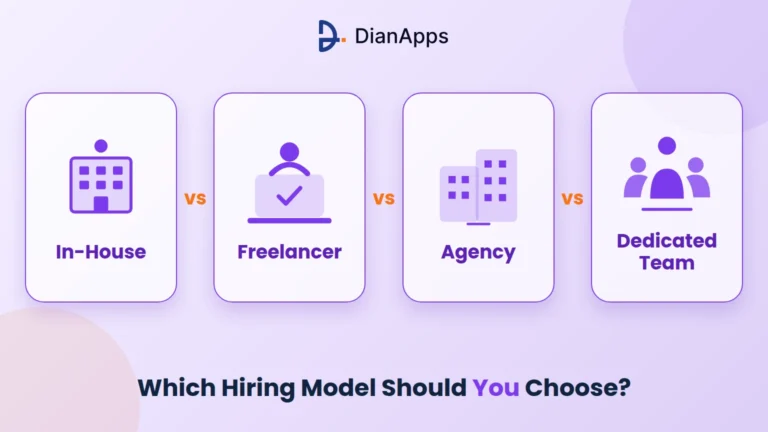
Pick in-house when fintech is your core product and you plan to scale a team over multiple years. Pick a fintech agency when you have a defined product to ship and want a turnkey delivery. Pick staff augmentation when you have an existing team that needs specialist capability added quickly without long term commitment.
Cost of Hiring Fintech Developers in 2026
Fintech developer cost depends on location, seniority, and engagement model. The numbers below reflect 2026 market rates we see across active engagements.
- US-based senior fintech developer (full-time, in-house): $180,000 to $300,000 base salary plus benefits and equity. Total cost of employment lands at 1.3 to 1.5 times base.
- US-based senior fintech developer (contract, hourly): $130 to $250 per hour, often through platforms like Toptal or direct hire.
- Senior fintech developer in Latin America or Eastern Europe (contract): $60 to $120 per hour, depending on country and platform.
- Senior fintech developer in India (offshore agency): $30 to $80 per hour, with most established agencies landing in the $40 to $70 range.
- Fintech agency project pricing: $100,000 to $500,000 for a focused build (MVP through Series A scale), $500,000 to multi-million for enterprise transformation work.
- Staff augmentation monthly cost (dedicated remote developer): $5,000 to $15,000 per month per senior developer, depending on provider and seniority.
Hybrid models (US-based contract management plus offshore engineering) have become the default for most growth-stage US clients. We offer this model at DianApps because it gives clients both ends without the trade-off most teams dread: cost benefit of offshore engineering paired with US-based or Australia-based account management.
Trends Shaping Fintech Development in 2026
Five trends are reshaping fintech engineering work in 2026. Hiring decisions made today should account for these.
Trend 1: Embedded Finance Goes Mainstream
Banking-as-a-Service platforms (Stripe Treasury, Unit, Solid, Synctera) now power thousands of B2B SaaS products. Building on these requires real ledger thinking and integration discipline. Hire developers who have shipped on at least one of these platforms, not just used the marketing materials.
Trend 2: Open Banking Becomes Default
Open Banking is now live in 60 plus markets. PSD3 in Europe expands obligations starting in 2026. US Open Banking via the CFPB Section 1033 final rule is ramping through 2026 and 2027. Fintech developers who already work with Plaid, Tink, Yapily, MX, and direct bank APIs have a clear advantage.
Trend 3: AI Fraud Detection Moves From Optional to Standard
Fintech companies losing more than 1 percent of transaction volume to fraud no longer have a competitive position. Hiring developers who can integrate Sift, Sardine, Unit21, or build internal fraud models is now a hiring requirement at most growth-stage fintech firms.
Trend 4: Regulatory Tech as a Distinct Skill
RegTech work (transaction monitoring, watchlist screening, SAR generation, suspicious activity reporting) used to be a side responsibility. In 2026 it is a distinct engineering specialty. Companies hiring for compliance-heavy products should screen for direct RegTech work, not assume general fintech experience covers it.
Trend 5: AI Code Generation Reshapes Developer Productivity
Anthropic Claude, GitHub Copilot, and similar tools have raised baseline productivity but have also raised the bar on what senior developers add. The right fintech developers in 2026 spend more time on design decisions, security review, and audit pass-through preparation, and less time on routine coding.
Frequently Asked Questions
Final Thoughts: Picking Your Fintech Hiring Partner
The right way to hire fintech developers in 2026 depends on your stage, your product, and your internal capacity. Early-stage fintech firms typically get more value from an agency engagement that ships an MVP fast. Growth-stage firms benefit from staff augmentation paired with a small in-house core team. Enterprise firms need a global services partner with formal compliance experience.
At DianApps, we build fintech products as part of a wider engineering stack that includes Salesforce, AI/ML, mobile, and Drupal. Our fintech engineers have shipped payments, lending, wealth, and Banking-as-a-Service work for clients across the US, UK, Australia, and the UAE. If you are scoping a fintech build or planning a Banking-as-a-Service launch, talk to our team. Contact us for an introductory call or browse our portfolio for case studies.
For our wider services beyond fintech engineering, see custom software development services. For a related read, see top custom software development companies in the US and our 2026 guide to top Drupal development companies.
Related reading: For a comprehensive look at where mobile apps are headed this year, see our pillar guide on Mobile App Development Trends 2026, covering AI integration, framework choices, and USD cost benchmarks.
 0 comments










Leave a Comment
Your email address will not be published. Required fields are marked *