













 0 comments





Key Takeaways:
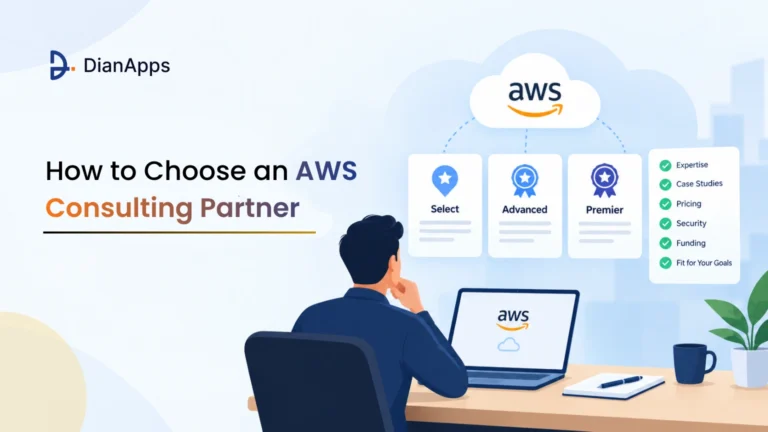
- AWS partner tiers reflect a provider’s certified workforce, customer project experience, and AWS-related business performance.
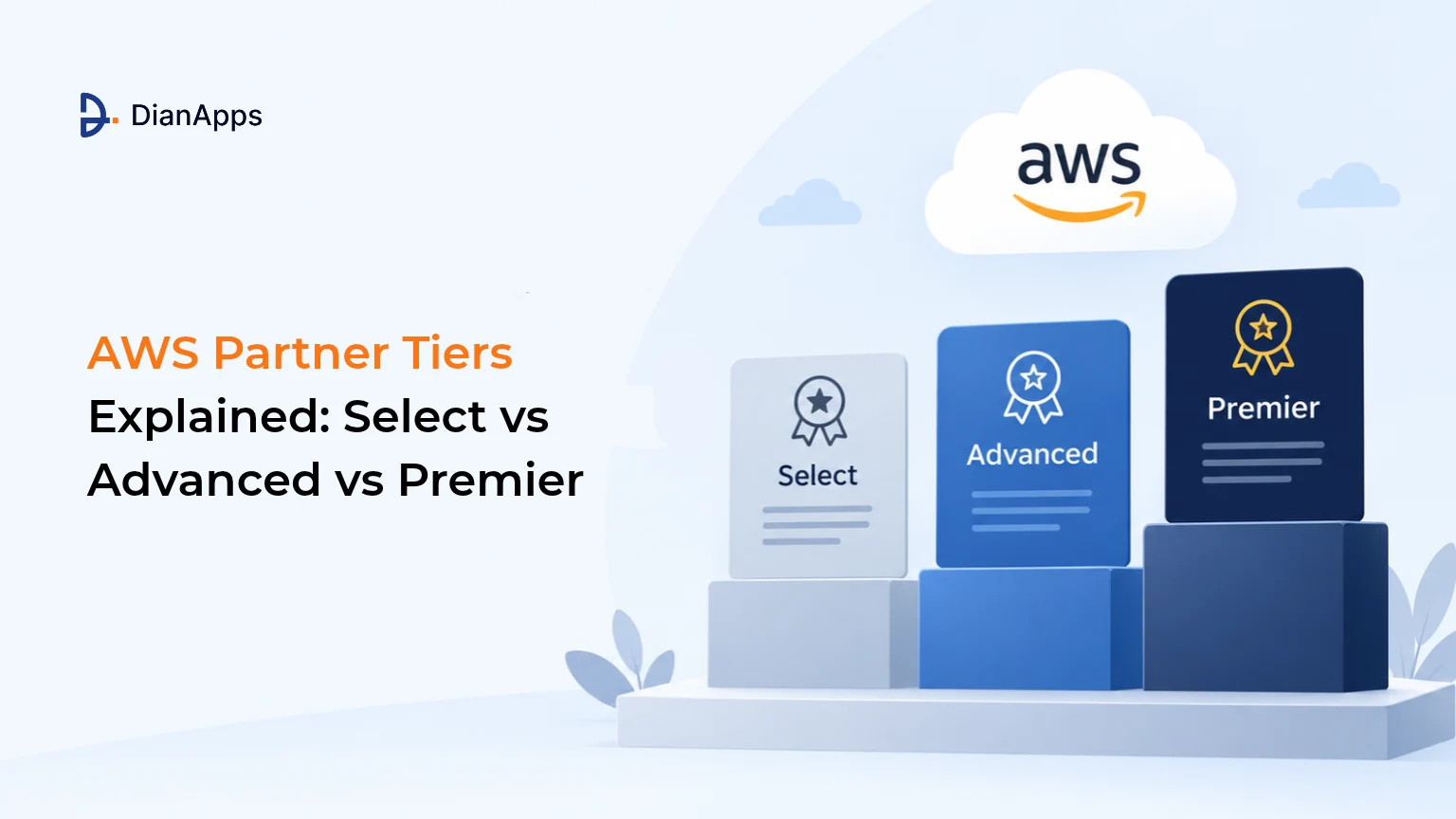
- Select is the entry-level Services Path tier, Advanced indicates a larger certified team and stronger delivery record, while Premier represents sustained, large-scale performance.
- AWS Advanced and Premier partners can qualify for specialised programs such as Competencies, Managed Service Provider and Well-Architected validations.
- Partner tiers do not guarantee that the most experienced engineers will work on your project or that the provider fits your industry, budget and timeline.
- AWS competencies validate expertise in specific areas, helping buyers assess whether a partner’s skills match their workload.
- Use AWS Partner Finder to verify tier claims, review specialisations and case studies, and check the credentials of the team assigned to your project.
Quick Answer: AWS Select, Advanced, and Premier are tiers within the AWS Partner Network Services Path, reflecting different levels of certification, customer delivery experience, and business performance. Select suits buyers evaluating smaller providers, Advanced offers a stronger track record, and Premier signals sustained large-scale delivery. The best choice depends on your project requirements, relevant competencies, assigned engineers, and budget, not the tier alone.
You have finally decided to move your product to AWS or fix the infrastructure that is already running there. If you are new to cloud computing, you can understand what AWS is before you move ahead and choose a partner, then start shortlisting vendors, and within the first few calls, each and every one of them is introducing themselves as an “AWS Partner”. Some are showing a Select badge, some an Advanced badge, and a few a Premier badge on their website. On paper, they all look trustworthy, but the badges are not really telling you what is different between them. So what do AWS partner tiers actually mean, and should the tier be the deciding factor when you hire? Well, the tier tells you a lot about a partner’s team and their track record on AWS, but it does not tell you everything, and knowing where that line sits is extremely crucial before you sign anything.
In this guide, we are breaking down what each tier requires, what it guarantees and what it does not, how competencies are different from tiers, and how you can verify any partner yourself in a few minutes. Let’s take a look.
What Is the AWS Partner Network?
The AWS Partner Network (APN) is the program AWS uses to organise all the companies that build, sell, or deliver services on its cloud. AWS groups these partners into paths, and companies that offer consulting, professional, managed, or value-added resale services enroll in the Services Path, which is where the Select, Advanced, and Premier tiers apply. Software vendors and hardware makers have separate paths with their own steps, so when a development or cloud consulting company talks about its tier, it is talking about the Services Path.
Joining the APN does not cost anything, since a company only has to create an AWS Partner Central account, enroll in the Services Path, and then meet the minimum criteria to earn the Select tier. This is important for buyers because it means “AWS Partner” on its own is not a strong signal. The tier attached to that word is what tells you how much the partner has proven to AWS, and the reasons are not hard to see once you look at the requirements.
How AWS Partner Tiers Work
AWS is measuring every Services partner on two things: knowledge, which means trained and certified people on the team, and experience, which means real customer projects running on AWS. In AWS’s own words, Select partners have trained and certified people plus some customer experience, Advanced partners have a strong certified technical team and proven customer experience, and Premier partners are the most experienced partners, recognised as leaders in their markets with multiple program validations and success across a large number of customers.
Experience is counted through “launched opportunities”. An opportunity counts when a customer is actively spending on AWS through a project the partner delivered or co-sold, and the monthly recurring revenue (MRR) is that customer’s monthly AWS spend. So the tier is not only checking that people passed exams, but it is also checking that real customers are running real workloads because of this partner. Now let’s break down each tier.
AWS Select Partner
The Select tier is the entry point for any company that wants to be visible as an AWS partner. To reach it, a partner needs 4 accredited individuals (2 technical and 2 business), 2 people with the foundational certification, 2 people with technical certifications, and 3 launched opportunities adding up to at least $1,500 in MRR.
For a buyer, an AWS Select partner is showing that the company is genuinely working on AWS, has a few certified people, and has already put a handful of customers into production. This is a real starting point, but it is not suggested to read it as proof of deep or large-scale delivery experience.
AWS Advanced Tier Partner
The jump from Select to Advanced is where the bar is clearly going up. An Advanced partner needs 8 accredited individuals (4 technical and 4 business), 4 foundational certified people, and 6 technically certified people, with at least 3 of them at Professional or Specialty level. It also needs 20 launched opportunities with total MRR of at least $10,000, plus a Partner Business Plan.
And that is not all. Advanced and Premier partners are the only ones eligible for programs like the AWS Competency Program, the AWS Managed Service Provider (MSP) Program and the AWS Well-Architected Partner Program. This means an AWS Advanced Tier partner is not only bigger on paper, but it also has access to the specialised validations buyers should be looking for, which we are covering a little later.
AWS Premier Tier Partner
Premier is the top tier, and it is built for partners working at a very large scale. A Premier partner needs 20 accredited individuals (10 technical and 10 business), 10 foundational certified people, and 25 technically certified people with at least 10 at Professional or Specialty level. It needs 50 launched opportunities with total MRR of at least $50,000, a Partner Business Plan, and an Executive Business Review. It must also hold 3 validations from the AWS Competency, MSP, or Well-Architected programs, with one being the MSP, DevOps, or CloudOps competency, and it must sustain all of this for more than six months.
Premier is also not given automatically, since it is an application-based designation that Advanced partners can apply for only after meeting and maintaining the Premier requirements for six consecutive months. An AWS Premier Tier partner is therefore showing sustained, large-scale delivery and not just a good quarter.
One thing that surprises many buyers is the fee. AWS lists the same annual APN fee of $2,500 for all three tiers, so a partner is not buying a higher tier. They have to earn it through people and customer outcomes.
AWS Partner Tiers Comparison Table
To make the tier requirements easier to scan, here is how the three AWS partner tiers compare side by side, based on AWS’s published Services Path requirements:
| Requirement | Select | Advanced | Premier |
| Annual APN fee | $2,500 | $2,500 | $2,500 |
| Accredited individuals | 4 (2 technical, 2 business) | 8 (4 technical, 4 business) | 20 (10 technical, 10 business) |
| Foundational certified | 2 | 4 | 10 |
| Technical certified | 2 | 6 (min. 3 Professional/Specialty) | 25 (min. 10 Professional/Specialty) |
| Launched opportunities | 3 (MRR ≥ $1,500) | 20 (MRR ≥ $10,000) | 50 (MRR ≥ $50,000) |
| Partner Business Plan | Not required | Required | Required |
| Executive Business Review | Not required | Not required | Required |
| Competency / MSP / Well-Architected validations | Not required | Not required | 3 (incl. MSP, DevOps or CloudOps) |
| Sustained attainment | Not applicable | Not applicable | More than 6 months |
The table makes one thing very clear: each tier is roughly multiplying the certified headcount and the customer revenue AWS expects to see, which is why the badge is a reasonable shortcut for a partner’s overall scale.
What Is the Difference Between AWS Advanced and Premier Partner?
This is one of the most searched questions about AWS partner tiers, and the honest answer is that the difference comes down to scale, validation, and consistency. A Premier partner is proving all of the following:
- More than three times the technical certifications of an Advanced partner.
- At least 10 people at Professional or Specialty level instead of 3.
- 50 launched opportunities instead of 20.
- Five times the customer MRR on AWS.
- Three specialised AWS validations.
- An Executive Business Review with AWS.
- Six months or more of sustained performance before applying.
For most buyers, this means a Premier partner is suited to large enterprise programs, multi-account migrations or projects where you need a big bench of certified people available at once. An Advanced partner, on the other hand, can be the better fit for mid-sized products, startups, and scale-ups, where you want senior people directly on your project and not a large delivery structure in between. Neither tier is “better” in every situation, and that brings us to what the badge actually promises.
What Each Tier Guarantees (and What It Does Not)
Here is where buyers/decision-makers are often reading too much into the badge. A tier guarantees that, at the time of assessment, the partner has met AWS’s minimum requirements, resulting in:
- A minimum number of accredited and certified people on the team.
- A minimum number of customer projects actually running on AWS.
- A minimum level of customer spend generated through those projects.
- For Advanced and Premier, a business plan agreed with AWS.
But the tier is not guaranteeing a few things that matter just as much to your project:
- That the certified people will be the ones working on your account.
- That the partner has done your kind of workload or worked in your industry.
- That their pricing, communication, or timelines suit you.
- That their experience matches the size of your project.
This is why the tier is a great filter for building a shortlist, but it should not be the final decision on its own. Asking who exactly will be assigned to your project, and which of their certifications that person holds, is extremely crucial.
Not Sure Which AWS Partner Fits Your Project?
Our AWS-certified cloud engineers can review your current setup, explain what kind of partner your workload really needs, and give you a clear plan before you commit to anyone.
Competencies vs Tiers: Why Buyers Mix Them Up
Tiers and competencies are both shown as badges, so it is very easy to treat them as the same thing, but they are measuring different things. A tier is telling you how big and experienced the partner is on AWS overall. A competency is telling you that the partner has been validated in one specific area.
AWS designed the Competency Program to identify, validate, and promote partners who have shown technical expertise and proven customer success in specialised areas across industries, use cases and workloads. Think of areas like migration, DevOps, security, data and analytics, financial services or healthcare. To earn these specialisations, partners go through a strict technical validation of their AWS solutions and practices. Partners in these programs also cannot pay their way in, since AWS or, in some cases, third-party auditors validate the technical expertise behind the designation.
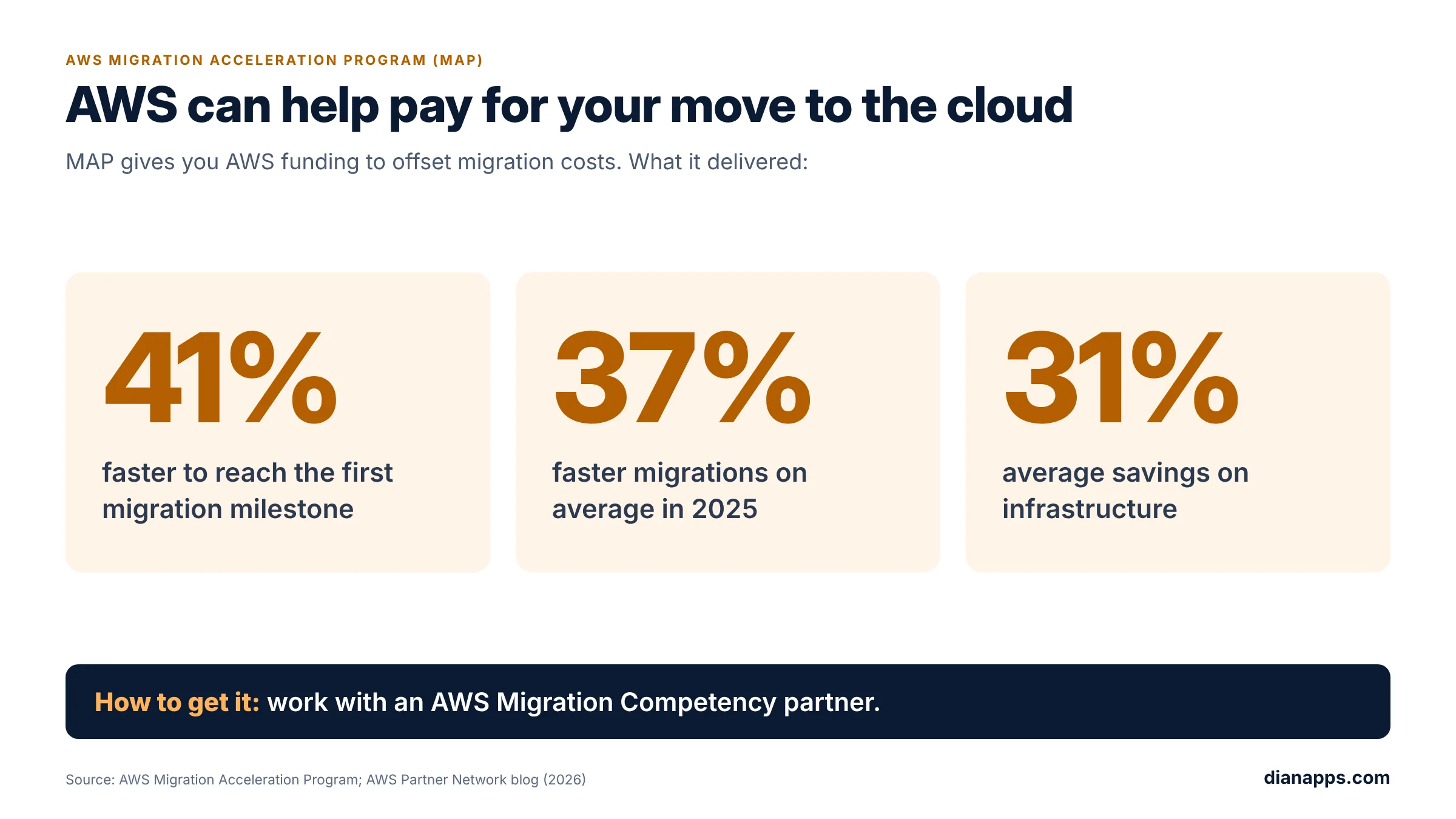
So how should a buyer use both? Well, start with the tier to understand the partner’s overall scale, then look at the competencies to see whether that scale is in the area you actually need. An AWS Advanced Tier partner with the exact competency your project needs may be a better fit than a larger partner whose validations sit in areas unrelated to your workload. If you are planning a cloud migration, for example, a validated migration specialisation is telling you far more than the tier name alone.
Ready to Build or Scale on AWS?
Share your project details with DianApps, and our team will get back to you within 24 hours with the next steps for your AWS journey.
How to Check a Partner on AWS Partner Finder
You do not have to take any partner’s word for their tier or competencies, because AWS is giving buyers a public directory to verify it. The Find an AWS Partner experience at partners.amazonaws.com lets you search by partner name, APN program designations, solutions, case studies, and office locations, and only Select, Advanced, or Premier partners have a visible listing there.
Here is a simple way to check any partner before your next call:
- Go to partners.amazonaws.com and type in the company’s name.
- Confirm the listing exists, since a missing listing means the company is not at Select tier or above.
- Check the tier shown on the profile and compare it with what their website and sales deck are claiming.
- Look at the AWS-validated qualifications, such as competencies and service validations.
- Read the case studies to see whether they match your industry and workload.
- Check the office locations if time zones or local presence matter to you.
- Ask the partner to share the certifications of the people who will actually be on your project.
Profile pages show the partner’s skill set as validated by AWS, along with partner solutions, case studies, and office locations, and you can contact the partner directly from there. This is not only saving you time, but it is also protecting you from badges that are outdated or simply not accurate.
How Do You Become an AWS Partner?
If you are a services company reading this, or you simply want to understand what your vendor went through, the path is straightforward on paper but takes real effort in practice:
- Create a free AWS Partner Central account to join the AWS Partner Network.
- Enroll in the Services Path.
- Get your team accredited and certified to meet the Select requirements.
- Deliver customer projects on AWS and register them as launched opportunities.
- Once assessed at a tier, pay the annual APN fee.
- Keep growing certifications and customer MRR to move up to Advanced.
- For Premier, earn three program validations, meet all requirements for six months, and then apply.
One partner that recently went through the process found that certifications can be bought with time and exam fees, but launched opportunities depend on customers who are already spending on AWS, which makes revenue the real constraint for most firms. This also explains why a higher tier is a meaningful signal for buyers, because it cannot be shortcut with exams alone.
How DianApps Is Helping Businesses Build on AWS
DianApps, a mobile and AI app development company, is working with startups, scale-ups and enterprises to plan, build, migrate and run their products on AWS. Our AWS cloud services cover cloud consulting, AWS migration, application modernisation, cloud security and compliance, managed services, DevOps automation, FinOps cost optimisation, and AI and ML workloads on Amazon Bedrock and SageMaker.
Our team holds AWS certifications across Cloud Practitioner, AI Practitioner, Solutions Architect, Machine Learning Engineer, Data Engineer, and CloudOps Engineer, and with 150+ skilled professionals, 450+ projects delivered, and clients in 25+ countries, we are bringing the same engineers who design your architecture into the actual build. Whether you need cloud consulting to choose the right setup, cloud managed services to keep things running after launch, or want to hire AWS developers to extend your own team, we are keeping the scope clear and the outcomes measurable from beginning until completion.
Get a Free AWS Infrastructure Assessment
Book a free 45-minute session with our AWS cloud consultants and walk away with a clear diagnosis of your environment and a prioritised action plan, with no commitment required.
Final Thoughts
AWS partner tiers are giving buyers a really useful starting point. Select is showing that a partner is genuinely working on AWS, Advanced is showing a strong certified team with proven customer delivery, and Premier is showing large-scale, sustained success with multiple specialised validations behind it. But the tier is only one part of the picture. The competencies are telling you where that experience actually sits, AWS Partner Finder is telling you whether the claims are real, and a simple question about who will be on your project is telling you whether the badge will translate into results for you.
If you are weighing up partners for a migration, a new cloud-native product or an AI workload on AWS, and you want someone to walk you through it honestly, we are always happy to help you make the right call.
 0 comments










Your email address will not be published. Required fields are marked *