















 0 comments





Key Takeaways:
- Native development suits performance-heavy apps, advanced device features and platform-specific experiences.
- Cross-platform development can reduce costs by 30 – 40% and build time by 20 – 30%.
- Flutter suits design-heavy apps, while React Native benefits teams using JavaScript or React.
- Android or iOS should be prioritised based on your target audience and market.
- Kotlin Multiplatform lets teams share business logic while retaining native user interfaces.
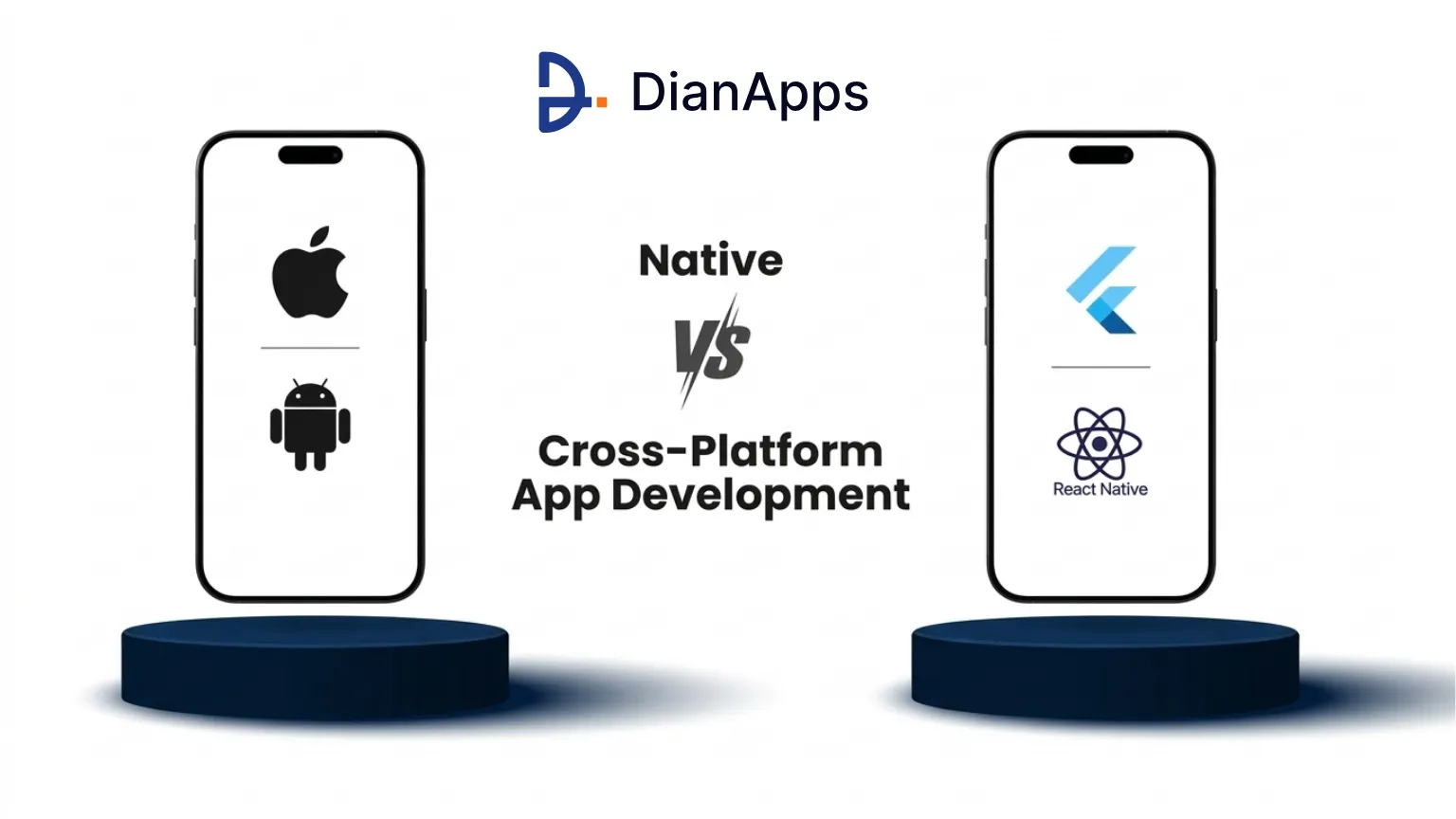
Quick Answer: Native app development uses separate codebases for Android and iOS, offering maximum performance and direct access to device features, while cross-platform development uses a shared codebase to build apps for both platforms with lower costs and faster delivery. In 2027, Flutter is a strong choice for design-heavy applications, while React Native suits teams with existing JavaScript or React expertise. Choose native development for graphics-intensive apps, advanced device integration or platform-specific experiences, and cross-platform development for MVPs, ecommerce, booking and business applications that need to reach both audiences efficiently.
Planning a mobile app can be exciting, until it comes to choosing the technology, with one developer telling you to go native for the best performance, another one suggesting Flutter to save time and money and a third one recommending React Native because your web team is already using JavaScript.
Every option is sounding right when you hear it, however, making the wrong choice is not suitable nor suggested for any business, as it is leading to higher costs, slower updates and an app that is needing a complete rebuild in a couple of years. This is why founders/business owners are now looking for a clear way to decide between native vs cross platform app development before even writing a single line of code, and this also is helping them plan the budget and timeline with a lot more confidence.
But which one is actually the right choice for your app in 2027? Well, there is no one answer that is fitting for each and every project, as the right choice depends on your users, your features, your budget and your long-term plans. But before we get into the comparison, let’s take a look at what is happening when this decision goes wrong.
The Challenges of Choosing the Wrong Development Approach
For many years, businesses have been picking their app technology based on what their developer is comfortable with or what is trending at the time, rather than what the product is actually needing. This is working for a while, however, as the app is growing and the users are increasing, the cracks are starting to show, resulting in:
- Higher development and maintenance costs than planned.
- Performance issues in feature-heavy or graphics-heavy apps.
- Delays when new features are needing platform-specific work.
- Difficulty in finding developers for the chosen stack.
- Costly rebuilds when the app is outgrowing its technology.
- Inconsistent experience for Android and iOS users.
Issues like these don’t just frustrate the development team, they also affect the user experience and the brand perception, as users are not caring about what technology your app is built on, they are only caring whether it is fast, smooth and reliable. This is why understanding native vs cross platform app development is extremely crucial before you start building anything.
What Is Native App Development?
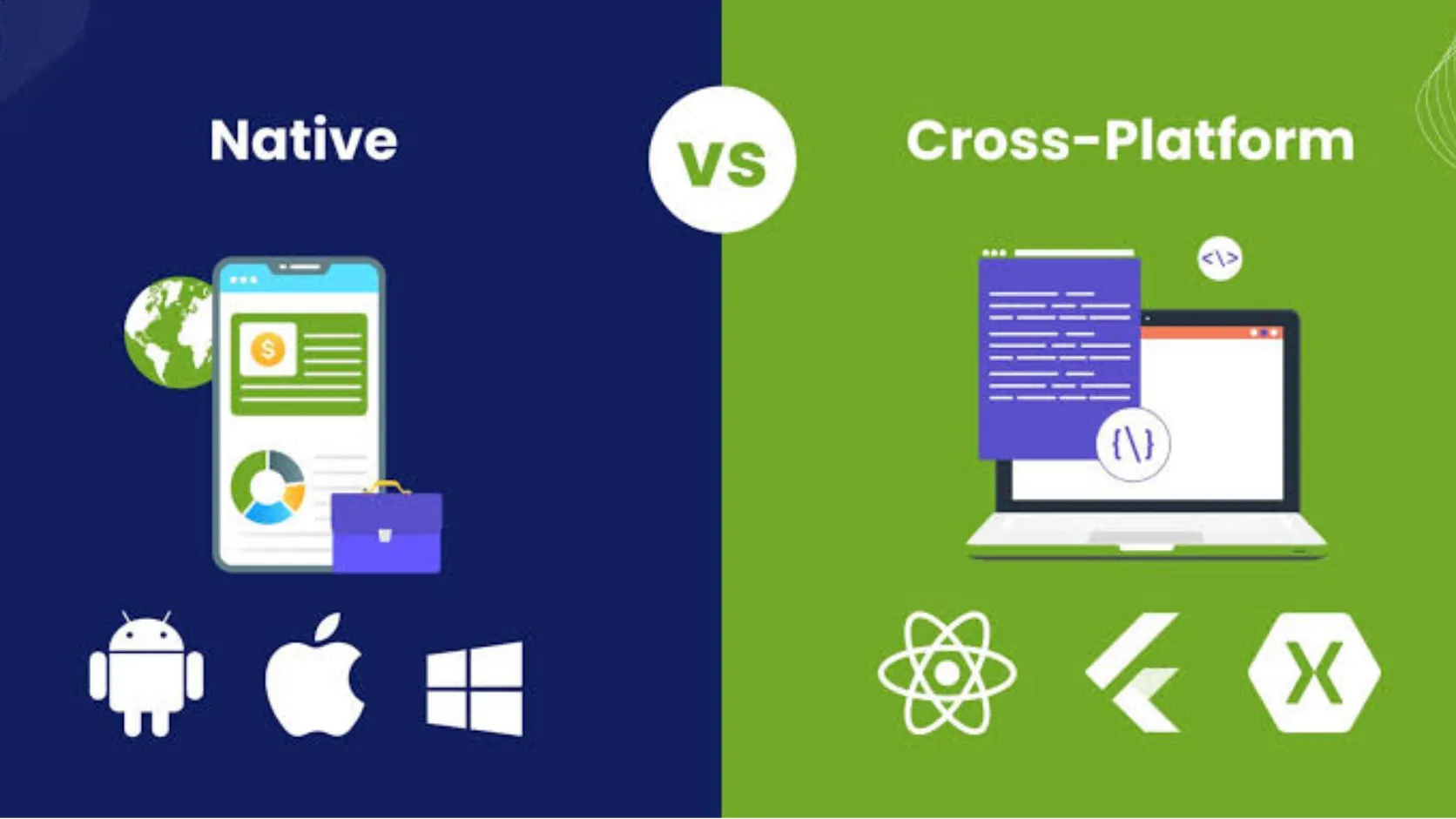
Native app development is building separate apps for each platform, using the languages and tools that are made by the platform owners themselves. Android apps are being built with Kotlin and Jetpack Compose in Android Studio, while iOS apps are being built with Swift and SwiftUI in Xcode, so if you are wanting your app on both platforms, you are building and maintaining two separate codebases, with either two sets of developers or one team that is skilled in both.
The biggest advantage here is that native apps are getting direct access to each and every feature of the device, from the camera, GPS and Bluetooth to the latest operating system features on the very day they are released. This also is giving native apps the smoothest performance and the most natural look and feel on each platform, as they are following Android’s and Apple’s design guidelines by default.
The trade-off, however, is the cost and the time, as two codebases are meaning double the development effort for many features, more testing and more maintenance, which is why native development is usually the choice for apps where performance, deep device integration or a premium experience is the top priority.
What Is Cross-Platform Mobile App Development?
Cross-platform mobile app development is building one app with a single codebase that is running on both Android and iOS. Instead of writing the same feature twice, developers are writing it once using a framework like Flutter or React Native, and the framework is handling the work of making it run on both the platforms.
With this, businesses are able to launch on both the app stores at the same time, keep the features and design consistent for each and every user and maintain one codebase instead of two, which is saving a lot of time and money from beginning until completion. Cross-platform mobile app development has come a long way in the last few years, and the gap in performance between cross-platform and native apps is now much smaller, which is why it is becoming the default choice for many startups, MVPs and business apps.
That being said, cross-platform apps are still needing some native code for certain device features, and very complex or graphics-heavy apps are still performing better when they are built natively, so it is not the right fit for every single project out there.
Native vs Cross Platform App Development: Key Differences
To make the decision a lot easier, let’s compare both the approaches side by side on the factors that are mattering the most for any app project.
| Factor | Native Development | Cross-Platform Development |
|---|---|---|
| Codebase | Separate code for Android and iOS | One shared codebase |
| Languages | Kotlin (Android), Swift (iOS) | Dart (Flutter), JavaScript/TypeScript (React Native) |
| Performance | Best possible | Very close to native for most apps |
| Development cost | Higher | Usually 30–40% lower for both platforms |
| Time to market | Longer | Faster |
| Access to new OS features | Immediate | Sometimes delayed |
| UI consistency across platforms | Different per platform | Same across platforms |
| Maintenance | Two codebases to update | One codebase to update |
| Best for | Complex, high-performance apps | MVPs, business apps, startups |
As the table is showing, native vs cross platform app development is not about which one is better overall, it is about which one is better for your app, your budget and your timeline.
Android vs iOS Development: What Is Different?
Whether you are going native or cross-platform, it is extremely crucial to understand how Android vs iOS development is differing, as both the platforms are having their own tools, their own users and their own rules.
| Factor | Android | iOS |
|---|---|---|
| Language | Kotlin | Swift |
| UI toolkit | Jetpack Compose | SwiftUI |
| Development tool | Android Studio | Xcode (Mac required) |
| Global market share | Around 70% | Around 30% |
| Device variety | Thousands of devices and screen sizes | Limited range of Apple devices |
| Store review | Usually faster, with extra testing rules for new personal accounts | Stricter, with detailed guidelines |
| Developer account | $25 one-time | $99 per year |
Android is holding the larger share of users worldwide and is dominating markets like India, Southeast Asia and Africa, while iOS is having a strong share in the US, UK and other premium markets, where iOS users are also spending more inside the apps. On the development side, Android is needing more testing because of the huge range of devices and OS versions, whereas iOS is having fewer devices to cover but a much stricter App Store review process.
This is why your target audience should be the first thing you are looking at in Android vs iOS development, if most of your users are in India, launching on Android first is making a lot more sense, whereas if you are targeting premium users in the US, launching on iOS first is likely bringing better returns.
Build Your App with the Right Technology
Get expert guidance on choosing between native, Flutter, and React Native for your mobile app.
Flutter vs React Native: Which Cross-Platform Framework Is Better?
Once you are deciding to go cross-platform, the next big question is Flutter vs React Native, as these two frameworks are the most popular choices for cross-platform mobile app development today, let’s break it down.
Flutter
Flutter is an open-source framework developed by Google that is using the Dart programming language. Instead of relying on the platform’s own UI components, Flutter is drawing each and every pixel on the screen with its own rendering engine, which is giving developers complete control over the design and making the app look exactly the same on Android and iOS. It is also well known for its smooth animations, fast development with hot reload and a rich library of ready-made widgets, which is why it is a popular choice for design-heavy apps and MVPs.
React Native
React Native is an open-source framework developed by Meta that is using JavaScript and TypeScript, the same languages that are being used in web development. Unlike Flutter, React Native is using the platform’s native UI components, so the app is feeling more like a native Android or iOS app on each platform. With its newer architecture, React Native has also improved its performance and its communication with native code significantly, and since it is built on React, businesses that are already having a React web team are able to share knowledge, tools and sometimes even code between their web and mobile apps.
| Factor | Flutter | React Native |
|---|---|---|
| Developed by | Meta | |
| Language | Dart | JavaScript / TypeScript |
| UI approach | Own rendering engine, custom widgets | Native platform components |
| Look and feel | Identical across platforms | Closer to each platform’s native style |
| Performance | Excellent, especially for animations | Very good with the new architecture |
| Developer availability | Growing | Very large, thanks to JavaScript |
| Web team synergy | Limited | Strong, especially with React teams |
| Best for | Design-heavy apps, MVPs, consistent branding | Apps with React web teams, native feel |
So, who is winning in Flutter vs React Native? Well, it is depending on your team and your product, if you are wanting a highly customised design that is looking the same everywhere along with smooth animations, Flutter is usually the better pick, whereas if your team is already knowing JavaScript or React, or you are wanting the app to feel more native on each platform, React Native is a strong choice.
Both of them are mature, reliable and being used by large companies, so you are not making a wrong decision with either one, as long as it is matching your needs.
What About Kotlin Multiplatform?
And that is not all, there is another option that has been gaining a lot of attention in the last couple of years, which is Kotlin Multiplatform by JetBrains. Instead of sharing the whole app, it is letting teams share the business logic, like data handling, networking and calculations, between Android and iOS, while keeping a fully native UI on each platform, and with Compose Multiplatform, teams are now able to share the UI as well if they want to.
This is making it a good middle path for businesses that are wanting native performance and look but are not wanting to write the same logic twice, especially for teams that are already having strong Android and Kotlin skills. However, it is still a smaller ecosystem than Flutter or React Native, so it is worth checking whether your development partner is having real experience with it before choosing it.
When Should You Choose Native App Development?
Native development is the right choice when the app’s performance and device integration are mattering more than saving time and cost, and these are the cases where it is really making sense:
- Apps with heavy graphics, gaming or complex animations.
- Apps depending on advanced device features like AR, Bluetooth or sensors.
- Apps needing the latest OS features as soon as they are released.
- Fintech, healthcare or enterprise apps with strict security requirements.
- Apps targeting only one platform at the start.
- Products where a premium, platform-specific experience is the key selling point.
If your app is falling into one or more of these categories, the extra investment in native development is usually paying off in the long run, through better performance, fewer workarounds and a much smoother user experience.
When Should You Choose Cross-Platform Mobile App Development?
Cross-platform mobile app development is the smarter choice for most business apps today, especially when the speed and the budget are important, and these are the cases where it is working the best:
- MVPs and startups needing to launch quickly on both platforms.
- Business apps like booking, ecommerce, delivery or service apps.
- Apps with a limited budget that still need to reach Android and iOS users.
- Products needing the same design and features on both platforms.
- Teams wanting one codebase that is easier to maintain and update.
- Apps that are updated frequently based on user feedback.
For most of these apps, the users are not noticing any difference in performance, while the business is saving a significant amount of time and money that can be invested in marketing, new features or improving the product.
How Native vs Cross Platform App Development Affects Cost and Timeline
Cost and timeline are often the deciding factors for most businesses, so let’s take a look at how both the approaches are comparing for an app that is needing to run on both Android and iOS.
| Factor | Native (Android + iOS) | Cross-Platform (Flutter / React Native) |
|---|---|---|
| Development cost | Higher, two separate builds | Usually 30–40% lower |
| Build time | Longer, two parallel tracks | Usually 20–30% shorter |
| Team required | Android and iOS developers | One cross-platform team |
| Testing effort | Two apps to test | One codebase, tested on both platforms |
| Ongoing maintenance | Two codebases to update | One codebase to update |
| Feature releases | Need to sync two apps | Released together |
These are general ranges and the actual numbers are depending on the features, integrations and design of your app, but the difference is clear, cross-platform is saving both time and money when you are needing to be on both the platforms. However, if your app is needing a lot of native features, the cross-platform savings are becoming smaller, as the developers are still needing to write platform-specific code for those parts.
Which App Development Approach Fits Your Project?
Compare your requirements with our experts and choose the right development approach for your goals and budget.
Common Mistakes When Choosing Between Native and Cross-Platform
Many businesses are making the same mistakes when deciding their app technology, and avoiding these is saving a lot of time, money and rework later on, these are the ones that are coming up the most:
- Choosing a framework only because it is trending.
- Going native for a simple app that does not need it.
- Going cross-platform for a graphics-heavy app or game.
- Ignoring the target audience’s preferred platform.
- Not thinking about long-term maintenance and updates.
- Choosing a stack that is hard to hire developers for.
- Letting the development partner’s comfort zone decide instead of the product’s needs.
The goal here is choosing the technology that is fitting your product, your users and your business plan, and not the one that is sounding the most impressive in a pitch meeting.
How to Make the Right Decision for Your App
If you are still not sure about native vs cross platform app development, these steps are helping you make the decision with a lot more confidence, let’s break it down.
Know Your Users
Start by finding out which platform your target users are on, as this is deciding whether you are needing both the platforms on day one or can start with just one. Market data, competitor apps and your own website analytics are giving you a clear picture of this.
List Your Must-Have Features
Write down the features your first version is really needing, and check whether any of them are depending on advanced device features, heavy graphics or real-time processing, as these are the features that are pushing the decision towards native.
Set Your Budget and Timeline
Be clear on how much you can spend and when you are needing to launch, if you are wanting to launch on both the platforms quickly with a limited budget, cross-platform mobile app development is usually the practical choice.
Think About the Future
Consider where the app will be in two to three years, how many users you are expecting, which features you are planning to add and who will be maintaining it, as the right choice today should also be supporting the product as it is growing.
Talk to an Experienced Team
Finally, speak with a development partner that is having experience in both native and cross-platform development, so they are recommending the approach based on your product and not just on what they are preferring to build.
Conclusion
Choosing between native vs cross platform app development is one of the most important decisions in your app journey, as it is affecting your cost, timeline, performance and how easily your app is growing in the future. Native development is giving you the best performance and full access to the device features, making it ideal for complex and high-performance apps, while cross-platform mobile app development with Flutter or React Native is helping you launch faster on both platforms with one codebase and a smaller budget.
Whether you are comparing Android app development vs iOS app development to pick your first platform or weighing Flutter vs React Native for your cross-platform build, the right answer is always coming down to your users, your features and your business goals. If you are planning your next app and are not sure which approach is right for you, talking to an experienced team like DianApps is helping you make the right choice from beginning until completion, and we’ve got you covered.
 0 comments










Leave a Comment
Your email address will not be published. Required fields are marked *