















 0 comments
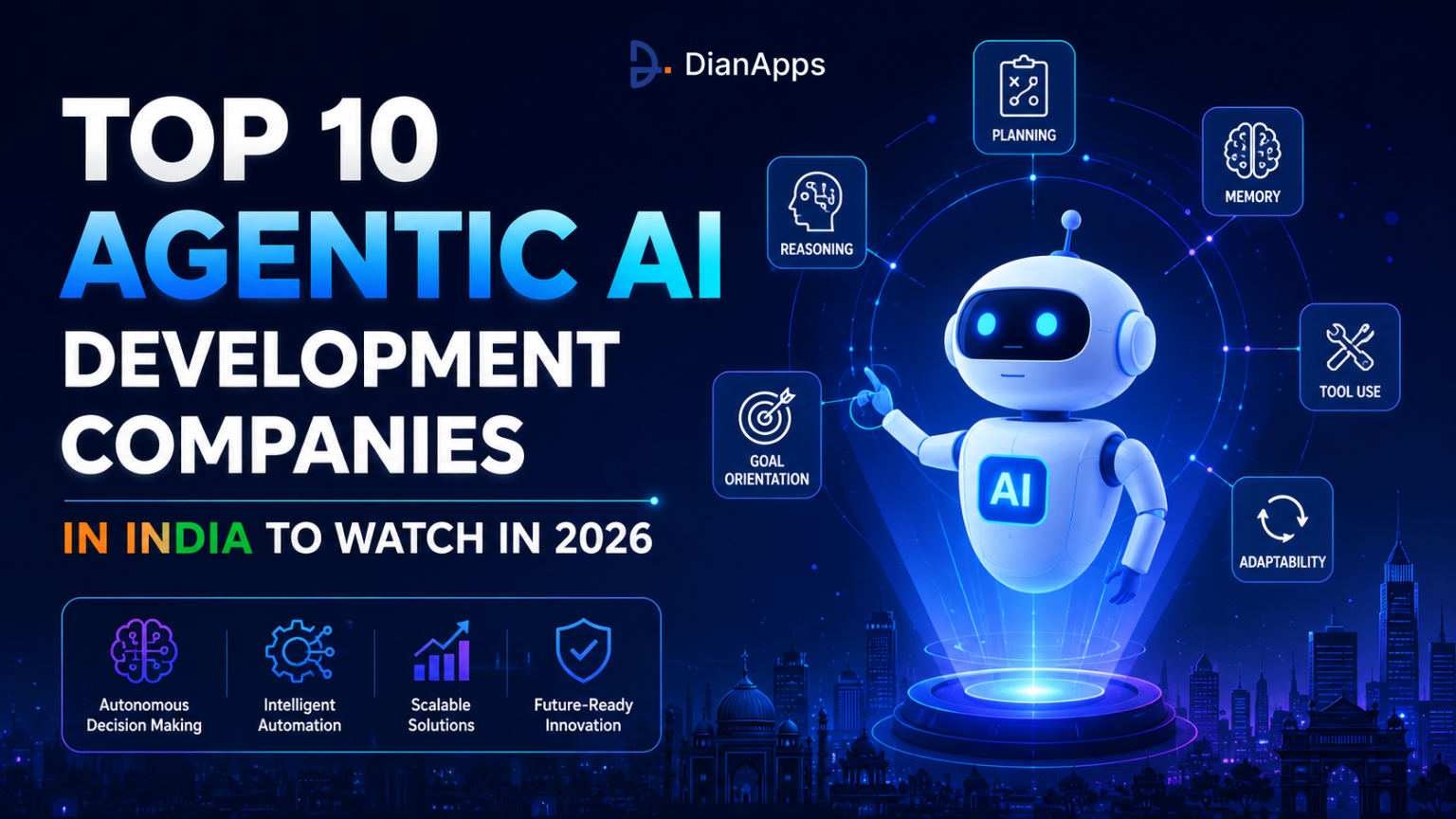





India produces over 1.5 million engineering graduates annually. A growing proportion of them are specializing in AI, machine learning, and data science. Global technology companies running R&D centres in Bangalore, including Google DeepMind, Microsoft, and Amazon AWS, have made agentic AI one of their primary development focuses in 2026. NASSCOM consistently highlights autonomous AI systems as the category of fastest-growing hiring demand across the Indian tech ecosystem.
None of this means every company marketing agentic AI in India actually builds it.
The Indian AI services market has a real signal-to-noise problem in 2026. “AI-native” and “agentic AI” have become marketing terms that get applied equally to companies building genuine multi-step autonomous systems and to companies that have connected a chatbot to an OpenAI API. Choosing between them without a clear evaluation framework costs six to twelve months of wasted development budget, according to independent market analysis.
This guide cuts through the noise. It lists ten Indian companies worth evaluating for genuine agentic AI development work in 2026, explains what separates real agentic capability from surface-level AI marketing, and gives you the questions that quickly reveal which category any vendor belongs to.
What Agentic AI Actually Is (And Why Most “AI Agents” Are Not)?
Before the company list, it is worth being precise about what separates an agentic AI system from the many things that are being sold under that name in 2026.
A traditional chatbot takes one input and produces one output. A RAG system takes a question, retrieves relevant documents, and generates a grounded answer. Both are genuinely useful. Neither is an agent.
An agentic AI system has a fundamentally different capability profile. It takes a goal, decomposes it into tasks, selects the tools needed for each task, executes those tasks in sequence or parallel, handles failures and retries intelligently, and returns a result that required no human to direct each step. The key property is autonomous multi-step execution with real tool use.
| System Type | What It Does | What It Cannot Do |
|---|---|---|
| Chatbot | Answers questions in natural language | Cannot execute tasks, cannot use external tools, single-turn only |
| RAG System | Retrieves relevant knowledge, answers grounded in real data | Cannot take actions, cannot plan multi-step workflows, read-only |
| Agentic AI System | Perceives environment, plans, executes multi-step tasks, uses tools, handles failures, delivers goal | Still requires human oversight for high-stakes decisions (by design) |
A production-grade agentic AI system requires deliberate decisions at every layer: the orchestration framework, the tool integration pattern, the memory architecture, the failure handling strategy, and the observability stack. Companies that have made these decisions can explain them. Companies that have not will answer questions about orchestration with vague references to “the latest AI models.”
Agentic AI has emerged as one of the most significant software development trends in 2026. As the top software development trends for 2026 show, agentic systems are now handling workflows, managing repetitive operational tasks, and collaborating on complex decision-making at a scale that was not practical even twelve months ago.
How to Evaluate Any Agentic AI Company in India?
This evaluation framework applies to every company on the list below, and to any company you evaluate that is not on the list.
| What to Ask | Strong Answer | Weak Answer (Red Flag) |
|---|---|---|
| Which orchestration framework do you use and why? | Names LangGraph, CrewAI, AutoGen, or custom orchestration with specific reasoning for that choice | “We use the best AI frameworks” or “we use LangChain” without explaining what layer it serves |
| What happens when an agent fails mid-workflow? | Describes specific failure handling: retry logic, partial state recovery, human escalation triggers | No clear answer, or “we test thoroughly before deployment” |
| Show me a live agentic system you shipped | Names a specific client, describes the agent workflow, discusses what they learned from it | Points to a chatbot demo or a RAG-powered Q&A system |
| How do you handle hallucination in a multi-step agent? | Discusses confidence thresholds, output validation steps, grounding with RAG, human review points | “We use the latest models which have low hallucination rates” |
| How do you handle Model Context Protocol integration? | Explains MCP as the standard for tool integration in agentic systems, describes their implementation | Does not know what MCP is, or conflates it with function calling |
Companies that answer these questions precisely have shipped agentic systems to production. Companies that deflect or speak in generalities have not.
1. DianApps
HQ: India (with offices in USA, Australia, UAE) | Team: 200+ engineers | Clutch: 4.9/5, #1 Premier Verified | Rate: $25 to $50/hr
DianApps sits at the top of this list because of what separates genuine agentic AI delivery from the category in general: a dedicated AI/ML engineering practice working alongside mobile and web development from the same architecture conversation, not as a separate add-on service.
Their AI/ML development services cover the complete agentic stack. LLM orchestration via LangChain and LangGraph for multi-step workflow design. RAG architecture for grounding agent responses in proprietary organizational data. Multi-agent system design where specialized agents collaborate through a coordinator layer. On-device ML inference for mobile-first agentic applications. Custom recommendation models trained on first-party behavioral data. And the observability infrastructure to monitor what agents are actually doing in production after deployment.
Their production outcomes are verifiable: Khatabook (50M+ users), Airblack (50% growth in monthly active users, 98% uptime), Uber Eats (45% reduction in service cost, 35% improvement in user retention). These reflect engineering discipline across systems of scale, which is directly relevant to agentic AI systems that need to handle real enterprise workloads reliably.
What makes DianApps particularly strong for global clients is the combination of India-based engineering talent at Indian cost rates, with Australian, US, and UAE account management that provides timezone overlap, cultural alignment, and the kind of communication accountability that offshore-only relationships often lack.
DianApps Agentic AI Capabilities
| Capability | Detail |
|---|---|
| Orchestration frameworks | LangChain, LangGraph, CrewAI for multi-step agent workflows and multi-agent collaboration |
| LLM integration | GPT-4o, Claude, Gemini, Llama (self-hosted) for different task complexity and privacy requirements |
| RAG and knowledge grounding | Vector databases (Pinecone, Weaviate, Chroma), semantic retrieval, document pipeline design |
| Mobile AI agents | Flutter and React Native applications with embedded agentic AI, on-device inference via TFLite |
| Enterprise integrations | CRM, ERP, ITSM, custom backend APIs for agents to take real-world actions |
| Industries served | Fintech, healthtech, e-commerce, enterprise SaaS, logistics |
Best for: Startups to mid-enterprise clients needing a partner who understands both the AI/ML engineering layer and the mobile or web product delivery layer. Particularly strong when agentic AI needs to be embedded into a mobile product alongside traditional features rather than built as a standalone system.
DianApps Agentic AI Development
Build Agentic AI That Operates in Production, Not Just in a Demo
DianApps combines deep LLM orchestration engineering with full-stack mobile and web development to build agentic systems that handle real enterprise workloads at scale.
★ Clutch #1 Premier Verified | 4.9/5 (79+ reviews) | 200+ Engineers | USA, Australia, UAE, India
2. LeewayHertz
HQ: Multiple Indian cities (Bangalore, Noida, Ahmedabad) with US presence | Experience: 15+ years | Known for: Broad AI and Web3 capability coverage
LeewayHertz is the large-vendor option in the Indian agentic AI market. Their capability set spans custom AI agents, LLM fine-tuning, computer vision, generative AI applications, and several adjacent areas. They help enterprises adopt generative AI platforms including GPT and Llama, and have established enterprise client relationships across North America, Europe, and the Middle East.
Their breadth is their primary value proposition and their primary limitation simultaneously. Organizations that want a single vendor relationship across multiple AI initiatives find LeewayHertz appealing because the breadth is genuine. Teams that need deep specialization at the orchestration layer for a complex multi-agent system may find that breadth comes at the cost of depth in any single area.
Their documented AI agent work includes conversational agents, workflow automation systems, and LLM-powered enterprise tools. For organizations modernizing specific workflows or adding AI capabilities to existing enterprise platforms, their delivery model is well-suited.
Best for: Enterprises wanting a broad AI capability vendor with multiple service lines. Particularly relevant for organizations running multiple parallel AI initiatives where vendor consolidation creates coordination value.
3. Maruti Techlabs
HQ: Ahmedabad, with US presence | Known for: Full-stack AI with strong delivery track record across fintech and enterprise
Maruti Techlabs has built a reputation in the Indian AI services market that holds up under scrutiny. Their west-India presence in Ahmedabad and Gujarat gives them particular strength in financial services and manufacturing sectors concentrated in Maharashtra and Gujarat, and their delivery model shows the kind of structured process that enterprise clients recognize from mature software development firms.
Their agentic AI work benefits from their broader data engineering foundation. Agents are only as reliable as the data they perceive and act on. Maruti’s capability in data pipeline design and governance means the perception layer of their agents is built with the same engineering discipline as the reasoning layer, which is not universal among Indian AI firms.
Best for: Mid-market enterprises in financial services, manufacturing, and e-commerce looking for a delivery-focused partner with strong process discipline and data engineering capability alongside the AI layer.
4. Tata Consultancy Services (TCS)
HQ: Mumbai, with presence in all major Indian cities and 50+ countries globally | Scale: One of the largest IT services companies in India | Known for: Enterprise-scale AI agent deployments
TCS operates at a scale that none of the other companies on this list can match. Their AI agent services span enterprise-level deployments in banking, insurance, retail, and government sectors across 50+ countries. Their AI and automation practice has evolved from traditional RPA implementations toward genuine agentic architectures that orchestrate LLMs, tools, and decision logic in production enterprise environments.
The practical consideration for anyone evaluating TCS is the engagement structure. Enterprise-scale delivery at TCS’s scale means project teams are large, processes are documented and repeatable, and the vendor relationship is built for organizations that can sustain multi-year engagements. For smaller or faster-moving organizations, TCS’s structural advantages become structural constraints.
Best for: Fortune 500 enterprises and large public-sector organizations that need AI agent deployments at scale, across geography, with the compliance and governance infrastructure that large-enterprise environments require. Not well-suited to startups or organizations needing fast, iterative product development.
5. Infosys
HQ: Bangalore, with global delivery centers | Known for: Enterprise digital transformation, AI consulting through Infosys Topaz
Infosys’s agentic AI work in 2026 is organized primarily through Infosys Topaz, their AI-first platform that brings together LLM capabilities, enterprise data integration, and workflow automation under a unified offering. Their Bangalore R&D centers benefit directly from the ecosystem of AI talent that makes Bangalore the strongest agentic AI hiring market in India.
Their work in enterprise process automation has real depth. Infosys has shipped agentic systems for HR automation, supply chain operations, and customer service across enterprise clients. The Topaz platform provides a structured environment for deploying agents that need to integrate with the legacy enterprise systems that most large organizations still operate.
Best for: Large enterprises with complex legacy system landscapes that need agentic AI integrated carefully rather than added on top. The Infosys Topaz platform provides more structured guardrails than bespoke development, which suits regulated industries with strict governance requirements.
6. Wipro
HQ: Bangalore | Known for: Enterprise AI through Wipro ai360, agentic automation for BFSI and telecom
Wipro’s ai360 initiative positions agentic AI as a core capability across their service lines rather than a specialist practice. Their work in banking, financial services, and insurance (BFSI) reflects the sector’s particular requirements: agents that handle complex, multi-step decision logic while operating within tight compliance constraints and producing explainable outputs that satisfy regulatory audit requirements.
IBM reports that 94% of Indian organizations require AI explainability, and Wipro’s BFSI-heavy client portfolio means they have had to build explainability and auditability into agent architectures in ways that many smaller firms have not yet been required to address. That institutional knowledge is valuable for any regulated-industry agentic AI project.
Best for: BFSI enterprises, telecom operators, and large regulated-industry clients where compliance, auditability, and explainability are non-negotiable requirements alongside agent performance.
7. eSparkBiz
HQ: Ahmedabad, Gujarat | Certifications: CMMI Level 3, ISO 9001:2015 | Team: 400+ professionals | Experience: 15+ years
eSparkBiz has built a strong position specifically in the mid-market enterprise AI space. Their agentic AI practice covers multi-agent AI systems, enterprise AI automation, RAG-powered assistants, LLM integrations, and workflow orchestration with a consistent focus on scalable digital transformation for global startups, SMBs, and enterprise organizations.
Their CMMI Level 3 certification reflects process maturity that matters in agentic AI development: documented processes for handling the failure modes that come up inevitably in complex multi-step agent systems. Their primary industry focus is enterprise software and digital transformation, which means their engineering teams have worked with the legacy integration challenges that real enterprise agentic AI projects always involve.
They develop AI agents tailored to specific business operations, customer interactions, and internal workflows, with a strategy-first approach that defines the agent’s mandate precisely before selecting the orchestration architecture.
Best for: US and European enterprises looking for mid-market process maturity with genuine technical depth. Strong fit for organizations modernizing enterprise workflows through agentic automation where process documentation and repeatability matter as much as technical capability.
8. Contus Tech
HQ: Chennai | Known for: Multi-agent mesh architectures, enterprise workflow automation for Fortune 500 clients
Contus Tech has established a track record in multi-agent mesh architectures for enterprise clients. Their agentic AI practice uses LangGraph for multi-step workflow orchestration and builds custom MCP endpoints for integrating agents with enterprise business platforms. Their client list includes Fortune 500 brands across retail, automotive, manufacturing, and healthcare sectors.
Their positioning as enterprise-focused and production-ready reflects a deliberate choice to focus on clients who cannot afford experimental deployments. Their multi-agent collaboration architecture, where specialized agents with defined roles collaborate through a coordinator layer, reflects real production experience rather than paper architecture. Retail shelf scanning agents, manufacturing quality inspection, and healthcare document processing are among the use cases they have shipped to real users at enterprise scale.
Best for: Enterprise clients in manufacturing, retail, and healthcare who need multi-agent systems with proven production reliability and Fortune 500 reference clients in adjacent verticals.
9. Daffodil Software
HQ: Gurugram, Haryana (Delhi NCR) | Known for: Building specialized agent teams designed as digital workforces
Daffodil Software’s differentiated positioning in the Indian agentic AI market is their concept of digital workforces rather than standalone AI agents. They design and deploy teams of specialized AI agents that integrate into organizational structures with defined roles, each contributing to broader workflow objectives rather than operating in isolation. This mirrors how high-performing human teams work, and it maps well to the multi-agent architectures that production enterprise deployments increasingly require.
Their focus on designing agents with distinct responsibilities, governance over agent interactions, and integration pathways into existing organizational systems reflects a maturity in product thinking that goes beyond the engineering layer.
Best for: Enterprises thinking about AI transformation at the organizational level rather than automating individual workflows. Strong fit for companies that want agents to participate in business processes rather than sit alongside them.
10. OrangeMantra
HQ: Gurugram (Delhi NCR) with offices in the USA and UK | Clients include: PVR, Hero, IKEA, Panasonic | Known for: Full agentic AI stack with enterprise brand client experience
OrangeMantra’s agentic AI practice covers the full orchestration stack: LangChain and AutoGen for multi-agent workflows, AWS Bedrock and Google Vertex AI for model deployment, custom orchestration layers for clients whose requirements fall outside standard framework capabilities. Their client list includes recognizable enterprise brands across retail, automotive, and consumer goods, which provides meaningful evidence that their agents have operated under real production conditions.
Their custom orchestration work for clients whose requirements exceeded what standard frameworks could provide out of the box is a meaningful signal. Teams that have had to go beyond LangChain for a specific production problem have made architecture decisions at a layer most vendors never reach. This is a sign of genuine production depth.
Best for: Mid-to-large enterprises in retail, manufacturing, and consumer goods who want recognizable brand references in their vertical and a partner with documented enterprise-grade deployment experience.
Side-by-Side Comparison
| Company | HQ | Agentic Depth | Rate Range | Best Fit |
|---|---|---|---|---|
| DianApps | India + USA, AU, UAE | Full-stack AI + mobile delivery | $25 to $50/hr | Startups to enterprise, all verticals |
| LeewayHertz | Multiple Indian cities + USA | Broad AI capability set | $40 to $80/hr | Multi-initiative enterprise consolidation |
| Maruti Techlabs | Ahmedabad + USA | Full-stack AI with data engineering focus | $30 to $60/hr | Fintech, manufacturing, e-commerce |
| TCS | Mumbai (global) | Enterprise AI at extreme scale | Enterprise rates | Fortune 500, multi-country deployments |
| Infosys | Bangalore (global) | AI platform (Topaz), legacy integration | Enterprise rates | Complex legacy enterprise environments |
| Wipro | Bangalore (global) | BFSI-specialized, compliant AI agents | Enterprise rates | BFSI, telecom, regulated industries |
| eSparkBiz | Ahmedabad | CMMI L3 process maturity, enterprise | $25 to $50/hr | US/EU enterprise, digital transformation |
| Contus Tech | Chennai | Multi-agent mesh, LangGraph + MCP | $30 to $60/hr | Retail, manufacturing, healthcare enterprise |
| Daffodil Software | Gurugram (Delhi NCR) | Digital workforce architecture | $25 to $55/hr | Organizational AI transformation |
| OrangeMantra | Gurugram + USA, UK | Full agentic stack, enterprise brand clients | $25 to $50/hr | Retail, automotive, consumer goods |
Agentic AI Development Costs in India: A Practical Breakdown
One of the primary reasons global companies evaluate Indian development partners for agentic AI is cost. Indian firms typically offer 30 to 60% cost savings compared to equivalent US or UK firms for comparable engineering capability. This is not a quality discount; it is a labor market arbitrage that reflects the structural difference in cost of living and talent compensation between markets.
| Project Type | India-Based Cost | US-Based Equivalent | Timeline |
|---|---|---|---|
| Conversational agent with tool use | $25,000 to $55,000 | $60,000 to $130,000 | 4 to 8 weeks |
| Multi-step RAG-grounded agent | $40,000 to $90,000 | $90,000 to $200,000 | 8 to 14 weeks |
| Multi-agent enterprise system | $80,000 to $200,000 | $200,000 to $450,000 | 14 to 24 weeks |
| Enterprise AI platform (agent-native) | $150,000 to $350,000 | $350,000 to $700,000+ | 24 to 40 weeks |
The cost advantage does not apply uniformly to all types of agentic AI work. Roles requiring deep research capability, novel architecture design, or highly specialized domain knowledge (financial engineering, clinical AI, advanced security) show smaller cost differentials because the talent is globally scarce and commands global compensation wherever it sits. For execution-heavy development work building against established patterns, the India cost advantage is very real.
Industries Where Indian Agentic AI Companies Excel?
India’s agentic AI strengths are not evenly distributed across industries. Several sectors stand out for the depth of experience the Indian AI ecosystem has accumulated.
Banking, Financial Services, and Insurance (BFSI)
Indian IT services companies have deep relationships with BFSI clients globally, and the agentic AI applications they have built in this sector reflect real production experience. Fraud detection agents, compliance monitoring systems, intelligent document processing, and customer service automation at scale are all well-represented in Indian BFSI agentic AI work.
The compliance requirements in BFSI have also forced Indian firms building in this sector to address explainability, auditability, and human-in-the-loop design patterns earlier than firms focused on less-regulated sectors. That institutional knowledge transfers to other regulated industries.
Healthcare and Life Sciences
Clinical documentation agents, patient journey coordination, drug discovery research assistance, and diagnostic support are growing areas of Indian agentic AI development. The role of generative AI in enterprise applications is particularly pronounced in healthcare, where document-heavy workflows create high-value automation opportunities.
Enterprise IT and Software
Code generation agents, DevOps automation, incident response coordination, and knowledge management are natural strengths for Indian companies given the deep software engineering talent pool. Claude Code alone holds 50%+ of the enterprise AI coding market in 2026, and Indian engineering teams have extensive production experience working with agentic coding tools.
E-commerce and Retail
Personalization agents, inventory management automation, customer service at scale, and supply chain optimization are all active agentic AI development areas for Indian firms. The volume requirements of large Indian e-commerce platforms have provided a useful forcing function for building agents that need to handle millions of interactions reliably rather than performing well only in low-volume conditions.
The Standard Tech Stack for Agentic AI in India (2026)
| Layer | Leading Tools (2026) |
|---|---|
| Orchestration | LangGraph (multi-step stateful workflows), CrewAI (multi-agent roles), AutoGen (human-in-the-loop patterns) |
| LLM layer | GPT-4o (general-purpose, strong tool calling), Claude 3.5 (long-context, document-heavy), Llama 3 (private deployment), Mistral (cost-efficient mid-tier) |
| RAG and knowledge | Pinecone, Weaviate, pgvector, Chroma for vector storage and semantic retrieval |
| Tool integration | Model Context Protocol (MCP) for standardized tool calling, custom REST and GraphQL integrations |
| Backend runtime | Python (FastAPI, LangChain), Node.js/TypeScript for client-side integrations |
| Infrastructure | AWS Bedrock, Google Vertex AI, Azure OpenAI Service for model deployment and enterprise compliance |
| Observability | LangSmith for agent tracing, Datadog/New Relic for infrastructure monitoring, custom dashboards for agent performance |
Model Context Protocol deserves specific attention. MCP is now the standard for tool integration in agentic systems, replacing bespoke function-calling layers that created technical debt and fragility in early agentic deployments. Companies still building custom tool integration without MCP are accumulating architectural debt that will require significant refactoring as their agent systems grow in complexity. Verify MCP familiarity in any vendor evaluation.
The question of which LLM to build on is no longer primarily a capabilities question. As the comparison between private and public LLMs shows, the right choice depends on data sovereignty requirements, cost at scale, and customization needs more than on raw model capability differences at the frontier level.
Common Mistakes When Choosing an Indian Agentic AI Partner?
Accepting a RAG chatbot demo as evidence of agentic capability. Retrieval-augmented generation with a chat interface is a useful product. It is not an agent. A demo that shows impressive document question-answering does not tell you whether the vendor can build a system that takes actions autonomously across multiple steps. Ask specifically to see an agent executing a multi-step workflow, not answering questions.
Choosing based on the company size without evaluating the specific team. Large Indian IT firms have deep agentic AI capability in their specialist practices and general software development capability in their delivery teams. These are different things. Ask specifically which team would work on your project, what their experience with agentic frameworks is, and whether you can meet them before signing.
Not asking about failure handling. Every agentic system encounters situations where a step fails, data is ambiguous, or an external tool returns an unexpected result. How the system handles these situations determines whether it is production-ready or demo-ready. A vendor who has built real agents will have detailed and specific answers about how their systems handle partial failures. One who has not will give generic answers about testing and quality assurance.
Underestimating post-launch requirements. Agentic AI systems require ongoing monitoring, retraining as the underlying data and task requirements evolve, and iteration as users discover edge cases the original specification did not anticipate. The relationship between AI capabilities and human engineering oversight does not end at deployment. Budget for 15 to 20% of the original build cost annually for maintenance, monitoring, and iteration.
Not verifying data residency requirements. IBM reports 94% of Indian organizations require AI explainability, and many global enterprises have data sovereignty requirements that affect where agent inference can run. For regulated industries, verify that the Indian development partner can architect for private cloud deployment, Indian data residency, and the compliance certifications (ISO 27001, SOC 2, HIPAA) your organization requires.
How DianApps Serves Global Clients Through India?
DianApps has been operating the hybrid model that makes Indian agentic AI development work well for global clients since 2017: India-based engineering talent working at Indian cost rates, combined with account management and client relationships in the USA, Australia, and UAE that provide the timezone overlap, communication quality, and contractual accountability that fully offshore relationships sometimes lack.
As a Clutch #1 Premier Verified mobile app development company, our agentic AI engagements cover the full stack from agent architecture design through mobile delivery. The most impactful AI app ideas in 2026 combine agentic backend capability with well-designed mobile interfaces, and DianApps is specifically positioned to deliver both from the same team rather than requiring separate vendor relationships for each layer.
For global clients, what this means in practice is structured sprint reviews, predictable communication cadences, clear escalation paths when issues arise, and the engineering depth to handle both the AI/ML work and the mobile product work without the handoff complexity that comes from two separate vendor relationships trying to coordinate.
Frequently Asked Questions
What is agentic AI and how is it different from a regular AI chatbot?
A chatbot takes a single input and produces a single output. An agentic AI system takes a goal, decomposes it into tasks, selects tools to execute those tasks, handles failures at intermediate steps, and delivers the goal outcome without human direction at each step. The critical property is autonomous multi-step execution with real tool use. A chatbot answers questions. An agent accomplishes objectives. They look superficially similar in early demos but are architecturally distinct systems.
How much does agentic AI development cost in India in 2026?
A focused conversational agent with tool use typically costs $25,000 to $55,000 from Indian development firms. A multi-step RAG-grounded enterprise agent runs $40,000 to $90,000. Multi-agent systems handling complex enterprise workflows cost $80,000 to $200,000. Enterprise-scale agent platforms run $150,000 to $350,000 or more. Indian firms typically offer 30 to 60% cost savings compared to equivalent US or UK firms at comparable capability levels.
Which orchestration frameworks do Indian agentic AI companies use?
Leading Indian firms in 2026 work primarily with LangGraph for complex multi-step stateful workflows, CrewAI for multi-agent collaboration with defined roles, AutoGen for human-in-the-loop patterns, and custom orchestration layers for clients whose requirements exceed standard framework capabilities. Model Context Protocol (MCP) has become the standard for tool integration. Firms that cannot explain their orchestration choices have likely not built real agentic systems yet.
Can Indian agentic AI companies work with US and European clients remotely?
Yes, and the leading Indian AI firms have extensive experience doing so. Most maintain overlap hours with key US and European timezones, use asynchronous collaboration tools effectively, and follow documentation and delivery standards that make remote engagement functional. The important distinction is between firms with a genuine hybrid model (India engineering plus international account management) and purely offshore firms that depend on asynchronous communication exclusively. The former provide better client outcomes for complex projects.
How long does it take to build an agentic AI system in India?
A focused conversational agent with defined workflows can be deployed in four to eight weeks. A multi-agent system handling complex enterprise workflows with legacy integration requirements typically runs three to six months. The factors that most consistently extend timelines are unclear requirements at the start, data quality issues that surface during development, and integration complexity with existing systems that was underestimated during scoping. Time invested in discovery before development consistently produces faster overall delivery.
What industries are Indian agentic AI companies strongest in?
Indian firms have deepest production experience in BFSI (banking, financial services, insurance), enterprise IT and DevOps automation, healthcare document processing and clinical workflow, and e-commerce personalization at scale. These industries reflect both the historical client relationships of Indian IT services companies and the volume requirements that have forced Indian firms to build agents that perform reliably under real production conditions rather than just demonstrating well in limited environments.
How do I verify that an Indian agentic AI company has genuine capability?
Ask them to name the orchestration framework they use and why they chose it for their last client. Ask what happens when an agent fails at step 3 of a 6-step workflow. Ask to see a live deployed system rather than a demo. Ask for a specific client reference from a completed agentic project rather than a general case study. Companies with real production experience answer these questions specifically. Companies relying on AI marketing language deflect or give generic answers about capabilities. The specificity of the answer is the signal.
The Bottom Line
India has a genuine and growing agentic AI development capability. The ten companies on this list have each demonstrated something real in this space, whether that is production deployments at enterprise scale (TCS, Infosys, Wipro), deep technical specialization in multi-agent orchestration (Contus Tech, DianApps), full-stack delivery with data engineering maturity (Maruti Techlabs), or process discipline that scales to complex regulated-industry requirements (eSparkBiz).
The harder task is separating these firms from the much larger group of Indian companies using agentic AI vocabulary without the engineering substance behind it. The evaluation framework in this guide draws that distinction clearly: orchestration layer clarity, failure handling specificity, live deployment evidence, and post-launch monitoring capability are the four tests that separate genuine agentic AI engineers from capable software developers who have added AI to their service list.
Apply those tests to any vendor you are evaluating, not just the ones on this list. The company that answers them specifically and honestly is the company worth building with.
 0 comments






Leave a Comment
Your email address will not be published. Required fields are marked *