















 0 comments





What Changed in 2026
The market landscape shifted meaningfully in the last twelve months. Here are the verified data points that shape the guidance below:
- Global mobile app market projected to hit $633.71 billion in 2026 (Statista App Market Forecast).
- MVP mobile app cost in 2026: $25,000-$50,000 over 6-10 weeks (DianApps client benchmark data).
- AI feature integration adds 15-25% to standard build costs (DianApps 2026 project benchmarks).
- Enterprise app builds average $150K-$500K over 6-12 months in 2026 (DianApps enterprise client data).
- Managed services averaging $5K-$25K per month for ongoing 2026 support (DianApps managed services benchmark).
Related Reading From Our 2026 Guides
For deeper context, see these companion guides:
- Mobile App Development Trends 2026
- How Much Does Mobile App Development Cost in 2026
- AI App Development Cost for US Businesses
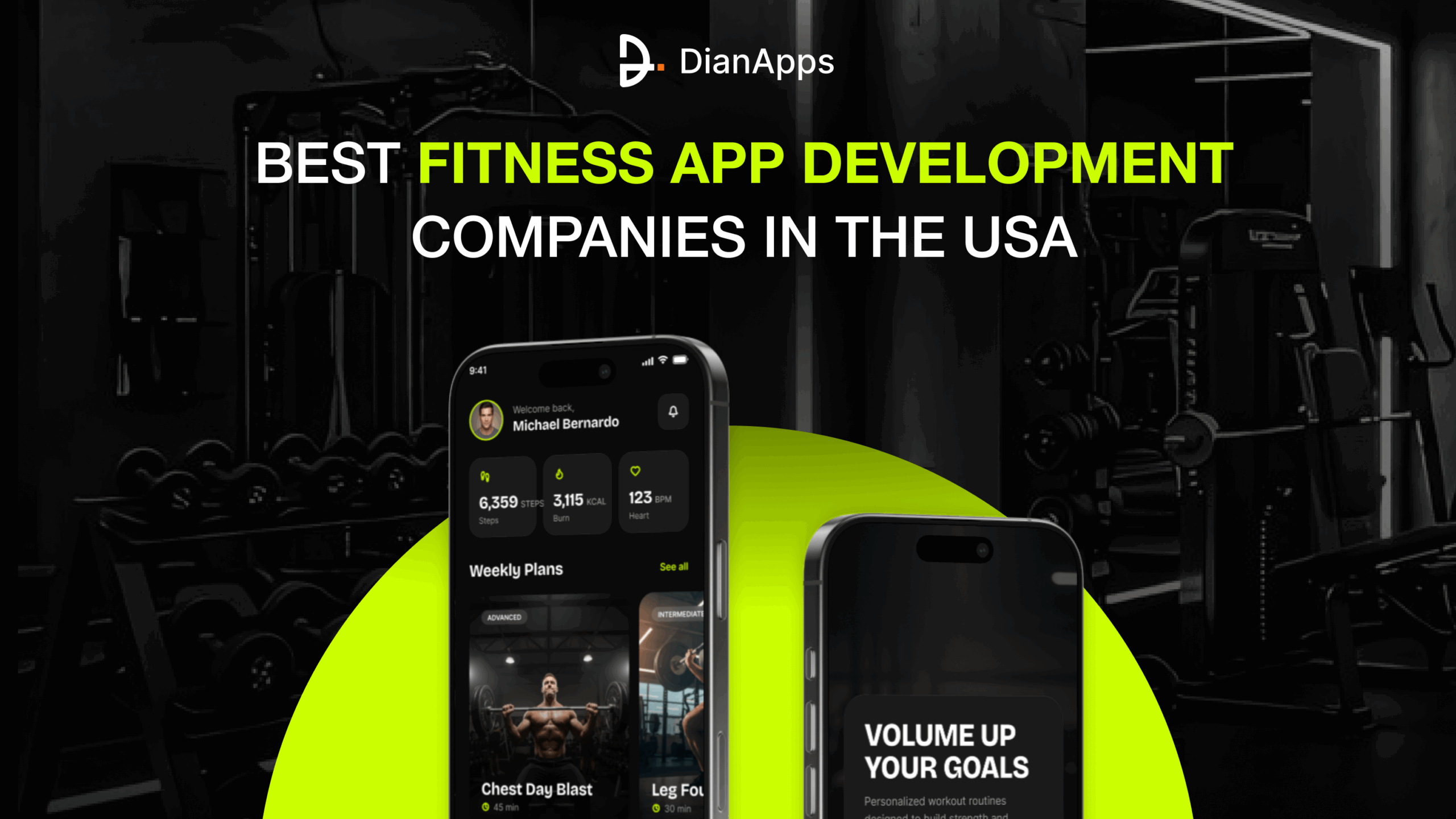
If you have spent any time searching for a fitness app development company, you already know the problem. Every agency claims expertise in health tech. Every portfolio shows polished screenshots of workout tracking screens and nutrition dashboards. None of them tell you which ones actually understand wearable device APIs well enough to ship something that syncs reliably with a Garmin, or which ones have ever had to think seriously about what happens when their app stores biometric data under HIPAA.
The fitness app market is enormous. Revenue from health and fitness apps is projected to surpass $13 billion globally in 2026, and that number is still growing. More important than the market size, though, is the complexity of the product category. A fitness app that works well has to do a lot of things simultaneously: pull accurate real-time data from multiple wearable sources, deliver AI-powered personalization that users can feel, handle health data with appropriate security, keep people engaged past the two-week motivation drop-off, and scale cleanly when the January traffic spike hits.
That is a genuinely difficult product to build. Which means choosing the right development partner is one of the most consequential early decisions a fitness brand or startup makes.
This guide lists eight companies that are genuinely worth considering in 2026, why each one stands out, who each one is best suited for, and the evaluation criteria that actually separate good fitness app developers from generic mobile agencies that happen to take fitness clients.
Quick Answer: The best fitness app development company for your project depends on three factors: the AI depth you need (basic personalization vs. real ML-driven coaching), whether your app handles regulated health data (which determines your HIPAA exposure), and your budget range. DianApps, Fueled, WillowTree, and Netguru each lead in a distinct combination of these factors. This guide helps you match your requirements to the right partner.
What Separates a Genuine Fitness App Specialist From a Generic Mobile Agency?
Any mobile development company can build a workout tracker. A scrollable list of exercises, a timer, a progress chart, and a push notification system, that combination takes a competent team four to six weeks. What they cannot do in four to six weeks, regardless of competence, is develop genuine understanding of the fitness product landscape: what keeps users engaged past the first month, how wearable device SDKs actually behave under edge cases, why AI coaching that feels generic drives churn rather than retention, and how to architect a backend that handles both the data compliance requirements of health information and the traffic variability of a product with seasonal demand spikes.
That institutional knowledge comes from having shipped fitness products before and observed what happened. When evaluating any company on this list, the question worth asking is not “can you build this?” but “what have you shipped in this space, and what did you learn from it?”
Evaluation Framework: What Actually Matters?
| Criterion | What to Ask | Why It Matters |
|---|---|---|
| Wearable API experience | Which specific wearable SDKs have you integrated in production? What edge cases have you hit? | Apple Health, Garmin, Fitbit, and Wear OS all have different data models and sync behaviors. Real experience shows in the questions they ask. |
| AI personalization depth | Show me a personalization feature you built. What model? What training data? What did it actually improve for the user? | Calling an LLM API is not AI personalization. Recommendation models trained on user behavior data are. The distinction matters for product quality. |
| Retention design knowledge | What retention mechanisms have you built into fitness apps, and do you have data on 30-day or 90-day retention rates? | Most fitness apps lose 70% of users within 30 days. Teams that have shipped and measured know why, and what works. |
| Health data compliance | If my app collects workout and biometric data, what compliance considerations apply? Walk me through your approach. | Fitness apps that sync with health platforms or store biometric data often have HIPAA exposure. Teams without compliance knowledge leave you exposed. |
| Scalable backend architecture | How do you architect a fitness app backend to handle the January traffic spike without degrading for existing users? | Fitness apps have predictable demand spikes. Teams that have not thought about this build backends that fail at the worst moment. |
The business case for investing in fitness app development is clear, but the returns only materialize if the product is built to retain users beyond the initial download. That retention question should be the lens through which you evaluate every potential partner.
1. DianApps (AI-Native Fitness App Development With Verified Health Tech Track Record)
HQ: USA (offices in Australia, UAE, India) | Team: 200+ engineers | Clutch: 4.9/5 (79+ reviews), #1 Premier Verified | Rate: $25–$50/hr
DianApps stands at the top of this list because of what they have actually shipped, not what they claim. Their health and fitness technology work spans AI-powered workout platforms, wearable-integrated mobile apps, and enterprise wellness solutions, built on Flutter, React Native, and native iOS/Android depending on what the product requires.
What makes them genuinely different from most agencies taking fitness clients is the combination of mobile engineering depth and real AI/ML capability. Their AI/ML development services go beyond API integration: they design recommendation models trained on user behavior, build on-device inference pipelines for real-time sensor processing, and architect data systems that feed AI features without creating compliance liability.
On the wearable side, their engineers have production experience with Apple HealthKit, Google Fit, Garmin Connect IQ, Fitbit Web API, and custom IoT sensor integration. The wearable app development and testing practices they follow account for the real-world edge cases that matter: background sync behavior, battery impact of continuous sensor reads, and data normalization across devices that report the same metric in different formats.
Their production outcomes speak clearly. Khatabook, built with DianApps, scaled to 50M+ users. Airblack saw 50% growth in monthly active users and a 30% rise in subscription revenue. Uber Eats reduced service costs by 45% and improved user retention by 35%. These are not fitness apps specifically, but they demonstrate the engineering discipline and product quality that carries across verticals.
What DianApps Builds in the Fitness Category?
| Fitness App Type | Capabilities | Tech Stack |
|---|---|---|
| AI workout coach | Adaptive training plans, form feedback via computer vision, LLM-powered coaching conversations | Flutter or React Native, TFLite for on-device inference, LangChain backend |
| Nutrition and meal planning | Food database integration, macro calculation, AI meal suggestions, barcode scanning | React Native, custom ML recommendation, Nutritionix/USDA API |
| Wearable-first fitness platform | Multi-device sync, real-time biometric processing, background data collection | Native iOS/Android or Flutter, HealthKit, Google Fit, Garmin SDK |
| Live streaming fitness classes | Video delivery, scheduling, instructor marketplace, subscription billing | Flutter or React Native, WebRTC/CDN, Stripe, AWS |
| Corporate wellness platform | Multi-tenant architecture, HR integration, team challenges, wellness analytics dashboard | React Native, SSO integration, custom analytics, enterprise backend |
Best for: Fitness startups and enterprises that need AI personalization and wearable integration done properly, not as add-ons. Strong fit for HIPAA-sensitive fitness health products through their healthtech development practice. Accessible pricing compared to US-only agencies makes them particularly strong for funded startups building at the $50,000 to $200,000 budget range.
The role AI plays in modern workout and personal training apps is exactly the space where DianApps has invested engineering resources, making them the strongest AI fitness choice on this list across budget tiers.
2. Fueled – Premium Design for Consumer Fitness Brands
HQ: New York, NY | Rate: Premium tier ($100–$150+/hr) | Known for: Consumer-facing apps with high visual standards
Fueled’s fitness work sits at the intersection of design and engagement psychology. They build apps that look genuinely premium, smooth animations, intuitive navigation, visual progress systems that make fitness feel like an experience users want to return to. Their strongest work is in the consumer fitness space where first impressions and visual quality drive early retention.
Their AI capabilities are real but lean toward personalization of the user experience layer rather than deep ML model development. They excel at connecting AI APIs to deliver intelligent content recommendations, personalized workout sequencing, and behavioral nudging at the right moments.
Best for: Consumer fitness brands and influencer-backed products where design excellence drives downloads and early retention. Not the first call for complex backend systems or deeply regulated health data environments. Budget expectations should be $100,000 minimum for a meaningful engagement.
3. WillowTree (TELUS Digital) – Enterprise-Scale Fitness Platforms
HQ: Charlottesville, VA (13 global studios) | Rate: $150–$200+/hr | Known for: Large-scale enterprise digital products
WillowTree builds fitness platforms for organizations that cannot afford downtime, national gym chains, large fitness franchises, and corporate wellness programs with enterprise compliance requirements. Their acquisition by TELUS Digital in 2022 brought additional enterprise infrastructure capability and scale.
Their strength is reliability at volume. They have shipped streaming workout platforms, facility booking systems, and loyalty programs that handle thousands of concurrent users without degrading. The fitness products they build are polished and stable. The price point reflects that: engagements start in the six-figure range and climb quickly for complex builds.
Best for: National gym brands, large fitness franchises, and corporate wellness programs that need enterprise-grade stability, compliance, and long-term vendor relationship. Not suited to early-stage startups or budget-constrained projects.
4. Netguru – Cross-Platform Fitness Apps With European Market Expertise
HQ: Poznan, Poland (global clients including USA) | Team: 900+ | Rate: $50–$99/hr | Known for: Agile cross-platform development, GDPR expertise
Netguru’s 900-person team gives them scale that most boutique agencies cannot match. Their fitness app work benefits from their cross-platform engineering maturity: they build clean Flutter and React Native fitness apps that work consistently across iOS and Android, with meaningful cost savings compared to separate native builds.
Their strongest differentiator for fitness clients is compliance expertise. They have deep GDPR knowledge built from years of European client work, which translates well to HIPAA contexts for US-facing health and fitness data. For fitness brands targeting both US and European markets simultaneously, Netguru understands the full regulatory picture.
Best for: Fitness brands targeting both US and European markets who need GDPR and HIPAA compliance alongside solid cross-platform development. Good mid-range option for products in the $50,000 to $150,000 range.
5. Glorium Technologies – Healthcare-Compliant Fitness Solutions
HQ: USA (with global teams) | Experience: 14+ years in health tech | Known for: ISO 13485 certified medical device software
Glorium Technologies’ fitness work is shaped by their healthcare DNA. They bring ISO 13485 certification (medical device software quality management) to fitness app development, which makes them the right choice when a fitness product sits close to the regulated medical device category, think continuous glucose monitoring apps with fitness coaching, or cardiac rehabilitation platforms.
Their CogniAgent AI platform is a genuine differentiator for clients who want sophisticated automation without building it from scratch. For fitness brands exploring AI-driven behavioral prediction and intelligent workout adaptation, this is meaningful infrastructure.
Best for: Fitness products that blur the line between wellness and medical, cardiac fitness, diabetes management, post-surgical rehabilitation, or any product working with clinical partners or insurance reimbursement models.
6. Zazz – Gamification-Driven Fitness App Development
HQ: Seattle, WA | Rate: Competitive mid-range | Known for: Gamification mechanics and creative engagement features
Zazz has built a strong track record in fitness apps where behavioral design drives engagement. Their gamification work, challenge systems, streak mechanics, achievement architectures, and social competition features, is some of the most thoughtful in the US market for the price range.
They understand that fitness app retention is more a behavioral psychology problem than a technical one. The notification systems, social accountability mechanics, and progress visualization features they build are designed around what actually keeps people coming back, not what looks impressive in a product demo.
Best for: Fitness startups whose competitive angle is engagement and community rather than clinical sophistication. Strong value at the $30,000 to $100,000 budget range. Less suited to complex backend systems or serious AI personalization requirements.
7. Wildnet Edge – Computer Vision and AI Coaching for Advanced Fitness Apps
HQ: USA | Team: 350+ certified engineers | Experience: 19 years | Known for: Computer vision, CMMI Level 3 certification
Wildnet Edge’s fitness work is technically ambitious. Their computer vision capability for real-time form correction during exercise is among the more mature in the US market, this is genuinely hard to build well, requiring both mobile inference optimization and a model training pipeline with qualified exercise biomechanics data.
Their 19 years of engineering history and CMMI Level 3 certification indicate process maturity that larger enterprise clients value. They have handled IoT device integration at scale, which matters for fitness apps connecting to gym equipment, smart mirrors, and custom hardware.
Best for: Fitness products where computer vision is a core feature, real-time form correction, movement analysis, AR-enhanced workout experiences. Also strong for gym equipment connectivity and IoT-integrated fitness platforms.
8. Fortunesoft – Enterprise Fitness Platforms With Multi-Device Support
HQ: San Francisco, Nashville, and New York | Known for: Full-stack enterprise solutions, big data, cloud architecture
Fortunesoft’s fitness work sits at the enterprise end of the market. Their full-stack capabilities, AI coaching systems, cloud architecture, IoT device integration, and big data analytics make them a good fit for fitness platforms that need to handle complex multi-device experiences across smartphones, tablets, smart TVs, and gym equipment simultaneously.
They have proactive compliance infrastructure covering HIPAA, GDPR, and HL7 from project inception, which eliminates one of the most expensive surprises in health tech development: discovering compliance gaps after the backend is built.
Best for: Enterprise fitness brands and healthcare organizations launching fitness products that need bulletproof security, multi-device parity, and verified compliance from day one.
Side-by-Side Comparison: All 8 Companies
| Company | AI Depth | Wearable Integration | Compliance | Rate Range | Best Budget Fit |
|---|---|---|---|---|---|
| DianApps | Full-stack AI + ML | HealthKit, Fit, Garmin, Fitbit, IoT | HIPAA | $25–$50/hr | $30K–$200K+ |
| Fueled | Personalization, UX-focused | Standard integrations | Basic | $100–$150+/hr | $100K+ |
| WillowTree | Enterprise AI features | Enterprise-grade | Strong | $150–$200+/hr | $250K+ |
| Netguru | ML integration, cross-platform | Cross-platform wearable | GDPR + HIPAA | $50–$99/hr | $50K–$200K |
| Glorium Technologies | CogniAgent AI platform | Strong, IoT included | ISO 13485, HIPAA, HITRUST | Mid-premium | $75K–$300K |
| Zazz | Gamification AI features | Standard integrations | Basic | Competitive mid | $30K–$100K |
| Wildnet Edge | Computer vision, on-device AI | IoT + gym equipment | HIPAA-ready | Mid-enterprise | $75K–$250K |
| Fortunesoft | Enterprise AI + big data | Multi-device, IoT | HIPAA, GDPR, HL7 | Enterprise | $150K+ |
Fitness App Development Costs: What Budget to Expect in 2026?
Fitness app costs are driven by four main variables: AI feature depth, wearable integration complexity, compliance requirements, and the content production needed to make the fitness product actually useful. Here is a realistic breakdown.
| App Type | Cost Range | Timeline | What Drives Cost |
|---|---|---|---|
| Basic workout tracker MVP | $25,000 to $50,000 | 2 to 4 months | Workout logging, progress tracking, basic push notifications |
| Full-featured fitness app | $60,000 to $130,000 | 4 to 7 months | Wearable sync, nutrition tracking, community features, subscriptions |
| AI-powered coaching platform | $100,000 to $250,000 | 6 to 10 months | Custom ML personalization, LLM coaching, computer vision form feedback |
| Live streaming fitness platform | $120,000 to $300,000 | 6 to 12 months | Video delivery infrastructure, instructor marketplace, multi-device support |
| Enterprise wellness platform | $200,000 to $500,000+ | 10 to 18 months | HR integration, multi-tenant architecture, compliance, analytics |
Annual maintenance typically adds 15 to 20% of the build cost each year, for a $100,000 app, budget $15,000 to $20,000 annually for OS updates, wearable SDK changes, security patches, and AI model updates. For a fuller picture of how healthcare compliance affects total cost, the guide to healthcare app development costs in the USA covers the compliance cost variables in detail.
Core Features That Define a High-Quality Fitness App in 2026
Evaluating a development partner’s fitness app capability is easier when you know what the feature set should look like at each tier.
Foundation Tier (Present in Most Good Fitness Apps)
- Workout creation and logging: Exercise library, custom workout builder, set and rep tracking, rest timer
- Progress tracking and analytics: Strength progression charts, volume tracking, body measurement logging
- Push notification system: Workout reminders, streak alerts, motivational triggers designed not to feel like spam
- User profiles and goal setting: Fitness level assessment, goal definition, onboarding flow that captures what actually matters for personalization
- Basic social features: Friend connections, activity feed, workout sharing
Differentiation Tier (What Separates Good Apps From Great Ones)
- Wearable integration: Real-time heart rate during workouts, automatic workout detection, sleep and recovery data from connected devices
- AI personalization: Workout difficulty adaptation, exercise substitution based on fatigue signals, nutrition recommendations informed by training load
- Nutrition tracking: Food logging with barcode scanning, macro calculation, meal planning, hydration tracking
- Gamification: Challenge systems that drive engagement without creating punitive streak mechanics, leaderboards that motivate without discouraging beginners
- Live or on-demand classes: Video delivery for guided workouts, instructor profiles, class scheduling
The relationship between these features and long-term retention is direct. How fitness mobile apps drive business growth comes down to getting users past the 30-day mark where most fitness app drop-off occurs. Every feature decision should be evaluated against that retention question.
AI Features in Fitness Apps: What Is Actually Worth Building?
AI in fitness apps ranges from genuinely valuable to expensive window dressing. Here is an honest assessment of which AI features earn their development cost.
| AI Feature | Real Value | Build Cost | Worth Doing? |
|---|---|---|---|
| Adaptive training plans | Adjusts based on actual performance, users feel coached rather than scheduled | $30K–$60K | Yes, direct retention impact |
| Computer vision form correction | Real-time movement analysis via phone camera, reduces injury risk | $60K–$120K | Yes if this is your core differentiator, expensive otherwise |
| LLM-powered coaching chat | Conversational AI that answers fitness questions with user context | $25K–$60K | Yes, but set clear scope limits on what the AI can advise |
| Churn prediction | Identifies users showing pre-churn behavioral patterns for intervention | $25K–$50K | Yes, high ROI at scale, requires data maturity |
| AI nutrition planning | Meal suggestions informed by training load, goal, and food preferences | $30K–$70K | Yes for nutrition-first apps, distraction for workout-first apps |
| AI-generated workout plans | LLM-generated plans without user behavior training, novelty value only | $5K–$15K | Low value, users quickly sense generic output |
The mobile development trends shaping 2026 are clear on this: AI that adapts to real individual behavior outperforms AI that applies generic intelligence to a user profile. For fitness apps, that means the ML investment should go into personalization engines that observe what a specific user actually does, not just what they say they want to do.
How to Choose: A Decision Guide by Situation?
| Your Situation | Best Choice | Why |
|---|---|---|
| Startup, $30K–$80K budget, need AI + wearables | DianApps | Best AI and wearable depth at an accessible price point |
| Consumer fitness brand, design is the differentiator, $100K+ | Fueled | Design-first culture, premium consumer experience depth |
| National gym chain or franchise, enterprise scale required | WillowTree | Enterprise stability, large-scale deployment experience |
| US + European market, GDPR + HIPAA compliance needed | Netguru | Strongest dual-market compliance experience on the list |
| Clinical fitness product near the medical device category | Glorium Technologies | ISO 13485, HIPAA, and healthcare software experience |
| Engagement-first startup, gamification is the product | Zazz | Best gamification design thinking at competitive pricing |
| Computer vision form correction is a core feature | Wildnet Edge | Most mature computer vision capability on the list |
| Multi-device enterprise platform, big data requirements | Fortunesoft | Full-stack enterprise, proactive compliance infrastructure |
DianApps Fitness App Development
Build a Fitness App That People Actually Stick With
DianApps builds fitness apps with AI personalization, wearable integration, and the kind of engagement architecture that keeps users active past the first month. Clutch #1 Premier Verified with production outcomes across health, fitness, and consumer apps.
★ Clutch #1 Premier Verified | 4.9/5 (79+ reviews)
Common Mistakes When Hiring a Fitness App Development Company?
Evaluating the portfolio by how it looks, not what it achieved. Screenshots tell you about design decisions. They say nothing about whether the app retained users past 30 days, synced reliably with multiple wearables, or handled the backend load when 10,000 users logged a workout simultaneously. Ask for outcome data, not just screenshots.
Treating HIPAA as optional until a lawyer raises it. Any fitness app that integrates with Apple Health or Google Fit, stores heart rate or sleep data, or connects with clinical systems has potential HIPAA exposure. Discovering this after the backend is built typically means rebuilding significant portions of the data architecture. Raise this in the first conversation with any development partner.
Choosing a development partner based on their general AI claims rather than fitness-specific AI experience. A team that has built recommendation engines for e-commerce has done technically adjacent work to fitness personalization, but the user behavior patterns, data types, and retention dynamics are different. Ask specifically about AI features they have shipped in fitness or health products.
Underbudgeting for content production. A workout library is not just a database. Exercise descriptions need to be accurate enough not to cause injury, demonstrations need to be produced with credentialed trainers, and nutrition guidance needs clinical review. Budget for this separately from development, because it is often the thing that makes or breaks user trust in a fitness product.
Not asking about wearable SDK maintenance. Apple and Google update their health and fitness APIs regularly. Garmin, Fitbit, and other device makers do the same. A fitness app that synced perfectly on launch can break six months later when a wearable manufacturer changes their API without deprecation warnings. Ask your development partner how they handle this ongoing maintenance commitment.
Related reading: For a comprehensive look at where mobile apps are headed this year, see our pillar guide on Mobile App Development Trends 2026, covering AI integration, framework choices, and USD cost benchmarks.
Frequently Asked Questions
How much does it cost to develop a fitness app in the USA?
A fitness app costs $30,000–$80,000 for a basic tracker or workout MVP, $80,000–$180,000 for a mid-level app with personalised plans, wearable sync and subscriptions, and $180,000–$350,000+ for an AI-coaching or live-class platform. US-only agencies typically charge 2–3× more than a hybrid US-delivery/offshore team for the same scope.
How long does it take to build a fitness app?
A fitness MVP with profiles, workout tracking and basic analytics ships in 8–14 weeks. Apps with AI personalisation, live streaming or multi-wearable sync take 5–9 months.
What should I look for when choosing a fitness app development company?
Check four things: shipped fitness/health apps in the portfolio, proven Apple HealthKit / Google Fit / Fitbit / Garmin integrations, HIPAA and GDPR experience if any health data is stored, and a post-launch retention plan. Ask for a live app link and retention numbers, not just screenshots.
How do I integrate Apple Health and Google Fit into a fitness app?
Apple Watch (via HealthKit) and Google Fit / Health Connect cover the majority of US users. Add Fitbit, Garmin and Whoop next based on your audience; each additional device adds roughly $5,000–$15,000 of integration and testing work.
Do fitness apps need to be HIPAA compliant?
Not usually. Step counts, workouts and calories are not protected health information. HIPAA applies once the app stores medical conditions, clinician notes or data shared with healthcare providers or insurers. GDPR/CCPA still apply to all personal data regardless.
What is the best tech stack for a fitness app in 2026?
Flutter or React Native for cross-platform front-end, Node.js or Python for the backend, PostgreSQL or Firebase for data, and AWS or GCP for hosting. Add HealthKit, Google Fit and Stripe/RevenueCat SDKs for device data and subscriptions.
How do fitness apps make money?
Subscriptions are the dominant model in 2026 (typically $9.99–$29.99/month), followed by freemium upgrades, one-off programme purchases, corporate-wellness licensing and affiliate revenue from equipment or nutrition brands. Ad-supported models work only for very high daily-active-user apps.
What features should a fitness app MVP include?
Five features are enough to validate: onboarding with goals, workout logging or guided plans, progress dashboard, push reminders and wearable sync for at least one platform. Social feeds, AI coaching and nutrition tracking belong in version two.
What are the biggest fitness app development trends in 2026?
AI-generated adaptive workout plans, recovery and sleep tracking from wearables, hybrid coaching (AI + human trainer), short-form video workouts and privacy-first data handling. Users now expect personalisation by default rather than as a premium feature.
Why do most fitness apps lose users within 30 days?
Three reasons dominate: onboarding that asks too much before showing value, generic plans that never adapt, and inaccurate or delayed wearable data. Apps that show visible progress within the first week retain 2–3× better.
Can DianApps build a fitness app for both iOS and Android at once?
Yes. DianApps builds fitness apps in Flutter and React Native so a single codebase ships to both stores, with native modules where HealthKit or Google Fit need them.
The Wrap-Up
The eight companies on this list are genuinely worth talking to, but none of them are universally the right choice. The correct partner depends on whether your app needs AI personalization at scale, deep wearable integration, clinical compliance, design excellence, gamification mechanics, or enterprise stability and most projects need some combination of these at different levels.
The one thing all of them would agree on: the most expensive decision in fitness app development is not the development cost. It is building the wrong thing, or building the right thing badly, and discovering that after launch when rebuilding is the only option. A proper discovery phase, an honest assessment of compliance requirements, and a clear retention strategy defined before development starts are worth more than any feature on the initial roadmap.
For fitness brands ready to start that process, DianApps handles the full stack from fitness app strategy through AI integration, wearable connection, and post-launch performance monitoring. The conversation starts with what your users actually need, not what the demo looks impressive showing.
 0 comments

![AI-Leading Mobile App Companies in the USA in 2026 [Top Picks]](https://dianapps.com/blog/wp-content/uploads/2026/06/How-to-Integrate-Salesforce-with-Heroku_-A-Complete-Guide-for-Scalable-App-Development-4-768x432.png)








Leave a Comment
Your email address will not be published. Required fields are marked *