















 14 views
 0 comments
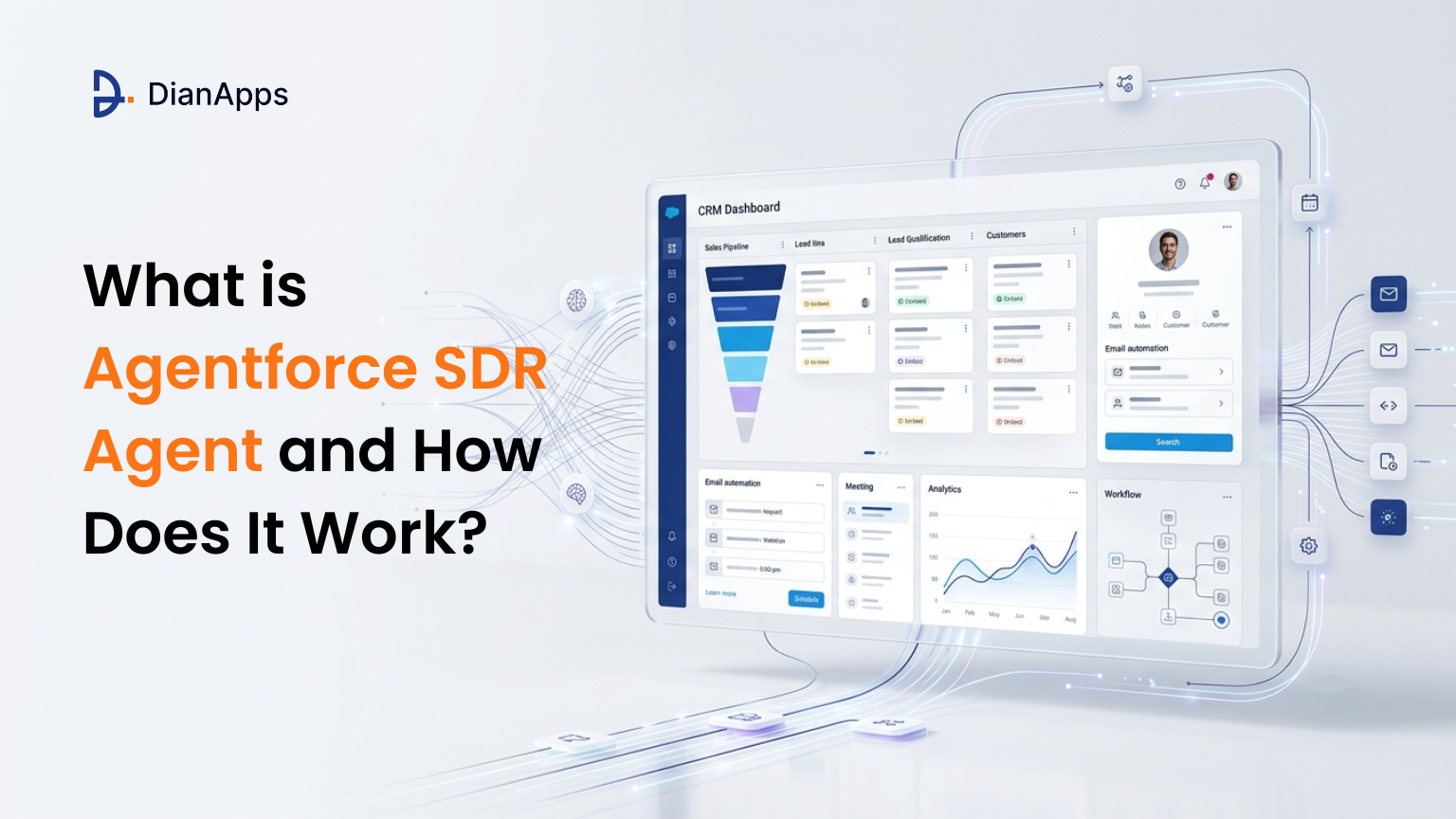
Speed has become one of the biggest competitive advantages in modern sales. Prospects expect businesses to respond within minutes, answer questions instantly, and deliver personalized interactions across every touchpoint.
However, as lead volumes continue to grow, many sales development teams struggle to keep up with repetitive tasks like qualifying prospects, sending follow-up emails, and scheduling meetings. The result is delayed responses, missed opportunities, and a slower sales pipeline.
This is where AI-powered sales agents are transforming the way organizations engage with potential customers.
Instead of relying solely on human Sales Development Representatives (SDRs), businesses can now leverage autonomous AI agents that work around the clock to interact with leads, answer queries, qualify prospects, and seamlessly hand over high-intent opportunities to sales teams.
Salesforce introduced Agentforce SDR Agent, now rebranded as Agentforce Lead Nurturing, to help organizations automate the early stages of the sales cycle.
Built on the Agentforce platform, it combines enterprise data, AI reasoning, and workflow automation to deliver personalized lead engagement while remaining deeply integrated with Salesforce Sales Cloud Services and Customer 360.
In this guide, you’ll learn what Agentforce SDR Agent is, how it works behind the scenes, its key features and business benefits, and why it’s becoming an essential tool for organizations looking to build a faster, smarter, and more scalable sales process.
Before proceeding, let’s understand the basic future of AI-powered customer support in Salesforce.
What Is Agentforce SDR Agent?
Agentforce SDR Agent, now known as Agentforce Lead Nurturing, is an AI-powered sales agent developed by Salesforce to automate the early stages of the sales process.
Acting as a virtual Sales Development Representative (SDR), it engages with inbound leads, answers questions, qualifies prospects, and schedules meeting, allowing human sales teams to focus on closing deals rather than managing repetitive outreach.
Unlike traditional chatbots that follow predefined scripts, Agentforce SDR Agent uses autonomous AI reasoning to understand customer intent, personalize conversations, and take appropriate actions based on real-time data.
It doesn’t simply respond to prompts; it analyzes customer interactions, retrieves relevant information from Salesforce, and determines the next best action to move a lead further down the sales funnel.
The AI agent is built on the Agentforce platform and integrates seamlessly with Sales Cloud, Data Cloud, Customer 360, and the Einstein Trust Layer.
Understand the key differences between Agentforce vs Einstein here in the detailed guide.
This enables it to access unified customer data, maintain context across conversations, and deliver responses that align with your organization’s knowledge base and business rules.
Whether a prospect submits a website form, downloads a whitepaper, or requests a product demo, Agentforce SDR Agent can engage them immediately.
It can send personalized follow-up emails, answer product-related questions, qualify the lead based on predefined criteria, and automatically book meetings with the appropriate sales representative.
In simple terms: Think of Agentforce SDR Agent as a highly efficient digital SDR that works 24/7. It never misses a lead, responds instantly, personalizes every interaction, and hands qualified opportunities to your sales team at the right time.
Agentforce SDR Agent vs. Traditional AI Chatbots
Many people confuse AI sales agents with chatbots, but they serve different purposes.
An AI chatbot is primarily designed to answer questions based on predefined rules or knowledge articles. Agentforce SDR Agent, on the other hand, goes several steps further by reasoning through customer requests, accessing CRM data, executing workflows, qualifying leads, and taking autonomous actions, all without constant human intervention.
This shift from conversational AI to autonomous AI is what makes Agentforce SDR Agent a valuable solution for businesses looking to improve lead conversion, reduce manual effort, and create a more responsive sales process.
Why Businesses Need an AI SDR Agent
Today’s buyers don’t wait. Whether they’re exploring a product, requesting a demo, or downloading a resource, they expect timely and personalized responses. Yet, many sales teams still rely on manual processes to qualify leads and follow up with prospects, making it difficult to keep pace with growing customer expectations.
As businesses generate more leads through websites, marketing campaigns, and events, traditional Sales Development Representatives (SDRs) often spend a significant portion of their day on repetitive tasks rather than meaningful sales conversations. This not only slows down the sales cycle but also increases the risk of losing high-intent prospects to faster competitors.
An AI SDR agent addresses these challenges by automating lead engagement while maintaining a personalized customer experience. Instead of waiting for a human representative to become available, prospects receive instant responses, relevant information, and timely follow-ups, regardless of the time or day.
Here are some of the biggest challenges businesses face and how an AI SDR agent helps solve them:
| Sales Challenge | How an AI SDR Agent Helps |
|---|---|
| Manual lead qualification | Automatically evaluates leads based on predefined criteria |
| Missed follow-ups | Sends personalized follow-up emails without manual intervention |
| High volume of repetitive inquiries | Answers common product and pricing questions autonomously |
| Limited SDR capacity | Handles multiple conversations simultaneously |
| Inconsistent customer experiences | Delivers accurate and personalized responses at scale |
Beyond automation, AI SDR agents also help sales teams become more productive. By taking over routine activities such as answering FAQs, collecting prospect information, and scheduling meetings, they allow human representatives to focus on higher-value tasks like building relationships, handling complex negotiations, and closing deals.
For organizations using Salesforce, Agentforce SDR Agent enhances this process by combining AI reasoning with real-time CRM data. This enables it to understand each prospect’s context, personalize every interaction, and identify qualified opportunities more effectively than rule-based automation alone.
In short, businesses don’t need AI SDR agents to replace their sales teams, they need them to help sales teams work smarter, respond faster, and convert more leads into revenue.
How Does Agentforce SDR Agent Work?
Agentforce SDR Agent streamlines the lead qualification process by combining AI reasoning, customer data, and Salesforce automation into a single workflow. Instead of simply responding to customer queries, it understands context, makes informed decisions, and performs actions that move prospects through the sales funnel.
Here’s a step-by-step look at how it works.
Step 1: Captures and Identifies New Leads
The process begins when a new lead enters your Salesforce ecosystem. This could happen through a website contact form, product demo request, marketing campaign, webinar registration, live chat, or CRM import.
Once the lead is captured, Agentforce SDR Agent automatically recognizes the new opportunity and initiates engagement without requiring manual intervention from a sales representative.
Step 2: Retrieves Customer Context
Before reaching out, the AI agent gathers relevant information from Salesforce’s connected data sources, including Sales Cloud, Data Cloud, Customer 360, and previous customer interactions.
This allows it to understand details such as:
- Company information
- Previous website activity
- Marketing campaign engagement
- Existing CRM records
- Past conversations and interactions
Having this context enables the AI agent to personalize every conversation rather than relying on generic messaging.
Step 3: Understand Lead Intent
Agentforce SDR Agent uses Salesforce’s Atlas Reasoning Engine to analyze customer intent and determine why the prospect reached out.
For example, it can distinguish between someone who is:
- Looking for pricing information
- Requesting a product demo
- Comparing solutions
- Exploring implementation options
- Seeking technical documentation
Based on this understanding, the agent determines the most appropriate next step instead of following a fixed conversation script.
Step 4: Starts Personalized Outreach
Once it understands the prospect’s intent, Agentforce SDR Agent initiates a personalized conversation through the configured communication channels.
Instead of sending the same email to every lead, it tailors its responses using customer data and business context. It can:
- Send personalized follow-up emails
- Introduce relevant products or services
- Share helpful resources
- Recommend the next steps based on customer interests
This level of personalization helps create a more engaging experience from the very first interaction.
Step 5: Engages in Meaningful Conversations
Unlike traditional chatbots that provide scripted answers, Agentforce SDR Agent can manage dynamic, multi-turn conversations.
It responds to common questions about products, pricing, implementation timelines, features, and other business-related topics while maintaining context throughout the interaction.
If the prospect asks follow-up questions or changes the direction of the conversation, the AI agent adapts accordingly, making the interaction feel more natural and relevant.
Step 6: Qualifies the Lead
As the conversation progresses, the AI agent evaluates whether the prospect meets your organization’s qualification criteria.
Depending on your sales process, it can assess factors such as:
- Business requirements
- Budget expectations
- Purchase timeline
- Decision-making authority
- Product interest
- Overall buying intent
This helps prioritize high-quality leads while ensuring sales representatives spend their time on opportunities with the greatest potential.
Step 7: Schedules Meetings Automatically
When a lead is qualified, Agentforce SDR Agent can coordinate the next step by scheduling a meeting with the appropriate sales representative.
It considers factors such as calendar availability, territory assignments, and time zones to streamline the booking process, reducing the back-and-forth communication that often delays sales conversations.
Step 8: Hands Off Qualified Leads to Sales
Once the meeting is confirmed, the AI agent updates Salesforce with conversation details, lead qualification insights, and customer preferences before handing the opportunity over to the sales team.
This ensures that sales representatives have complete context before the first meeting, allowing them to focus on building relationships and closing deals rather than gathering basic information.
Agentforce SDR Agent Workflow
- Lead Enters Salesforce
- Customer Data Retrieval
- Intent Analysis
- Personalized Outreach
- AI Conversation & Follow-ups
- Lead Qualification
- Meeting Scheduling
- Sales Rep Handoff
By combining autonomous decision-making with real-time CRM data, Agentforce SDR Agent transforms lead engagement into an intelligent, end-to-end process. Instead of automating isolated tasks, it continuously guides prospects toward the next stage of the sales journey, helping businesses respond faster, qualify leads more accurately, and accelerate pipeline growth.
Key Features of Agentforce SDR Agent
Agentforce SDR Agent goes beyond basic sales automation by combining AI reasoning, enterprise data, and workflow execution into a single solution. Instead of handling isolated tasks, it manages the complete lead engagement journey, from the first interaction to sales handoff. Here are the standout features that make it a powerful AI sales assistant.
| Feature | What It Does | Business Benefit |
|---|---|---|
| AI-Powered Lead Qualification | Evaluates leads based on predefined business criteria such as interest, buying intent, and engagement. | Helps sales teams prioritize high-value prospects and improve conversion rates. |
| Personalized Customer Engagement | Uses CRM data and conversation history to tailor emails and responses for every lead. | Creates more relevant interactions and increases customer engagement. |
| 24/7 Lead Response | Engages with prospects instantly, regardless of business hours or time zones. | Reduces response times and prevents potential leads from going cold. |
| Autonomous Multi-Turn Conversations | Maintains natural, context-aware conversations across multiple interactions. | Delivers a seamless customer experience without requiring constant human involvement. |
| Automated Follow-Ups | Sends timely reminders, follow-up emails, and additional resources based on customer behavior. | Improves lead nurturing while reducing manual work for SDR teams. |
| Meeting Scheduling | Coordinates calendars and books meetings with the right sales representative automatically. | Speeds up the sales cycle and eliminates scheduling delays. |
| Real-Time CRM Updates | Logs conversations, updates lead records, and captures qualification details within Salesforce. | Keeps CRM data accurate and saves sales representatives valuable administrative time. |
| Knowledge-Based Responses | Answers product, pricing, and service-related questions using trusted business knowledge. | Ensures customers receive consistent and accurate information. |
| Human Handoff When Needed | Escalates complex conversations or qualified opportunities to human sales representatives. | Enables smooth collaboration between AI and sales teams for better customer outcomes. |
| Native Salesforce Integration | Connects seamlessly with Sales Cloud, Data Cloud, Customer 360, Flow, and other Salesforce products. | Creates a unified sales ecosystem without requiring complex third-party integrations. |
What Makes Agentforce SDR Agent Different?
Many AI sales tools focus on automating a single activity, such as email outreach or chatbot conversations. Agentforce SDR Agent takes a broader approach by combining AI reasoning, enterprise data, and workflow automation into one intelligent system.
Rather than simply responding to customer queries, it understands the context behind each interaction, decides on the next best action, executes tasks such as scheduling meetings or updating CRM records, and continuously learns from ongoing conversations.
This ability to reason and act autonomously makes it a valuable extension of modern sales teams, enabling businesses to deliver faster, more personalized, and scalable customer engagement.
Benefits of Using Agentforce SDR Agent
For many organizations, the biggest challenge isn’t generating leads, it’s engaging them quickly and consistently. Delayed responses, manual follow-ups, and administrative tasks often prevent sales teams from focusing on high-value opportunities. Agentforce SDR Agent addresses these challenges by automating repetitive work while enabling more personalized and efficient customer interactions.
Here are some of the key benefits businesses can expect.
| Benefit | Business Impact |
|---|---|
| Faster Lead Response Times | Engages new prospects instantly, reducing the chances of losing qualified leads to competitors. |
| Higher Sales Team Productivity | Automates repetitive SDR tasks, allowing sales representatives to spend more time closing deals. |
| Improved Lead Qualification | Uses AI reasoning and CRM data to identify high-intent prospects more accurately. |
| Personalized Customer Experiences | Delivers tailored conversations based on customer behavior, preferences, and interaction history. |
| 24/7 Sales Availability | Responds to leads anytime, ensuring no opportunity is missed outside business hours. |
| Consistent Follow-Ups | Automatically nurtures leads with timely emails and reminders, keeping prospects engaged throughout the buying journey. |
| Shorter Sales Cycles | Accelerates the transition from initial inquiry to scheduled meetings and sales conversations. |
| Lower Operational Costs | Reduces the manual workload on SDR teams, enabling businesses to scale without proportionally increasing headcount. |
| Accurate CRM Data | Automatically records conversations, qualification details, and customer interactions within Salesforce. |
| Scalable Sales Operations | Handles thousands of simultaneous conversations without compromising response quality or consistency. |
How Businesses Benefit Beyond Automation
While automation is a major advantage, the true value of Agentforce SDR Agent lies in its ability to enhance decision-making and customer engagement.
By combining AI reasoning with real-time customer data, the agent can determine the next best action for every prospect instead of following a one-size-fits-all workflow. Whether it’s answering product questions, nurturing a hesitant buyer, or escalating a high-value opportunity to a sales representative, every interaction is driven by context rather than predefined scripts.
This allows businesses to create a sales process that is not only faster but also more intelligent and customer-centric with the help of a Salesforce development company.
Empowering Sales Teams, Not Replacing Them
One of the biggest misconceptions about AI SDR agents is that they are designed to replace human sales representatives. In reality, Agentforce SDR Agent is built to work alongside them.
By taking ownership of routine tasks such as lead qualification, follow-up communication, and meeting scheduling, the AI agent frees sales professionals to focus on strategic conversations, relationship building, solution consulting, and deal negotiations.
The result is a collaborative sales model where AI handles repetitive execution, while human representatives concentrate on activities that require expertise, empathy, and critical decision-making. This combination helps organizations improve efficiency, increase pipeline quality, and ultimately drive stronger revenue growth.
Agentforce SDR Agent vs. Traditional SDR Teams
Sales Development Representatives (SDRs) play a crucial role in generating pipeline by engaging prospects, qualifying leads, and scheduling meetings. However, as businesses scale, relying solely on human SDR teams can create challenges such as delayed responses, inconsistent follow-ups, and limited capacity to manage growing lead volumes.
Agentforce SDR Agent is designed to complement, not replace, traditional SDR teams. By automating repetitive tasks and handling routine customer interactions, it allows sales representatives to focus on relationship building, strategic conversations, and closing opportunities.
Here’s how the two compare.
| Traditional SDR Team | Agentforce SDR Agent |
|---|---|
| Works during business hours | Available 24/7 without interruptions |
| Manually qualifies leads | Uses AI reasoning to qualify leads automatically |
| Sends emails and follow-ups manually | Automates personalized outreach and follow-ups |
| Handles a limited number of conversations at a time | Engages with multiple prospects simultaneously |
| Requires manual CRM updates | Automatically records conversations and updates Salesforce |
| Response time depends on workload | Responds to leads instantly |
| Performance may vary across representatives | Delivers consistent messaging and customer experiences |
| Scaling requires hiring and training additional staff | Scales effortlessly to support increasing lead volumes |
Why AI and Human SDRs Work Better Together
The comparison isn’t about choosing between AI and people; it’s about combining the strengths of both.
Agentforce SDR Agent excels at handling repetitive, data-driven tasks such as responding to inquiries, qualifying leads, nurturing prospects, and scheduling meetings.
Human SDRs, on the other hand, bring qualities that AI cannot replicate, including emotional intelligence, relationship building, complex negotiation, and strategic problem-solving.
By allowing AI to manage routine activities, businesses enable their sales teams to spend more time engaging with qualified prospects who are ready for meaningful conversations. This improves productivity, shortens sales cycles, and creates a better experience for both customers and sales representatives.
In today’s competitive sales landscape, the most effective organizations aren’t replacing SDRs with AI; they’re empowering their teams with AI to build a faster, smarter, and more scalable sales process.
Best Practices for Implementing Agentforce SDR Agent
Implementing Agentforce SDR Agent is more than enabling an AI-powered sales assistant; it’s about creating a sales process where AI and human teams work together seamlessly. A thoughtful implementation ensures the agent delivers accurate responses, qualifies leads effectively, and aligns with your organization’s sales goals.
Here are some best practices to maximize the value of the Agentforce SDR Agent.
1. Define Clear Lead Qualification Criteria
Before deploying the AI agent, establish what qualifies a lead for your business. Define criteria such as company size, industry, budget, buying intent, decision-making authority, and expected purchase timeline.
Clear qualification rules help Agentforce SDR Agents identify high-potential opportunities and route them to the right sales representatives.
2. Build a Reliable Knowledge Base
The quality of customer interactions depends on the information available to the AI agent. Keep your product documentation, FAQs, pricing details, and company policies accurate and up to date.
A well-maintained knowledge base enables Agentforce SDR Agent to provide consistent, relevant, and trustworthy responses throughout the buyer journey.
3. Connect Your Salesforce Data
Agentforce performs best when it has access to comprehensive customer information. Integrating Sales Cloud, Data Cloud, Customer 360, Marketing Cloud, and other Salesforce products allows the AI agent to understand customer history and personalize every interaction.
The richer your CRM data, the smarter your AI-driven conversations become.
4. Personalize Customer Interactions
Avoid generic outreach. Configure the AI agent to use customer names, company details, previous interactions, and expressed interests to create personalized emails and conversations.
Relevant communication increases engagement and helps build stronger customer relationships from the very first touchpoint.
5. Establish Human Escalation Rules
Not every conversation should remain with AI. Define clear scenarios where Agentforce SDR Agent should transfer a conversation to a human sales representative, such as:
- Enterprise or high-value opportunities
- Complex technical discussions
- Pricing negotiations
- Custom solution requests
- Customer complaints or sensitive issues
A seamless handoff ensures prospects receive the right level of support at every stage.
6. Continuously Monitor and Optimize Performance
AI agents improve over time when their performance is regularly reviewed. Track metrics such as lead qualification accuracy, response times, meeting conversion rates, and customer satisfaction to identify areas for improvement.
Regular optimization helps the agent adapt to changing business goals and customer expectations.
7. Maintain Strong Data Governance and Security
Since the Agentforce SDR Agent works with customer information, organizations should implement appropriate security controls, user permissions, and compliance policies.
Leveraging Salesforce’s Einstein Trust Layer helps ensure AI-generated responses remain grounded in approved business data while protecting sensitive customer information.
Implementation Checklist
Before launching Agentforce SDR Agent, make sure you’ve completed the following:
- Define lead qualification criteria
- Organize and update your knowledge base
- Connect Salesforce CRM and customer data
- Personalize outreach templates
- Configure escalation and handoff rules
- Monitor AI performance and key sales metrics
- Establish governance, security, and compliance policies
By following these best practices, businesses can move beyond basic automation and create an AI-powered sales process that is accurate, scalable, and customer-centric. The result is a more efficient sales team, improved lead quality, and a stronger pipeline that drives long-term business growth.
Need the best Salesforce AI consulting partner to kickoff 2026? Read through the best 10 list.
KPIs to Measure Agentforce SDR Success
Implementing Agentforce SDR Agent is only the first step; the real value comes from measuring its impact on your sales performance.
Tracking the right Key Performance Indicators (KPIs) helps businesses understand how effectively the AI agent is engaging leads, improving sales efficiency, and contributing to revenue growth.
Below are the most important metrics to monitor after deploying the Agentforce SDR Agent.
| KPI | Why It Matters |
|---|---|
| Lead Response Time | Measures how quickly the AI agent engages new leads. Faster response times increase the likelihood of converting prospects into opportunities. |
| Lead Qualification Rate | Tracks the percentage of leads that meet your predefined qualification criteria, helping evaluate the accuracy of AI-driven lead scoring. |
| Meeting Booking Rate | Indicates how effectively Agentforce SDR Agent converts qualified leads into scheduled sales meetings. |
| Email Response Rate | Measures how many prospects respond to AI-generated outreach, providing insights into the effectiveness of personalized messaging. |
| Sales Accepted Leads (SALs) | Shows the number of AI-qualified leads accepted by the sales team, reflecting the quality of lead qualification. |
| Opportunity Conversion Rate | Tracks how many qualified leads progress into active sales opportunities, demonstrating the agent's impact on pipeline growth. |
| Pipeline Value Generated | Measures the total value of sales opportunities created through AI-assisted lead engagement. |
| Customer Engagement Rate | Evaluates how frequently prospects interact with emails, messages, or follow-ups initiated by the AI agent. |
| CRM Data Accuracy | Assesses whether customer records, conversation logs, and qualification details are being captured correctly within Salesforce. |
| Sales Productivity | Measures the time saved by automating repetitive SDR tasks, allowing sales representatives to focus on high-value selling activities. |
Focus on Business Outcomes, Not Just Activity
While operational metrics like response time and meeting bookings are important, businesses should also track the broader impact of the Agentforce SDR Agent on sales performance.
Metrics such as pipeline growth, conversion rates, and revenue provide a clearer picture of how AI contributes to overall business success.
Reviewing these KPIs regularly enables organizations to refine lead qualification rules, optimize customer conversations, and improve AI workflows over time.
By combining performance insights with continuous optimization, businesses can ensure Agentforce SDR Agent remains a strategic asset that drives measurable sales growth rather than simply automating routine tasks.
Conclusion
As customer expectations continue to evolve, businesses need smarter ways to engage prospects, qualify leads, and accelerate sales without overwhelming their teams.
Agentforce SDR Agent (now known as Agentforce Lead Nurturing) addresses this challenge by combining AI reasoning, real-time Salesforce data, and intelligent automation to streamline the entire lead engagement process.
Rather than replacing human Sales Development Representatives, it empowers them by taking over repetitive tasks such as lead qualification, follow-ups, and meeting scheduling. This enables sales teams to focus on building relationships, solving complex customer needs, and closing more deals.
Whether you’re looking to improve response times, enhance customer experiences, or scale your sales operations, Agentforce SDR Agent provides the foundation for a more efficient and AI-driven sales strategy.
Ready to Transform Your Sales Process with Salesforce Agentforce?
At DianApps, we help businesses unlock the full potential of Salesforce with tailored AI-powered solutions. From Agentforce implementation and Salesforce consulting to CRM customization and workflow automation, our certified experts ensure your sales teams have the tools they need to drive higher conversions and sustainable growth.
Get in touch with DianApps today to discover how Agentforce can automate lead nurturing, boost sales productivity, and help your business stay ahead in the AI-first era.
 0 comments

Leave a Comment
Your email address will not be published. Required fields are marked *