















 0 comments
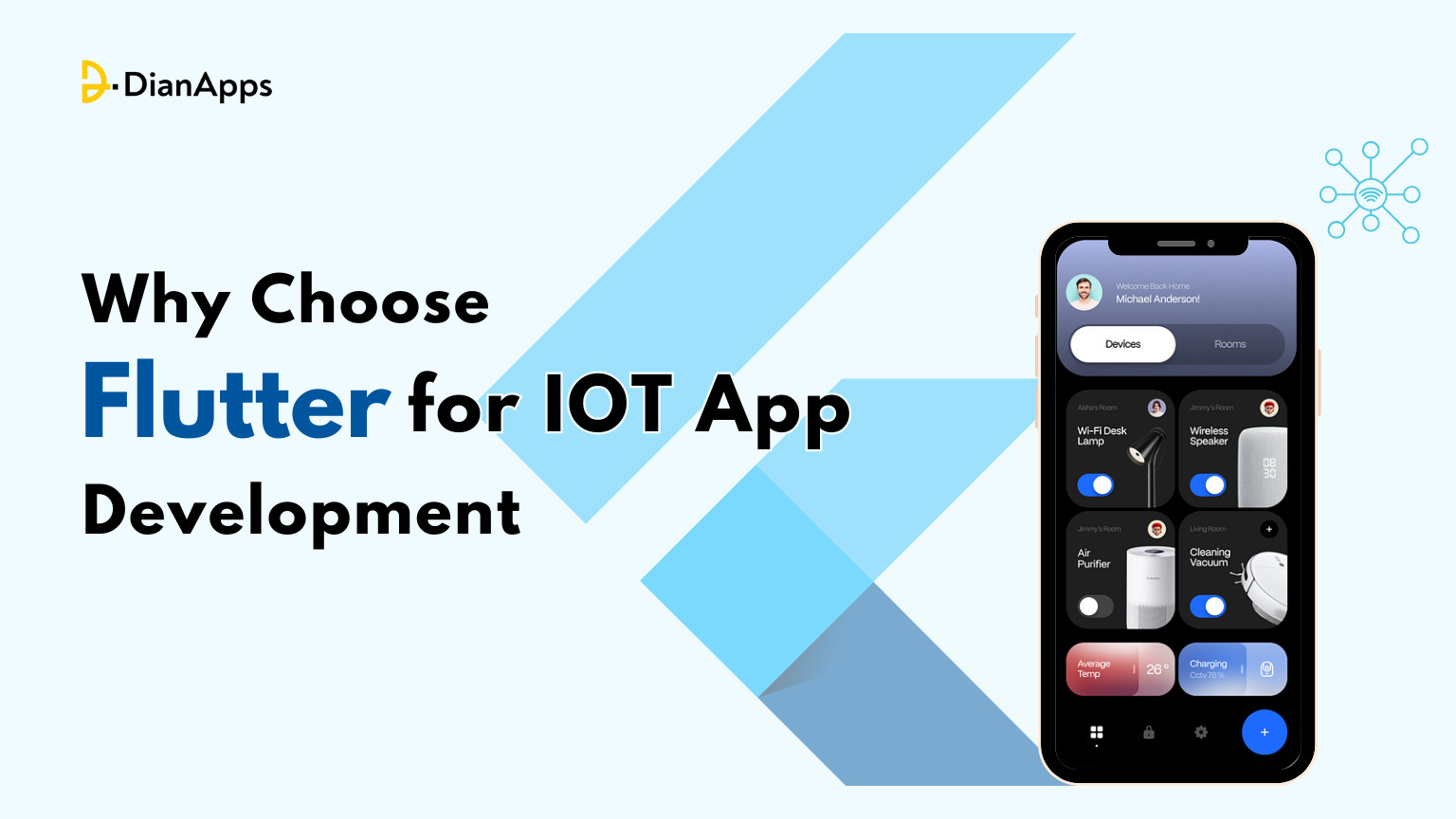





Have you ever considered creating an app that works on iOS and Android without requiring distinct code for every platform? If so, you’re likely familiar with the concept of cross-platform development. One framework that has made waves in the mobile development world is Flutter, created by Google.
Using a single codebase, programmers can create laptop, net, and mobile applications with the open-source Flutter framework. High platform performance is ensured by way of the usage of the Dart programming language, which compiles local code.
One of the excellent alternatives for programmers globally, Flutter stands out in the IOT app development industry as it delivers a smooth user experience that feels very similar to native apps.
However, what is Flutter, and how does it perform? To position this, Flutter gives a high-end local interface at the side of a fast development cycle. Widgets are pre-made user interface factors that may be used to assemble applications that can be responsive and aesthetically attractive.
Furthermore, if you are interested in developing a Flutter application you must get help from the expert Flutter App Development Company.
What Sets Flutter for Mobile App Development Apart?
Have you ever imagined why Flutter has become so popular? Its simplicity, quickness, or adaptability might be the reason. Let’s look at some of Flutter’s maximum notable characteristics that set it apart other than competing frameworks.
Single Codebase
First of all, a single codebase for iOS and Android apps is made feasible by using Flutter. This saves developers money and time by disposing of the need to develop unique code for each platform. Flutter’s Dart language enables a unified improvement method, in contrast to normal strategies that require developers to apply different languages for iOS (Swift or Objective-C) and Android (Java or Kotlin).
Hot Reloading
One greater noteworthy feature is Hot Reload. Imagine now not having to restart your program so you can view the modifications you make to its code quickly. As a result, can check and enhance their code extra rapidly, saving a ton of time during development. When developing an app, have you ever been annoyed with the aid of time-consuming compilation times? This is easily solved when you operate with Flutter.
Customizable Widgets
Furthermore, rich and customizable widgets are provided by Flutter. The essential gadgets of Flutter packages are widgets. From the appearance of a button to the overall layout of your software, they have complete management. The extremely customizable widgets in Flutter provide a truly flexible experience, in contrast to different frameworks in which widgets may also sense rigid or preset. Does that remind you of how tons simpler things could be?
How to Build an IoT app with Flutter
Below are the guidelines for developing a Flutter app with IoT. But, you can also get insights into the complete process of Flutter app development.
Have you ever thought of a utility for the Internet of Things (IoT)? Smart lighting fixtures, thermostats, and security systems can all be managed from smartphones way to Internet of Things apps. Using Flutter to create IoT software should transform your lifestyle. There are a few important steps you need to take to create an IoT app with Flutter.
Use Communication System
Initially, you will use a communication era like Bluetooth, Wi-Fi, or even Zigbee to attach the Flutter app to the Internet of Things devices. Flutter has reliable libraries for Bluetooth and Wi-Fi connections, permitting you to talk together with your Internet of Things devices.
Manage Records
The second task is to manage the records that those gadgets send in real-time. Real-time information streams from Internet of Things sensors are without problems handled through Flutter. For instance, an Internet of Things app for a smart thermostat can also constantly check the temperature and replace your app. This technique can be sped up by utilizing applications like Firebase or MQTT and the asynchronous programming architecture of Flutter.
Have you ever wanted to broaden an Internet of Things application but been intimidated by the prospect of integrating actual-time facts? This is drastically less difficult to address with Flutter because of its easy integration and full-size library guide.
The Google Home app is a noteworthy example of an Internet of Things utility developed with Flutter, allowing customers to deal with lots of clever domestic home equipment.
Look at the cost of developing a Flutter application.
Key Flutter Development Trends in 2025
What do you believe you studied Flutter’s future holds? Will new technology emerge to assign it, or will it maintain to rule the sector of mobile app development? Let’s have a look at a few essential subject matters that will probably influence Flutter’s improvement in 2025.
Cross-Platform Development
First, Flutter for desktop and on-line packages will hold turning into greater famous. Flutter was first designed with mobile development in mind. Its computer and web platform compilation competencies are enhancing, though. Cross-platform apps that operate on Android, iOS, the Web, or even computers with a single codebase would possibly gain even greater sturdy assistance in 2025.
Integration of AI and ML
The integration of Flutter with devices gaining knowledge of (ML) and synthetic intelligence (AI) is another huge trend. Flutter developers will probably incorporate Google ML Kit or TensorFlow Lite into their apps as AI performs a bigger position in mobile apps. Features like language processing, photograph identity, and actual-time predictive analytics could be made feasible as a result.
Do you consider that incorporating AI into mobile packages will transform the industry? Consider an app that could count on a user’s next motion or regulate to their conduct in real-time. It can be interesting to look at how Flutter integrates AI and ML in the years yet to come.
Advantages of Using Flutter for Mobile App Development
Has the query of whether or not Flutter is the fine choice for your app improvement desires ever crossed your thoughts? Let’s have a look at the primary benefits that distinguish Flutter:
- Faster Development: Flutter’s Hot Reload feature allows developers to check, experiment, and make changes to their code more fast, which significantly cuts down on development time.
- Cross-Platform Development: Cross-Platform development is made simpler with Flutter, which helps you to write a single codebase for each iOS and Android. Businesses looking to goal numerous systems also can store time and money by means of doing this.
- Intuitive User Interfaces: With the abundance of customizable widgets that Flutter gives, programmers can create apps that have a native-like appearance and feel. You can use Flutter to make your app precisely as you need it to look, regardless of whether or not you’re developing for iOS or Android.
Do you no longer assume that these benefits make Flutter an attractive choice for makers of mobile apps? Flutter offers the capability and sources required for effective and advanced app improvement, regardless of your corporation’s size.
Disadvantage of Flutter App Development
Despite its many benefits, Flutter has a few drawbacks that can not be ignored:
- Large App Size: Users who’ve restrained garage space on their smartphones may also find Flutter apps because they usually have larger file sizes compared to native apps.
- Restricted Libraries and Plugins: In contrast to other frameworks like React Native, Flutter currently lacks some specialized libraries and plugins, even as having a growing environment. For a few functionalities, developers can also want to create precise solutions.
- Platform-Specific capabilities: It can also face issues during platform-specific functionalities that require deeper integration with the operating system. For instance, advanced native features like background services or specific device integrations may require custom code.
- Performance Overhead: Although Flutter works well, a few sophisticated apps won’t characteristic as easily as native apps, specifically those who need a whole lot of snapshots or animations. For high-performance programs, this may be a difficulty.
- Restricted Talent Pool: Compared to other frameworks, Flutter has a smaller pool of experienced developers because it is nonetheless an exceedingly young framework. This may make it a bit tougher to discover the Flutter development process.
Many developers nevertheless locate Flutter to be an excellent choice in spite of these drawbacks, in particular, whilst developing cross-platform apps quickly.
Which Apps are Created with Flutter? Real-life Examples
Are you curious about which apps have already been created with Flutter? The following real-world instances highlight Flutter’s adaptability in app improvement:
- Google Ads: Flutter is used to create Google’s marketing app, showcasing the platform’s capability to control problematic, statistics-pushed packages with a fluid consumer interface.
- Alibaba: Flutter is used by certainly one of the largest e-trade websites inside the international for its mobile application. Every day, it manages thousands and thousands of users, and the app’s great performance is proof of Flutter’s scalability.
- Reflect Ly: An AI-powered journaling app that assists customers in questioning again about their normal lifestyles. Another lovely and beneficial app created with Flutter is Reflectly.
These examples demonstrate how Flutter may be used to create a wide variety of applications, which include enterprise-level solutions, AI-powered personal assistants, and e-commerce apps. Flutter’s adaptability, in your opinion, says much approximately its potential for app creation in the future.
Comparison of Flutter with Other Cross-Platform Development Frameworks
Have you ever contrasted Flutter with different frameworks which include Xamarin or React Native? Let’s speedy examine how Flutter differs from its rivals.
React Native
Cross-platform development is possible with React Native, just with Flutter. But because it uses JavaScript, React Native couldn’t be as performant as Flutter’s Dart language. Additionally, Flutter gives a more incorporated answer in which the whole thing features perfectly, whereas React Native offers third-party libraries and plugins. To build an application you must know is react native better than ionic.
Xamarin
Xamarin creates pass-platform packages using C# and.NET. Although Xamarin offers local functionality, Flutter has a larger community and environment. Furthermore, Flutter is greater effective than Xamarin because of its improvement cycle, Hot Reload, and user-friendliness.
Ionic
It is a framework constructed on the pinnacle of net technology consisting of JavaScript, HTML, and CSS. Flutter provides higher overall performance and a local look and feel, however, Ionic remains a major choice for developing small apps. Nevertheless, Ionic continues to have a position inside the discipline of app improvement, mainly for more simple apps. Smaller programs with lower overall performance necessities can regularly be developed greater quickly and without difficulty because of its usage of the IOT generation.
The simplicity of developing apps with acquainted web tools makes Ionic a cross-to alternative for builders trying to create lightweight, content material-pushed apps like news apps or easy commercial enterprise tools. Ionic is still a popular choice for smaller, less useful resource-extensive packages even though it might not offer the identical performance as Flutter for complex apps.
Flutter continuously outperforms these frameworks in assessment because of its strong network aid. Large widget library, single codebase, and exact overall performance. Will Flutter retain to surpass these frameworks in the years yet to come, to your opinion?
Final Words
In conclusion, Flutter has the vast capacity to transform custom software development company, like DianApps, a business enterprise that focuses on innovative app creation. DianApps has been able to lower charges, expedite their improvement manner. And bring high-end fast-running apps for iOS and Android with the use of a single codebase by way of implementing Flutter. With the assistance of the framework’s customizable widgets and Hot Reload function, the business is now able to produce good, user-friendly apps with higher speed. Flutter will be a prime thing in figuring out how mobile app development develops in the future as more companies, including DianApps, adopt it.
 0 comments











Leave a Comment
Your email address will not be published. Required fields are marked *