















 0 comments





The complicacy of adhering to the app development cost in Australia is the talk of the town among app developers and industry experts.
Wondering what shall be the average cost of app development? And how will it impact your business? Well, you’ve hovered to the right space.
As per app development cost statistics, the business market is fast-growing and inculcating a total of $33 billion dollars in the use of mobile apps among smartphone users in 2022. For a deeper dive, see our guide on a complete guide to mobile app development costs in australia.
What’s more, is that approximately 90% of Android users spend time browsing mobile apps. While the remaining 10% tentatively involves iPhone users.
Imagine if there is so much profit in app development and your business is adjacent to unique ideas that will change the pathway of other competitors. What will happen if you hire mobile app developers in Australia and derive the actual cost for your project?
As 2023 has already set new boundaries in the tech world, getting the best and most affordable app development services in Australia can be challenging!
This blog will help you accomplish the app development cost in Australia alongside trends that you may imply and factors that may affect your mobile development budget.
Mobile app development market share in Australia
- As per August 2023 reports, the app development market size in Australia is USD $228.98 billion.
- From 2023 to 2030, the need for app development has increased to 13.8% CAGR.
- To add more, to the revenue generation forecast, the app market will touch a volume of USD $567.19 billion by the year 2030.
- Another report suggests that the iOS and Android app store house over 7 million applications, this indicates that the competition in the app industry is high.
Mobile app development latest trends 2023
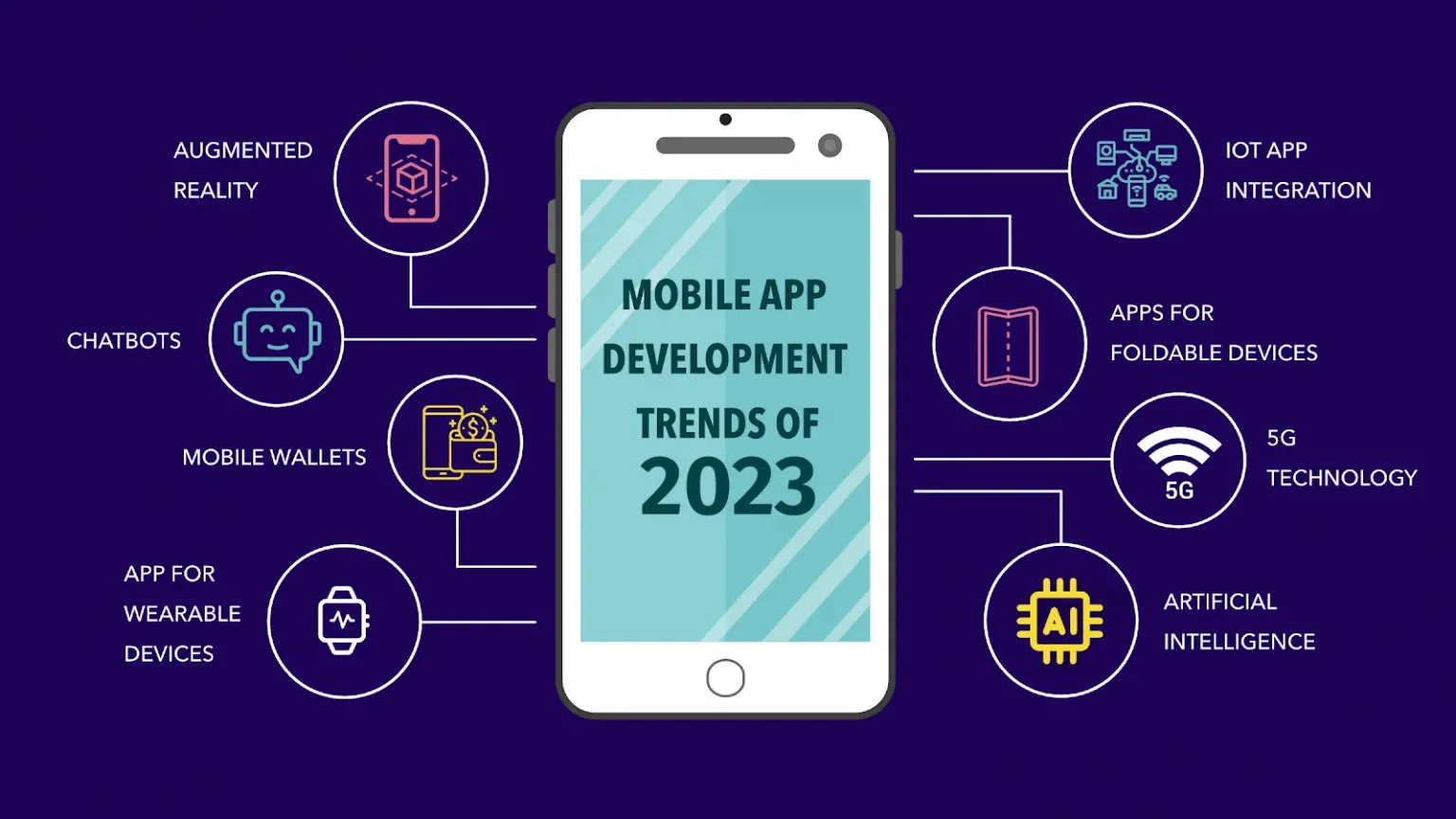
1. IoT & Cloud Technology
The technology-driven world is focused on maintaining large data, as well as Artificial Intelligence and Analytics Capabilities. Your application includes all three aspects. The role of cloud computing in IoT is to gain access to remote computing, fortify security, use data integration, ensure business continuity, and whatever else.
As per Google’s August reports, the global Internet of Things market is expected to reach $318 billion in 2023. And $226 billion will be accumulated from mobile app development.
2. Apps For Foldable Devices
In 2019, big mobile device companies like Samsung Galaxy Fold, Motorola Razr, and the Hawai Mate X released the concept of a Foldable phone in Australia and many other countries.
The results of these smartphones captured huge customer attention and impacted the overall smartphone market share. One of Statista’s reports forecasted that by 2023 end, roughly 50 million units will be sold. Which is said to be the biggest achievement for Flip phones.
Therefore, planning a mobile application for Foldable phones is a smart choice to drive users from all over the world removing the limitations and providing convenience.
3. 5G Technology
The 5G innovation initiative has rolled out the app development trends tremendously. Providing 5G convenience to users is 10x more beneficial than 4G as it boosts your network efficiency and removes the wait time of applications.
The best scenario where the 5G technology is most useful is in live streaming applications. Video consumers no longer need to stare at the screen and enjoy their favorite shows and events anytime anywhere.
4. Mobile Commerce
eCommerce in Australia and other countries is ruling majorly. Having an eCommerce mobile application that serves and meets the needs of customers is a win-win situation for your business. Mobile commerce not only offers convenience but also raises the overall profit of your product and services.
However, building an eCommerce app can be expensive depending on the complexity of your app and feature integration.
5. Superior App Security
Cybercrimes are frequent and may impact your business drastically. Nobody is immune, not even lone content producers or multibillion-dollar businesses.
Attacks by malware intended to damage mobile devices surged by 54%. More than 60% of fraud starts with mobile technology. Eighty percent of that total comes from smartphone applications.
When it comes to app security, you cannot afford to cut any corners throughout the development process. If you offer apps, your customers should place a high importance on security.
Users of apps are familiar with security threats. People will now be more cautious about giving personal information to app developers or revealing passwords in the future.
Mobile app developers will begin integrating features like “Sign in With Apple”.
Instead of being required to enter their name, email address, and password in form fields, app users may just establish an account and sign in using their Apple ID. Apple won’t monitor the activities of these accounts since they use two-factor authentication to safeguard them.
6. Statistical Analysis
Here’s another development trend for mobile apps that will upend the mobile app market. Predictive analytics uses technologies such as machine learning, AI, data mining, and modeling to forecast occurrences using data.
Predictive analytics has been used by IT companies for many years. Netflix is a clear illustration. Based on what users have already viewed, the site provides suggestions for TV shows and movies.
Predictive analytics will be used more often starting in 2023 across a variety of mobile apps. The main goal of the app will be to improve the UI/UX.
What Is the Price to Create an App?
There may be numerous hidden costs while designing an app, therefore you shouldn’t limit your thoughts to design and development expenses. You should be informed that there may be a lot of additional expenses.
To pay for developer accounts, data storage, updates/maintenance expenses, marketing, and many other things, you’ll need money.
It’s essential to account for these “other” expenditures right away since, in our experience, many projects are put on hold or abandoned due to a lack of funding, frequently because the app owner neglected to take these extra expenses into account.
For instance, building the code is not where a good mobile app begins or ends. Marketing will be necessary to help your clients discover and download your app.
The Average Amount You Might Spend When Developing an App, Broken Down:
- Fees for servers: $10 to $10,000
- Google costs $USD 25 (a one-time fee) for an Android developer account, and Apple charges $USD 99 (a membership fee per year) to sign up for the Apple developer program.
- App upkeep: The price of app upkeep depends on a variety of variables, including user feedback, Google or Apple OS upgrades, etc.
At DianApps, we’ve found that allocating up to 15-20% of your overall mobile app development budget to yearly maintenance works well.
Although this is only a preliminary outline to use as a jumping-off point, maintenance is absolutely essential to the continued success of your app.
Services provided by a third party, such as automatic in-app chat tools, teamwork resources, DNS services, etc.
Typically, you may arrange for some of these services for as little as $100 or as much as $500 each month.
The total sum of money you will need to invest in your project will ultimately rely on a variety of factors, and the prices listed above might differ greatly.
For instance, Australia’s best banks do not spend $10,000 annually on hosting fees; instead, they spend far more than that.
The complexity and usefulness of your app, whether you need to support iOS or Android, or both, if you need to constantly add features, or whether you only need to “keep the lights on” will all affect how your app works.
Costs Affecting the Development of Mobile Apps
With a record-high number of people possessing smartphones, the app market has never been bigger. But how much does it cost to create your own apps? The costs of development will be affected by the following variables.
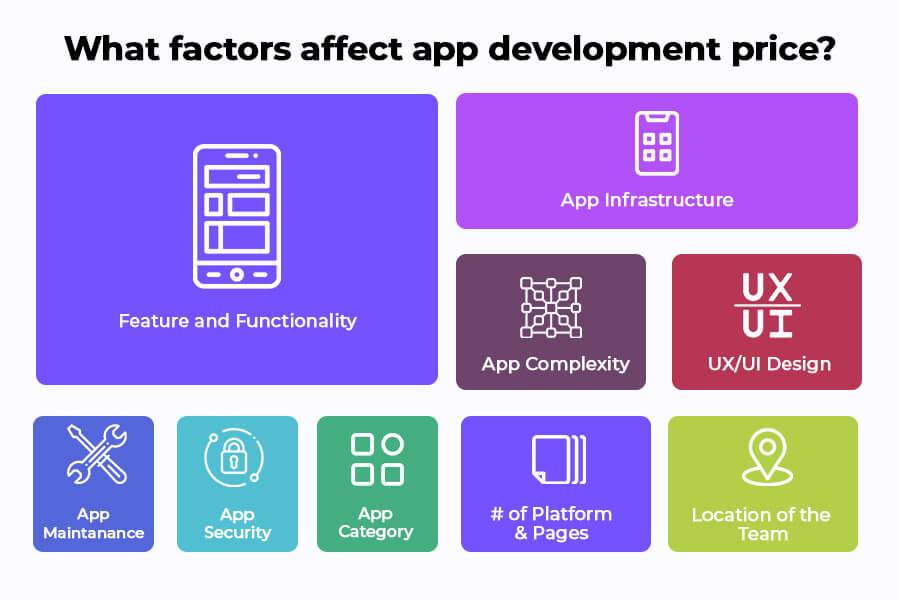
What Are You Looking for Your App to Do?
Apps come in a great variety, from games to utility apps like banking or shopping lists to business apps like fleet management or time sheets.
“Continue reading the top 10 mobile game development companies in 2023 if you are required to get started with a gaming application for your business. “
People who only want a game on their phone will have different needs than companies that need an app. This affects both the cost and the amount of time required for app development.
For instance, if you’re a major firm, you should prepare to spend upwards of $1M on your mobile app.
This is because the expenses pile up quite rapidly once you’ve connected the app to your company’s operations and multiple record-keeping systems, established or migrated user accounts, developed APIs, and built the app itself.
Complexity
The amount of development hours and accompanying costs will increase as your needs get more complex. For instance:
- Will your app be able to link to external systems?
- If your software is intended for a global audience, you need to take into consideration languages other than English.
- Should the app be available both online and off? Is an ongoing internet connection necessary for the program to work properly?
Quality Control for an App
Your app should function properly and look excellent. Experienced testing on many platforms and gadgets is necessary for this. The process of creating a mobile app includes testing, which is both essential and sometimes disregarded.
We like assisting mobile app developers in launching their applications swiftly. Our expert teams, both native and cross-platform, and our Mobile QA Specialists have a track record of testing your apps on the most widely used gadgets.
There are two different testing methodologies: manual testing and automated testing. Mobile QA experts do testing manually on the mobile device in accordance with predetermined benchmarks.
Software is utilized, and the QA creates code to execute a “test suite” automatically, in automated testing.
Automated testing is commonly used and has several advantages. Although manual testing is still required, automation testing allows for quicker testing of the product and ultimately saves time and money.
Time Required to Build the App
Developers is by far the most expensive part of any mobile app project.
You must know that your budget must be more as the mobile app’s complexity, length of development, and number of features increase.
The most expensive apps are those that professional app developers who specialize in only one or two fields, like design, engineering, or marketing, spend years developing.
As a side note, Uber has raised $25.2 billion to date, so no, they didn’t spend $1.6 million to create the Uber app you see today.
You might not need millions to get started, but eventually, you’re going to need to pay developers a lot of money. Think about where that money might come from; will you already be making money by then, or will you need to raise money or ask the CFO for funding?
The cost of developing a mobile app will increase by hundreds of dollars per hour if it includes any complicated features like push notifications, offline mode, or augmented reality. These features may also call for more senior & lead developers or specialized skills.
What Are Your Budget Constraints?
When people ask us how much a mobile app costs, we like to reply that the cheapest one we’ve ever developed was $30K (11 years ago, and it was terrible, cheap software), and the most costly one so far was well over $3M (it was for a big business customer, and they squandered a lot of money).
The more you put into the creation of your software, the greater return you’ll see. In general, higher quality and more functionality or scalability will correspond to your budget.
A seasoned developer like DianApps who has been listed in the MobileAppDaily lists in the USA, has seen it all and can provide you with prompt advice on ways to save costs and where to allocate your cash most efficiently.
Average Cost of App Development in Australia
Austrain adores their smartphones and takes great pleasure in utilizing a variety of mobile applications. They most frequently download web-based, hybrid, or native apps.
It is vital to assess the sort of app you want to design in order to establish how much it will cost you. Since we’ve been creating and developing applications for more than ten years, we can typically divide them into three groups based on their size:
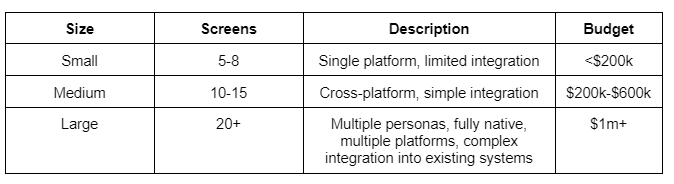
The cost of developing an app will mostly depend on the kind of app you want to create. Cost also affects the variables like the number of views, the intricacy of the features, the number of platforms, and the particular features that your app requires.
For instance, it will cost substantially more to design a gaming app to download and use it by more than 100,000 people each month on any device than it costs to produce an app with fewer features for only a few devices.
The kind of platforms you are creating your app for has a big impact on how much it costs.
Because it is written specifically for one platform and do not require the additional labor of design, development, and QA on many platforms, apps built natively for a single platform tend to be a little bit more affordable.
Apps’ estimated prices for iOS and Android
Business owners now cannot function without mobile apps. Using both Android and iOS applications will improve the number of conversations and purchases.
So how much does it cost to develop an app? According to some experts, in general, the development of iOS apps is quicker and less expensive than that of Android apps.
DianApps: Mobile App Development Company in Australia 2023
Finally, the time has come to spotlight choosing the best app development services in Australia. For all of your application needs, DianApps provides specialized resources. We assist you in creating apps that function flawlessly on all platforms, including iPhone, iPad, Android, and web apps as well as Flutter and React Native app development services, all at affordable prices.
With our custom mobile app development services, you may increase your business’s exposure, increase its return on investment, and attract more customers while also considerably increasing the value of your products and services.
Our approach to developing apps is straightforward, fun, and future-focused.
Why do our clients trust us?
Over 1,000 entrepreneurs and businesses have received help from DianApps in altering their physical environments through technology. Our mobile app developers are aware of the requirements for delivering secure, interesting solutions. Because of the skills and knowledge we have developed over the years, we are the top mobile app development firm in Canada, the United States, and India.
You may rely on us for:
- Superior Security Promise
- Improved Scalability
- Inclusion of technology
- Customer Contentment
What then do you have in a restaurant delivery service? How about a car wash service? Whatever business you work in, we can design your app. Our business solutions include:
- Travel & transport
- Education
- Healthcare
- E-commerce
- Social media
- Sports
- Food
- On-demand
- Health & Fitness
- FinTech
- & the domain you serve as well.
Understand Our Portfolio
As a result of our work with several outstanding brands, we have earned the respect of leading sector marketers in Australia and other nations. We have created products that have flourished at the confluence of company objectives and customer demands, from award-winning Android and iOS app development services to sleek and smooth website app development.
As a leading mobile app development company in Australia, we are sure that we can help you grow your company and get the respect your platform deserves.
Call us right away! Let’s help you create your next app project at the most affordable rates and a smooth experience altogether.
 0 comments











Leave a Comment
Your email address will not be published. Required fields are marked *