















 0 comments
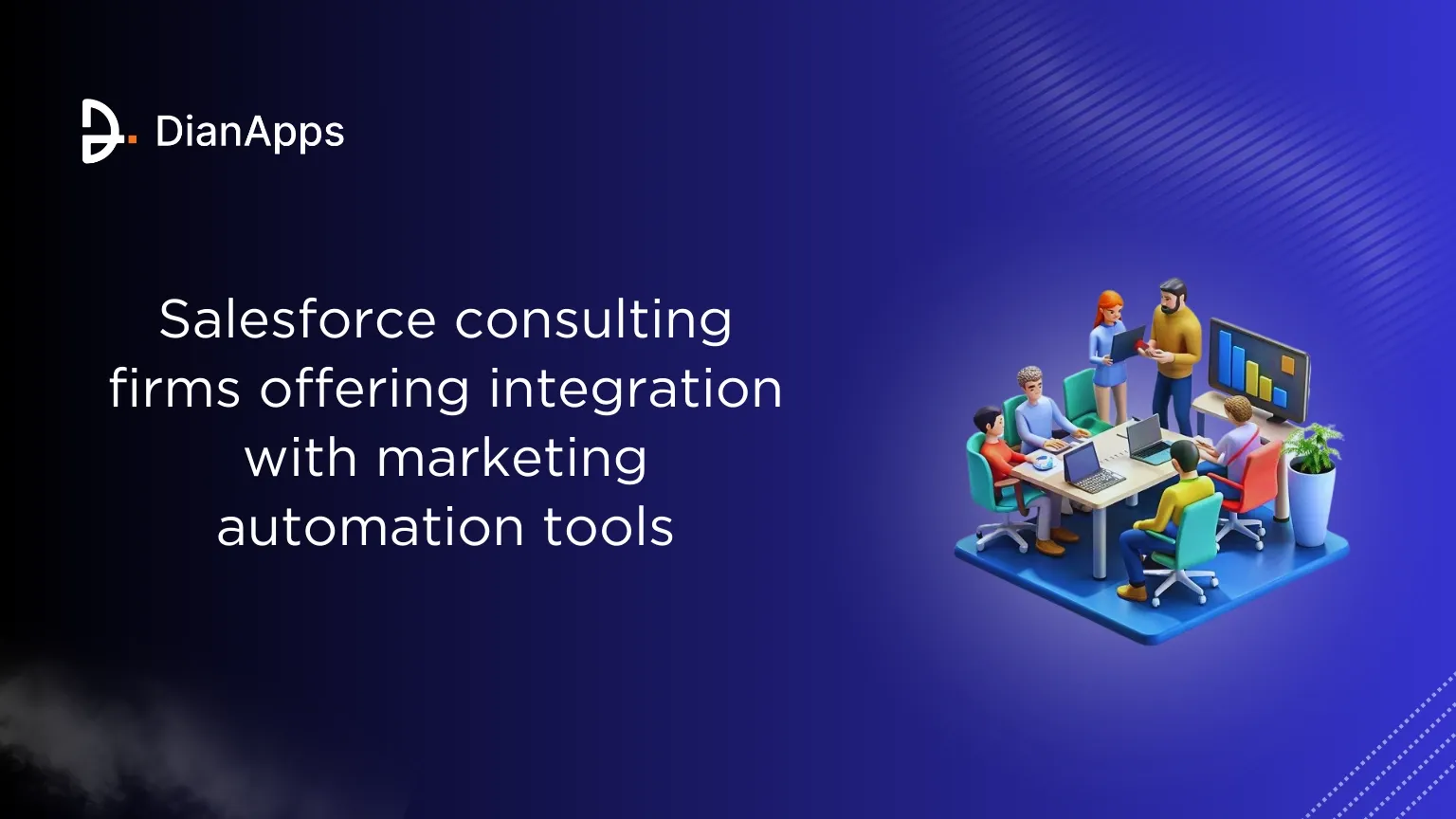





Quick Summary:Salesforce consulting firms play a critical role in integrating marketing automation tools with Salesforce to drive higher conversions, faster sales cycles, and better customer experiences. This blog explains why automation alone isn’t enough execution matters. It covers leading platforms like HubSpot, Marketo, and Pardot, key integration challenges, and how expert consultants solve them. The takeaway: the right Salesforce partner turns disconnected systems into a scalable, revenue-driving growth engine. |
Understand this: Your marketing team spends hours manually uploading leads from your email campaigns into Salesforce. Your sales team complains they’re getting cold leads because the handoff timing is all wrong. And somewhere in the chaos, valuable customer data is falling through the cracks.
Sound familiar? You’re not alone.
Here’s a number that should grab your attention: companies using marketing automation to nurture prospects experience a 451% increase in qualified leads, according to the Annuitas Group. Even better? According to Nucleus Research for every dollar spent on marketing automation, businesses see an average return of $5.44 over three years that’s a 544% ROI.
But here’s the catch and it’s a big one. Nearly half of CRM projects miss their targets because of poor implementation. The technology itself isn’t the problem; it’s how you connect the pieces together.
That’s exactly where Salesforce consulting company comes in. They’re not just tech installers they’re the architects who design the bridge between your Salesforce CRM and marketing automation platforms like HubSpot, Marketo, or Pardot. They transform disconnected tools into a unified system where your marketing and sales teams actually talk to each other.
In this guide, we’re diving deep into what makes a great Salesforce consulting partner, which marketing automation platforms work best with Salesforce, and how to choose the right firm for your business. Whether you’re a small business taking your first steps into automation or an enterprise looking to optimize a complex system, this is your roadmap.
Let’s start with the basics, but let’s make them interesting.
Marketing automation integration isn’t just about connecting two software platforms. It’s about creating a continuous conversation between your marketing efforts and sales outcomes. Think of it as building a highway where customer data flows freely in both directions from initial website visit all the way through to closed deal and beyond.
When we talk about Salesforce marketing automation integration, we’re really talking about synchronizing three critical elements:
- Customer Data Flow: Every interaction a prospect has with your brand website visits, email opens, content downloads, social media engagement gets captured and automatically fed into Salesforce. Your sales team sees the complete story, not just fragments.
- Automated Workflows: When someone downloads your whitepaper at 2 AM, they automatically enter a nurture sequence. When they hit a certain engagement score, a task pops up for your sales rep to make a call. No manual intervention required.
- Unified Analytics: Marketing can finally prove ROI with real revenue numbers instead of vanity metrics. Sales can see which campaigns actually produce buyers, not just leads.
Why This Matters More Than Ever in 2026
The marketing automation market has exploded according to a report given by Grand View Research. We’re talking about a market that hit $6.65 billion in 2024 and is projected to reach $15.58 billion by 2030. That’s not just growth that’s a fundamental shift in how businesses operate.
Here’s what’s driving this transformation: 83% of sales teams using AI reported revenue growth in 2025, compared to just 66% of teams not using AI. Marketing automation powered by AI isn’t science fiction anymore it’s table stakes.
Consider these numbers from recent research:
- 77% of companies report higher conversion rates with marketing automation
- 79% of sales teams increased revenue over the past year using automated systems
- 73% of customers now feel brands treat them as unique individuals, jumping dramatically from just 39% in 2023.
That last statistic is the real breakthrough. Customers expect personalization. They expect you to remember their preferences, anticipate their needs, and engage with them on their terms. You simply cannot do that at scale without automation.
Common Marketing Automation Platforms Integrated with Salesforce
Not all marketing automation platforms are created equal, and choosing the right one for your Salesforce integration can make or break your success. Let’s break down the major players and when each makes sense.
Salesforce Marketing Cloud (Pardot/MCAE)
Since Salesforce owns Pardot (now rebranded as Marketing Cloud Account Engagement), you’d think this would be the obvious choice for everyone using Salesforce. And for many B2B companies, it is.
Best for: B2B companies with complex sales cycles, especially those already deep in the Salesforce ecosystem. If you’re running multiple Salesforce clouds (Sales, Service, Commerce), Pardot’s native integration is hard to beat.
The Reality Check: Pardot has a steeper learning curve than some competitors. Several users report that building responsive landing pages requires HTML/CSS knowledge, and the interface feels dated compared to newer platforms. The reporting capabilities are often described as limited out-of-the-box, with many teams needing to export data or purchase additional Salesforce analytics add-ons to get insights.
HubSpot
HubSpot has built its reputation on being the platform that marketing teams can actually use without a computer science degree. It’s an all-in-one system covering marketing, sales, service, and CRM.
Best for: Growing businesses that want an intuitive interface and teams without dedicated marketing operations specialists. HubSpot shines for companies doing content marketing, social media, and inbound strategies.
The Integration Story: While HubSpot integrates well with Salesforce through bi-directional syncing at both lead and user levels, there’s a subtle catch. You’re essentially maintaining two databases that need to stay in sync. Data naming differences can create headaches if the setup isn’t meticulous, and HubSpot has list transfer limits to CRMs that can be problematic for larger datasets.
That said, many companies find HubSpot’s native blog functionality, drag-and-drop editors, and extensive free training through HubSpot Academy worth the trade-offs. One marketing leader switching from Pardot noted: “A campaign that used to take four different team members and six web-based tools can be done by one person with HubSpot.”
Marketo
Now owned by Adobe, Marketo is the choice for companies that need sophisticated automation at scale. It’s powerful, flexible, and capable of handling extremely complex workflows.
Best for: Mid-market to enterprise companies with dedicated marketing operations teams who need advanced segmentation, complex nurture programs, and deep customization.
The Trade-offs: Marketo’s power comes with complexity. Users consistently describe it as difficult to navigate, with countless clicks required for basic functions. It typically requires dedicated admin resources to manage effectively. Companies implementing Marketo alongside Salesforce report that routine tasks like building emails or landing pages often require more technical skill than expected.
However, for companies that can harness its power, the results speak for themselves. Research from Markets and Markets shows organizations effectively implementing Marketo’s lead scoring see a 28% increase in sales productivity and a 33% reduction in cost per lead.
The Others Worth Knowing
- Eloqua (now Oracle Marketing Cloud): Best for large enterprises needing sophisticated B2B automation, though it’s expensive and not particularly user-friendly.
- ActiveCampaign: Popular among small to mid-sized businesses for its affordability and strong email marketing features.
- Mailchimp: Great for small businesses just starting with automation, though most companies outgrow it as their needs become more complex.
Recommended Read: How to Grow Your Business Rapidly Using Salesforce Marketing Cloud?
Top Benefits of Working with Salesforce Consulting Firms for Marketing Automation
You must have definitely heard: Why can’t you just do this yourself?
You absolutely can attempt a DIY integration. Some companies succeed. But statistics show that 47% of CRM projects miss their targets, and poor implementations are the primary culprit. Here’s why bringing in experts changes the game:
They’ve Seen Your Problems Before (And Solved Them)
When you’re implementing marketing automation integration for the first time, everything feels like uncharted territory. For experienced Salesforce consulting firms? It’s a usual practice just like an another day.
They know that your “unique” data structure issue has actually been solved seventeen times this year. They understand that the disconnect between your sales and marketing teams isn’t just about technology it’s about process and culture. They’ve navigated the politics of getting executives to approve budgets and end-users to actually adopt new systems.
Speed and Efficiency That Actually Matters
A DIY Salesforce and marketing automation integration typically takes 3-6 months. Professional consulting firms? They can often complete the same project in 6-12 weeks.
That time savings isn’t just about getting started faster. It’s about reaching ROI sooner. Remember that 544% ROI figure? The average payback period for marketing automation is under six months but only if your implementation actually works. Every month of delay or troubleshooting costs you real revenue.
Risk Mitigation Is Worth Its Weight in Gold
Implementation failures don’t just waste time they’re expensive disasters that can set your business back years. When a project fails, you’ve not only lost the consulting and software costs, but you’ve also damaged team morale, wasted months of productivity, and potentially lost customers who fell through the cracks during the transition.
Consulting firms bring proven methodologies, change management expertise, and insurance against costly mistakes. They know how to migrate data without losing critical information. They understand how to set up workflows that won’t break when you scale. They’ve learned from others’ mistakes so you don’t have to make them yourself.
Deep Technical Expertise You Don’t Have In-House
Unless you’re a large enterprise, you probably don’t have (and don’t want to maintain) specialized expertise in Salesforce development, API integrations, data architecture, and multiple marketing automation platforms.
Good consulting firms bring certified developers, administrators, and architects who live and breathe this stuff. They stay current with the latest releases, know the limitations and workarounds, and can build custom solutions when the out-of-the-box functionality falls short.
The Real ROI Numbers
Let’s get specific about what professional implementation delivers:
- 14.5% increase in sales productivity
- 12.2% reduction in marketing overhead
- 80% more leads generated
- 77% higher conversion rates
These aren’t hypothetical benefits they’re measured outcomes from companies that got their implementations right.
Recommended Read: How Salesforce Consulting Services Help You Solve Critical Business Challenges?
How to Choose the Right Salesforce Consulting Firm: Complete Selection Guide
This is where theory meets reality. You’re convinced you need help, but how do you choose the right partner? The market is flooded with options, from massive global consultancies to boutique agencies. Here are some factors that can help you make decisions.
Define Your Requirements First (Or You’ll Regret It)
Before you talk to a single consulting firm, get crystal clear on what you’re actually trying to accomplish. Too many companies jump into vendor selection with vague goals like “improve marketing efficiency” or “better integration.”
Instead, document specific, measurable objectives:
- Reduce lead response time from 48 hours to 2 hours
- Increase marketing qualified leads by 40% in the first year
- Unify customer data from 5 current systems into a single source of truth
- Enable automated lead scoring that routes high-value prospects to senior sales reps
Also, identify your constraints upfront:
- Budget range (be realistic, good consulting isn’t cheap)
- Timeline (when do you absolutely need to be operational?)
- Internal resources (who on your team will be involved?)
- Technical complexity (how customized is your current Salesforce instance?)
Certifications and Partner Status: The Non-Negotiables
Salesforce maintains a rigorous partner program with different tiers: Summit (Global Strategic), Platinum, Gold, and Registered. These tiers aren’t just marketing; they indicate real differences in capability, investment, and Salesforce’s confidence in the partner.
What to verify:
- Partner tier status (viewable on Salesforce AppExchange)
- Number of certified consultants on staff
- Specific certifications relevant to your needs (Marketing Cloud Consultant, Administrator, Developer, Technical Architect)
- Years as a Salesforce partner (longevity suggests stability)
Higher-tier partners often get early access to new features like Agentforce and Einstein AI, which can be essential if you want to leverage modern capabilities.
Industry Expertise: More Important Than You Think
A consulting firm that has implemented Salesforce and marketing automation for 50 companies in 50 different industries has broad experience. A firm that has done 50 implementations in healthcare has deep expertise.
For regulated industries (healthcare, financial services, insurance), deep industry expertise isn’t just helpful, it’s essential. These firms understand:
- Compliance requirements (HIPAA, FINRA, GDPR, CCPA)
- Industry-specific workflows and sales cycles
- Common integrations with industry platforms
- Regulatory reporting requirements
Ask for case studies in your specific vertical. If a firm can’t show you examples of companies like yours succeeding with their help, that’s a red flag.
Integration Track Record and Technical Capabilities
Not all Salesforce consultants are equally skilled at integrations. Some focus primarily on Sales Cloud configuration and customization but have limited experience with complex marketing automation integrations.
Questions to ask:
- How many marketing automation integrations have you completed in the last 12 months?
- Which platforms do you have the most experience with? (Should match your choice)
- Can you show examples of complex data mapping you’ve solved?
- How do you handle API rate limits and optimization?
- What’s your approach to data quality and deduplication?
- Do you have experience with MuleSoft or other middleware platforms if needed?
Cultural Fit and Communication Style
This gets overlooked, but it matters enormously. You’ll be working closely with this team for months, possibly years if you engage them for ongoing support.
Red flags to watch for:
- They’re talking at you, not with you
- They’re pushing a specific solution before understanding your needs
- They can’t explain technical concepts in plain language
- They’re dismissive of your internal team’s capabilities or concerns
Green flags that suggest a good fit:
- They ask thoughtful questions about your business goals, not just technical requirements
- They’re honest about what they can and can’t do
- They explain trade-offs clearly when multiple approaches are possible
- They show genuine interest in your success, not just completing the project
Pricing Models and Value
Consulting firms typically use three pricing models:
- Fixed Price: You pay a set amount for defined deliverables. Best for well-scoped projects with clear requirements. Risk: Change orders can get expensive if your needs evolve.
- Time and Materials: You pay hourly rates for the time spent. Best for exploratory projects or when requirements are uncertain. Risk: Costs can spiral without clear controls.
- Retainer: Monthly fee for ongoing services. Best for long-term partnerships with continuous optimization needs. Risk: You may pay for unused capacity in slower months.
Pricing red flags:
- Quotes that seem too good to be true (they are)
- Vague scope documents that leave room for “extras.”
- No clear breakdown of what’s included
- Resistance to providing client references
Smart budget approach:
- Get detailed proposals from 3-5 qualified firms
- Compare total cost of ownership (implementation + training + first-year support)
- Factor in the opportunity cost of delays or failures
- Remember: cheap consulting often becomes expensive when projects fail
Post-Implementation Support Model
The project doesn’t end at go-live. In fact, the first 30 days after launch (often called “hypercare”) are critical. Bugs will emerge. Users will have questions. Processes will need tweaking.
Essential questions:
- What does your post-go-live support include?
- What are your SLA terms and response times?
- Do you offer ongoing managed services?
- How do you handle user training and knowledge transfer?
- What happens if we want to add features or make changes after launch?
Recommended Read: Build and Manage Amazing Experiences With Salesforce Marketing Cloud
Common Integration Challenges and How Consulting Firms Solve Them
Let’s get real about what can go wrong and how experienced firms prevent these issues with the right set of experience in developing an amazing platform:
Data Mapping and Synchronization Nightmares
The Problem: Salesforce calls it an “Opportunity.” Your marketing automation platform calls it a “Deal.” Your ERP system calls it a “Sales Order.” Same concept, different names, different data structures.
How Consultants Solve It: Experienced data architects create comprehensive mapping documents that define exactly how data flows between systems. They identify the authoritative source for each data element, establish sync rules, and build validation to catch errors before they propagate.
They also know the tricks like using middleware to transform data formats in real-time or creating temporary staging objects to handle complex transformations.
The API Rate Limit Trap
The Problem: Both Salesforce and marketing automation platforms have limits on API calls. Exceed them, and your integration grinds to a halt. This often happens when companies sync too frequently or haven’t optimized their workflows.
How Consultants Solve It: They design efficient call patterns, implement caching strategies, and use bulk APIs where possible. They monitor API usage proactively and set up alerts before you hit limits. They also know which operations can be batched and which need real-time sync.
Data Quality: Garbage In, Garbage Out
The Problem: You can have the most sophisticated integration in the world, but if your data is full of duplicates, missing information, and inconsistent formatting, automation will just spread the mess faster.
How Consultants Solve It: They start with data cleansing before implementation. They establish validation rules and required fields. They implement deduplication strategies and ongoing data governance frameworks. Many consulting firms have developed proprietary tools or processes for data quality management.
User Adoption: The Hidden Killer
The Problem: This is the big one. Research shows that 73% of CRM failures are due to low user adoption. You can have perfect technical implementation, but if your team doesn’t actually use the system, it’s worthless.
How Consultants Solve It: The best consulting firms treat user adoption as a core deliverable, not an afterthought. They conduct stakeholder workshops to understand workflows. They involve end users in design decisions. They provide role-specific training, not generic demos. They create champions within your organization who can support peers.
They also focus on quick wins, implementing features that provide immediate, obvious value to users so they see the benefit early.
Security and Compliance Complexity
The Problem: Integrating systems creates new security risks. Data flowing between platforms needs to be encrypted. Access needs to be controlled. Audit trails need to be maintained. And if you’re in a regulated industry, compliance requirements add another layer of complexity.
How Consultants Solve It: They build security protocols into the architecture from day one. They implement proper authentication and authorization. They ensure data residency requirements are met. They document everything for compliance audits.
For regulated industries, they know exactly which fields contain PHI, PII, or other sensitive data and ensure appropriate controls are in place.
Final Words
Here’s the straight talk: marketing automation integrated with Salesforce isn’t a “nice-to-have” in 2026; it has become a compulsion. Companies doing this right are closing faster, converting better, and engaging customers with precision that manual systems simply can’t match.
But automation only works when it’s executed with intent. Poor implementations burn budgets. Smart ones create outsized ROI. That gap is massive.
This is where the right consulting partner and Salesforce Service Cloud Services make the difference. Start with strategy, not tools. Obsess over business outcomes before architecture. Prioritize expertise over cost, because shortcuts show up later as revenue leaks.
Most importantly, treat adoption as mission-critical. If teams don’t use the system, nothing else matters.
Automation is no longer the advantage, but execution is. Ensure to get it right if you want to stay ahead of the market.
Frequently Asked Questions
 0 comments








Leave a Comment
Your email address will not be published. Required fields are marked *