

Quick Summary:
|
Meta’s Superintelligence Labs (MSL) built its first AI model, Muse Spark, also known internally as “Avocado”. The AI model tech world has been waiting for almost a year was dropped on April 8, 2026, by Meta CEO Mark Zuckerberg and his team. Along with Muse Spark, they have also launched a completely revamped version of the Meta AI assistant.
This isn't just another incremental AI update. Muse Spark marks a turning point for Meta in the AI race, one that comes after a very public stumble with Llama 4, months of silence, a massive change in leadership strategies, and a rebuild of the entire AI infrastructure from scratch.
The result?
A model that Meta says is their most capable yet, and one that has the potential to reach more people than any other AI model on the planet.
In this blog, we're breaking down everything you need to know about Meta Muse Spark, what it is, what's new, how it performs, and why it actually matters.
What Is Meta Muse Spark?
Muse Spark is the first model in Meta's new Muse family of large language models, developed by Meta Superintelligence Labs (MSL). It's a natively multimodal AI model, meaning it can understand and process both text and images, not as an afterthought, but built into its core.
The model is designed to power the new Meta AI assistant and currently runs at meta.ai and the Meta AI app. It handles everything from quick everyday questions to complex, multi-step reasoning tasks across science, math, health, shopping, and more.
Think of it as Meta's answer to GPT and Gemini, but with one major difference: it's baked directly into apps that over 3.5 billion people already use every single day.
Meta Superintelligence Labs, overseen by Alexandr Wang, says, "Today, we are sharing our first milestone: Muse, our new family of models. Spark, the first model in the Muse family, powers a new version of Meta AI that you can try today." |
The Comeback Story: Why Meta Launched a New AI Model
To understand why Muse Spark matters, you need to know what happened before it.
Back in April 2025, Meta launched Llama 4, and it did not go well. Benchmarks were questioned, developers largely ignored them, and the final result was to declare it a failure. It was a rough moment for a company that had already poured tens of billions into AI. Due to this situation, Zuckerberg didn't just rely on a changing broken strategy; he scrapped the AI tool entirely.
He then made one of the most expensive hires in tech history. Meta acquired a 49% stake in Scale AI for $14.3 billion and brought in Scale AI's co-founder, Alexander Wang, who had built the company from scratch at just 19 years old, as Meta's new Chief AI Officer to lead the newly formed Meta Superintelligence Labs.
Over the next nine months, the team rebuilt Meta's entire AI stack from the ground up, new training methods, new infrastructure, and new models. Meta says this was their fastest AI development cycle ever. And Muse Spark is the first thing to come out of it.
It's a classic comeback story, and whether it pays off is now up to the model to prove.
What's New in Meta AI: Key Features Breakdown
Muse Spark doesn't just upgrade Meta AI; it has completely transformed what it can do. From parallel multi-agent reasoning to real-time visual understanding, here's a detailed look at every major feature that came with this release.
Instant Mode
Instant Mode is designed for speed. Whether you're asking for a quick recipe, a weather update, a translation, or a simple recommendation, this mode gives you a crisp, accurate answer without any unnecessary delay.
It's the everyday driver of Meta AI. Most casual conversations and quick lookups will run through Instant Mode by default, making the experience feel snappy and natural rather than like you're waiting on a machine to think.
Thinking Mode
When your question is genuinely complex, think of detailed medical queries, multi-step math problems, or research-heavy topics. Thinking Mode steps in. It takes a bit longer, but the depth and quality of the response is significantly better.
Meta built this mode to serve users who actually need AI to reason through a problem, not just pattern-match an answer. It's particularly strong in science, health, and analytical tasks where getting the right answer matters more than getting a fast one.
Contemplating Mode: Multi-Agent Thinking
Source: Meta
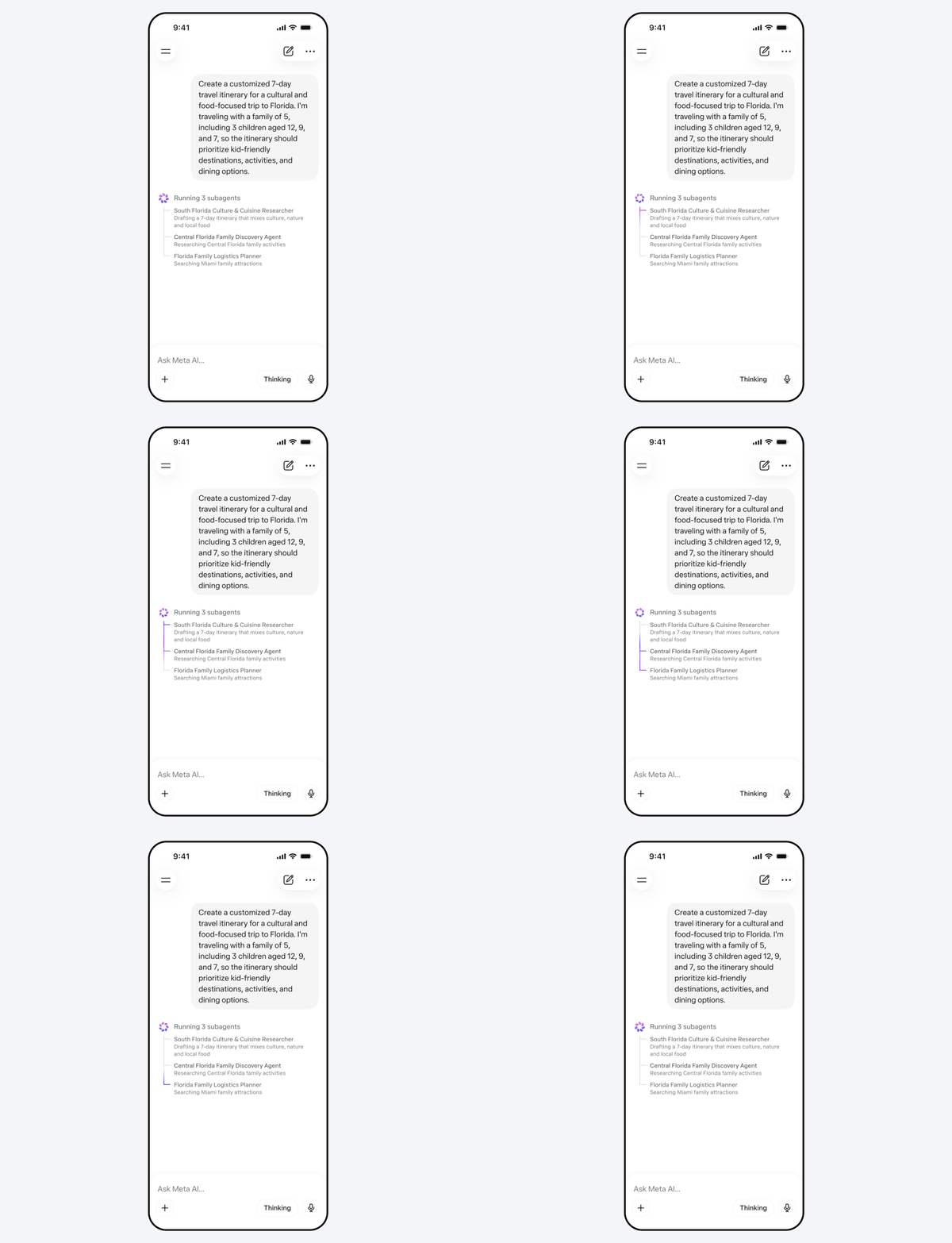
This is arguably the most exciting feature in the entire update. Contemplating Mode doesn't just make Meta AI think harder, it makes it think wider. Instead of processing your query sequentially, it spins up multiple AI sub-agents that all work in parallel at the same time.
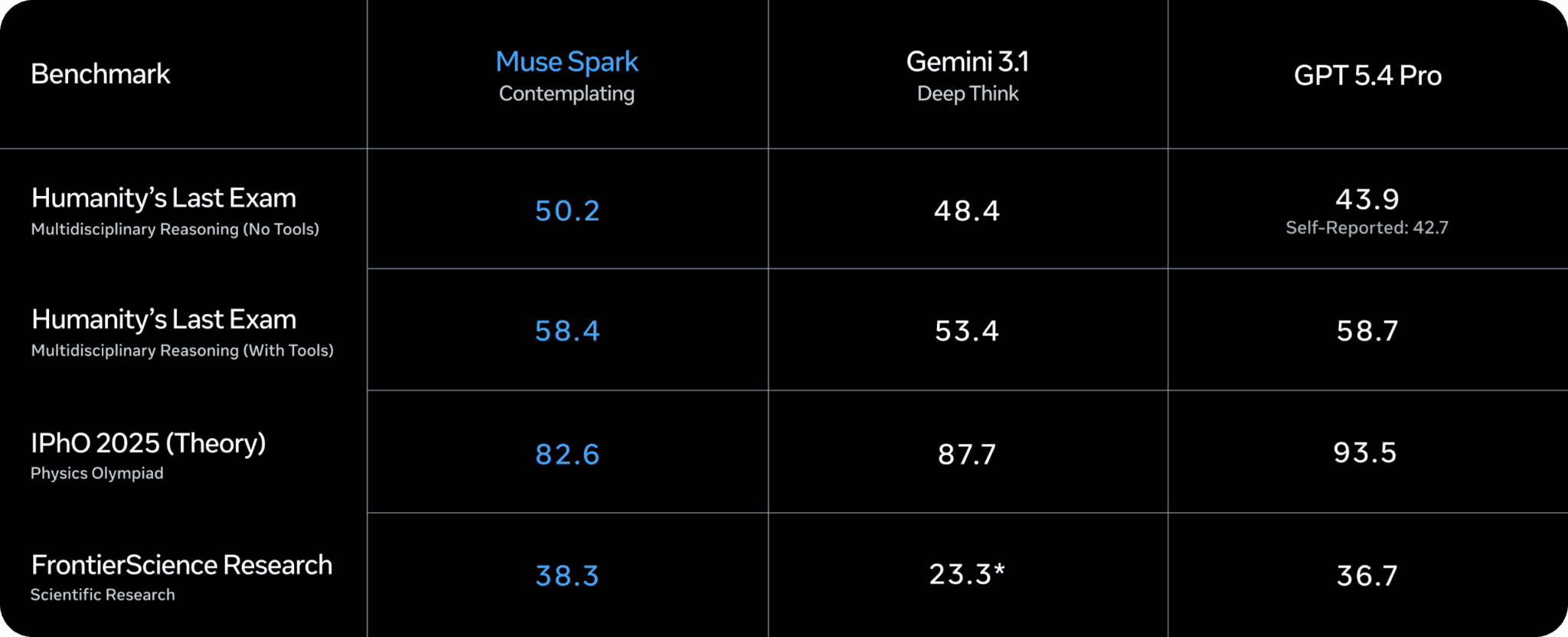
Each agent handles a different piece of your question simultaneously, and the results are then combined into one complete, well-rounded answer without adding extra wait time. It scored an impressive 58% on Humanity's Last Exam and 38% on FrontierScience, putting it directly in the same conversation as GPT Pro and Gemini Deep Think.
Multimodal Vision
Muse Spark is built to see the world with you not just read what you type into it. You can snap a photo of anything, and Meta AI will analyse, identify, and respond to what's actually in the image, making interactions far more natural and intuitive.
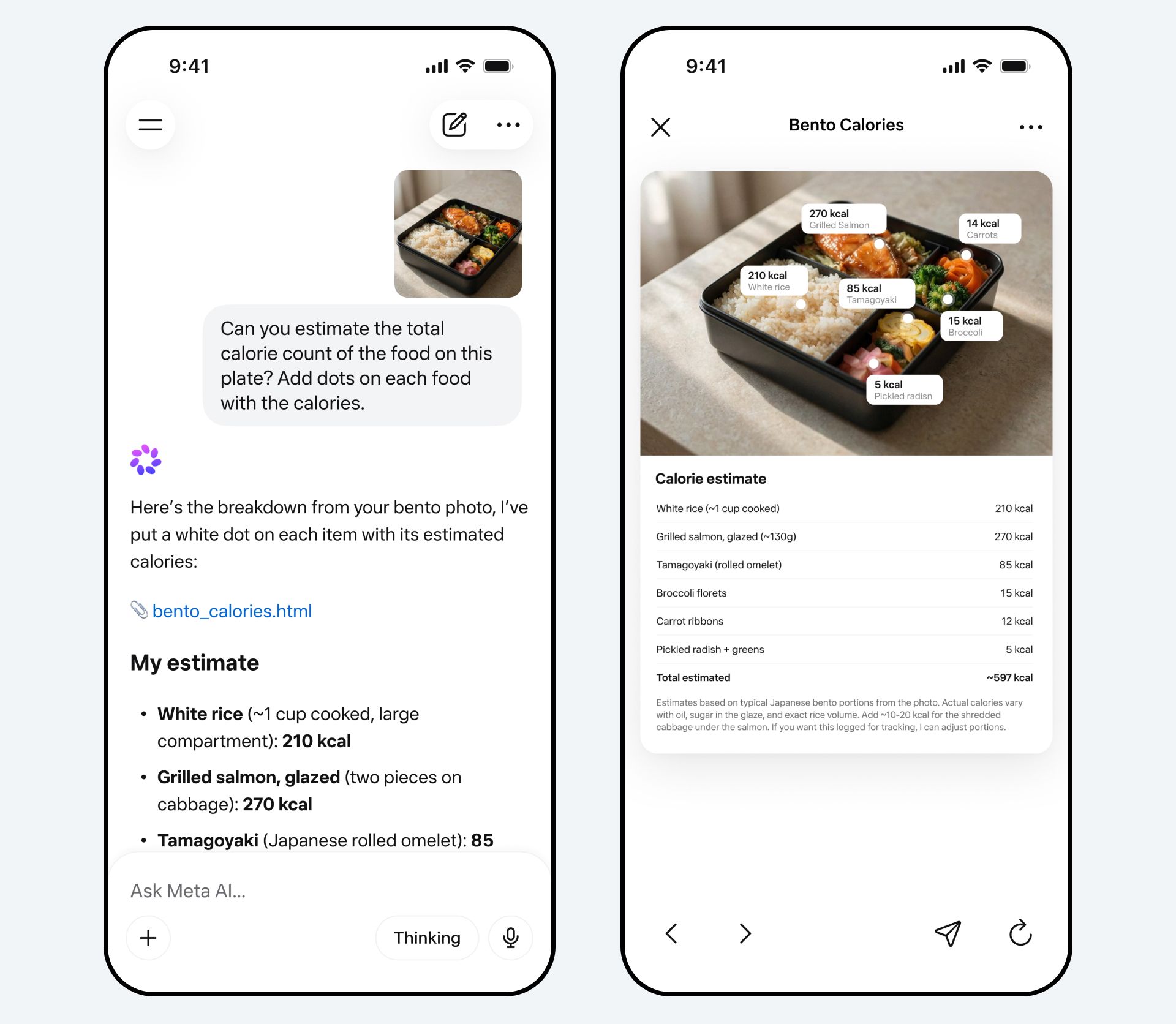
Practical examples? Point your camera at a snack shelf and get a protein ranking. Scan a product and ask how it compares to alternatives. When Muse Spark rolls out to Ray-Ban Meta smart glasses, this capability becomes even more powerful the AI will literally see what you're looking at in real time and respond accordingly.
Shopping Mode
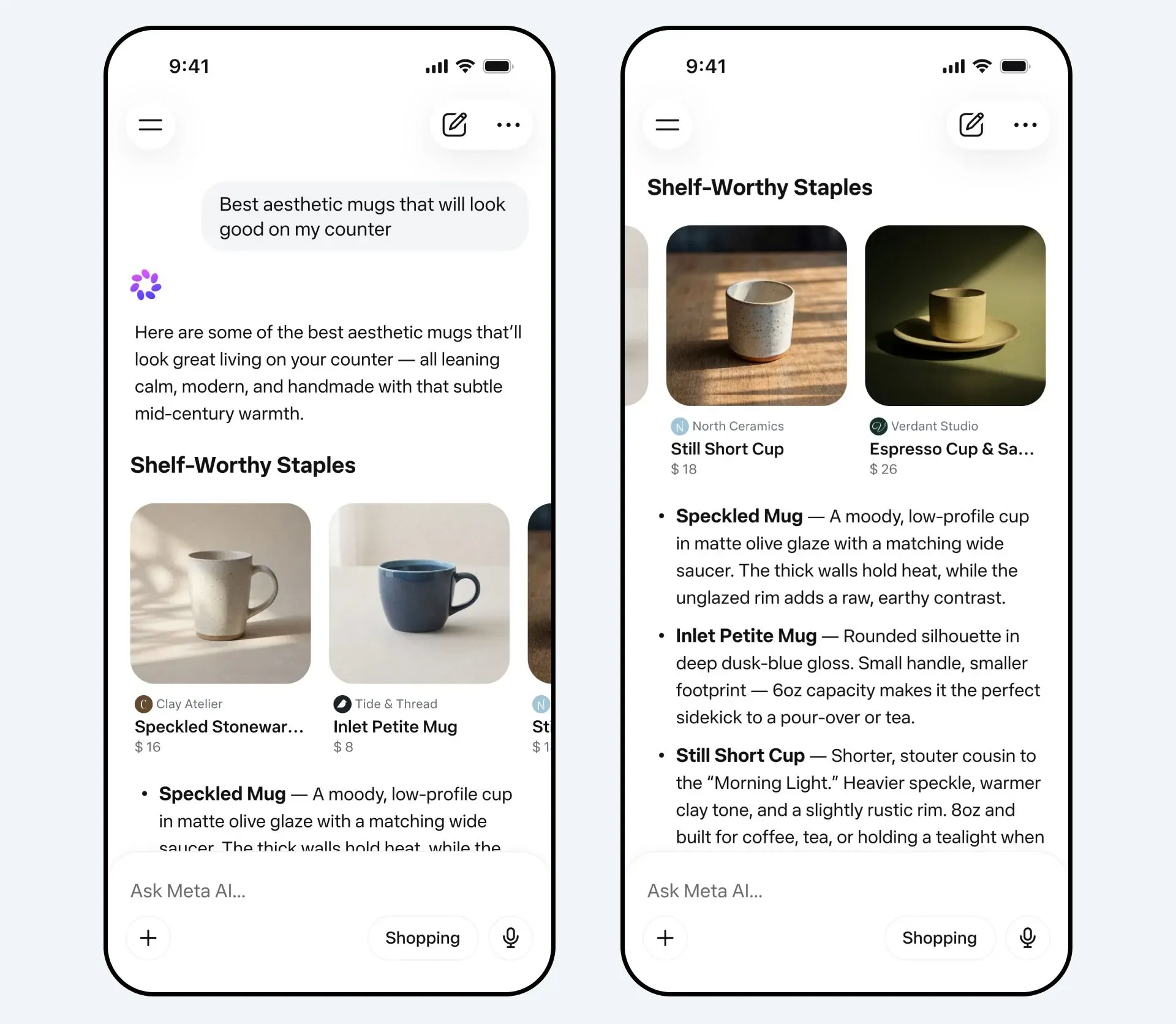
Shopping Mode turns Meta AI into a genuinely useful personal stylist and product discovery tool. It doesn't just pull generic results from the internet, it draws from the styling content, brand stories, and product recommendations that creators and brands are already sharing across Instagram and Facebook.
So when you ask for outfit inspiration or a gift idea, the suggestions are actually relevant to the aesthetics and brands you already engage with. It's contextual, personalised shopping assistance and it's something only Meta can pull off given the scale of its content ecosystem.
Health Assistance
Health is one of the top reasons people turn to AI and Meta has taken that seriously with Muse Spark. The health assistance feature was developed in collaboration with a team of real physicians, which gives it a level of credibility and accuracy that most AI chatbots simply don't have.
Beyond answering general health questions, Meta AI can now analyse images and charts relevant to health topics, meaning you can photograph a nutrition label, a rash, or a medical document and get a detailed, informed response. It won't replace a doctor, but it's a meaningful step toward making reliable health information more accessible to everyone.
Social Context Search
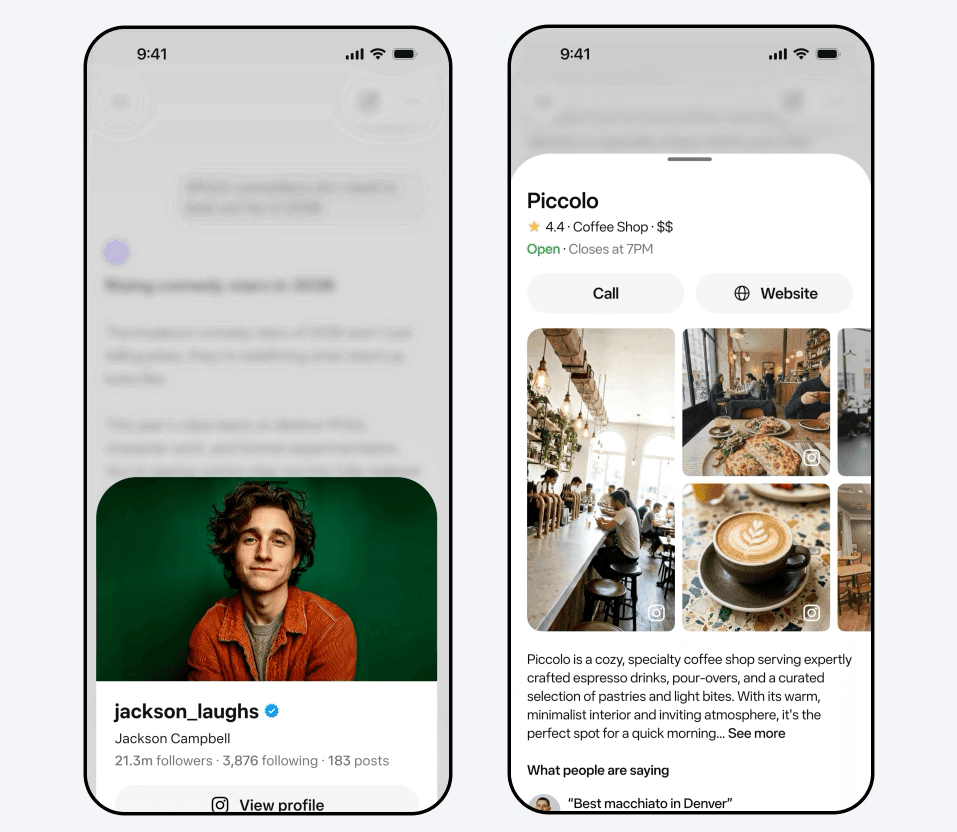
This is where Meta's unique data advantage becomes impossible to ignore. When you search a location, a trending topic, or ask what people are saying about something, Meta AI doesn't just give you generic web results it surfaces real public posts from people on Instagram, Facebook, and Threads who've actually been there or talked about it.
Looking for the best hidden coffee spot in a new city? Meta AI can show you what locals are actually recommending right now, not just a static list from a review site. It's the difference between getting information from an algorithm and getting it from real people and it makes the search experience feel genuinely social.
Visual Coding
You don't need to know how to code to build something with Muse Spark. Visual Coding lets you describe what you want: a dashboard, a mini-game, a personalised tool, and Meta AI builds it for you directly from your prompt.
Want a party planning dashboard for a surprise event? Ask for it. Want to spin up a retro arcade game to share with friends? Done. It's a powerful creative feature that puts lightweight app-building in the hands of anyone, not just developers, and it's a clear signal that Meta sees Muse Spark as far more than just a chatbot.
Where Can You Use Muse Spark Right Now?
Muse Spark is already live. Here's the current availability breakdown:
- Meta AI App
- meta.ai (US)
- Messenger
- Ray-Ban Glasses
- API (Private Preview)
The green dots are live right now. The amber ones are rolling out over the coming weeks, starting in the US before expanding internationally. Meta has also opened a private API preview for select developer partners, with open-source versions of future models also planned down the line.
Why Meta's Distribution Is Its Biggest Weapon?
Here's the thing that makes Muse Spark genuinely different from any other AI model launched this year it's not just about the benchmarks or the architecture. It's about where it lives.
- 3.5B Users across Meta platforms
- 9mo Rebuild from scratch
- $14.3B Scale AI stake to hire Alexander Wang
- 58% Score on Humanity's Last Exam
No AI lab on earth not OpenAI, not Google, not Anthropic has distribution anywhere close to what Meta has. WhatsApp, Instagram, Facebook, and Messenger are already inside the daily habits of billions of people worldwide. Meta doesn't need to convince anyone to download a new app. They just ship the model to where people already are.
And with Muse Spark coming to Ray-Ban Meta smart glasses, the model will literally see the world with you understanding what's in front of you in real time. That's a level of ambient AI integration that no competitor currently has at scale.
Meta Muse Spark vs GPT-5.4 vs Claude Opus 4.6: Key Differences Explained
So how does Muse Spark actually stack up against the current top models? Here's a straightforward comparison:
Feature | Meta Muse Spark | GPT-5.4 (OpenAI) | Claude Opus 4.6 (Anthropic) |
Multimodal (Vision) | Yes core features | Yes | Yes |
Multi-agent reasoning | Yes contemplating model | Yes (via tools) | Yes (extended thinking) |
Humanity's Last Exam | 58% | Competitive | Competitive |
Coding Strength | Improving -still behind | Very string | Very strong |
Platform Distribution | 3.5B users unmatched | ChatGPT + API | Claude.ai + API |
Social context integration | Yes: Instagram, FB, Threads | No | No |
Smart glasses integration | Yes: Ray-Ban Meta | No | No |
Free to use | Yes | Freemium | Freemium |
The honest take: Muse Spark isn't beating GPT or Claude in coding benchmarks just yet. But in terms of real-world accessibility, social integration, and sheer reach, it's operating in a completely different league.
What Do DianApps Think of Meta Muse Spark?
As a growing AI/ML development company, we see Muse Spark as a serious comeback and a clear sign that Meta means business in the AI race. Here's our take:
- Rebuilding an entire AI stack in 9 months and shipping a competitive model is no small feat. Meta has shown it can move fast when the stakes are high.
- Contemplating Mode's multi-agent architecture is the feature we find most relevant; it mirrors how complex, real-world problem-solving actually works, and that's valuable beyond just benchmarks.
- The multimodal vision and health assistance features raise the bar for what intelligent, context-aware products should look like, something we actively apply in our own client solutions.
- For businesses on Meta's platforms, the API preview is the real opportunity. Smarter WhatsApp bots, AI-driven Instagram experiences, and personalised Messenger flows are now within much closer reach.
- Muse Spark confirms what we've always believed: the most impactful AI isn't the flashiest model, it's the one that solves real problems for real people at scale.
Final Words
Meta Muse Spark is the first real proof that Meta's bet on a ground-up AI rebuild has paid off at least as a starting point. It's fast, multimodal, deeply integrated into platforms people use every day, and backed by a distribution engine that no AI company can match. The Muse model family is only just beginning, and Meta has already confirmed that larger, more capable models are in development.
Whether you're a casual user, a developer, or a business looking to understand where AI is heading, Muse Spark is worth paying attention to. You can try it right now at meta.ai or through the Meta AI app.
The future of AI isn't just about the smartest model. It's about the one that reaches the most people. And on that front, Meta just made a very strong move.



Leave a Comment
Your email address will not be published. Required fields are marked *