


As AI tools become deeply embedded in modern marketing teams, one critical question continues to surface:
How do you scale faster with AI without turning brand communication into something generic, automated, and disconnected?
According to Aleksandra Dejnarowicz, Solution Marketing Manager at BlueSoft and a seasoned B2B and digital marketing leader, the answer is not full automation. Instead, it lies in building a clear AI–human hybrid workflow, where artificial intelligence accelerates execution, while humans remain responsible for strategy, creativity, and judgment.
“AI should reduce friction and speed up decision-making,” Aleksandra explains, “but humans must remain in control of meaning, tone, and direction.”
In this expert round-up, Aleksandra shares how marketing teams can integrate AI thoughtfully without losing brand control, creativity, or strategic clarity.
Q1. How do you define an effective AI–human hybrid workflow in marketing?
An effective AI–human hybrid workflow is built on clear ownership and intentional role division.
In the strongest teams, AI is not added randomly or used as a shortcut. Instead, it is embedded into well-defined processes where humans stay accountable for the outcome.
Most successful hybrid workflows follow three core steps:
Humans define the strategy
This includes business goals, target audiences, brand voice, positioning, and success metrics. AI depends entirely on the quality of this input.
AI supports execution
AI accelerates research, generates drafts, analyzes data, and surfaces optimization opportunities.
Humans review and decide
Teams refine messaging, assess relevance, and make final decisions before anything goes live.
“AI is excellent at producing options and spotting patterns,” Aleksandra notes. “But without human review, those outputs stay surface-level.”
This structure allows teams to move faster while maintaining consistency, quality, and brand integrity.
Q2. Where does AI deliver the most value in marketing workflows today?
AI delivers the strongest impact in areas where speed, scale, and data-driven decision-making are essential. Content and performance optimization are two standout examples.
Q3. How can AI support content creation and SEO without hurting quality?
Content creation is one of the clearest areas where AI adds value when used correctly.
For many teams, producing high-quality blogs, landing pages, and newsletters consistently is a challenge. Traditional workflows often involve long research phases and SEO optimization happening only at the end.
In one of Aleksandra’s B2B marketing projects, AI was introduced at the very beginning of the content workflow.
AI supported:
- Topic validation and keyword research
- Outline creation
- Initial draft generation
Meanwhile, Aleksandra focused on refining the message, improving structure, and aligning content with brand voice.
“The biggest change was that we no longer treated SEO as an afterthought,” she explains. “AI helped us validate topics, titles, and keywords before content was written.”
AI tools were also used to review SEO-focused headlines and meta descriptions. Based on search intent, competition, and keyword relevance, the tools suggested alternative title structures with stronger organic potential.
“Instead of guessing which title might perform better, we could validate SEO potential early,” Aleksandra adds. “Humans still made the final decision, but data supported the choice.”
The results were clear:
- Content production time reduced by nearly 40%
- Improved organic visibility and click-through rates
- Fewer revisions after publication
This hybrid approach made it possible to scale content efficiently without sacrificing creativity or SEO quality.
Q4. How does AI improve campaign analysis and optimization?
AI also plays a powerful role in data analysis and campaign optimization.
In traditional setups, reporting, testing, and optimization often involve manual work and slow iteration cycles. AI changes this by analyzing campaign data in real time and surfacing patterns that would otherwise take days to identify.
Across multiple campaign-focused projects, AI was used to:
- Analyze engagement and performance metrics
- Identify early optimization signals
- Suggest improvements based on data trends
Aleksandra then evaluated which recommendations aligned with long-term brand goals and messaging consistency.
“AI helps identify patterns early, but people make the final call,” she says. “That balance improves decision speed while protecting the brand.”
Within a few months, engagement rates improved, and optimization cycles became significantly faster.
Q5. Where is human leadership still absolutely essential?
Despite its strengths, AI has clear limitations, and this is where human leadership remains critical.
Brand strategy and positioning cannot be automated. While AI can analyze competitors and trends, it cannot define what a brand should stand for or how it should differentiate itself.
Creative concept development also remains human-led. AI can support ideation, but original storytelling, emotional resonance, and cultural relevance come from human experience.
“AI can remix existing ideas,” Aleksandra explains. “Humans create meaning and context.”
Ethical judgment, tone sensitivity, and responsibility for final communication decisions must always stay with people.
Q6. What mistakes do brands commonly make when adopting AI?
As AI adoption accelerates, several mistakes appear repeatedly.
One of the most common is automating unclear or broken processes. AI amplifies whatever system it is placed into; if the workflow is inefficient, automation only makes it worse.
Another frequent issue is publishing AI-generated content without proper review, which often leads to generic messaging and weakened brand voice.
“There’s a misconception that AI saves time by removing humans from the process,” Aleksandra says. “In reality, the best results come from redefining human roles, not eliminating them.”
Many brands also focus too heavily on speed and volume, instead of measuring engagement, relevance, and long-term impact.
Q7. How can marketers maintain creativity while scaling with AI?
Creativity doesn’t disappear when AI enters the workflow; it simply moves upstream.
AI should be used to generate ideas, variations, and structures. Humans decide what fits the brand, what resonates emotionally, and what should be refined or rejected.
Strong brand and creative guidelines are essential. When AI operates within clear frameworks, consistency becomes easier to maintain.
Most importantly, the time saved through automation should be reinvested into:
- Strategy
- Experimentation
- Deeper understanding of customer needs
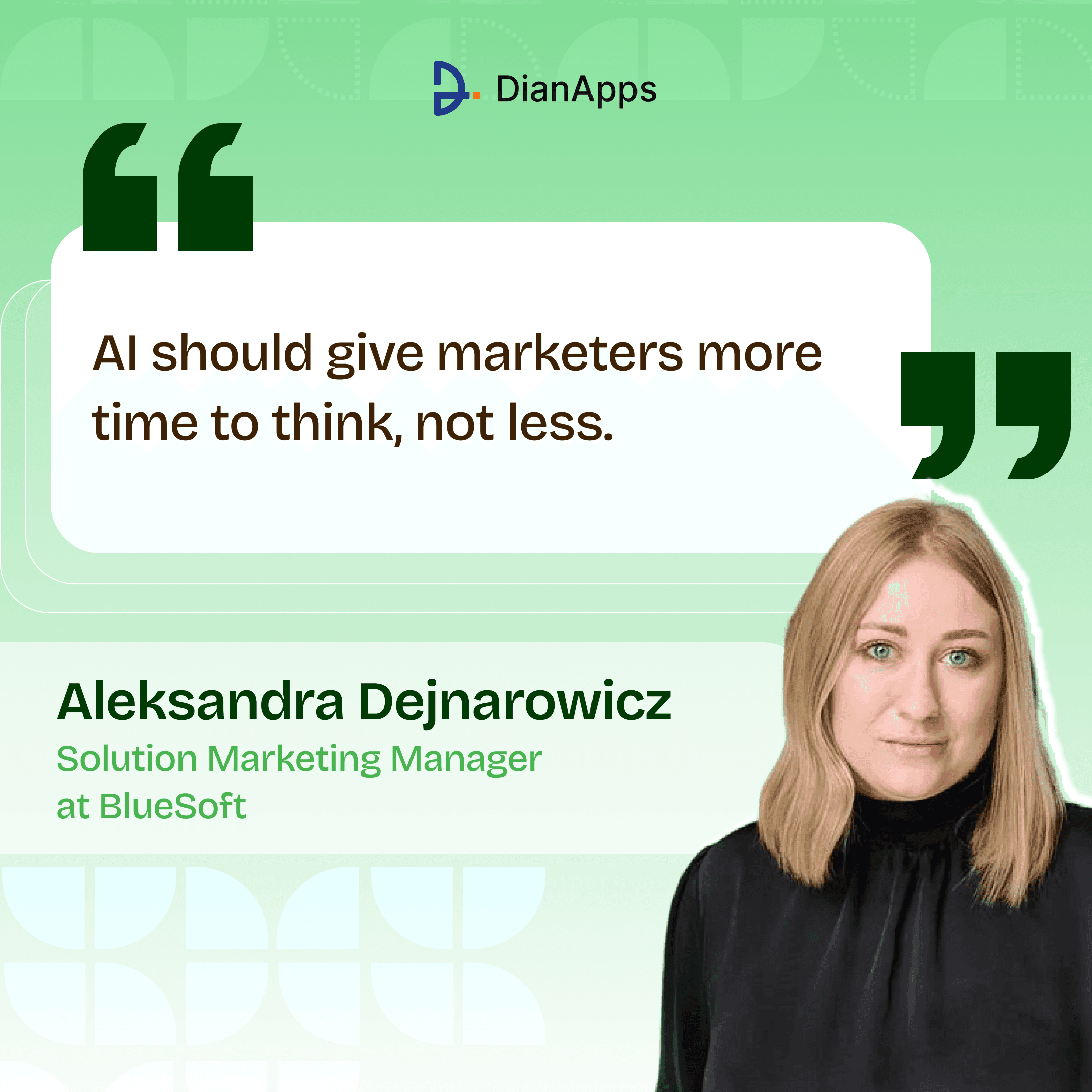
“AI should give marketers more time to think, not less,” Aleksandra emphasizes.
Final Thoughts: Scaling Faster Without Losing Control
The future of marketing is not about choosing between humans and AI. It’s about designing workflows where both work together intentionally.
AI brings speed, scalability, and efficiency. Humans bring creativity, judgment, and purpose. When combined thoughtfully, they enable stronger differentiation and more meaningful execution.
For brands willing to invest in clear AI–human hybrid workflows, the outcome is clear:
faster growth without losing control over what truly matters.









Leave a Comment
Your email address will not be published. Required fields are marked *