














 0 comments
Quick Summary:
|
Houston is the undisputed energy capital of the United States. Over 600 oil and gas firms operate out of the city. The Energy Corridor alone houses Shell, BP, ConocoPhillips, and ExxonMobil within a few miles of each other.
The 18 refineries dotting the Houston Ship Channel collectively process nearly 5 million barrels of crude every single day.
But behind that scale is an operational reality many energy leaders know too well, field teams spread across remote Permian Basin well sites, Gulf Coast pipelines, and offshore platforms, working with paper forms, radio calls, and systems built before smartphones existed.
That gap between what’s happening in the field and what decision-makers in Houston actually know about it in real time? It costs operators an average of $62,400 per employee per year in inefficiencies, errors, and delayed responses, according to McKinsey.
That’s why custom Android apps built specifically for field operations are gaining serious ground across Houston’s energy sector.
Not generic SaaS tools. Not web-based dashboards.
Android-native applications designed for rugged devices, offline environments, and the operational workflows oil and gas teams actually run, from wellhead data collection to pipeline inspection to HSE compliance.
This blog breaks down exactly how they’re being used, what features make them work in the real world, and how to choose the right Android app development company to build one for your operations.
Why the Houston Oil & Gas Sector Is Moving to Android-First Field Technology
The shift didn’t happen because of a technology trend. It happened because the old way stopped being affordable.
Field workers in oil and gas have historically carried two things into the field: the knowledge in their heads and a clipboard. Data gets recorded by hand, driven back to a base facility, and re-keyed into a desktop system, sometimes hours later.
By the time production anomalies, safety flags, or equipment warnings reach an Android app development company in Houston, the window to act on them has often already passed.
The numbers make the business case obvious:
| Metric | Statistic |
| Digital field tools, operating cost reduction | Up to 25% in year one |
| McKinsey offshore value chain boost | $11/barrel, $300B/year globally |
| BCG digital technology cost reduction | 50–60% lower data interpretation costs |
| AI adoption in oil & gas (executives) | 50% already using AI for field challenges |
| Digital transformation value by 2030 | $250 billion in value from digitizing O&G ops |
| Oil & gas digital transformation CAGR | $56.4B market growth projected 2025–2029 (14.5%) |
| Safety incidents, field safety apps | 47% fewer incidents with integrated digital tools |
| IoT-connected maintenance savings | 20–30% maintenance cost reduction |
- Going digital reduces operating costs by up to 25% in the first year alone.
- McKinsey estimates digitizing oil and gas operations could add $11 per barrel across offshore value chains, $300 billion a year globally.
- BCG found companies using digital field tools cut data interpretation and costs by 50–60%.
- 50% of oil and gas executives have already begun using AI and automation to solve field challenges (EY, 2025).
Add to this a workforce where nearly half of the field personnel are over 45 and approaching retirement, taking decades of institutional knowledge with them, and the urgency becomes clear. Android apps don’t just digitize processes.
They capture and systematize knowledge that would otherwise walk out the door.
Why Android specifically? Because it runs on the rugged, industrial-grade devices field workers actually use, Zebra handhelds, Panasonic TOUGHBOOK tablets, Samsung Galaxy XCover units, and ATEX-certified explosion-proof devices for hazardous sites.
It works offline. It integrates with SAP, SCADA, Maximo, and the enterprise systems Houston operators already run. And it gives development teams the open architecture to build exactly what your operations need, not a generic platform shaped around someone else’s workflow.
Related: What Are the Latest Android App Development Trends Shaping Enterprise Mobility?
6 Ways Houston Oil & Gas Companies Are Using Android Apps in the Field Right Now
These are active deployments, not prototypes, across upstream, midstream, and downstream operations in and around Houston.
1. Wellhead Data Collection and Production Monitoring
Ask any field supervisor what kills operational efficiency upstream, and they’ll tell you: the time between something happening at the wellhead and someone in Houston knowing about it.
Paper-based production reporting creates a lag of 12 to 14 hours on average. In that window, pressure anomalies go unaddressed, tank levels spill their thresholds, and gauge data gets transcribed wrong.
Custom Android apps eliminate that lag entirely. Technicians log readings directly on their device using structured digital forms.
Data syncs to live dashboards the moment it’s submitted, or stores locally and uploads automatically once connectivity returns.
Mobile app developers in Houston see what’s happening on a Permian well site in real time, not tomorrow morning.
The result: up to 25% reduction in operating costs and an 8% increase in production rates for companies that have made the switch.
2. Predictive Maintenance and Equipment Health Monitoring
Unplanned equipment downtime on a remote well site is expensive in every direction, lost production, emergency parts dispatch, and HSE exposure for anyone working nearby.
The traditional model of scheduled maintenance doesn’t catch failures that develop fast, and it wastes resources on equipment that doesn’t yet need attention.
Android apps connected to IoT sensors on critical equipment, pumps, compressors, separators, continuously monitor vibration, temperature, pressure, and flow data.
When values drift outside safe parameters, maintenance teams get an alert on their device with enough diagnostic context to arrive prepared. Not to diagnose. To fix.
McKinsey data shows IoT-connected maintenance programs deliver up to $1 trillion in value globally, for individual operators, which typically means a 20-30% reduction in maintenance costs and significantly less unplanned downtime.
Related: A Practical Guide to IoT App Development Costs for Industrial Operations
3. HSE Compliance and Digital Safety Inspections
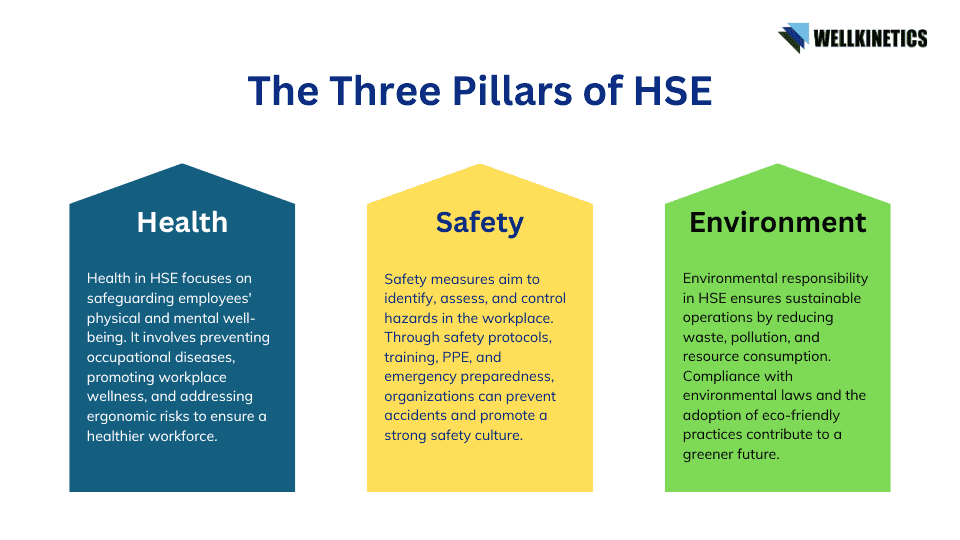
The oil and gas industry has one of the highest workplace fatality rates across all sectors. More forms don’t fix that. Frictionless, actually-completed forms do.
Paper HSE workflows have a predictable failure pattern: Job Safety Analyzes get rushed, permits-to-work get verbally approved instead of documented, and incident reports get reconstructed from memory two days after the fact.
No one intends for this to happen, it happens because the compliance process adds friction to work that’s already physically demanding.
Android HSE apps flip that. A JSA is a guided digital form that takes five minutes and won’t submit with missing fields. A permit-to-work is a push notification a supervisor approves from their phone in two minutes.
An incident gets reported from the site immediately, with GPS coordinates and photos automatically attached. The compliance record that results is complete, timestamped, and audit-ready, not reconstructed.
4. Asset Tracking Across Remote and Distributed Sites
A mid-size Houston operator managing upstream, midstream, and downstream assets could be tracking thousands of pieces of equipment, drilling tools, valves, vehicles, pressure vessels, pipeline components, scattered across dozens of sites.
Spreadsheets and manual yard logs can’t keep up. Equipment gets dispatched to the wrong site. Maintenance records get lost. Assets leave a yard without a documented condition check.
Android apps with barcode/QR scanning, GPS tagging, and cloud-synced asset databases give operations teams a live, accurate picture of every asset: where it is, what condition it’s in, and when it’s due for service.
Every movement is logged. Every service event creates a record tied to that specific asset’s history. When something is overdue for a regulatory inspection, the app sends an alert before the deadline, not after.
5. Field Service Dispatch and Work Order Management
Coordinating field technicians across multiple Houston-area sites has traditionally meant a dispatcher making calls, printing job sheets, and following up again to confirm completion. It gets jobs done, eventually.
But it gives operations managers no real-time visibility and creates the exact communication gaps that result in two technicians showing up for the same job or one technician arriving without the right parts.
Android field service apps close that visibility gap. Dispatchers see a live map of every technician’s location and status. Work orders push directly to the technician’s device. Jobs are closed out with digital signatures and timestamps.
Zero phone tag. Full audit trail. For oilfield services companies operating in the Houston market, a sector worth $60 billion annually, that visibility difference translates directly into more completed jobs per day and tighter cost control.
6. Pipeline Inspection and Integrity Management
Pipeline integrity failures aren’t just operational problems, they’re regulatory liabilities and environmental incidents. The documentation requirements around pipeline inspection are strict, and gaps in that documentation are expensive to explain.
Android pipeline inspection apps allow field crews to log visual observations, flag anomalies, and capture photo evidence with automatic GPS coordinates and timestamps on every entry.
Combined with IoT sensors monitoring pressure differentials and flow rates along the pipeline itself, the mobile app becomes the field interface through which monitoring alerts are received, investigated, and resolved, creating a closed documentation loop that paper inspection never could.
Companies using integrated field safety and inspection tools have reported up to 47% fewer safety incidents compared to paper-based processes.
Android App Use Cases: Before vs. After at a Glance
| Field Workflow | Without Android App | With Android App | Impact |
| Production data collection | Paper logs, 12–14hr lag | Real-time sync to dashboards | Up to 25% cost reduction |
| Equipment maintenance | Reactive repairs post-failure | IoT-triggered predictive alerts | 20–30% lower maintenance costs |
| HSE compliance | Rushed paper forms, late incident reports | Guided digital forms, GPS-tagged reports | Audit-ready records, fewer incidents |
| Asset tracking | Spreadsheets, manual logs | GPS + barcode, live asset database | Zero misplaced assets, full service history |
| Work order dispatch | Phone calls, no job visibility | Live dispatch map, digital close-out | More jobs/day, zero duplicate dispatch |
| Pipeline inspection | Paper walkthroughs, no location proof | GPS-stamped entries, IoT anomaly alerts | 47% fewer safety incidents reported |
Must-Have Features in Any Oil & Gas Android App: Before You Build
There’s a graveyard of oil and gas apps that demonstrated well and got abandoned in month two. The difference between those and apps that actually stick comes down to how they were built, not what they look like.
Offline-First Architecture – Non-Negotiable
Field sites in the Permian Basin, Gulf of Mexico platforms, and remote pipeline routes have unreliable or zero connectivity. If an app needs a live connection to function, it will fail in the field.
A properly built field app stores data locally on-device, works with complete functionality offline, and syncs intelligently when signal returns. Any development team that treats this as a feature rather than a core architecture decision is telling you something important.
Industrial Device Compatibility
Field workers don’t carry consumer-grade smartphones. They use Zebra TC-series handhelds, Panasonic TOUGHBOOK tablets, Samsung Galaxy XCover devices, and ATEX-certified explosion-proof Android devices for hazardous environment classifications. The app must be built and tested on these devices, touch responsiveness with gloves, screen readability in direct sunlight, battery optimization under continuous data capture.
Enterprise System Integration
Your Android app needs to feed data directly into the systems your operations already run, SAP ERP, Oracle, Maximo, SCADA historians, GIS platforms.
Not as a batch export at the end of the day. As a live data feed.
This integration layer is where most of the complexity and cost in a field operations app actually lives, and it’s where an underprepared development team will fall short.
Smart Forms with Conditional Logic
A digital copy of a paper form is marginally better than paper. A smart form that adapts based on inputs, blocks submission until all required fields are complete, and auto-populates from sensor readings or prior inspection records is genuinely transformative.
The difference matters at the compliance level and at the usability level for field workers doing this daily.
Role-Based Access and User Experience
A field technician logging readings, a site supervisor approving work orders, a safety officer reviewing compliance records, and a Houston-based engineer monitoring dashboards all need completely different interfaces from the same underlying app.
Role-based access that reflects how your organization actually works, and doesn’t add friction to daily use, determines whether the app gets adopted across all levels or only by the people patient enough to work around it.
Related: Top Mobile App Development Trends Shaping Enterprise Field Operations
How to Evaluate an Android App Development Company for Oil & Gas Work
Most development companies in the USA can build an app. Far fewer have built one that deployed successfully in a remote field environment and kept getting used six months later. Here’s what separates the right partner from the rest.
Demand field deployment references: not case study slides
Ask directly: Which clients have you built for in oil and gas, utilities, or industrial field operations, and can we speak to them? A UI screenshot tells you nothing about how an app performed at a remote well site at 6am with poor signal and a worker in gloves. The operational manager who ran that deployment will.
Test how they scope integration before they quote
The integration work, connecting your Android app to SAP, SCADA, Maximo, or Oracle, is where real complexity lives and where underqualified teams consistently underscope.
An app development company like DianApps with genuine experience will ask technical, specific questions about your existing stack in the first discovery session.
If an initial quote arrives without addressing integration in detail, treat that as a warning signal.
Define post-launch support before you sign anything
Oil and gas operations evolve. Regulations change, new equipment keep adding to the fleet, and field workers discover edge cases nobody anticipated.
Your app needs to evolve too. What does bug resolution look like? What’s the process for adding features? How to monitor performance over time? Get specific answers to these questions before signing the contract.
Related: Why Enterprise Software Development Requires a Different Approach
How DianApps Builds Android Apps for the Oil & Gas Industry
DianApps is a mobile app development company in USA with a proven track record of building enterprise-grade Android solutions for industrial clients who need software to work in real conditions, not controlled ones. Here’s what makes our approach different for energy sector engagements.
1. We start with workflows, not wireframes.
Before architecture discussions, before design, before any code, we run structured discovery with your field supervisors, technicians, safety officers, and IT teams. We map the actual workflows, the actual devices, the actual connectivity conditions, and the actual enterprise systems your app needs to connect to. That foundation prevents the costly rework that comes from designing for imagined conditions.
2. Offline-first is structural, not supplemental.
We architech every field operations app to work fully offline from day one. Local data storage, intelligent sync with conflict resolution, identical UX with or without signal. This isn’t a feature toggle, it’s a core architectural decision that shapes everything from data models to sync logic.
3. We connect to your existing stack.
SAP, Oracle, Maximo, SCADA, GIS, your Android app feeds directly into the systems your operations already depend on. No parallel data silos, no manual exports, no reconciliation headaches. Your field data flows exactly where it needs to go, in real time.
We test for the field, not the demo.
Our team tests on the device types your workers carry. We simulate extended offline conditions, intermittent connectivity, and high-volume concurrent data entry. Launch day should be boring, because we’ve already found everything worth finding.
Related: How DianApps Approaches IoT App Development for Industrial Operations
The Bottom Line for Houston Energy Operators
The oil and gas companies getting ahead in Houston right now aren’t necessarily the ones with the biggest rigs or the deepest reserves.
They’re the ones that have closed the gap between what’s happening in the field and what their operations teams know about it in time to act.
Custom Android apps built for field operations, production monitoring, predictive maintenance, HSE compliance, asset tracking, work order dispatch, pipeline inspection, are the most direct way to close that gap.
Prove the technology. Document the ROI. And the operational risk of continuing to rely on paper-based processes in a margin-compressed environment is real.
The companies doing this well have one thing in common: they found a development partner who had actually built for these conditions before. That’s the starting point.
Frequently Asked Questions
 0 comments








Leave a Comment
Your email address will not be published. Required fields are marked *