















 0 comments
AI overview:
|
Take a look at how people play today. A session starts on a console, continues on a phone during a commute, and ends on a tablet before bed.
Players don’t think in platforms anymore, they think in experiences.
And that shift is exactly why cloud gaming mobile is no longer a futuristic idea. It’s becoming the new foundation of how games are built and delivered.
Here’s the real question: What happens when your mobile game is no longer limited by the device in someone’s hand?
No more cutting features because of hardware constraints. No more bloated downloads just to push higher-quality visuals.
Cloud gaming moves the heavy lifting to remote servers, streaming gameplay directly to smartphones. That changes design decisions, technical architecture, and even monetization strategies.
At the same time, players expect their progress, purchases, and multiplayer sessions to follow them across devices.
That’s where cross-platform play becomes the multiplier. Cloud delivery removes performance barriers, and cross-platform systems remove environment barriers.
Together, they’re redefining what a “mobile game” even means.
This isn’t just a tech upgrade. It’s a business model shift. Studios that understand cloud gaming on mobile can:
- Reach players on lower-end devices without sacrificing quality
- Extend game lifecycles through cross-device engagement
- Reduce friction between discovery and play
- Unlock new monetization and live-ops opportunities
What this means for you: If you’re planning your next mobile title using yesterday’s technical assumptions, you’re already behind the curve.
In this guide, we’ll break down how cloud gaming mobile actually works, why cross-platform play is becoming a competitive necessity, and what development teams need to consider right now to stay relevant in the next wave of mobile gaming.
What Is Cloud Gaming on Mobile?
Cloud gaming on mobile is a way of playing high-quality games on smartphones where the game runs on powerful remote servers instead of the device itself. The gameplay is streamed to the player’s screen in real time, while taps, swipes, and controller inputs are sent back to the cloud technology in gaming. Your phone becomes the display and control surface, the heavy processing happens elsewhere.
Think of it like Netflix – but interactive.
Instead of streaming a movie, you’re streaming a live game session that responds instantly to everything the player does.
Traditional Mobile Gaming vs. Cloud Gaming Mobile
Here’s where the shift becomes obvious:
| Traditional Mobile Gaming | Cloud Gaming Mobile |
| Game runs on the phone | Game runs on cloud servers |
| Limited by device hardware | Powered by remote GPUs and CPUs |
| Large downloads and updates | Instant or lightweight access |
| Performance varies by device | Performance depends more on network quality |
| Device storage is a constraint | Minimal local storage needed |
In short, cloud gaming changes the main limitation.
Instead of asking “Can this phone handle the game?” the question becomes:
“Is the network fast and stable enough to stream it smoothly?”
That’s a massive mindset shift for both players and developers.
Why This Matters Specifically for Mobile?
Mobile has always had one big challenge: device fragmentation. Different chipsets. Different RAM limits. Different GPU capabilities. And that forces studios to scale features down just to make games run across a wide audience.
Cloud gaming flips that model.
Now, even players on mid-range or older devices can experience visually rich, performance-heavy games, because the rendering isn’t happening on their phone. It’s happening in the cloud.
That opens the door to:
- Delivering premium-quality experiences to a much wider audience
- Reducing performance compromises tied to hardware tiers
- Designing gameplay that isn’t restricted by device ceilings
What this means for your game:
You’re no longer building only for the top-end devices. You’re designing for a broader global player base where the network, not the hardware, becomes the key performance factor.
And this leads to the natural next question: If the phone isn’t doing the heavy lifting, where is the game actually running, and how does that stream stay responsive enough for real-time play?
Let’s break down the technology that makes mobile cloud gaming possible.
Cloud gaming 101: Everything you need to know to get started.
How Mobile Cloud Gaming Works: The Technology Behind the Stream?
So if the game isn’t running on the phone what’s actually happening behind the scenes?
Here’s the simple version: your player’s device becomes a window into a game running somewhere else. That “somewhere else” is a powerful cloud server designed to handle graphics, physics, AI, and multiplayer processing at scale. The phone handles display and input, the cloud handles everything heavy.
Let’s break down the full loop.
Step 1: Player Input Leaves the Device
Every interaction starts on the mobile screen, taps, swipes, joystick movements, controller inputs. In a traditional mobile game, these actions are processed instantly on the device. In cloud gaming mobile, those inputs are transmitted over the network to a remote server where the game session is running.
This happens continuously, not occasionally. Each second of gameplay involves a rapid exchange of inputs flowing from the player to the cloud, forming the first half of a real-time loop.
The smoother this input transmission, the more responsive the game feels.
Step 2: The Game Engine Runs Entirely in the Cloud
Once the input reaches the cloud, the game behaves exactly as it would on a high-end console or gaming PC. The server processes the action, updates the game state, calculates physics, triggers animations, runs AI logic, and prepares the next frame.
Because this environment isn’t constrained by mobile hardware, developers can rely on:
- High-performance GPUs for rendering
- Scalable CPUs for physics and AI
- Centralized systems for multiplayer synchronization
Read how the gaming industry is a goldmine for app developers.
This is where cloud gaming mobile breaks free from device fragmentation. Instead of tailoring performance for hundreds of phone models, the game runs in a controlled, powerful environment designed for consistency.
Step 3: Gameplay Is Streamed Back as Live Video
After the frame is rendered in the cloud, it’s immediately encoded into a video stream and sent back to the player’s device. The phone doesn’t load textures, models, or assets locally, it receives a continuous visual feed of the game session.
This is why cloud-based mobile games:
- Launch faster
- Require minimal local storage
- Maintain consistent visual quality across devices
From the player’s perspective, it feels like the game is running on their phone. Technically, they’re watching and controlling a live stream that updates in real time.
Step 4: The Feedback Loop Repeats in Milliseconds
This entire cycle, input, processing, streaming, repeats constantly.
| Loop Stage | What’s Happening |
| Player action | Input sent from device |
| Cloud processing | Game logic and rendering |
| Stream delivery | Updated visuals sent back |
| On-screen response | Player sees the result |
For the experience to feel natural, this loop must complete in milliseconds. Any delay becomes noticeable as lag, delayed reactions, or visual stutter. This is why cloud gaming mobile is deeply dependent on network speed and stability.
Step 5: Edge Computing Keeps the Experience Responsive
To reduce delay, cloud gaming platforms rely on edge computing, deploying servers closer to where players are physically located. Shorter distance means faster data travel, which directly improves responsiveness.
Instead of routing gameplay traffic through distant centralized servers, edge infrastructure allows mobile players to connect to nearby nodes. This proximity is one of the biggest reasons cloud gaming on mobile is becoming viable now, compared to earlier attempts that struggled with latency.
While we speak about edge computing, here’s other top trends you may find interesting in 2026.
Step 6: Latency Becomes the New Performance Metric
In native mobile games, performance is tied to frame rate and device capability. In cloud gaming mobile, latency becomes the defining factor.
Different types of games react differently to delay:
| Game Type | Sensitivity to Latency |
| Turn-based games | Low |
| RPGs and casual multiplayer | Moderate |
| Action and racing games | High |
| Competitive shooters | Critical |
This forces developers to think differently, not just about visuals and mechanics, but about network conditions, stream optimization, and infrastructure reliability.
What This Means for Mobile Game Development?
Cloud gaming doesn’t replace native mobile development, it extends it. It allows developers to design more ambitious experiences without being boxed in by device limitations, while introducing new challenges around networking, scalability, and real-time delivery.
Instead of optimizing for hardware constraints alone, teams must now account for:
- Network variability
- Server-side performance
- Stream quality vs responsiveness
- Always-on infrastructure
And once a game already runs in the cloud, delivering that same experience across phones, tablets, PCs, and consoles becomes far more achievable.
That’s why cloud gaming mobile naturally leads into the next evolution of player expectations, cross-platform play, where the experience follows the player, not the device.
Cross-Platform Play: The Multiplier Effect for Mobile Games
Cloud gaming changes where games run.
Cross-platform play changes where players can go.
Together, they remove two of the biggest limitations mobile games have faced for years: device power and platform walls.
Players no longer think in terms of “mobile game” versus “console game.” They think in terms of one continuous experience that fits into their day, at home, on the move, or between tasks. Cross-platform systems make that possible by allowing gameplay, progress, and social connections to travel with the player across devices.
What Cross-Platform Play Really Means?
Cross-platform play isn’t just one feature, it’s a set of connected systems that make a game feel unified across devices.
It typically includes:
| Capability | What It Enables for Players |
| Cross-play | Play with others on different devices |
| Cross-progression | Progress, unlocks, and stats sync everywhere |
| Cross-save | Resume the same session across devices |
| Shared accounts | One identity across platforms |
For mobile, this transforms the device from a “secondary screen” into a core access point within a larger gaming suite.
Why Mobile Becomes the Center of the Stack
Mobile devices are always within reach. That makes them the most consistent touchpoint in a player’s day.
When a game supports cross-platform play:
- A player might start a session on a console
- Continue progress during travel on mobile
- Join friends later from a PC
Instead of competing with other platforms, mobile becomes the bridge between them.
This increases:
- Session frequency
- Player retention
- Lifetime value
Because the game is no longer tied to a single location or device.
How Cloud Gaming Strengthens Cross-Platform Play?
Cloud gaming and cross-platform systems naturally reinforce each other.
When a game runs in the cloud, the core experience already lives on centralized infrastructure. That makes it easier to maintain consistent game states, player inventories, and multiplayer environments across devices.
Rather than syncing separate versions of a game, developers can design a shared backend environment where every platform connects to the same live environment.
| Without Cloud Support | With Cloud-Enabled Infrastructure |
| Platform-specific builds | Unified game environment |
| Complex sync logic | Centralized player data |
| Feature gaps across devices | More consistent gameplay |
| Slower updates per platform | Simultaneous global updates |
This alignment reduces fragmentation and accelerates feature rollouts across platforms.
The Business Impact of Cross-Platform Design
From a player’s perspective, cross-platform play is about convenience.
From a studio’s perspective, it’s about engagement and growth.
When players can access the same game anywhere:
- Drop-off caused by device limitations decreases
- Social networks grow stronger and more active
- Monetization opportunities expand across platforms
A player who can stay connected to their progress is far more likely to stay connected to the game itself.
This is especially powerful in mobile, where shorter, more frequent sessions become part of a broader engagement loop that includes longer sessions on other devices.
What This Means for Game Development Strategy?
Cross-platform play isn’t something that gets “added later” without friction. It influences decisions from the very beginning:
- Account systems must be platform-agnostic
- Backend infrastructure must support real-time sync
- Multiplayer architecture must handle mixed-device sessions
- Progression systems must be consistent everywhere
When combined with cloud gaming, this pushes mobile game development closer to service-based architecture rather than isolated app releases.
Games stop being device-bound products. They become persistent ecosystems players enter from multiple entry points.
And building those ecosystems requires more than just strong gameplay, it demands thoughtful system design, scalable infrastructure, and experience in managing cross-platform environments.
Now that we’ve explored how cloud gaming delivers performance and how cross-platform play expands reach, the next step is understanding the technology and development stack required to build games that thrive in this new model.
Native vs Hybrid vs Cross-platfrom read which is the best for your gaming app.
Real-World Examples of Cloud Gaming and Cross-Platform Play
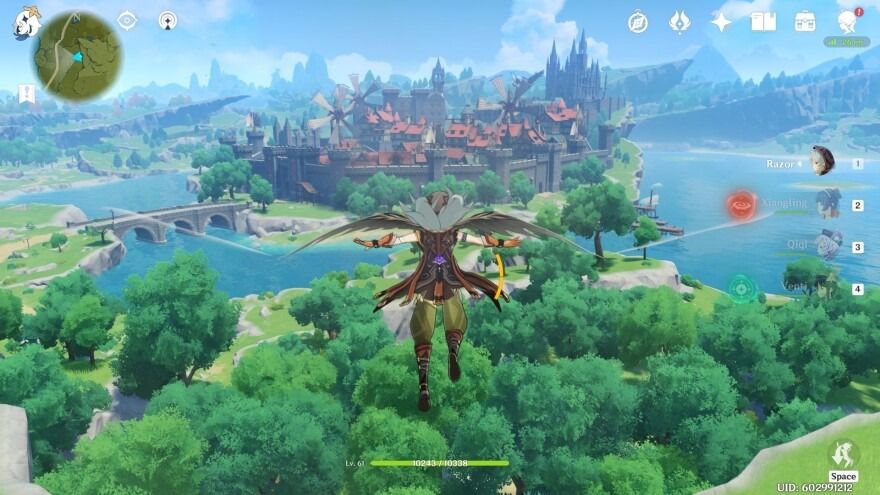
Nothing explains the power of cloud gaming and cross-platform ecosystems better than the games already using them to dominate engagement.
Fortnite
One of the strongest examples of cross-platform play in action. Players on mobile, console, and PC share the same world, events, and progression. A match started on one device can smoothly continue on another. This keeps daily engagement high and makes the game feel like a persistent social space rather than a single-platform title.
Genshin Impact
This game proves that high-production-value experiences can live comfortably across devices. With shared accounts and synced progress, players move between mobile and PC without losing momentum. It’s a clear example of how cross-platform progression strengthens retention and expands playtime beyond a single device.
Xbox Cloud Gaming
Instead of being limited to locally installed games, players can stream console-level titles directly to smartphones. This is cloud gaming in its purest form, the phone becomes a screen and controller interface while heavy processing happens in the cloud. It shows how premium gaming experiences are becoming hardware-independent.
Call of Duty: Warzone
Known for large-scale multiplayer and fast-paced action, this title highlights how cross-platform ecosystems keep communities unified. Players can squad up across different systems, keeping the social and competitive layers alive regardless of device.
These examples show two clear patterns:
- Cloud gaming removes hardware limits, making high-end gameplay accessible on more devices
- Cross-platform play removes platform barriers, keeping players connected to their progress and friends everywhere
Together, they turn games into always-available experiences, not device-specific apps, and that’s exactly where the future of mobile gaming is heading.
The Development Stack Behind Cloud Gaming Mobile
Building a game for cloud gaming mobile isn’t just about great gameplay. It’s about designing a system where rendering, networking, synchronization, and scalability all work together in real time.
This changes the development stack from a device-focused setup to a cloud-first architecture.
Choosing the Right Game Engine
Your engine decision carries more weight in a cloud-enabled, cross-platform world.
Modern engines like Unity and Unreal Engine are popular not just because they support mobile, but because they integrate well with cloud services, multiplayer frameworks, and cross-platform deployment pipelines.
The engine must handle:
- Cross-platform builds
- Scalable asset management
- Networking support
- Performance profiling across devices
When a game runs partly or entirely in the cloud, developers aren’t just optimizing for frame rate on a phone, they’re balancing performance between device display, network throughput, and server rendering.
Backend Infrastructure Becomes the Core
In traditional mobile games, backend systems often support features like accounts or leaderboards. In cloud gaming mobile, the backend becomes the foundation of the entire experience.
It must manage:
- Real-time game sessions
- Player identity across platforms
- Data synchronization
- Matchmaking and multiplayer services
- Live updates without breaking sessions
This requires cloud infrastructure that can scale dynamically as player activity rises or falls, ensuring performance stays stable even during traffic spikes.
Networking and Multiplayer Systems
When gameplay depends on cloud processing, networking is no longer a supporting feature, it’s mission-critical.
Development teams must account for:
- Latency compensation techniques
- Packet loss handling
- Region-based server distribution
- Real-time state synchronization
The goal is to make the experience feel instant, even when data is constantly traveling between player and server. This becomes even more important in cross-platform environments where players on different devices share the same game world.
DevOps and Continuous Delivery
Cloud-enabled games behave more like live services than static app releases. That means development doesn’t stop at launch.
Teams need systems that allow them to:
- Roll out updates without major downtime
- Monitor performance across regions
- Patch server-side issues quickly
- Scale infrastructure automatically
Instead of pushing large app updates through stores every time, many improvements can be delivered directly through the cloud layer.
Security and Data Integrity
With more game logic and player data living in the cloud, security becomes even more critical.
Studios must safeguard:
- Player accounts
- In-game economies
- Multiplayer fairness
- Data privacy across regions
A well-architected cloud gaming system reduces cheating risks by keeping sensitive logic off the client device, but it also requires strong backend security practices.
What This Means for Studios?
Developing for cloud gaming mobile means your project sits at the intersection of:
- Game design
- Cloud engineering
- Network optimization
- Live service operations
This isn’t just mobile app development anymore. It’s building a scalable, always-on gaming suite.
Studios that plan for this early can design smoother cross-platform experiences, adapt faster to growth, and deliver higher-quality gameplay to a broader audience. Those that treat cloud as an afterthought often face expensive architectural rewrites later.
And once the technical foundation is in place, the next strategic layer comes into focus:
how cloud delivery and cross-platform reach reshape monetization and long-term player engagement?
Monetization & Player Engagement in a Cloud-First Mobile World
When games move into the cloud and across platforms, monetization doesn’t just scale, it evolves.
Cloud gaming mobile removes many of the friction points that traditionally limited mobile revenue. Players can jump in faster, play on more devices, and stay connected to their progress wherever they are. That continuity creates more opportunities to engage, and more moments where monetization can happen naturally.
Lower Friction, Higher Entry
One of the biggest silent revenue killers in mobile gaming has always been download friction. Large install sizes, device compatibility issues, and storage limits often stop players before they even reach gameplay.
Cloud delivery reduces that barrier. When players can start playing almost instantly without worrying about device specs, the top of the funnel widens. More players trying the game means more potential long-term users entering the stack.
And because performance isn’t tied to high-end devices, premium-quality experiences become accessible to a broader audience, expanding your addressable market.
Cross-Platform Continuity Increases Lifetime Value
When progress follows players across devices, engagement stops being tied to one context.
A player who might only play occasionally on console can stay connected daily through mobile sessions. Small check-ins during the day turn into longer sessions later. That continuity strengthens habit loops and increases total playtime across the environment.
More touchpoints mean:
- More opportunities for in-game purchases
- Stronger retention curves
- Higher lifetime value per player
Instead of competing with other platforms, mobile becomes the engagement engine that keeps the entire platform active.
Live Ops Becomes More Dynamic
Cloud-based infrastructure gives studios more control over the live experience. Events, updates, and content drops can be deployed with greater flexibility, often without requiring large client-side downloads.
This enables:
- Limited-time events rolled out globally
- Real-time balancing and tuning
- Seasonal content that appears instantly
- Faster experimentation with engagement mechanics
Players experience a game that feels alive and constantly evolving, which is key to long-term retention.
New Monetization Models Become Viable
Cloud gaming mobile also opens doors to models that are harder to support in traditional app-only environments.
Because the game runs as a service, studios can explore:
- Subscription-based access to premium experiences
- Bundled ecosystems across devices
- Cloud-powered demos or instant trials
- Dynamic content tied to live player behavior
The monetization strategy no longer depends solely on app store mechanics. It becomes part of a broader service suite.
Engagement Is No Longer Device-Bound
In a cloud-first, cross-platform world, the player relationship isn’t tied to a single device or session length. Players can dip in and out more freely, and their progress stays intact.
That flexibility supports different play styles:
- Quick mobile sessions during the day
- Deeper sessions on larger screens later
- Ongoing social interaction across platforms
The game becomes part of a player’s routine, not just a destination they visit occasionally.
What This Means for Game Strategy
Monetization and engagement in cloud gaming mobile aren’t just about adding new revenue streams. They’re about designing an stack where players can enter from anywhere, stay connected across devices, and encounter meaningful reasons to return.
Studios that align their technical architecture with engagement design early can build games that are not only more accessible, but also more resilient over time.
And to reach that stage successfully, teams need a clear implementation strategy, knowing when cloud gaming makes sense, what readiness looks like, and how to approach the transition without unnecessary risk.
That’s where the practical roadmap comes in next.
Implementation Blueprint: Turning Cloud Gaming Mobile into Reality
By now, the opportunity is clear. Cloud gaming mobile expands reach. Cross-platform play deepens engagement. The technology exists.
But the real question studios face is simpler: How do we move from idea to implementation without derailing timelines or budgets?
Adopting a cloud-first approach doesn’t mean rebuilding everything from scratch. It means making informed architectural decisions early and aligning your game design with the right infrastructure from day one.
When Cloud Gaming Mobile Makes Strategic Sense?
Not every game needs full cloud streaming. The key is identifying where cloud delivery creates a meaningful advantage.
Cloud gaming becomes a strong strategic fit when:
- Your game demands high-fidelity visuals or complex simulations
- You’re targeting a global audience with varied device capabilities
- Cross-platform continuity is central to your player experience
- You want to reduce install friction and enable instant access
- Live service updates are a major part of your roadmap
In these cases, cloud isn’t just a technical upgrade, it becomes a growth enabler.
When a Hybrid Approach Is Smarter?
Some experiences benefit from blending native and cloud elements rather than going fully streamed.
Hybrid strategies can work well when:
- Core gameplay runs locally, but high-end modes use cloud rendering
- Multiplayer systems and progression live in the cloud while offline play remains possible
- Cloud is used to support scalability during peak demand
This approach reduces risk while still unlocking many benefits of cloud infrastructure.
Technical Readiness Checklist
Before moving forward, studios should evaluate whether their current setup can support a cloud-enabled future.
Key readiness factors include:
| Area | What to Evaluate |
| Game design | Does gameplay rely heavily on low-latency response? |
| Engine capability | Does your engine support cross-platform builds and cloud integration? |
| Backend systems | Can your infrastructure handle real-time synchronization at scale? |
| Networking | Are you equipped to manage latency and regional server distribution? |
| Live operations | Do you have processes for continuous updates and monitoring? |
Gaps in these areas don’t mean cloud gaming is out of reach, they highlight where planning and expertise are most critical.
Cost Considerations Without the Guesswork
Cloud gaming shifts some costs from client-side optimization to server infrastructure and bandwidth. However, these costs scale with usage and can be aligned with player growth.
Instead of over-investing in device-specific optimization for countless hardware variations, studios can focus resources on a centralized environment that delivers consistent performance.
The key is designing infrastructure that scales intelligently, expanding with demand while maintaining performance standards.
Start with the Right Milestones
A successful cloud gaming roadmap often begins with focused, staged goals:
- Establish a scalable backend foundation
- Enable cross-platform accounts and progression
- Integrate multiplayer and live systems into the cloud
- Expand into cloud rendering or streaming where it adds value
This phased approach reduces risk and allows teams to validate performance and engagement at each stage.
What This Means for Studios Planning Their Next Game?
Cloud gaming mobile isn’t an all-or-nothing leap. It’s a strategic evolution that can be planned, tested, and expanded over time.
Studios that approach it with a clear roadmap gain:
- More flexibility in game design
- Greater scalability as audiences grow
- Stronger cross-platform engagement
- A technical foundation built for the next generation of player expectations
And executing that roadmap requires more than just strong development skills. It requires experience in building systems that blend game engineering with cloud architecture, networking, and live service operations.
That’s where having the right development partner becomes a serious advantage, especially when the goal is to build not just a game, but a long-term, cloud-powered environment.
The Future Is Already Loading
Cloud gaming is not a side experiment anymore. It’s fast becoming the infrastructure layer of modern interactive entertainment. Pair that with cross-platform ecosystems, and the definition of a “mobile game” has officially changed.
We’re no longer building apps that live on a phone.
We’re building persistent game worlds players access from a phone.
That shift is exactly where a forward-looking mobile gaming app development company separates itself from studios still optimizing for yesterday’s hardware limits.
Let’s talk about what comes next.
Cloud Gaming + Cross-Platform = One Continuous Player Experience

When cloud gaming handles performance and cross-platform systems handle continuity, games stop being device-bound software and start becoming living services.
This combination delivers three major transformations:
Device Power Stops Being the Gatekeeper
Your audience is no longer limited to high-end phones. Cloud gaming allows visually rich, technically ambitious experiences to reach users on mid-range and older devices.
That’s not just inclusivity, that’s market expansion.
Sessions Multiply Across the Day
Cross-platform progression means players don’t “leave” your game when they switch devices. Mobile becomes the always-available touchpoint that keeps engagement loops active between longer sessions elsewhere.
More sessions = more retention = more monetization windows.
The Game Becomes an Platform, Not an App
Instead of shipping isolated builds, studios manage a centralized, evolving experience where content, events, and systems update in real time across every platform.
That’s a live service mindset, and cloud gaming is what makes it operationally realistic.
Why This Matters for a Mobile Gaming App Development Company?
Let’s be blunt: building mobile games the old way is a shrinking strategy.
A modern mobile gaming company isn’t just shipping APKs or iOS builds. It’s architecting:
- Cloud-integrated game backends
- Cross-device identity systems
- Scalable multiplayer infrastructure
- Live operations pipelines
- Data-driven engagement loops
If your technical foundation doesn’t support cloud gaming and cross-platform play, your game is already boxed into a smaller future.
Studios that adapt early gain:
- Larger addressable audiences
- Longer game lifecycles
- Faster content delivery
- Stronger player retention
- More flexible monetization models
This is no longer innovation for its own sake. It’s competitive survival.
Design Shifts Teams Must Embrace
Cloud gaming doesn’t just change infrastructure. It changes design philosophy.
Gameplay Design
You can design richer simulations, larger worlds, and more dynamic environments because you’re not squeezing everything into a mobile chipset.
But you also need to:
- Account for network variability
- Build smart latency tolerance
- Avoid mechanics that collapse under minor delay
System Design
Cross-platform means:
- One progression system
- One inventory economy
- One social graph
- One persistent world
Fragmented systems kill cross-device immersion. Unified systems amplify it.
Technical Design
Your performance budget now includes:
- Stream encoding efficiency
- Server-side rendering optimization
- Bandwidth usage
- Regional server proximity
Frame rate still matters, but now it’s tied to infrastructure decisions, not just device optimization.
Where Cloud Gaming Is Heading Next?

Here’s the forward-looking reality most studios underestimate:
5G + Edge Computing = Lower Latency Norms
As edge nodes spread and networks improve, cloud gaming will feel increasingly indistinguishable from native play for most genres.
Instant Play Will Become Standard
Waiting for large downloads will feel outdated. Players will expect to tap and play immediately, just like streaming a show.
Platform Lines Will Blur Further
A player won’t say, “I play the mobile version.”
They’ll say, “I play the game.”
The device will be irrelevant.
Subscription and Access Models Will Expand
Cloud delivery supports flexible access models, subscriptions, timed access, bundled ecosystems, that go beyond traditional app store monetization.
Studios that prepare now won’t scramble later.
Practical Takeaway: How to Stay Ahead
If you’re planning a new title, ask these hard questions early:
- Can our backend support real-time cross-device progression?
- Are we designing gameplay that tolerates network variability?
- Is our architecture scalable for live cloud-hosted sessions?
- Do we have the DevOps maturity for a live service model?
- Are we thinking suite… or just app launch?
If those answers are unclear, you don’t just have a tech gap, you have a strategy gap.
That’s exactly where an experienced mobile gaming app development company with cloud gaming expertise becomes a growth accelerator, not just a vendor.
Final Word: The Winners Will Think Beyond the Device
Cloud gaming is removing hardware barriers. Cross-platform play is removing stack barriers.
Together, they’re removing excuses.
The studios that win in the next decade of mobile gaming won’t be the ones that optimize hardest for devices.
They’ll be the ones that design borderless game experiences powered by cloud gaming infrastructure and accessible from anywhere.
The future of mobile games isn’t smaller screens.
It’s bigger systems delivered through them.
Also read: Why choose DianApps as you digital mobile game app development company?
 0 comments








Leave a Comment
Your email address will not be published. Required fields are marked *