

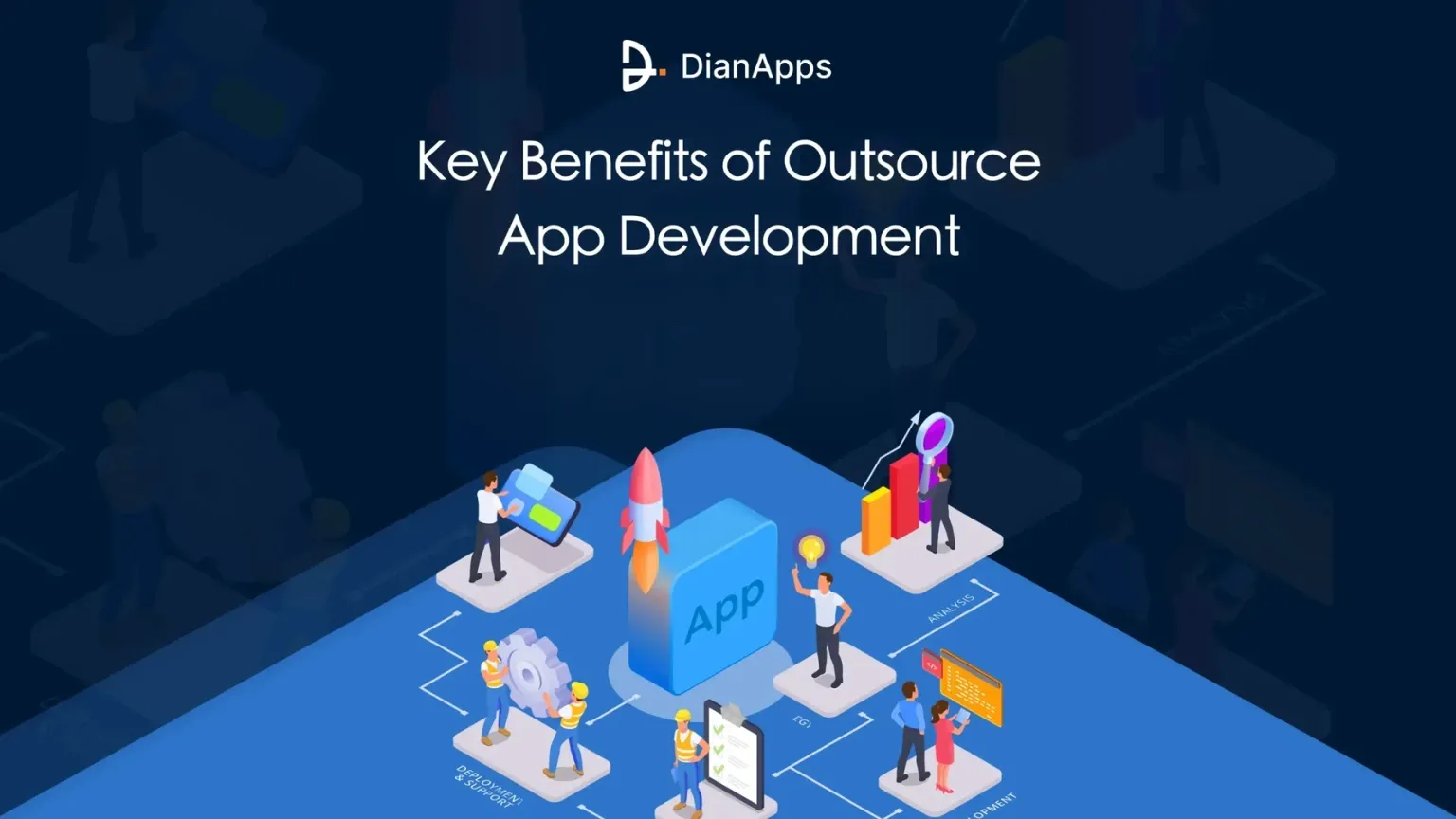
Key Takeaways:Modern outsourcing gives businesses:
In 2026, the companies that win aren’t the ones building everything themselves, they’re the ones orchestrating the right expertise at the right time. Outsourcing isn’t optional anymore. It’s how modern apps get built, shipped, and scaled. |
Let’s be honest: app development in 2026 looks nothing like it did even two years ago.
Apps are no longer standalone products. They’re living systems, powered by AI, driven by data, and expected to evolve continuously based on user behavior, market signals, and platform updates.
That shift has fundamentally changed how companies build apps.
The old model, one in-house team handling everything from design to deployment, is struggling to keep up. Not because teams aren’t capable, but because the scope of modern app development has exploded.
This is why outsourcing app development is no longer viewed as a cost-saving tactic. In 2026, it’s increasingly a strategic delivery model for companies that want speed, specialization, and resilience.
Read: The complete guide on outsourcing software development.
Why Outsourcing Looks Different in 2026 (And Why That Matters)
Outsourcing isn’t new. But how it’s done today is completely different. As 2026 approaches, businesses are outsourcing because:
- Product cycles are shorter
- Tech stacks change faster
- AI features are becoming baseline expectations
- Hiring for niche skills is slow and risky
Instead of outsourcing “work,” companies are outsourcing capability.
Modern outsourcing is built on:
- AI-assisted planning and delivery tracking
- Distributed product pods (not random developers)
- Deep specialization by domain and tech stack
- Continuous delivery rather than one-time builds
This evolution has made outsourcing far more predictable, transparent, and scalable than it was in the past.
Also Read: Top Reasons Why Companies Outsource Software Development
Key Reasons Companies Are Outsourcing App Development in 2026
Companies aren’t outsourcing because they can’t build apps in-house. They are outsourcing because building everything internally is no longer the fastest, smartest, or most resilient way to shop products.
Here are the real drivers behind that shift.
1. Apps Have Become AI-Native Systems, Not Feature-Based Products
Modern apps are no longer defined by screens and flows. They’re defined by intelligence.
From personalization and automation to predictive analytics and smart recommendations, AI is now a baseline expectation and a differentiator.
Building AI-native apps requires:
- ML and data engineering expertise
- Model integration and optimization
- Ongoing monitoring, tuning, and compliance
Most companies don’t need these skills full-time. They need them on-demand and done right, which is why outsourcing app development with integrated AI capabilities has become the preferred approach.
2. Hiring Specialized Talent Has Turned Into a Growth Bottleneck
In 2026, the problem isn’t talent availability, it’s time and alignment. Hiring for roles like:
- AI engineers
- Cross-platform mobile architects
- DevOps and cloud specialists
can take months, cost heavily, and still miss project-specific needs. Outsourcing bypasses this entirely by providing ready-to-deploy specialists who are already aligned to modern app stacks and delivery workflows.
Result: faster execution without long-term hiring risk.
3. Outcome-Based Delivery Is Replacing Hourly Execution Models
One of the biggest shifts in outsourcing is how work is measured. Companies are moving away from:
- Hourly billing
- Rigid scopes
- Static delivery plans
And toward:
- Milestone-based outcomes
- Performance and stability KPIs
- Adoption and scalability metrics
Outsourcing partners in 2026 are expected to own delivery outcomes, not just complete assigned tasks. This has made outsourcing more accountable and more valuable than traditional in-house execution.
4. Product Pods Have Replaced Isolated Development Roles
Instead of outsourcing individual developers, companies now outsource cross-functional product pods.
A typical pod includes:
- Product management
- UX/UI design
- Mobile and backend development
- QA and DevOps
This mirrors how high-performing internal teams operate, but with built-in speed, alignment, and scalability. Product pods reduce handoffs, improve accountability, and significantly shorten build cycles.
5. Speed of Iteration Now Matters More Than Perfect Planning
Markets, user expectations, and platforms evolve too quickly for long planning cycles. Outsourced teams are structured for:
- Rapid MVP launches
- Continuous experimentation
- Feature validation in real environments
- Fast iteration based on real user data
This makes outsourcing ideal for companies that prioritize learning velocity over rigid execution, a critical advantage in 2026.
6. Companies Need Flexibility Without Organizational Disruption
App development is rarely linear. Features change. Markets shift. Priorities evolve. Outsourcing allows companies to:
- Scale teams up during build phases
- Scale down post-launch
- Pivot without layoffs or internal restructuring
This flexibility protects both budgets and internal morale, something fixed in-house teams struggle to offer.
7. Security, Compliance, and Reliability Are No Longer Optional
With stricter data privacy regulations and higher user expectations, apps must be secure and stable from day one.
Leading outsourcing partners now bake in:
- Security-by-design architectures
- Compliance-ready development practices
- Automated testing and monitoring
- Post-launch performance oversight
This reduces risk and ensures apps remain reliable as they scale.
The Real Business Benefits of Outsourcing App Development
Many businesses hesitate to outsource often because they want more control or assume in-house is safer. But the reality is, not outsourcing can slow you down.
Here’s what typically happens:
- Overburdened Teams: Your internal staff tries to handle everything, leading to burnout, errors, and missed deadlines.
- Higher Costs: Full-time developers, designers, and QA specialists add up fast. Plus, you’ll need the infrastructure to support them.
- Slower Innovation: Without specialized experts, you risk falling behind on tech trends like AI integration, wearable compatibility, or AR/VR experiences.
- Lost Opportunities: Time spent on building could be time spent on growing. When you’re tied up managing code, you can’t focus on partnerships, marketing, or customer engagement.
Outsourcing doesn’t mean giving up control; it means gaining bandwidth and breathing room to focus on what truly matters.
Recommended Read: Insourcing VS. Outsourcing Software Development: Your Complete Guide
Outsourcing vs In-House App Development: Key Differences
Factor | Outsourcing | In-House |
Cost | More budget-friendly, no hiring overhead | Expensive (salaries, tools, infrastructure) |
Expertise | Access to global talent | Limited to local skillset |
Time-to-market | Faster (dedicated agile teams) | Slower (hiring and onboarding delays) |
Scalability | Flexible and adjustable | Fixed team size |
Control | Shared with partner agency | Full control, but higher risk |
Maintenance | Usually included | Requires additional staff |
The key difference? Outsourcing gives you access to ready-made expertise without building everything from scratch.
Freelancers vs Agencies: What Works in Today’s Market
When companies decide to outsource app development, one question almost always comes up first:
Should we work with freelancers or a full-service agency?
In 2026, this isn’t just a budget decision. It’s a risk, scale, and accountability decision.
Let’s break it down clearly.
When Freelancers Make Sense
Freelancers still have a role, but it’s a narrow one.
They work best when:
- The scope is small and clearly defined
- The work is isolated (UI tweaks, bug fixes, minor features)
- Timelines are flexible
- The project is non-critical to core business operations
Freelancers can be cost-effective for short-term needs and tactical execution. However, they usually operate solo, which means limited coverage, limited scalability, and higher dependency risk.
If a freelancer becomes unavailable, the project often stalls.
Where Freelancers Fall Short in 2026
Modern app development has outgrown the freelancer model for anything beyond basic tasks.
Common challenges include:
- No built-in project management or delivery process
- Limited QA, security, and DevOps support
- Inconsistent availability across time zones
- Little to no post-launch responsibility
- High dependency on a single individual
In a market where apps require constant iteration and reliability, these gaps become expensive fast.
Why Agencies Have Become the Preferred Model
Agencies aren’t just “multiple freelancers under one roof.” They operate as structured delivery organizations.
A mature app development agency provides:
- Cross-functional teams (PM, design, development, QA, DevOps)
- Established delivery frameworks and agile workflows
- Accountability across the entire app lifecycle
- Built-in scalability and backup resources
- Long-term support beyond launch
Instead of managing individuals, companies manage one accountable partner.
Best Practices for Outsourcing App Development in 2026
Outsourcing can be a game-changer, but only if done right. Here’s how to make it successful:
- Do Thorough Research: Evaluate multiple agencies, check portfolios, read client reviews, and ask about their tech stack and communication model.
- Set Clear Expectations: Define project scope, deadlines, deliverables, and KPIs from day one.
- Prioritize Communication: Regular updates and weekly check-ins ensure you’re always in the loop.
- Sign an NDA: Protect your app idea and business data with legal agreements.
- Think Long-Term: Don’t treat outsourcing as a one-time fix. Build a relationship that supports ongoing improvements and future versions.
With these best practices, you transform outsourcing from a transaction into a strategic partnership.
How Much Does It Cost to Outsource App Development in 2026?
Costs vary widely depending on the project’s size, features, and region. But here’s a general idea:
- Simple App (basic features): $15,000 – $30,000
- Medium Complexity (custom UI, APIs, databases): $30,000 – $70,000
- Complex App (AI, AR, or real-time data): $70,000+
Hourly rates also differ across regions:
- India & Southeast Asia: $25–$50/hour
- Eastern Europe: $40–$70/hour
- North America: $100–$150/hour
When you partner with agencies like DianApps, you get a balance of quality and affordability. They combine global talent, agile processes, and transparent pricing, making outsourcing both efficient and reliable.
Top Outsourcing App Development Trends Shaping 2026
AI-Assisted Project Planning & Delivery Tracking
In 2026, AI is used to predict delivery risks, optimize resources, and forecast timelines before issues surface. Outsourcing partners now rely on data-driven planning to ensure predictable execution instead of reactive project management.
Security-First & Compliance-Ready Development
Security is embedded into architecture from day one, not added at launch. With stricter data regulations and platform scrutiny, outsourcing teams build apps that are compliance-ready, continuously monitored, and designed to minimize long-term security risk.
Continuous Delivery & DevOps Automation
App development no longer ends at launch. Outsourcing partners operate with automated CI/CD pipelines, enabling frequent updates, faster rollbacks, and constant performance optimization without disrupting users.
Domain-Focused Outsourcing (Fintech, Healthtech, Logistics, etc.)
Generic development teams are being replaced by domain-specialized partners. Deep industry knowledge reduces onboarding time, prevents costly compliance errors, and ensures apps align with real-world operational needs.
Long-Term Product Partnerships Over Short-Term Contracts
Outsourcing in 2026 is built around continuity. Companies prefer partners who stay involved post-launch, contribute to product decisions, and support ongoing iteration as apps evolve and scale.
Final Words
Outsourcing app development in 2026 isn’t about cost-cutting anymore; it’s about strategic growth.
It’s about working smarter, not harder. It’s about building partnerships that extend your team’s capacity, creativity, and technical reach. Whether you’re a startup on a budget or a large enterprise chasing innovation, outsourcing can help you move faster, scale efficiently, and build apps that truly stand out.
And with the rise of AI development services, outsourcing partners are now capable of delivering smarter, more data-informed, and performance-optimized apps than ever before.
So, if you’ve been thinking about outsourcing but holding back, this is your sign to explore it. Find a trusted partner, share your vision, and watch your ideas turn into high-performing digital experiences that drive impact.









Leave a Comment
Your email address will not be published. Required fields are marked *